

French Walnut Marble Commode
When you search for a french walnut marble commode, you seek a substantial continental chest of drawers topped with stone and finished in warm timber.
French Walnut Marble Commode
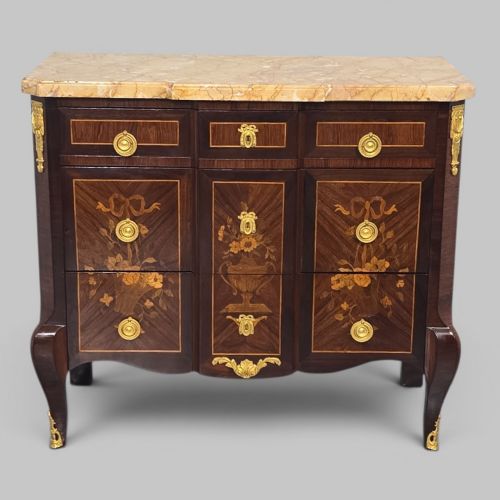
A french walnut marble commode functions primarily as a low chest of drawers or bedside cabinet, originating from continental workshops during the eighteenth and nineteenth centuries. These pieces combine substantial timber carcases with heavy stone slabs, built to serve formal reception rooms and private chambers alike.
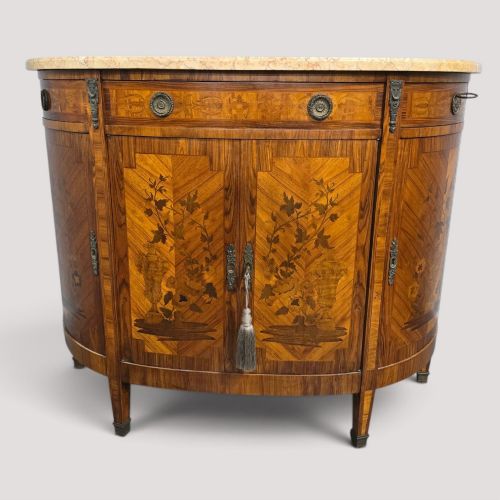
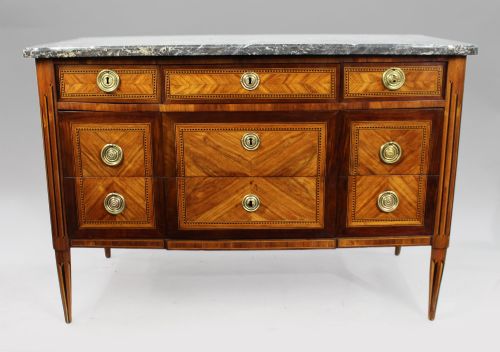
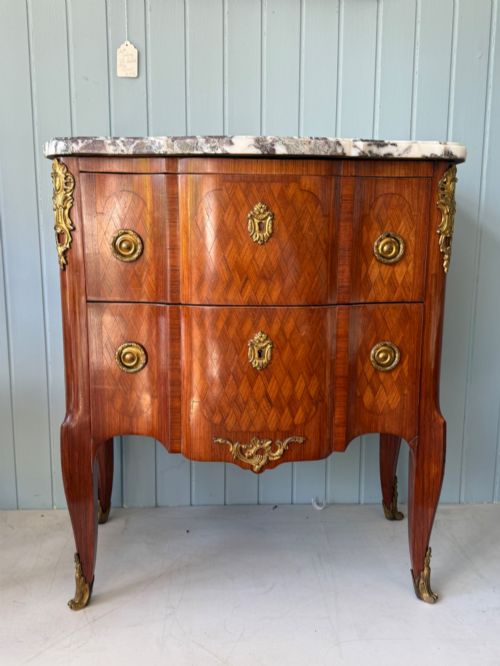
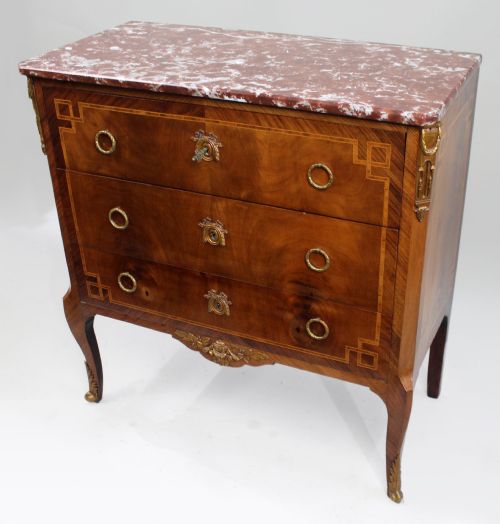
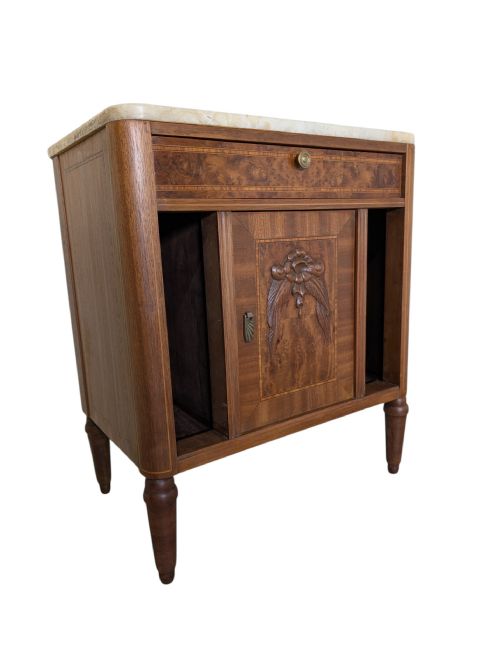
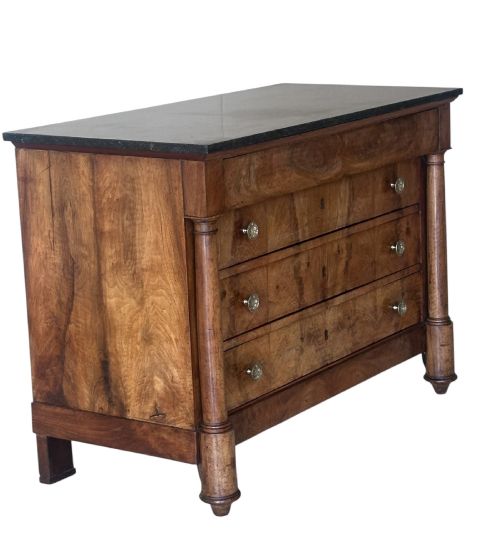
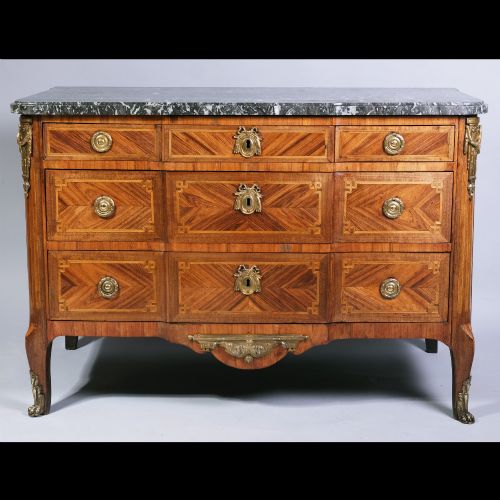
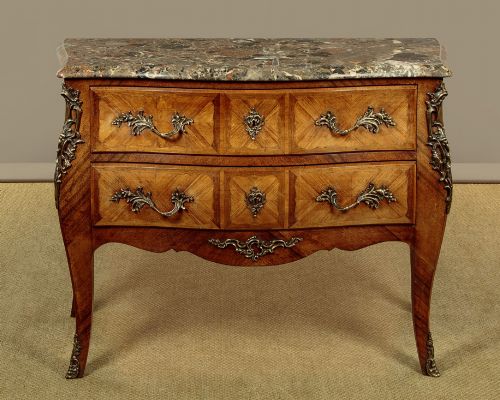
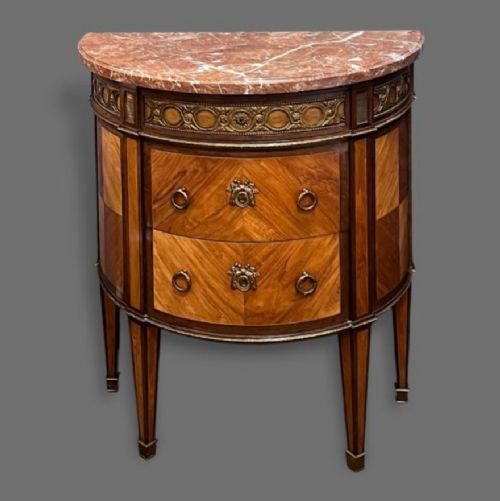
Most examples encountered on this page date from the nineteenth century, though eighteenth-century survivals and later revival pieces from the early twentieth century also appear. Forms range from straight-fronted chests and serpentine shapes to bombe profiles and demi-lune cabinets.
Regional variations span periods including Louis XV, Louis XVI, Louis Philippe, and Charles X styles, alongside simpler provincial forms. Buyers select them for their combination of generous storage capacity and durable stone working surfaces.
Materials and Construction
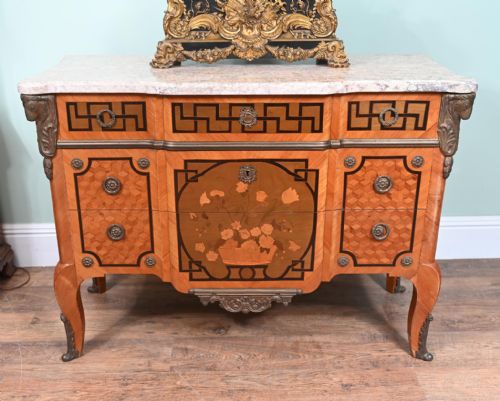
The primary carcase construction relies on walnut, frequently utilised as burr walnut, figured walnut, or plain timber veneers over secondary woods. Cabinetmakers integrated contrasting veneers such as kingwood and satinwood for geometric parquetry and floral marquetry panels.
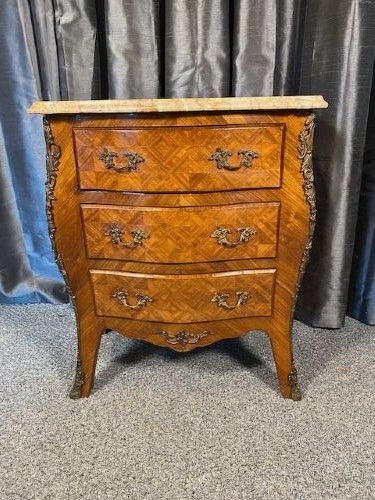
Slab tops of grey, white, rouge, or scagliola marble rest directly upon the timber frames, chosen for resistance and visual weight. Ormolu, gilt bronze, brass mounts, and cast handles accent the corners, keyhole escutcheons, and apron rails.
Listings feature walnut, burr walnut, and kingwood timbers paired with grey, white, and rouge marble slabs across multiple centuries.
Evaluating Quality and Execution
Quality reveals itself in the precision of the marquetry and the selection of the walnut grain across the drawer fronts. Finer pieces demonstrate careful book-matching of burr walnut veneers and seamless integration of parquetry patterns.
The weight and thickness of the marble top, along with its edge profiling, distinguish superior examples from standard production. Cabinet construction details, such as hand-cut dovetailing in the drawer boxes and substantial cast ormolu mounts rather than stamped brass, mark the upper tier.
The French Walnut Marble Commode Glossary
- Bombe
- A swelling, outward-curved commode profile that bulges on the front and sides. This exuberant shape is typical of Louis XV revival pieces.
- Marquetry
- Decorative patterns formed by fitting together thin slices of various coloured woods and veneers. Artisans arrange these to create floral or geometric scenes across drawer fronts.
- Ormolu
- Gilded bronze used for decorative mounts, handles, and feet on finer cabinets. The technique involves applying a gold amalgam to bronze.
- Parquetry
- Geometric wood inlay forming repetitive patterns such as cubes or chequers. It differs from marquetry through its strict geometric arrangement.
- Serpentine
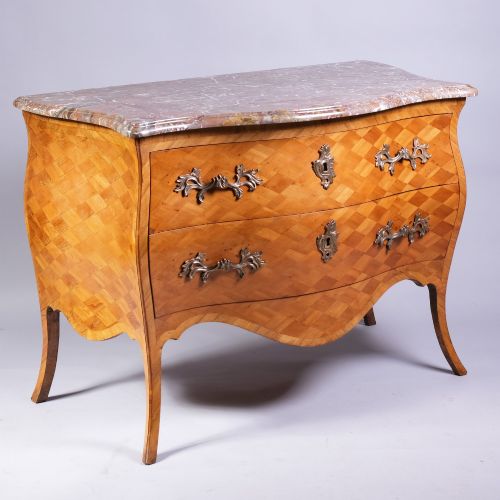
- A front edge or top shaped with a central concave curve flanked by two convex sweeps. This undulating contour requires skilled woodworking.
- Scagliola
- A composite material made from plaster, glue, and pigments, mimicking natural marble. Craftsmen inlay and polish it to resemble stone.
French Walnut Marble Commode: Frequently Asked Questions
How do I clean the marble top?
Wipe the stone surface with a soft damp cloth and mild neutral soap, avoiding acidic cleaners that etch the polish. Dry thoroughly with a lint-free cloth to maintain the sheen.
Protect the stone from prolonged contact with liquids, oils, and cosmetics to prevent permanent staining.
Were these chests used as bedside tables?
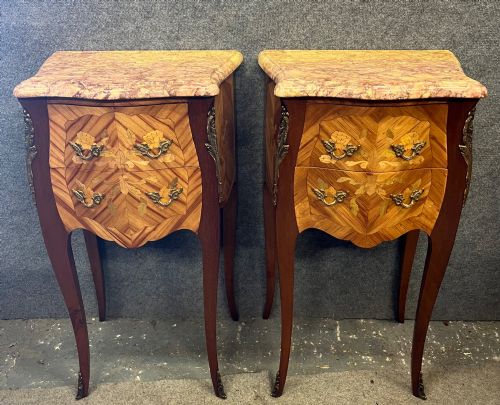
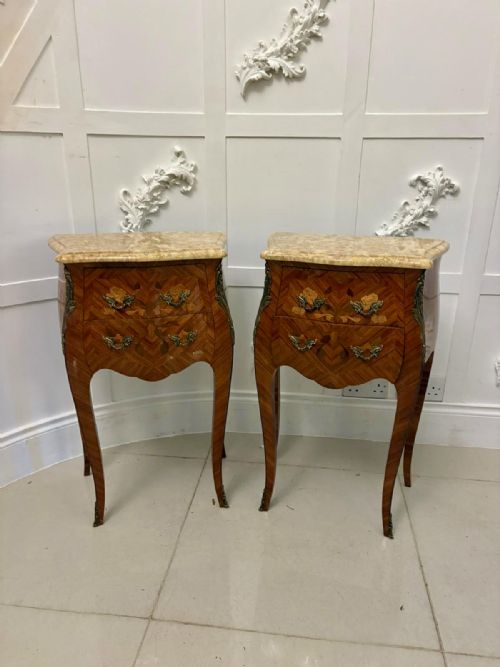
While standard commodes served main reception rooms and grand chambers, smaller variants functioned as bedside cabinets and lamp tables. These compact pieces matched the materials of larger chests while offering enclosed cupboard storage or smaller drawers.
Pair configurations frequently appear, intended to flank a bed or seating area in symmetrical arrangements.
How do I distinguish eighteenth-century pieces from later revivals?
Eighteenth-century examples display construction methods, timber ageing, and hand-cut joinery specific to the period of their origin. Revival pieces made around nineteen-hundred or nineteen-thirty often combine older stylistic motifs with machine-processed secondary timbers.
Examine the interior drawer construction and backboards to read the true age of the carcase.
What is the difference between straight and serpentine fronts?
Straight-fronted commodes feature flat drawer faces, while serpentine fronts curve outward and inward in a continuous undulating line. Serpentine and bombe shapes required greater joinery skill and were generally reserved for more ambitious cabinet work.
Both forms retained the standard functional layout of two to four drawers beneath a fitted marble top.