




Antique French Washstand
An antique french washstand brings the quiet utility of past bedrooms into modern rooms with fitted marble tops and carved timber frames.
Antique French Washstand
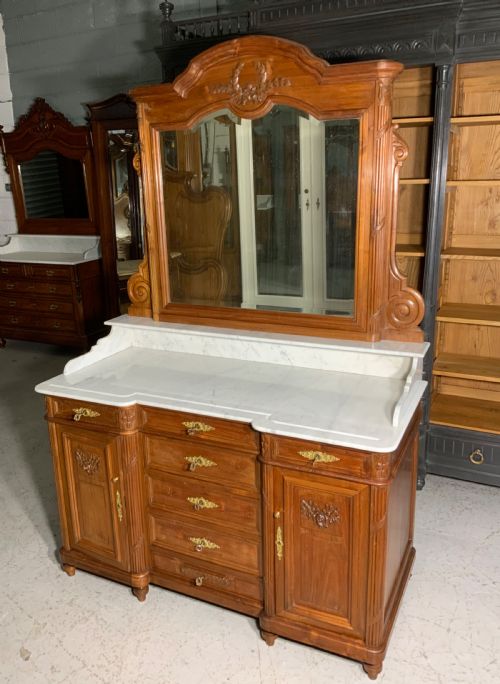
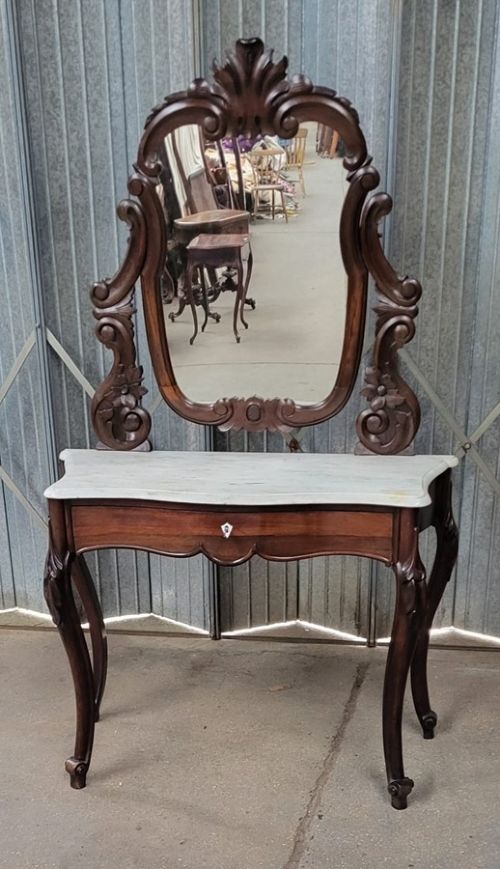
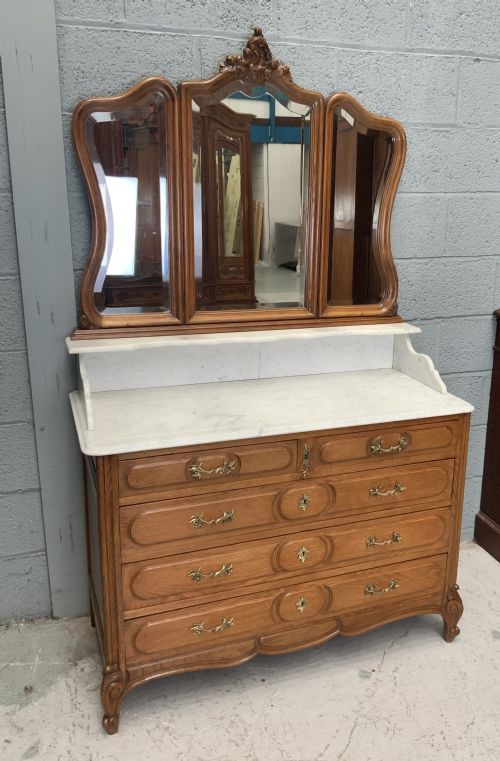
An antique french washstand is a practical bedroom piece designed for personal ablutions, typically supporting a basin, jug, and mirror before modern plumbing arrived in domestic spaces. The pieces gathered here range from simple provincial oak and fruitwood cupboards to sophisticated marble-topped walnut consoles and faux-bamboo dressing cabinets.
Buyers searching this phrase will find a variety of forms spanning from the eighteenth century through to the art deco period of the 1920s. Alongside traditional marble-topped washstands, the selection includes related bedroom furniture such as dressing tables, bedside cabinets, and occasional lavabo units equipped with original pewter cisterns.
Origins stretch across different regions and stylistic movements, encompassing French Provincial utility, elaborate Louis Philippe designs, and coastal marine pieces built for yachts. This diversity means every piece carries distinct regional character, whether executed in solid mahogany, turned walnut, or forged iron.
What distinguishes the finer examples
Quality rests upon the harmony of the timber selection and the integration of the stone top, with superior pieces showing careful matching of walnut grain or rich fruitwood patination. Finer cabinets combine robust structural joinery with delicate hand-carved ornamentation that remains crisp and well-defined.
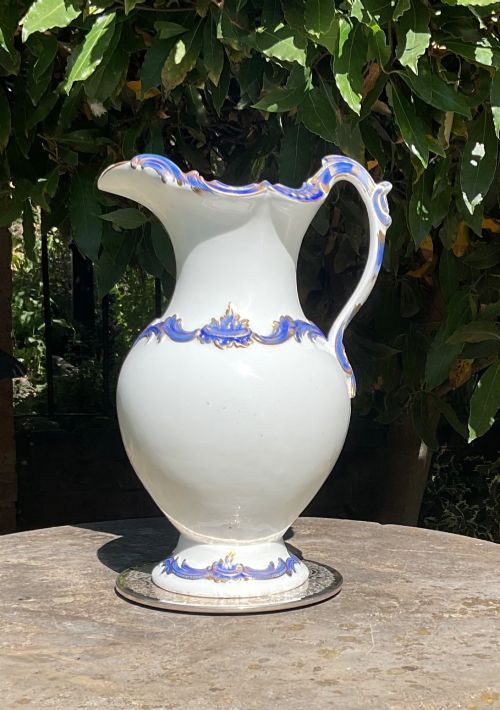
The integrity of original functional fittings, such as pewter basins, brass taps, and matching porcelain water jugs, elevates a piece beyond a simple reconstructed table. Superior execution appears in the balanced proportions of turned legs, tightly fitted marble slabs, and intact cabinet doors that operate smoothly.
The Antique French Washstand Glossary
- Washstand
- A dedicated piece of bedroom furniture designed to hold a basin and pitcher for washing before plumbed bathrooms became standard. These items often feature protective marble tops and enclosed cupboard storage below.
- Lavabo
- A self-contained washing apparatus comprising a cistern and basin, often wall-mounted or integrated into a wooden cabinet. Eighteenth-century examples frequently retain their original pewter components.
- Etagere
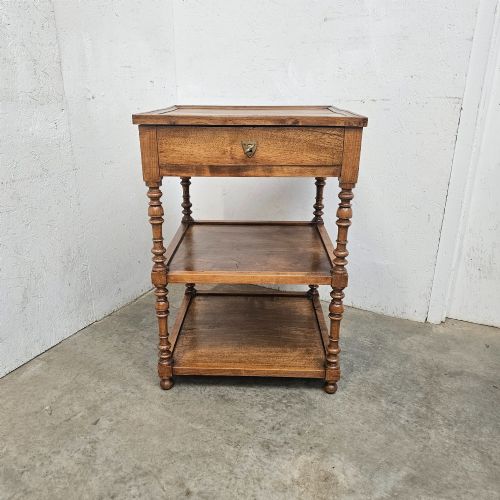
- An open set of tiered shelves used for displaying small items or storing bedroom requisites. French variations often employ turned wooden supports.
- Faux-bamboo
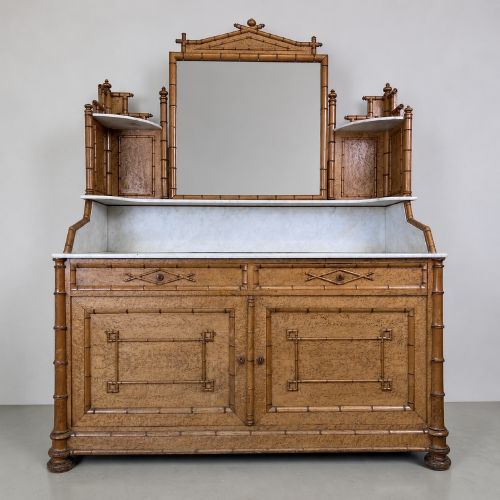
- A decorative wood-carving technique imitating the segmented stalks of bamboo. This style gained popularity during the nineteenth century, particularly in maple and fruitwood dressing cabinets.
- Athenienne
- A tripod-supported pedestal basin or stand inspired by classical antiquity. These decorative pieces utilise bronze and refined metalwork.
Antique French Washstand: Frequently Asked Questions
How were antique french washstands used?
These items served as the primary washing station in bedrooms before running water was common. A porcelain jug and bowl sat upon the stone surface for morning routines, while lower cupboards stored linens and chamber pots.
Over time, many adapted to serve as general dressing tables or decorative console surfaces in hallways and living spaces. Their practical water-resistant stone tops make them well-suited for modern bathrooms and plant displays.
How do I identify different periods?
Eighteenth-century examples tend to feature simple provincial chestnut or fruitwood construction with built-in plumbing elements like pewter cisterns. Nineteenth-century pieces frequently showcase rich walnut, elaborate rococo carving, or exotic faux-bamboo finishes.
Twentieth-century variations move towards cleaner lines, culminating in oak art deco designs from the 1920s and 1930s. Examining the joinery styles and secondary woods helps confirm the era of manufacture.
Are the marble tops original?
Most marble slabs found on these cabinets are original to the pieces, cut specifically to fit the wooden frames. Variations in veining and edge profiling match the manufacturing standards of the respective periods.
Replacement stones do occur due to accidental breakage over decades of domestic use. Inspecting the underside reveals whether the marble rests naturally upon historical timber supports.
Can I use one as a bathroom vanity?
Many buyers repurpose these solid cabinets as distinctive bathroom sink surrounds. The marble surfaces naturally resist water, though professional plumbing modifications are required to fit modern pipes.
Standard heights and depths vary across periods, so measuring the interior clearance for modern basins is essential. Retaining the historic timber structure adds unique character to contemporary interiors.