



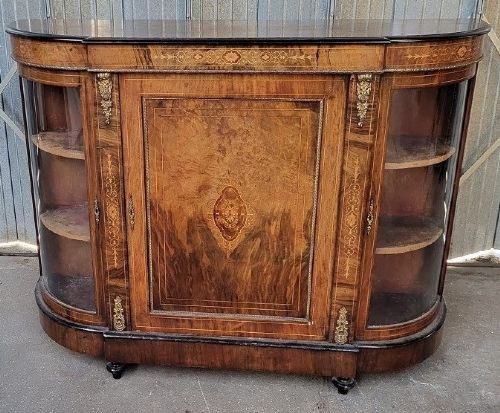
French Walnut Credenza
A french walnut credenza brings architectural presence and figured grain to a room, offering display space and enclosed storage in one piece.
French Walnut Credenza
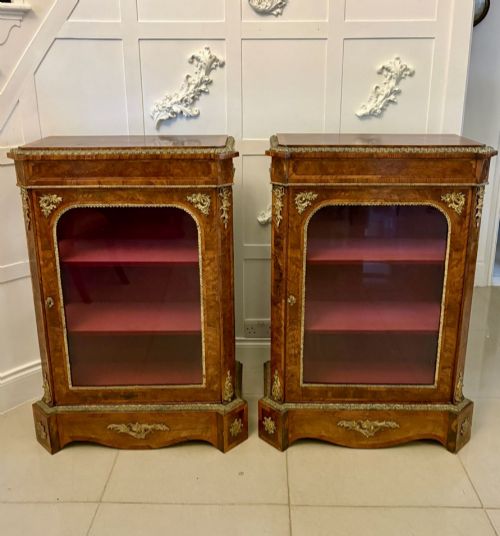
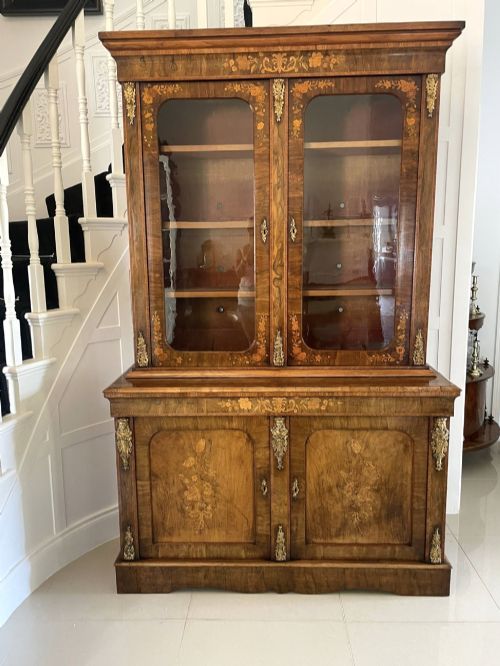
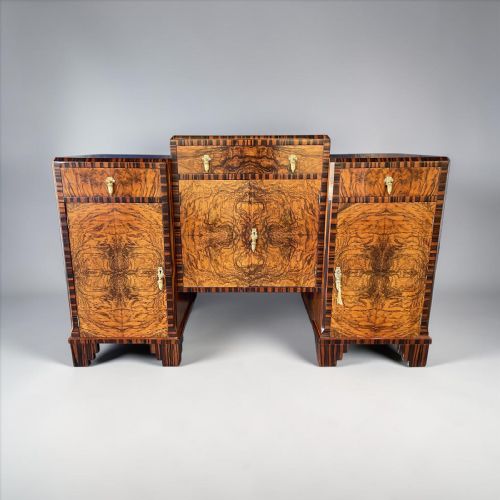
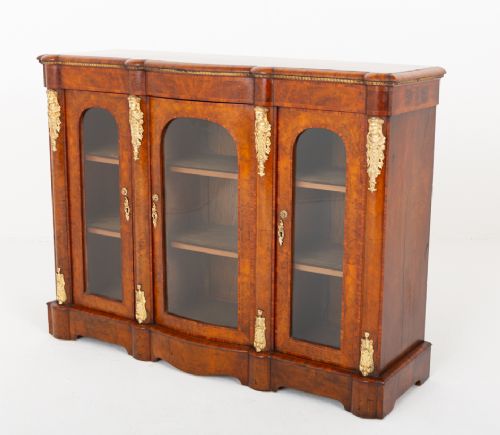
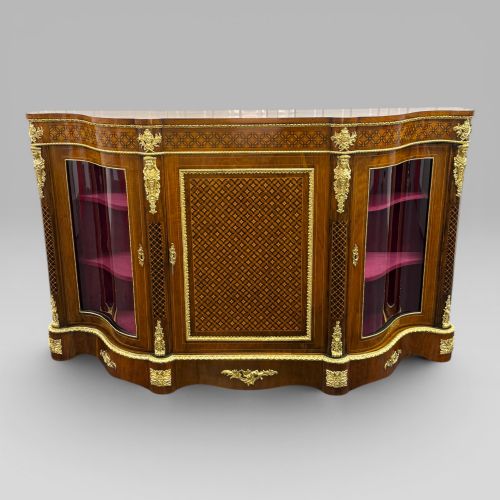
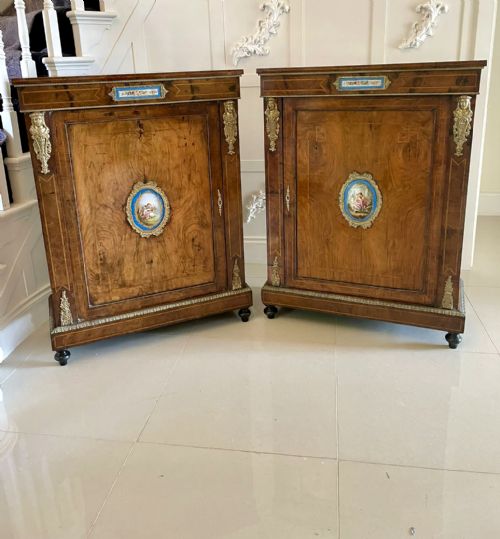
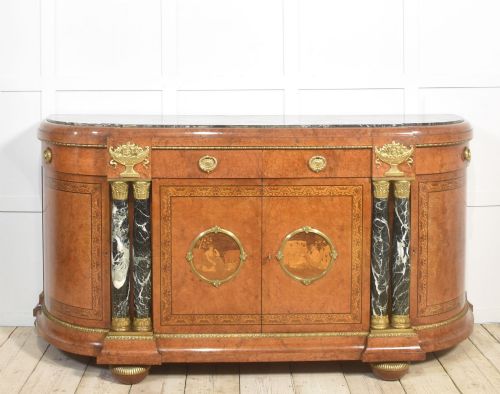
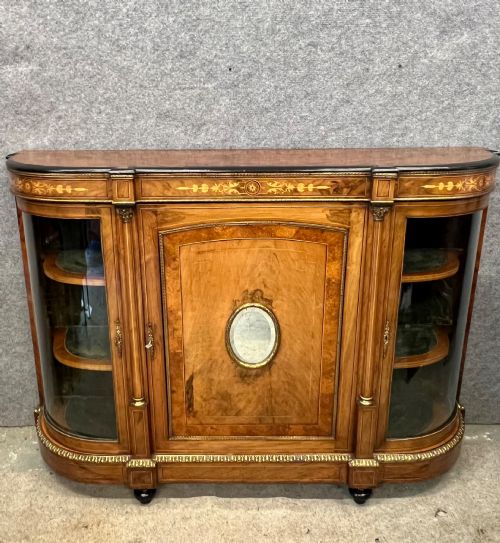
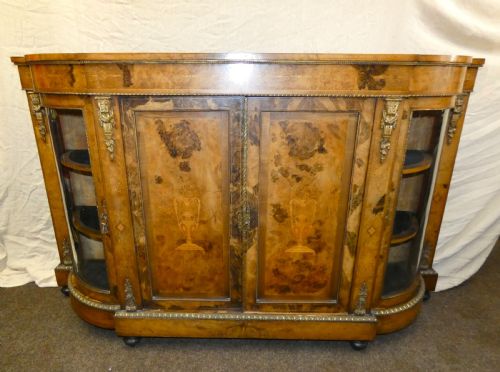
A french walnut credenza is a substantial cabinet designed for display and storage, appearing in nineteenth-century Victorian workshops as well as twentieth-century Art Deco interpretations. Buyers encounter serpentine forms, breakfront shapes, and straight-sided side cabinets that combine timber framing with glass doors.
The pieces on this page span the mid-nineteenth century through the nineteen-thirties, reflecting periods from Victorian revivalism to early twentieth-century French design. Walnut and burr walnut dominate the timber choices, often accompanied by marble tops and gilt metal mounts.
Makers and workshops across France and Britain produced these cabinets to serve formal dining rooms and drawing rooms. Alongside standard credenzas, related forms include pier cabinets, sideboards, and marble-topped buffets sharing similar proportions.
Distinctions in execution
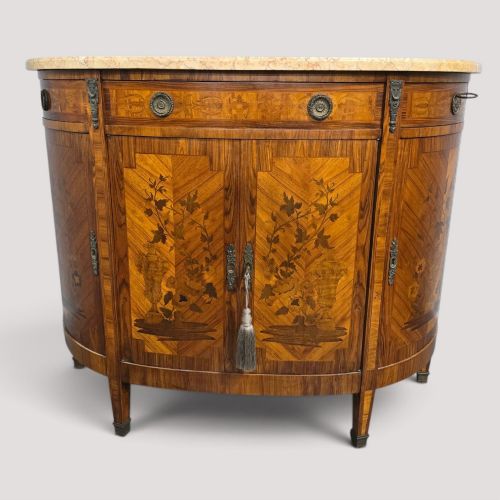
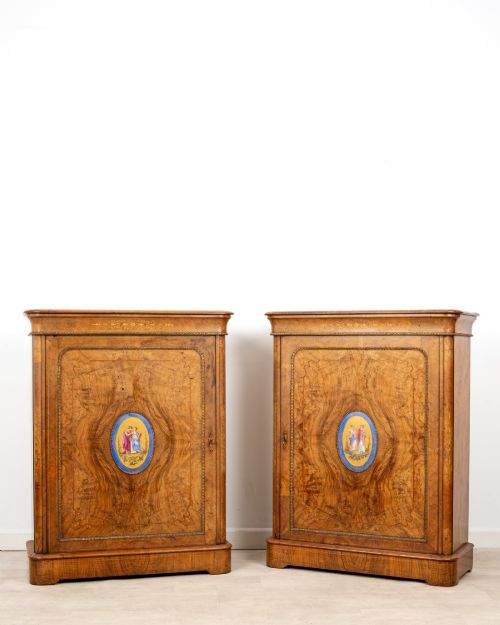
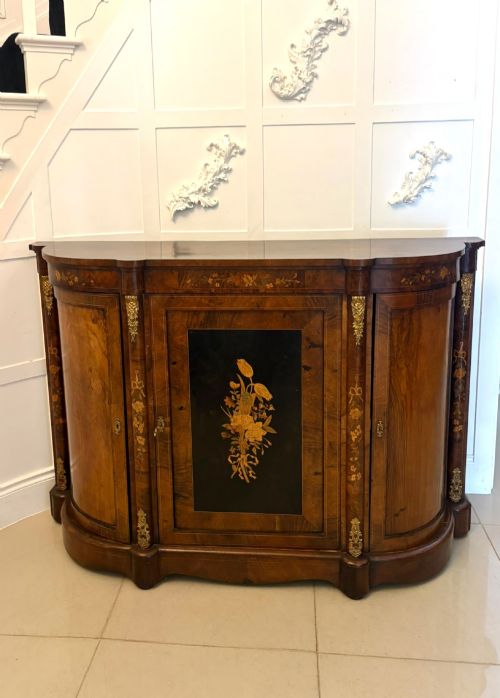
The fineness of the marquetry inlay sets standard production apart from exhibition-grade work, where floral and scroll motifs show meticulous cutting and shading. The choice of burr walnut veneer with dense, even figuring creates a more striking visual surface than plain timber.
Cast bronze or ormolu mounts display crispness of detail in the chased surfaces rather than soft, simplified casting. Heavy marble tops with moulded edges and tight joints to the timber carcase indicate high-tier manufacturing standards.
Listings feature walnut, burr walnut, and kingwood veneers paired with white and coloured marble tops across the Victorian and Art Deco periods.
Maison Gagneau
The French Walnut Credenza Glossary
- Burr walnut
- A figured timber obtained from walnut tree growths, producing swirling patterns used for decorative veneers on cabinet fronts.
- Ormolu
- Gilt-bronze mounts applied to furniture for decorative enrichment, cast and chased with ornamental patterns.
- Marquetry
- Decorative patterns formed by fitting veneer pieces of different woods, metals, or shells into a prepared wood surface.
- Serpentine
- A cabinet front or top curved with a convex centre flanked by concave ends, creating a flowing contour.
- Pier cabinet
- A narrow cabinet designed to stand against the wall space between windows, often featuring glazed doors and ormolu mounts.
French Walnut Credenza: Frequently Asked Questions
What is the difference between a credenza and a sideboard?
A credenza typically incorporates a combination of central cupboards and glazed side compartments, originally designed for displaying plate and valuables in formal rooms.
Sideboards generally lean towards serving functions with drawer space and larger cupboards, though nineteenth-century makers frequently used the terms interchangeably for walnut display furniture.
Are marble tops original to these cabinets?
Marble tops on French side cabinets and credenzas were fitted during original production to provide durable, decorative surfaces that resisted stains from serving dishes and flower vases.
Slabs varied in colour from white to mottled grey and dark tones, chosen by the cabinet maker to complement the walnut veneer and ormolu mounts.
How do I identify nineteenth-century walnut furniture?
Nineteenth-century walnut furniture relies on deep timber tones, hand-cut veneer thicknesses, and traditional joinery methods visible inside the carcase and drawer construction.
Stylistic markers such as ormolu mounts, floral marquetry, and porcelain plaques point towards Victorian and French revival periods.
Can a credenza fit in a modern interior?
A walnut credenza provides functional surface area and enclosed storage that suits contemporary living spaces, functioning well as a media console or dining room storage piece.
The warm timber grain and reflective glass or marble surfaces introduce texture and contrast against neutral modern walls.