


French Tapestry Seats
French tapestry seats bring historic textile artistry and carved woodwork together, offering rich period character and enduring comfort for any sophisticated interior.
French Tapestry Seats
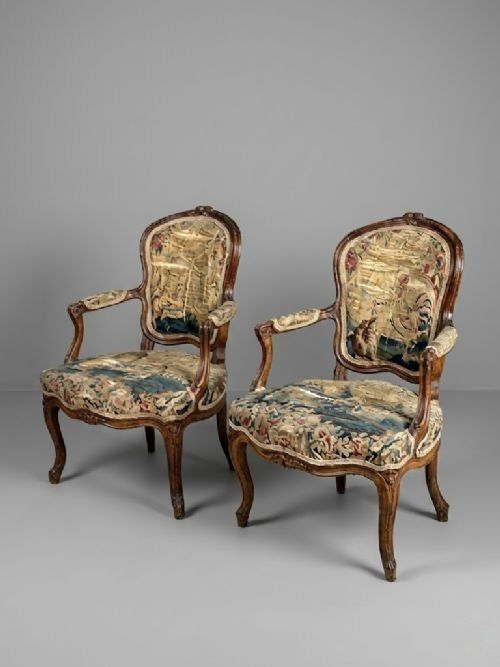
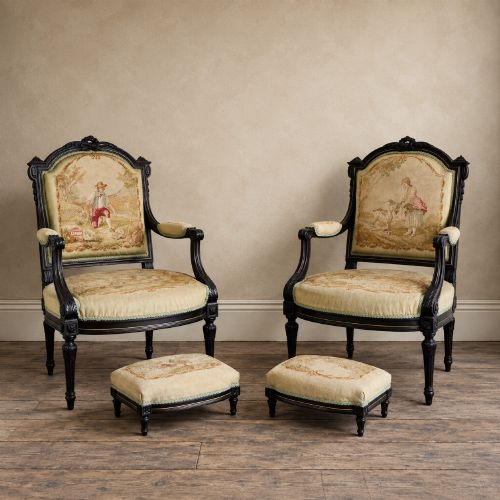
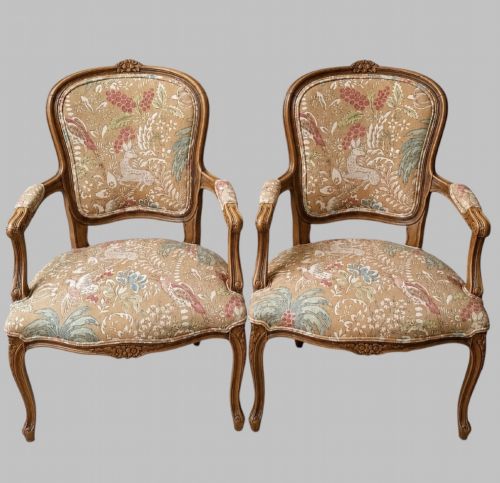
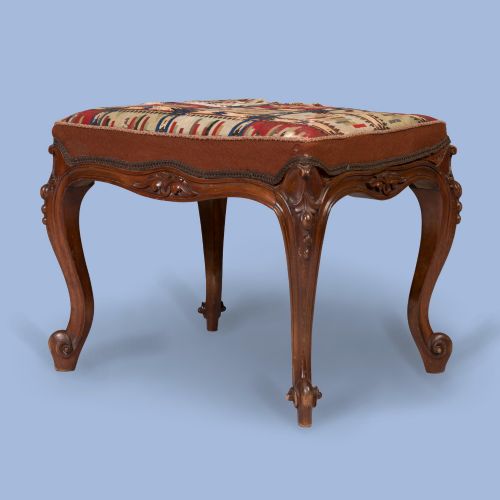
French tapestry seats encompass a diverse range of seating forms including armchairs, settee canapes, side chairs, salon chairs, footstools, and slipper chairs. These pieces trace their origins primarily through the eighteenth and nineteenth centuries, spanning periods such as the Victorian era, the 1900s, and the 1930s.
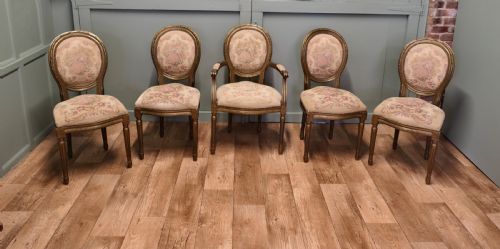
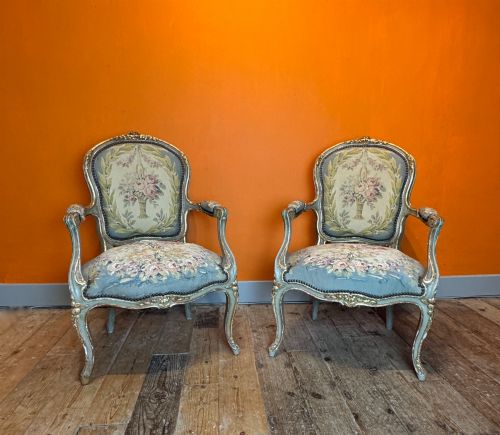
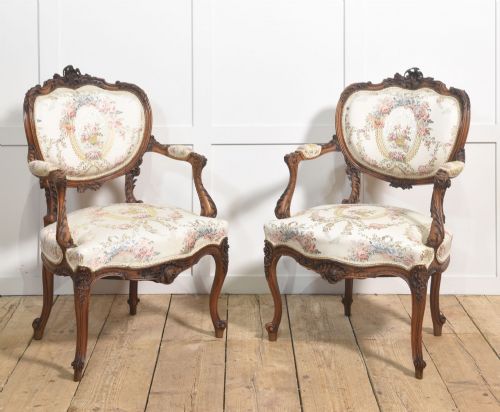
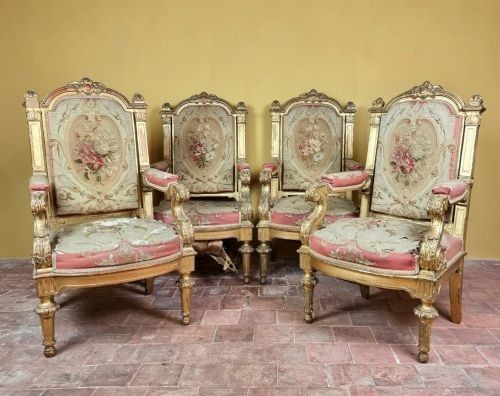
Buyers seeking french tapestry seats will most frequently encounter nineteenth-century interpretations built in the Louis XV and Louis XVI revival styles, alongside provincial variations. These range from single accent pieces and paired salon chairs to complete five-piece salon suites.
The aesthetic vocabulary draws heavily from classic French chateau and Rococo revival traditions, combining exposed wooden frames with pictorial textile panels. Such seating grounds a room in classical European design while remaining entirely functional for daily use.
Materials and construction methods
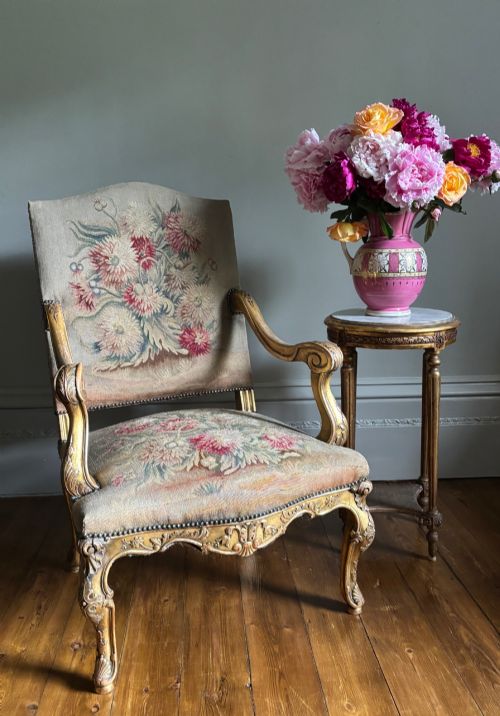
Makers constructed the supportive frameworks of these seats using dense hardwoods including walnut, mahogany, beech, and giltwood, frequently applying paint, ebonisation, parcel gilding, or elaborate carving. The structural woodwork provides a robust armature designed to withstand generations of sitting.
The primary upholstery medium consists of woven tapestry fabric, wool, and intricate needlepoint or needlework panels, occasionally identified by specific weaving origins like Aubusson. Brass tacks and traditional stuffing methods secure these heavy textiles tightly to the wooden frames.
One persistent nineteenth-century artisan clearly found straight chair legs deeply offensive, curving every single piece of walnut within reach.
Distinctions in quality
The hierarchy of quality in these chairs rests upon the crispness of the wood carving and the fineness of the needlework panels. Hand-carved giltwood and walnut frames with deep, dimensional relief sit far above simpler turned or factory-moulded structures.
Tapestry quality dictates overall value, where finely worked petit point panels depicting pictorial scenes display superior artistry compared to coarser, repetitive machine-woven textile coverings. The integrity of the underlying frame joinery completes the measure of excellence.
Holland and Sons
The French Tapestry Seats Glossary
- Giltwood
- Wood that has been coated with a thin layer of gold leaf. This finish was favoured for formal salon seating throughout the eighteenth and nineteenth centuries.
- Aubusson
- A traditional type of tapestry woven in the French town of Aubusson. These pictorial textiles are renowned for their muted floral and pastoral designs.
- Petit point
- A fine, highly detailed needlepoint stitch worked on single-thread canvas. It allows for intricate shading and facial expressions within tapestry upholstery.
- Settee
- A long upholstered seat with a back and arms, designed to accommodate multiple people. These pieces match the style of accompanying armchairs in larger salon suites.
- Prie Dieu
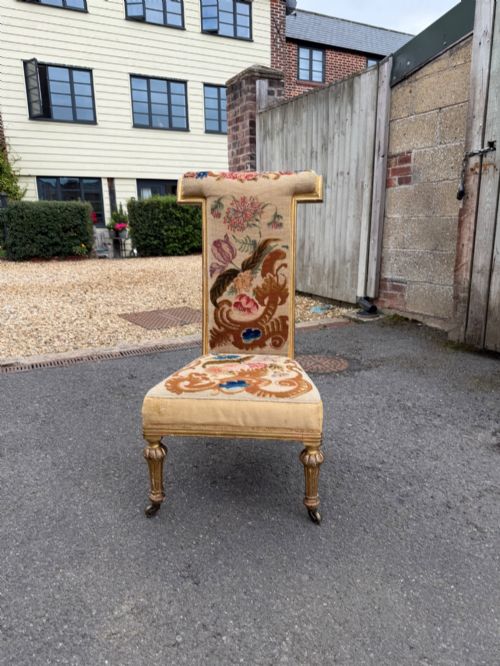
- A low devotional chair featuring an upper rest designed for kneeling and prayer. They often appear in nineteenth-century walnut and feature needlepoint panels.
French Tapestry Seats: Frequently Asked Questions
What is a french tapestry seat?
A french tapestry seat is a historic chair, settee, or stool upholstered with woven textile panels, wool, or needlepoint. These pieces combine decorative wooden frames with pictorial fabric designs.
Originating largely from French design traditions across the eighteenth and nineteenth centuries, they serve as both functional furniture and decorative works of art.
How do I identify louis xv revival pieces?
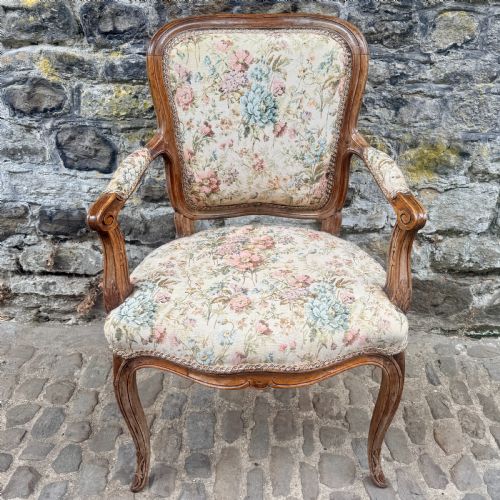
Louis XV revival pieces feature characteristic asymmetric flowing lines, cabriole legs, and organic floral carvings. The woodwork often curves continuously from the crest rail down to the feet.
These nineteenth-century interpretations emulate the lighter, more sinuous forms of the earlier eighteenth-century French royal court.
Where should I place a salon chair?
Salon chairs work best in drawing rooms, bedrooms, or reading corners where their decorative carved frames and textile panels can be fully appreciated. They function well as occasional seating rather than heavy-use lounging chairs.
Pairing matching armchairs opposite a sofa creates a balanced, classical arrangement within a traditional interior layout.
How do needlepoint and tapestry differ?
Needlepoint is stitched by hand using a needle and yarn over an open-weave canvas ground. Tapestry is typically woven on a loom, integrating the design directly into the structure of the fabric.
Both methods produce durable decorative coverings, though needlepoint often yields a textured, highly detailed surface panel.