

French Style Writing Desk
A french style writing desk brings continental elegance and refined practicality to any room, offering a dedicated space for correspondence crafted with distinct period detail.
Understanding French Style Writing Desks
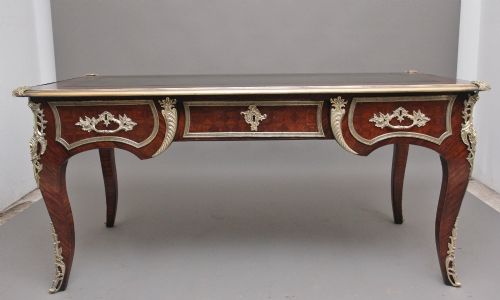
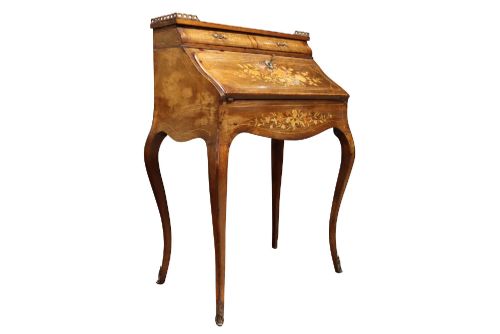
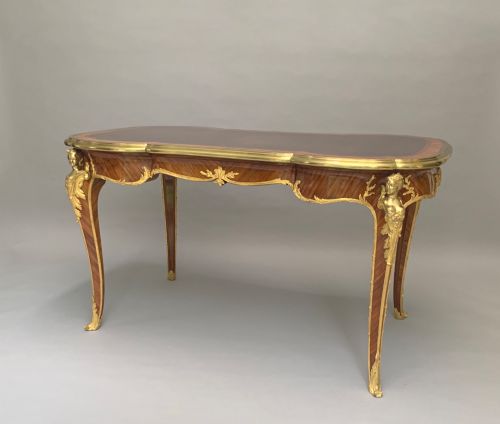
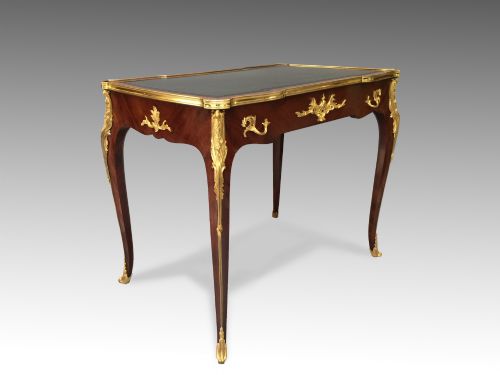
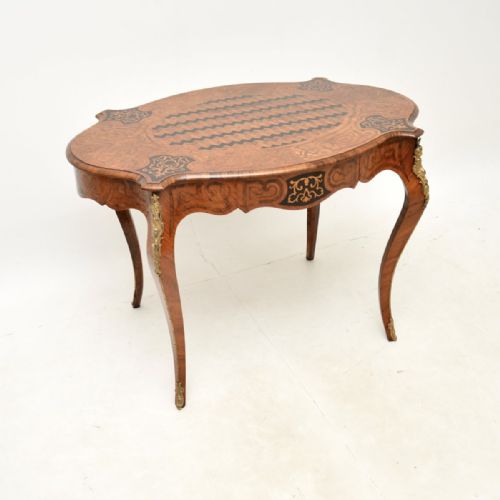
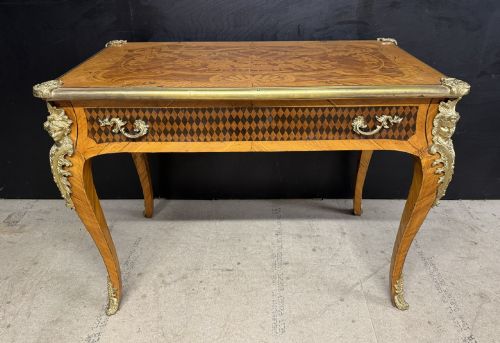
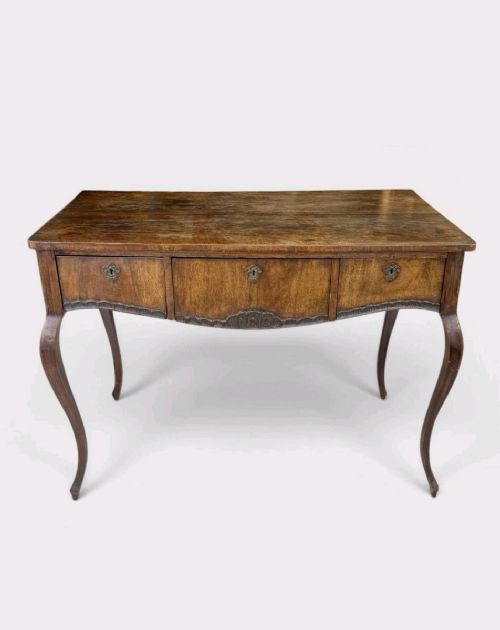
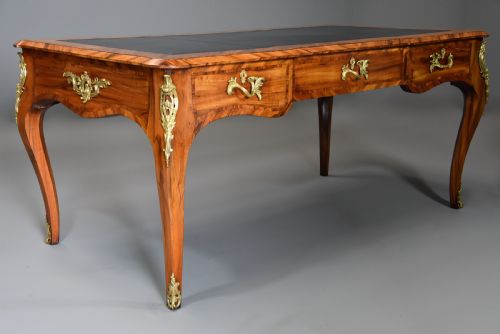
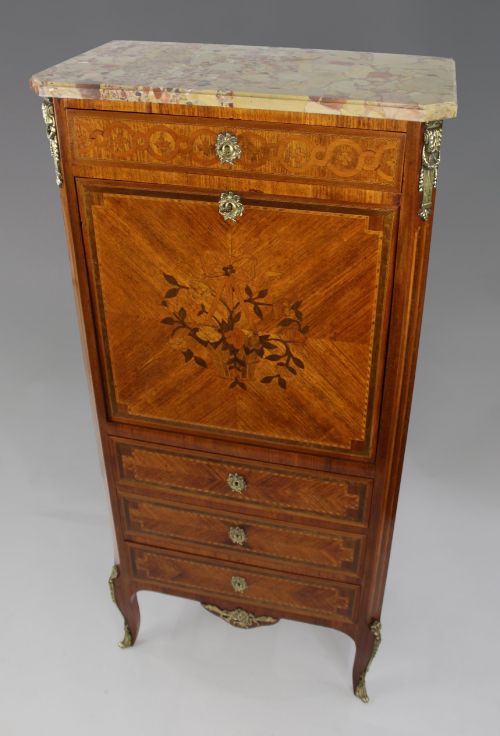
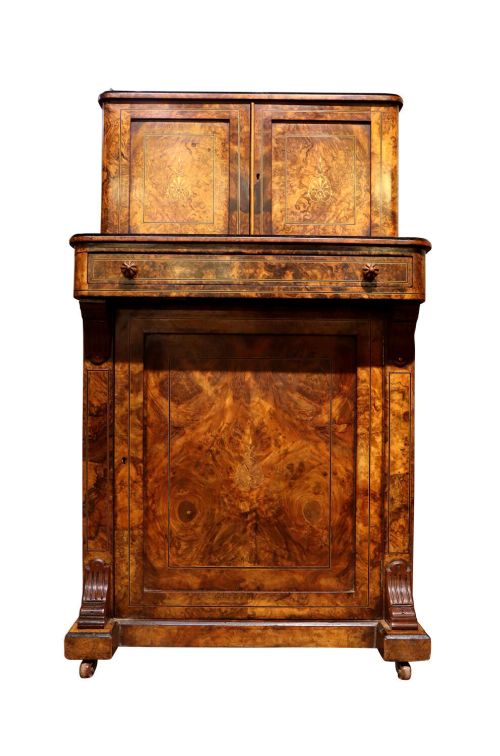
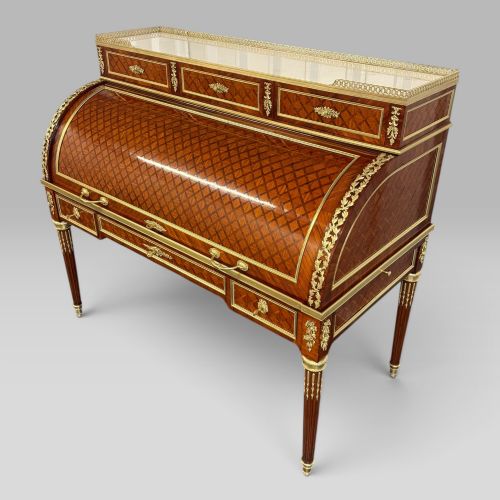
When you search for a french style writing desk, you encounter sophisticated forms designed for correspondence and light administrative work, encompassing various interpretations from the nineteenth century onwards. These pieces span distinct manifestations such as the bonheur du jour, secretaire abattant, kidney-shaped writing desks, and classical writing tables. Revival movements dominate the offerings, heavily drawing upon Louis XV, Louis XVI, and Rococo aesthetics.
The nineteenth century accounts for the primary era represented here, capturing Victorian revivals alongside continental influences. Makers adapted these forms to suit British interiors while retaining characteristic serpentine outlines, raised upper tiers, and compact proportions suited for private chambers. Walnut, burr walnut, rosewood, and mahogany form the structural foundation of these survivors.
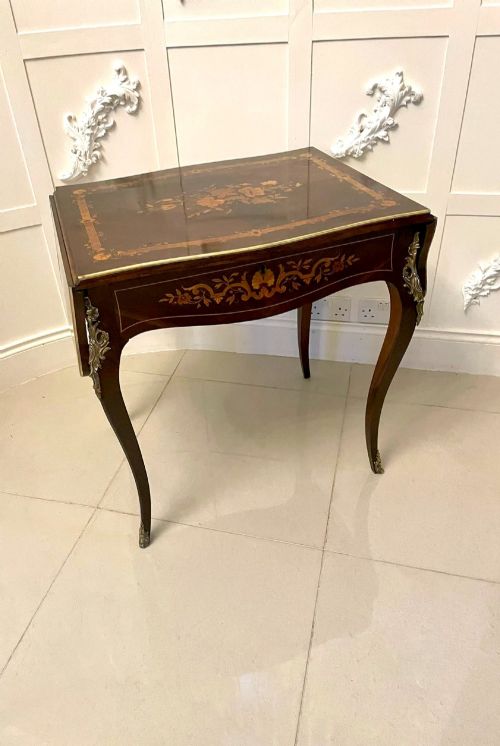
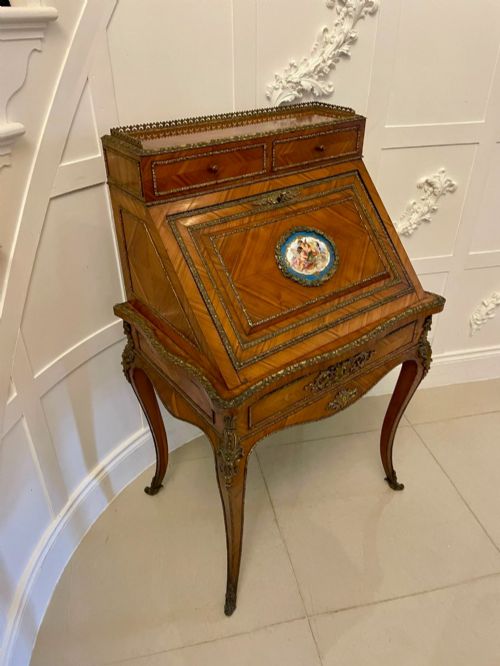
Buyers most frequently meet compact desks featuring tiered cabinetry, inset leather writing surfaces, and delicate metal mounts. Some examples incorporate porcelain plaques or elaborate marquetry panels, demonstrating the enduring appeal of continental design vocabularies within nineteenth-century British cabinet making. Every variation reflects the persistent demand for graceful, multi-functional furniture.
Materials and Construction Techniques
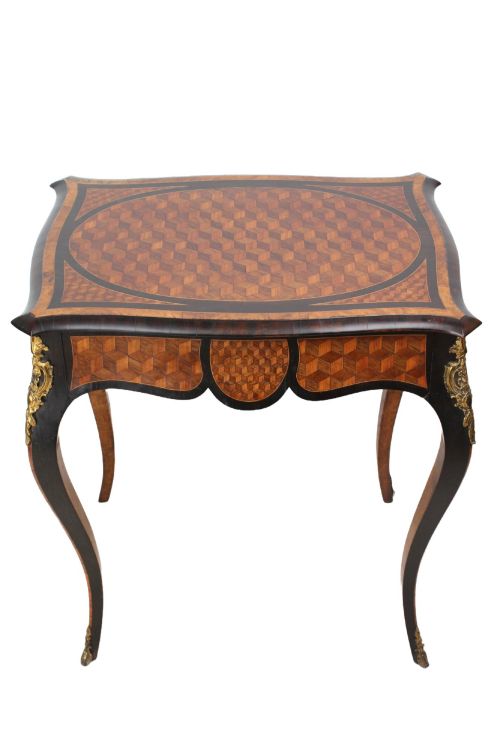
Makers utilised dense hardwoods including walnut, burr walnut, rosewood, and mahogany, often applying decorative veneers to curved and flat surfaces alike. Marquetry inlay work appears across various panels, alongside contrasting stringing that defines the structural contours of writing tables and cabinets.
Metal ornamentation played a central role, with cast or chased ormolu and brass mounts applied to corners, legs, and drawer edges. Glass components protect delicate elements such as inset porcelain plaques, while tooled leather provides a durable writing surface atop the primary platform.
Retail Price Guide 2026
Typical UK retail prices for french style writing desk, calculated from the Sellingantiques database of over a million retail prices indexed since 2003. This retail price guide relies exclusively on Sellingantiques data; no external sources or auction records are used, so the figures do not describe the wider market.
Many nineteenth-century writing desks include tiny hidden drawers behind dummy books, designed for keeping private letters away from prying eyes.
Distinguishing Quality Across the Range
The standard of execution in timber selection and marquetry precision dictates the standing of an individual piece. Desks incorporating high-grade burr walnut or meticulously matched rosewood veneers demonstrate superior workshop investment compared to simpler mahogany versions.
Hardware integration and mount crispness further separate standard production from exceptional examples. Finely cast ormolu mounts, well-fitted internal stationery compartments, and documented maker attribution elevate a desk beyond standard commercial output.
Blake London·Gillows
The French Style Writing Desk Glossary
- Bonheur du jour
- A small lady's writing desk featuring a tiered cabinet or super-structure with shelves and small drawers above the main writing surface. This form gained immense popularity during the nineteenth century revival periods.
- Secretaire abattant
- A tall upright desk featuring a drop-front writing flap that conceals a fitted interior of pigeonholes and small drawers. When closed, it presents a unified cabinet facade.
- Ormolu
- Gilded bronze applied as decorative mounts, feet, and edge guards on nineteenth-century furniture. The technique involves applying a mercury-gold amalgam to cast bronze.
- Marquetry
- Decorative veneer patterns formed by fitting together small pieces of different coloured wood, ivory, or shell. This technique adorns tabletops and drawer fronts on better quality desks.
- Kidney-shaped
- Describing a writing table or desk with a curved, concave front and convex back resembling a kidney bean. This ergonomic shape allowed the user to sit closer to the central writing area.
Frequently Asked Questions
What is a bonheur du jour?
A bonheur du jour is a small, elegant ladies' writing desk featuring a raised cabinet section with small drawers and pigeonholes above the main writing surface.
First appearing in France, these pieces became fashionable in Britain during the Victorian era for casual correspondence and display.
How do I use a antique writing desk today?
These desks serve well as laptop stations, vanity tables, or traditional correspondence centres in modern living spaces and bedrooms.
Their compact proportions allow them to fit into alcoves or smaller rooms where standard executive desks would overwhelm the floor plan.
What is ormolu?
Ormolu refers to gilded bronze mounts used to decorate the corners, legs, and edges of nineteenth-century revival furniture.
The technique provides bright metallic highlights that contrast against dark walnut or rosewood veneers.
How can I tell a Victorian copy from earlier work?
Victorian revival pieces often utilise machine-sawn secondary timbers and standardised hardware fixings hidden beneath decorative veneers.
Construction methods, tool marks on interior drawer sides, and the specific style of brass or ormolu mounts help determine the exact period of manufacture.