




French Style Walnut Sideboard
A french style walnut sideboard brings substantial display surface and rich wood grain to a room.
French Style Walnut Sideboard
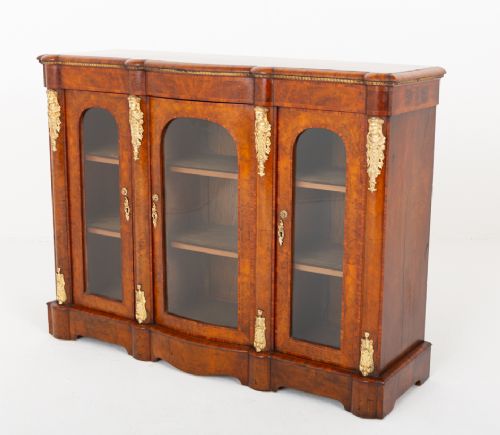
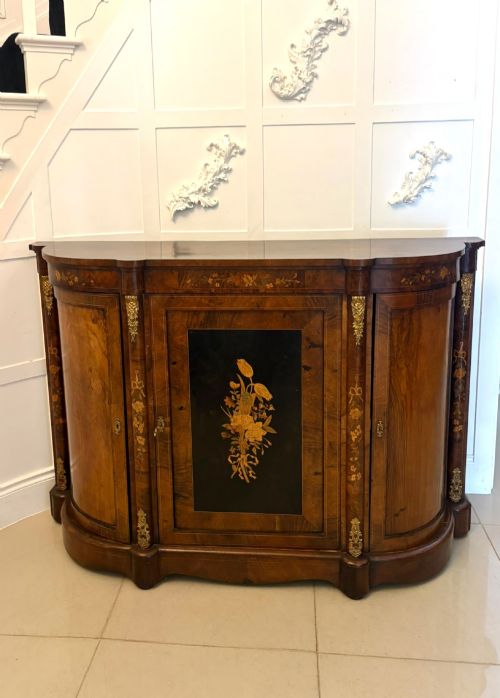
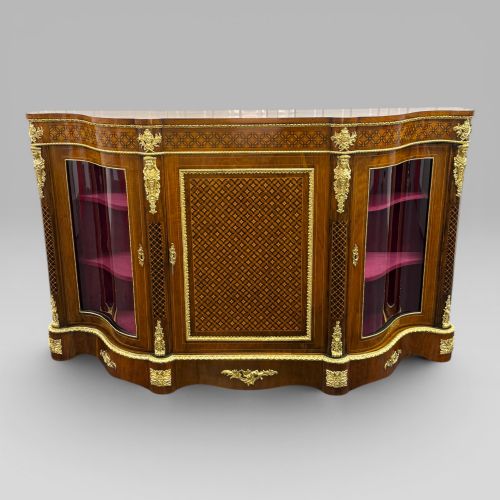
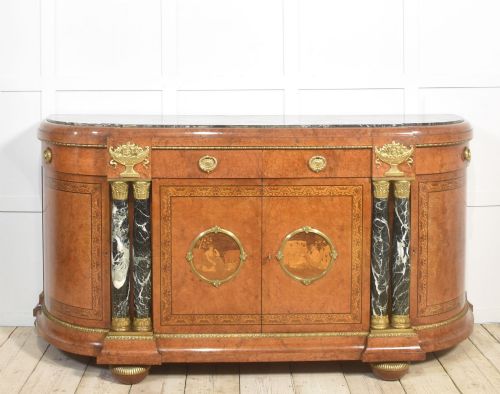
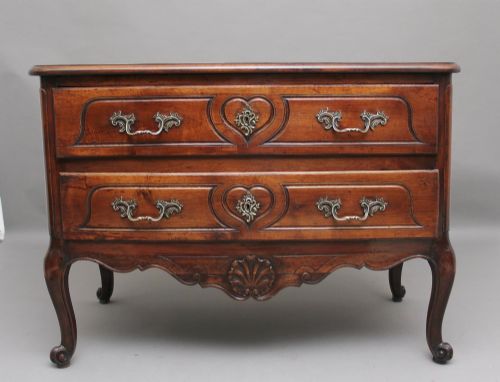
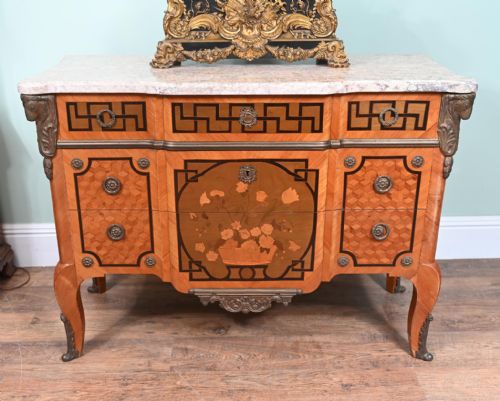
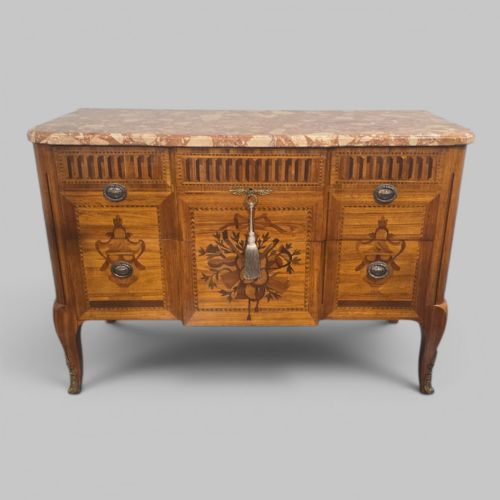
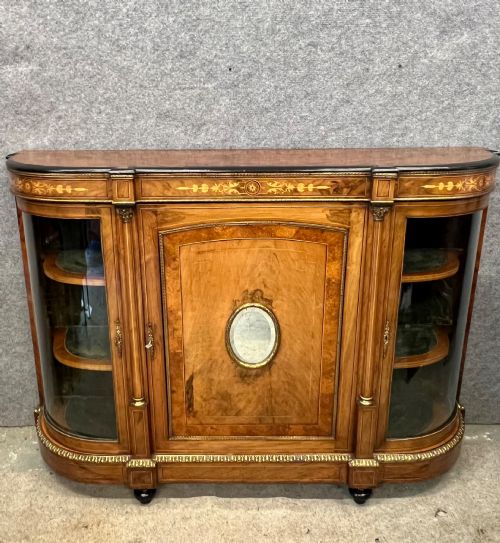
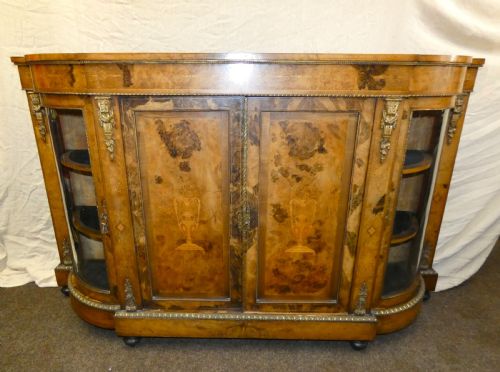
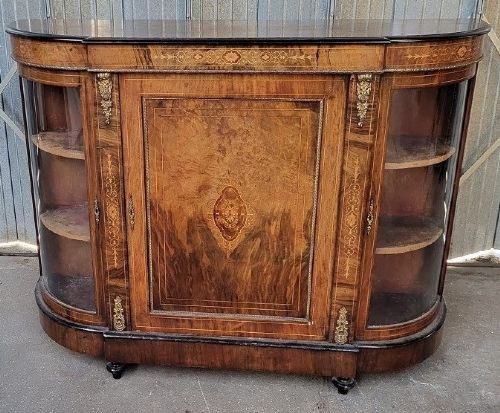
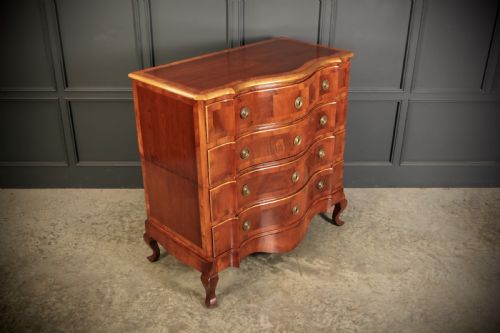
A french style walnut sideboard spans forms such as credenzas, side cabinets, and commodes originating across the nineteenth and early twentieth centuries. These pieces typically display serpentine shapes, floral marquetry, and substantial storage capacity behind panelled doors.
The pieces appearing on this page range from Victorian interpretations to Louis XV and Louis XVI revivals. Buyers encounter walnut and burr walnut timbers frequently, often paired with marble tops and decorative metal mounts.
Materials and construction methods
Cabinet makers utilised solid walnut and decorative burr walnut veneers over secondary timbers to create patterned grain surfaces. Marquetry inlay work incorporated contrasting woods to form floral and geometric motifs across the cabinet doors and drawer fronts.
Mounts cast in ormolu and gilt bronze embellished the corners, feet, and friezes of many pieces. Heavy marble slabs, including scagliola varieties, were fitted to the upper surfaces of commodes and side cabinets.
Some credenzas hide secret compartments behind intricately inlaid floral marquetry panels.
Judging quality and craftsmanship
Quality rests in the crispness of the marquetry cutting and the depth of figure within the burr walnut veneer. Superior examples show precise hand-chiselling on the ormolu mounts rather than plain or mass-produced brass work.
The structural integrity of the serpentine shaping and the thickness of the fitted marble top distinguish finer workshops from standard production. Cabinet doors should close flush and drawers should run smoothly within their carcases.
Maison Gagneau·Étienne Kohlmann
The French Style Walnut Sideboard Glossary
- Marquetry
- Decorative patterns formed by the insertion of small pieces of veneer into a fitted wood ground. This technique creates detailed floral or pictorial designs across cabinet fronts.
- Ormolu
- Gilt bronze mounts applied to furniture for decorative accent. The term describes bronze that has been treated with a mercury and gold amalgam.
- Credenza
- A sideboard or display cabinet featuring central doors flanked by curved glass or side compartments. These forms often incorporate extensive inlay and metal mounts.
- Commode
- A low chest of drawers or cupboard standing on legs. In continental and revival pieces, these frequently feature marble tops and shaped fronts.
- Serpentine
- A curved furniture front with a convex centre flanked by concave ends. This undulating shape requires advanced cabinet-making skill to execute properly.
French Style Walnut Sideboard: Frequently Asked Questions
How do I care for marble tops?
Clean marble surfaces using a soft damp cloth with mild soap and dry thoroughly to prevent water marks. Avoid acidic substances like citrus or vinegar which etch the polished stone.
Apply a neutral stone sealer periodically to protect the marble from stains. Lift objects rather than dragging them across the stone surface.
Where should I place a sideboard?
Position these cabinets against a principal wall in a dining room, hallway, or living space where the decorative timber and mounts can be appreciated. Ensure the room has stable humidity to protect the burr walnut veneer and prevent wood movement.
Keep pieces away from direct heat sources and strong sunlight to preserve the colour and polish of the wood. Allow adequate clearance around doors and drawers for easy access.
How do I distinguish revival styles?
Louis XV revival pieces generally display asymmetrical curves, cabriole legs, and flowing floral marquetry. Louis XVI revival items favour more restrained neoclassical lines, straight tapered legs, and geometric symmetry.
Victorian interpretations often combine French decorative motifs with heavier proportions and darker polishes. Examine the specific combination of mounts and inlay to identify the design influence.
What is burr walnut?
Burr walnut is taken from a growth deformation on the walnut tree, producing swirling, highly figured grain patterns. Cabinet makers prized this wood for creating decorative panels on high-status furniture.
Due to its irregular growth, burr walnut was sliced into thin veneers rather than used solid. These veneers required careful application over stable backing timbers.