



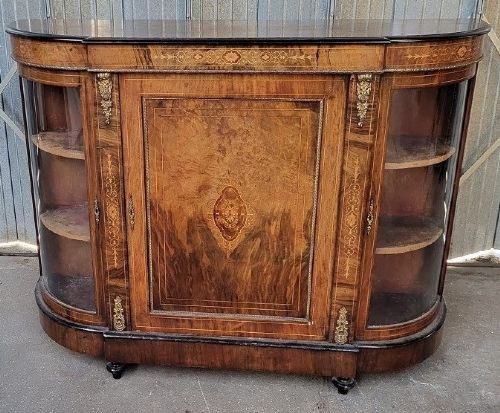


French Style Glazed Credenza
A french style glazed credenza brings stately Victorian display to a drawing room through burr walnut, ormolu, and glass.
French Style Glazed Credenza
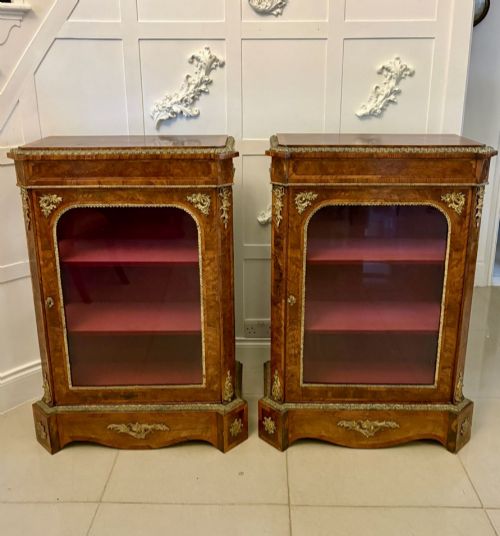
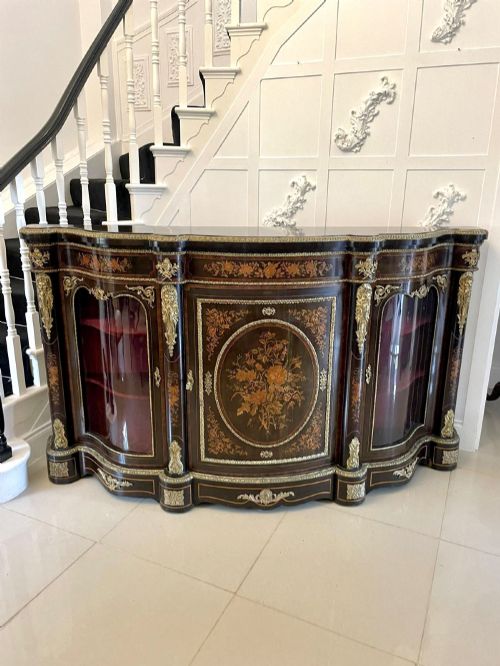
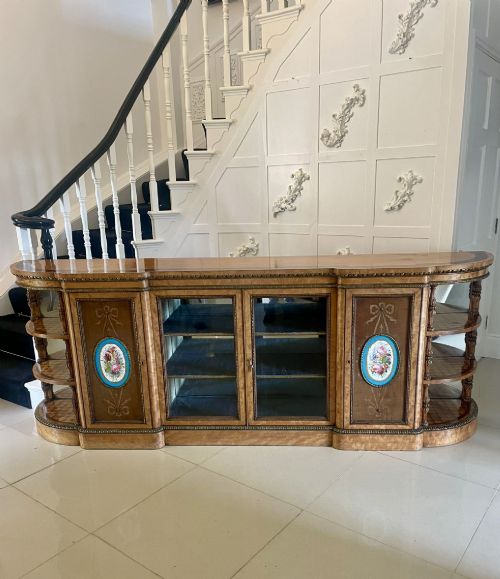
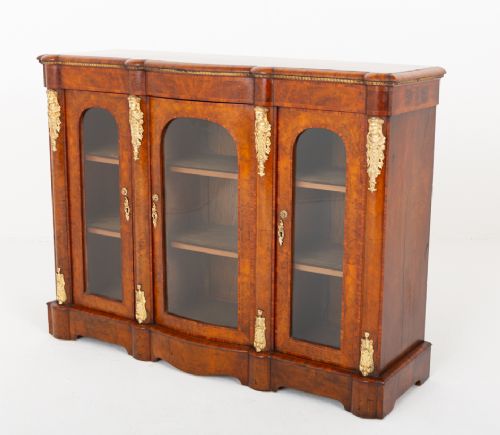
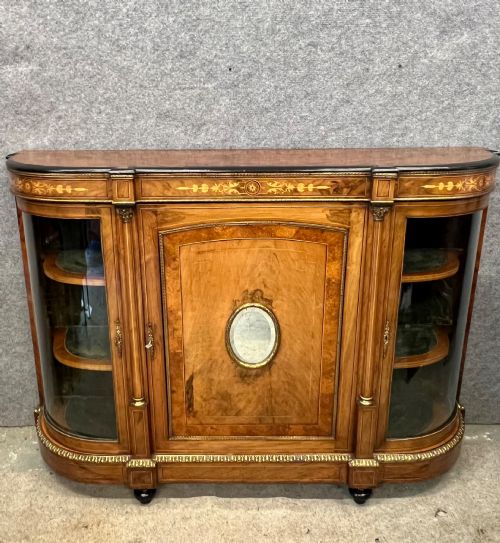
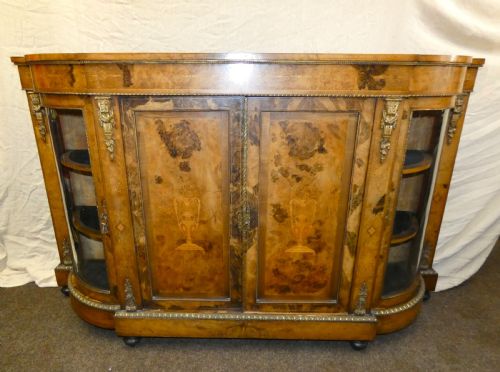
When you search for a french style glazed credenza, you encounter Victorian iterations dating from the mid-nineteenth century, predominantly from the decades between eighteen-fifty and eighteen-nineties. These pieces take the form of serpentine-shaped side cabinets, multi-door credenzas, and glazed display cases designed to showcase porcelain and decorative objects. English cabinetmakers of the period drew heavily on continental French Revival and Napoleon III aesthetics, blending glazed central compartments with flanking curved display doors.
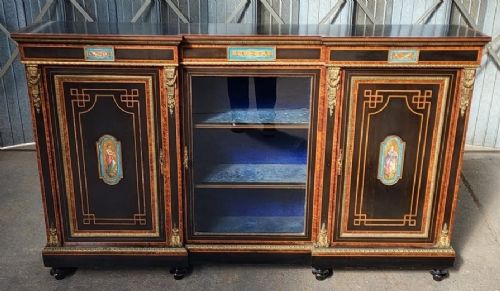
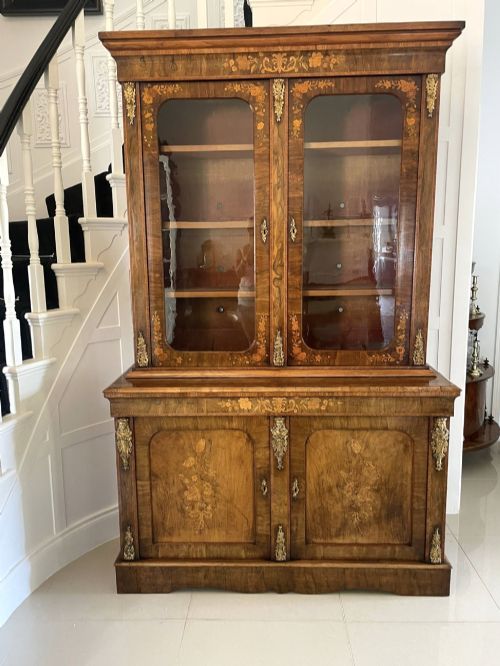
The dominant material signature involves burr walnut, figured walnut, and ebonised wood carcasses enriched with intricate boxwood marquetry. Many examples incorporate glazed panels set within gilded or ormolu mounts, reflecting a clear lineage from French chateau furnishings of the era. The selection ranges from compact pier cabinets to monumental exhibition-quality credenzas featuring extensive porcelain plaque inlays.
Materials and Technique
Craftsmen built these cabinets upon robust timber foundations of walnut, applying highly figured burr walnut veneers to the exterior surfaces. Marquetry panels demanded precise hand-cutting of contrasting timbers such as satinwood and boxwood, creating elaborate floral and scroll motifs across the facade. The resulting wooden structures were then fitted with cast bronze mounts finished in ormolu, adding gilded enrichment to the corners, friezes, and feet.
Glazing techniques utilised clear sheet glass housed within slim timber door frames, often complemented by velvet-lined interiors designed to display precious ceramics. Sevres-style porcelain plaques and painted panels were frequently inset directly into the woodwork or ormolu frames, marrying ceramic art with cabinetmaking. Brass stringing and meticulous inlay work completed the exterior, sealing the veneers against moisture and wear.
Victorian drawing room etiquette demanded that the porcelain behind your glass doors be rearranged weekly to prevent polite society from getting bored.
Evaluating Execution
The upper tier of these pieces displays superior selection in the burr walnut veneer, where the grain symmetry across multiple doors reveals careful matching by the artisan. Lower grades rely on repetitive or mismatched veneer patterns that lack the depth and optical movement seen in exhibition-quality examples. Finer specimens integrate heavy, crisply chased ormolu mounts rather than thin, unrefined cast metal.
Execution of the marquetry also separates standard production from exceptional work, with top-tier cabinets showing microscopic precision in the boxwood and satinwood inlay. The integration of hand-painted porcelain plaques and substantial marble tops further elevates a piece above simpler timber iterations. Structural ambition, such as complex serpentine curves and four-door configurations, marks the most accomplished Victorian workshop output.
The French Style Glazed Credenza Glossary
- Credenza
- A low cabinet or sideboard, frequently featuring glazed central doors flanked by curved side compartments for display. This form became central to formal Victorian entertaining spaces.
- Ormolu
- Gilded bronze mounts applied to furniture edges and panels for decorative effect. The technique originated in France before being adopted by Victorian cabinetmakers.
- Marquetry
- Inlay work using thin pieces of wood veneer to form decorative pictures or geometric patterns. Artisans utilised contrasting timbers like boxwood and satinwood against walnut.
- Pier Cabinet
- A narrow display cabinet designed to fit against the wall space between windows. These often feature glass doors and velvet-lined shelves for porcelain.
- Napoleon III
- A nineteenth-century French design style characterised by eclectic revivalism, lavish ormolu, and porcelain plaque mounts. British makers reinterpreted this aesthetic during the Victorian era.
French Style Glazed Credenza: Frequently Asked Questions
What is a french style glazed credenza?
A glazed credenza is a low Victorian display cabinet inspired by French Napoleon III and Rococo Revival aesthetics, featuring glass doors for showing ceramics.
Cabinetmakers built these pieces primarily in burr walnut with ormolu mounts and marquetry inlay.
How were these cabinets used originally?
Victorian households utilised these credenzas in drawing rooms and reception spaces to store and display valuable porcelain, glassware, and decorative objects.
The glass doors protected the contents from dust while allowing guests to admire the owner's collection.
Where do the porcelain plaques come from?
Many Victorian cabinets incorporate painted porcelain panels styled after Sevres manufactory wares, imported or imitated during the nineteenth century.
These plaques are set directly into the wood or framed within ormolu mounts on the cabinet doors.
How do I identify a Victorian piece?
Victorian credenzas show characteristic nineteenth-century timber choices like burr walnut, ebonised wood, and kingwood combined with machine-sawn veneer techniques.
Stylistic markers include French Revival curves, ormolu mounts, and intricate boxwood marquetry popular between eighteen-fifty and eighteen-nineties.
How do I care for burr walnut?
Burr walnut requires stable indoor humidity away from direct sunlight to prevent the delicate veneer from drying or cracking over time.
Regular dusting with a soft, dry cloth maintains the polished surface without damaging the historic timber.