


French Style Cocktail Table
A french style cocktail table brings Continental elegance to a seating area, offering a low surface shaped by classical design and rich materials.

French Style Cocktail Table
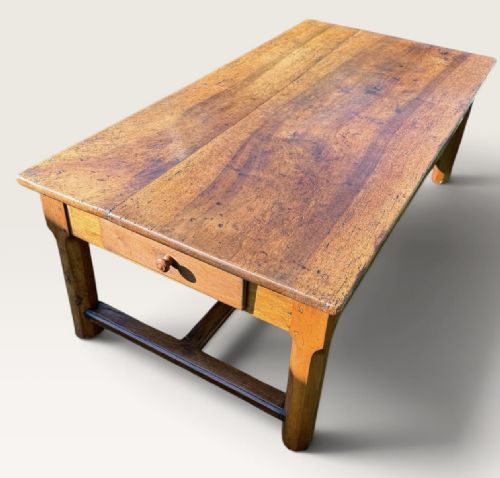
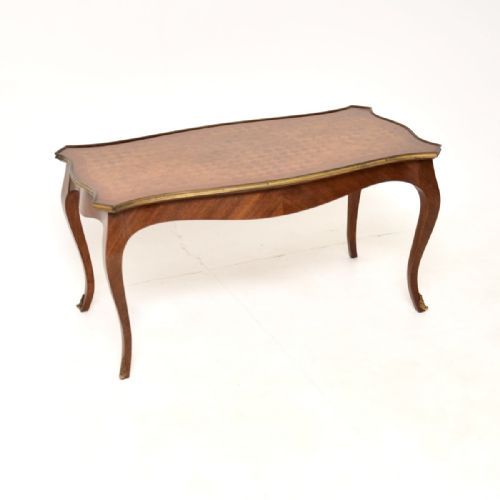
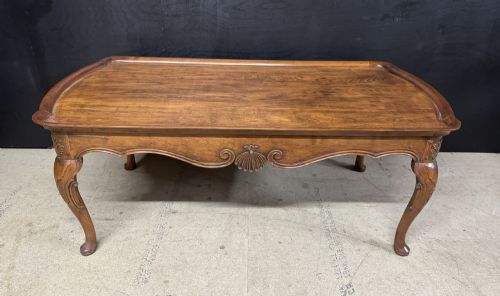
A french style cocktail table combines low proportions with historical European design motifs, serving as a functional centrepiece in a sitting room. These tables draw inspiration from 19th-century and early 20th-century decorative traditions, ranging from rustic farmhouse forms to ornate revival styles.
The versions most commonly met on this page date from the late nineteenth century up to 1930, capturing periods such as the Edwardian era and the 1920s. They appear primarily as coffee tables and occasional tables, designed to sit comfortably before a sofa or armchair.
How they were made
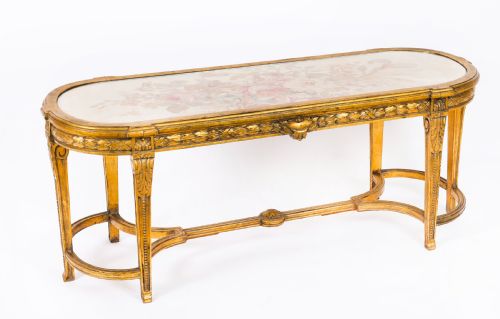
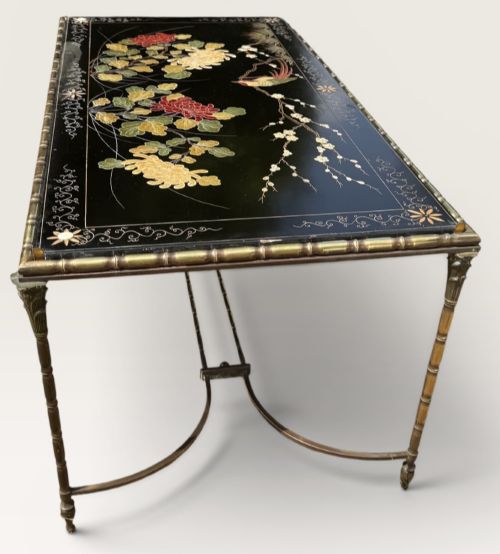
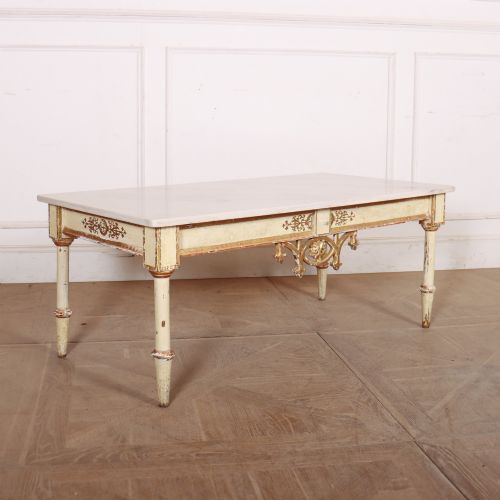
Cabinetmakers constructed these pieces using timbers such as walnut, mahogany, satinwood, and burr walnut, often applying intricate parquetry or marquetry to the surfaces. Giltwood carving and black lacquer also appear, alongside painted finishes that reflect regional aesthetics.
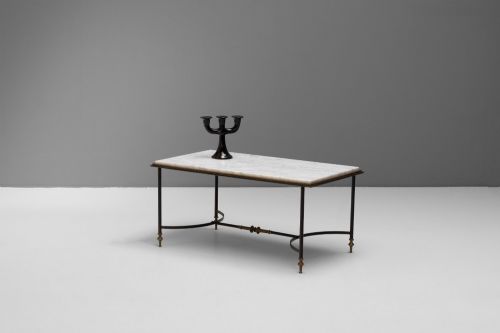
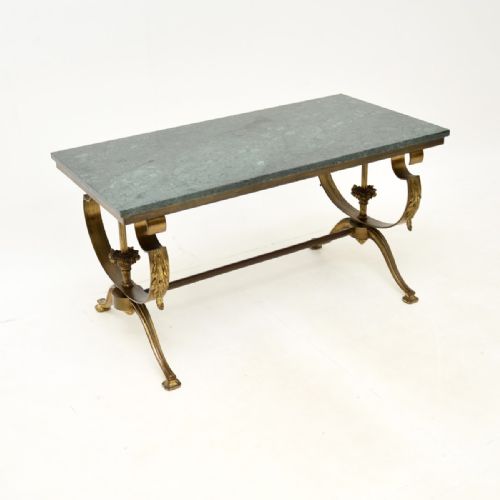
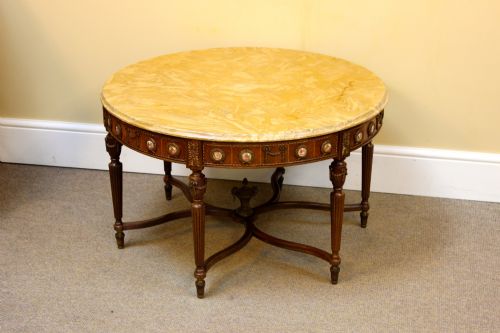
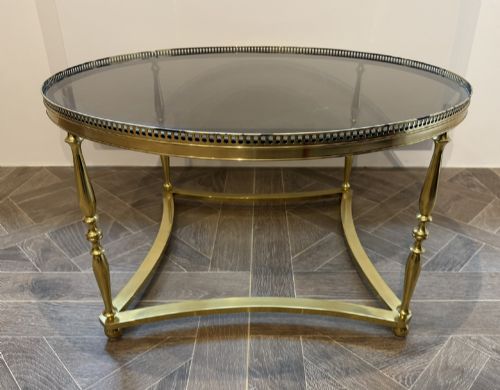
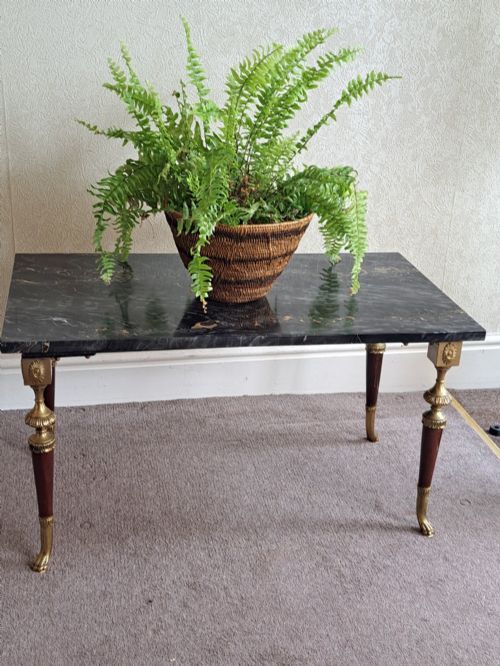
Many examples incorporate inset marble tops or glass panels, supported by brass mounts and frames. Joinery techniques from the nineteenth and early twentieth centuries ensure structural stability beneath decorative veneers and carved details.
Listings feature walnut, mahogany, satinwood, and burr walnut timbers, often paired with marble tops and brass mounts.
What varies in quality
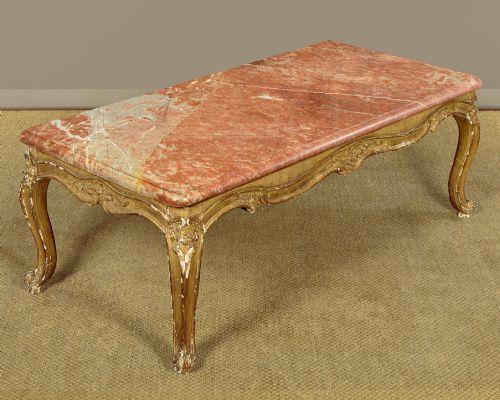
The standard of execution in the timber work and decorative mounts defines the upper tier of these tables. Finely cut marquetry, crisp carving on giltwood frames, and the integration of heavy marble slabs separate superior examples from standard production.
Proportion and material selection further distinguish individual pieces, as seen in the choice of figured burr walnut or genuine brass fittings. The integration of period textiles, such as Aubusson tapestry beneath glass, marks particularly ambitious design work.
Maison Bagues
The French Style Cocktail Table Glossary
- Marquetry
- Decorative veneer work forming pictorial or geometric patterns using various coloured woods. It requires considerable skill from the cabinetmaker to fit each piece precisely into the surface.
- Giltwood
- Timber that has been coated with a thin layer of gold leaf or gilt paint. This technique highlights carved ornamentation on frames and legs.
- Parquetry
- Geometric mosaic woodwork used for flooring or tabletops. It arranges small blocks of timber in repeating patterns such as squares or chevrons.
- Louis XVI Style
- A neoclassical design movement characterised by straight lines, symmetry, and classical motifs like fluted legs. It contrasts with the more flowing curves of earlier revival periods.
- Chinoiserie
- European decorative style interpreting Chinese artistic traditions. It employs motifs like lacquerwork and painted figures to create exotic surface designs.
French Style Cocktail Table: Frequently Asked Questions
How do I clean a marble top?
Wipe the surface gently with a soft cloth dampened in warm water with a mild, pH-neutral soap. Avoid acidic cleaners, vinegar, or harsh scrubbing agents that can etch or dull the stone.
Dry the marble thoroughly afterwards to prevent water spots. Using coasters for glasses helps protect the polished finish from potential stains.
Are these tables sturdy enough for daily use?
Most of these tables were built to serve as functional furniture in reception rooms and parlours. Solid timber frames and secure joinery provide the stability needed for holding books, drinks, and decorative objects.
Care should be taken with delicate elements like giltwood carving or inset glass panels. Regular placement away from direct heat sources keeps the timber and veneers stable.
How do I identify a Louis XV style piece?
Louis XV style tables typically feature asymmetric curves, cabriole legs, and naturalistic ornamentation such as scrolling foliage and floral carvings. The overall aesthetic prioritises flowing lines over rigid symmetry.
This style emerged during the eighteenth century but saw major revivals throughout the nineteenth and early twentieth centuries, which accounts for the dates of many surviving examples.
Will a low table suit a modern sofa?
The low proportions of these tables make them adaptable companions for contemporary seating arrangements. Their height generally allows for easy access from a standard sofa height.
Mixing historical decorative forms with modern upholstery creates a balanced interior. The variety of wood tones and marble tops helps tie different design eras together.