


French Slant Front Bureau
A french slant front bureau brings functional elegance to a room, offering a concealed writing surface alongside refined cabinetry.
French Slant Front Bureau
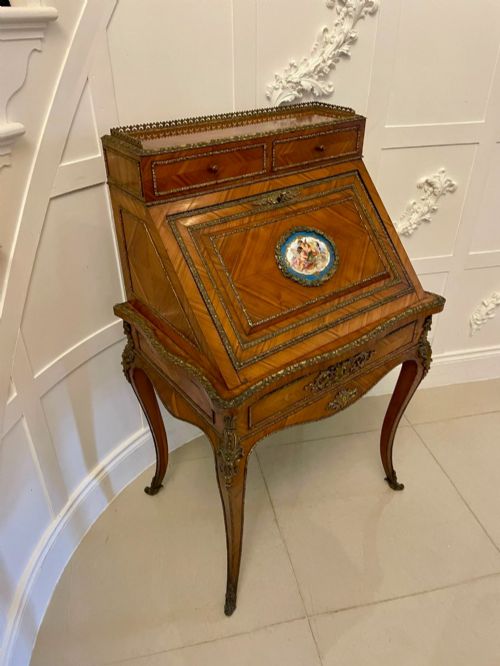
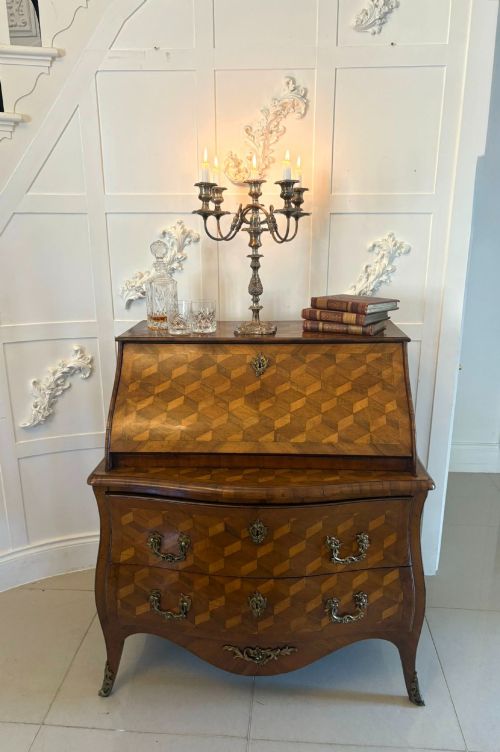
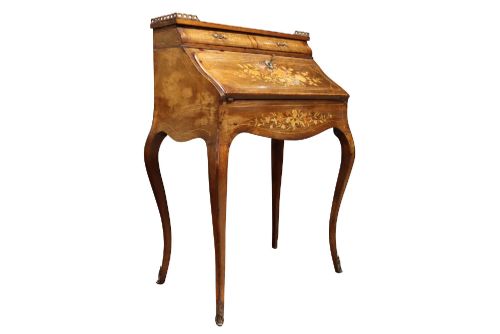
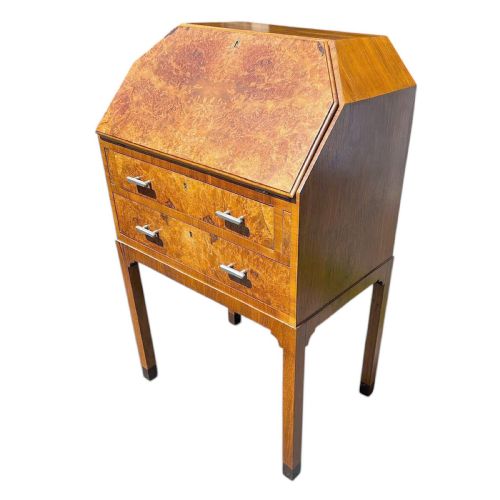
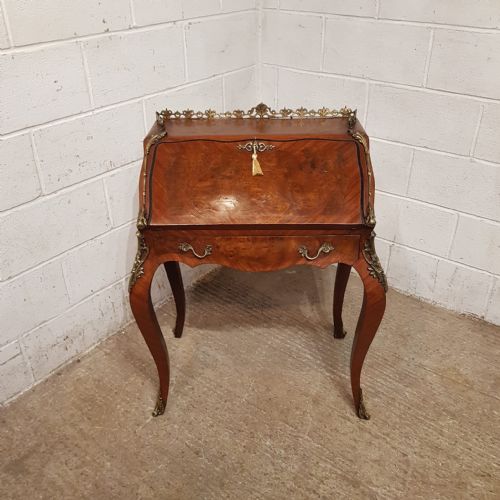
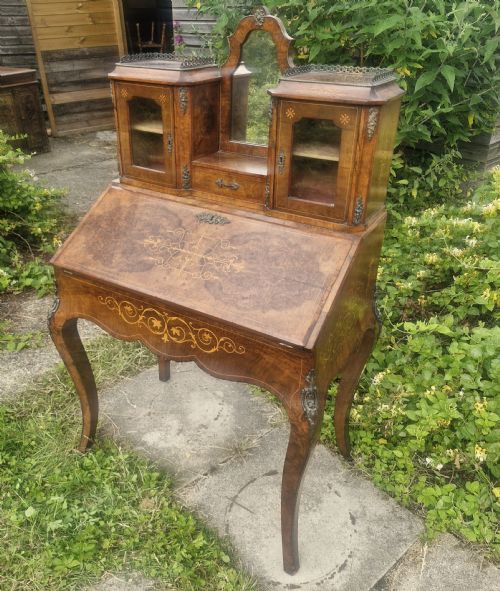
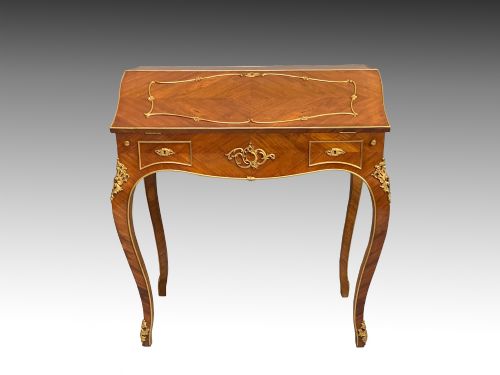
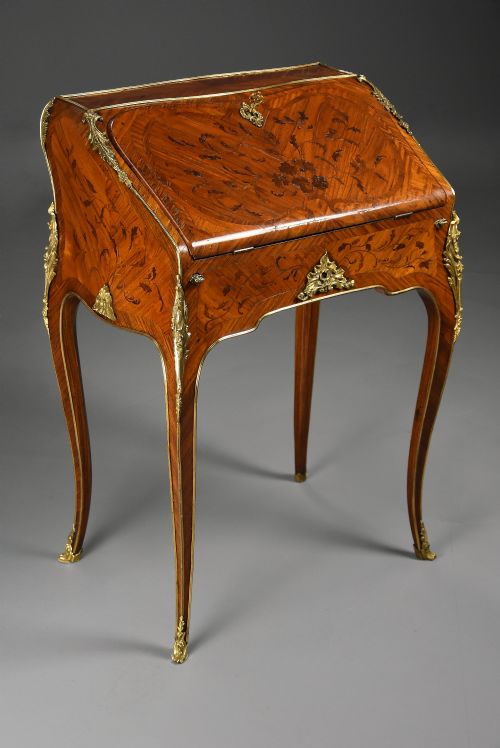
A french slant front bureau is a sophisticated form of writing furniture designed for private correspondence and record keeping. These pieces combine a sloping hinged writing flap with internal pigeonholes and drawers, resting upon a secure base of drawers or cabriole legs. You encounter various iterations on this page, ranging from compact lady's desks to substantial walnut and kingwood writing cabinets.
The selections span multiple periods, predominantly featuring 19th-century interpretations alongside 18th-century examples. Many pieces adopt Louis XV revival and rococo styles, characterised by flowing serpentine lines and ornate mounts. Alongside traditional bureaux, the listings include bonheur-du-jour desks and secretaire en pente formats originating from French workshops.
How They Were Made
Cabinetmakers constructed these desks using dense hardwood carcases of walnut, kingwood, rosewood, and tulipwood, often enhanced by intricate marquetry and parquetry patterns. Timber veneers were meticulously sliced and laid over foundational woods to create geometric designs and pictorial floral scenes. Artisans incorporated burr walnut and amboyna sections to introduce rich grain movement and tonal depth across the writing surfaces and drawer fronts.
Metalwork played a defining role in structural and decorative execution, utilising cast brass and ormolu mounts to highlight the contours of the desk. Gilt metal appliques, porcelain plaques, and brass inlay frame the marquetry panels, securing corners and protecting vulnerable edges. These applied elements required precise joinery to sit flush against curved bombe bodies and sloping lids.
Secret drawers hidden behind dummy pigeonholes await anyone patient enough to decode the internal spring catches.
What Varies in Quality
The refinement of the marquetry and the precision of the parquetry lay down the primary distinction between standard production and exceptional examples. Master cabinetmakers achieved seamless transitions in wood grains, whereas lesser pieces rely on simpler veneer repeats. The complexity of the floral or geometric inlay indicates the time dedicated to the workshop creation.
The weight, chasing, and application of the ormolu mounts separate fine specimens from ordinary ones. High-grade pieces feature crisply cast bronze mounts that follow the exact contours of the woodwork, whereas basic items utilise lighter, repetitive metal stampings. Additionally, the selection of underlying solid timbers and the execution of internal secret compartments dictate the overall standard of the bureau.
BVRB·Paul Sormani
The French Slant Front Bureau Glossary
- Bonheur-du-jour
- A small, light lady's writing desk usually featuring an upper tier of shelves or small drawers. This form appeared during the 18th century and remained popular through later revival periods.
- Ormolu
- Gilt bronze mounted ornamentation applied to furniture for decorative and protective purposes. The technique involves treating cast metal with a gold amalgam.
- Bombe
- A swelling, outward-curving contour found on the sides and fronts of case furniture. This undulating shape requires advanced woodworking skill to veneer accurately.
- Parquetry
- Geometric wood-mosaic work used for flooring and furniture surfaces. Artisans cut small wooden blocks precisely to form repeating triangular or square patterns.
- Secretaire en pente
- A French term for a sloping-front desk or writing cabinet. The angled flap lowers to reveal a fitted interior intended for correspondence.
French Slant Front Bureau: Frequently Asked Questions
How do I style a bureau at home?
Position your bureau against a prominent wall in a living room, study, or bedroom where the wood grain and ormolu mounts catch the light. Leaving the writing flap open occasionally displays the internal stationery compartments.
Keep surrounding decor complementary to allow the marquetry and parquetry to stand out. Avoid placing the desk in direct sunlight to protect sensitive veneers from fading over time.
What is a bonheur du jour?
A bonheur du jour is a compact ladies writing desk featuring a small cabinet or shelving superstructure above the main writing surface. These lighter pieces were designed for drawing rooms and intimate chambers.
Originating in France, they often showcase delicate floral marquetry, kingwood veneers, and slender cabriole legs. They provided a portable and elegant station for writing letters during the morning hours.
How do I date a antique bureau?
Dating relies on examining the timber species, construction methods, and decorative styles present in the piece. 18th-century examples often feature heavier structural timbers and hand-cut joinery, while revival pieces from the 19th century adopt historicised Louis XV motifs.
Maker stamps, brass mount quality, and specific veneer combinations such as burr walnut or tulipwood help narrow down the period of manufacture. Comparing the hardware and internal secondary woods provides further chronological clues.