
French Parquetry Furniture
French parquetry furniture brings geometric wood surfaces and gilt mounts into rooms through chests, desks and tables.
French Parquetry Furniture
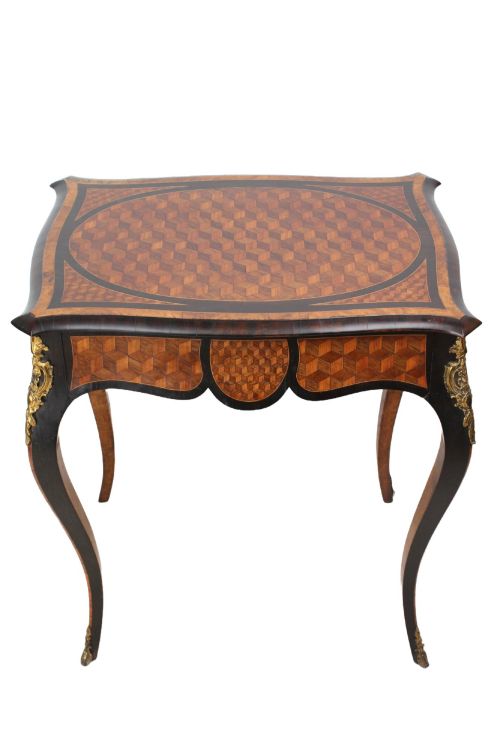
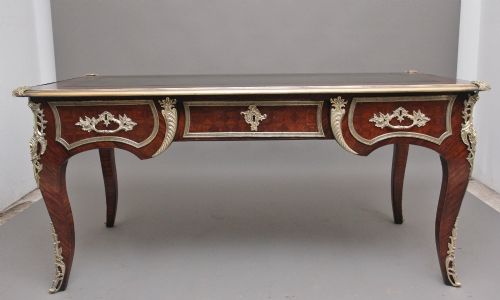
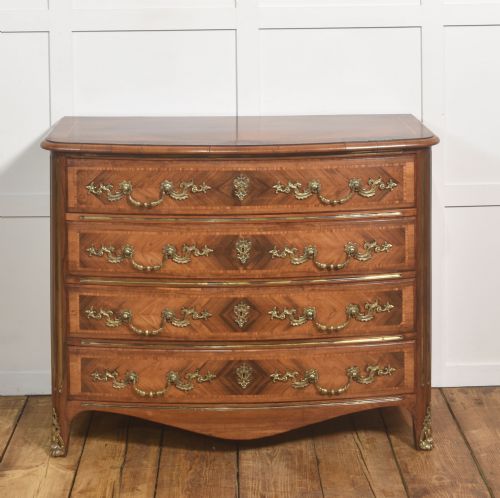
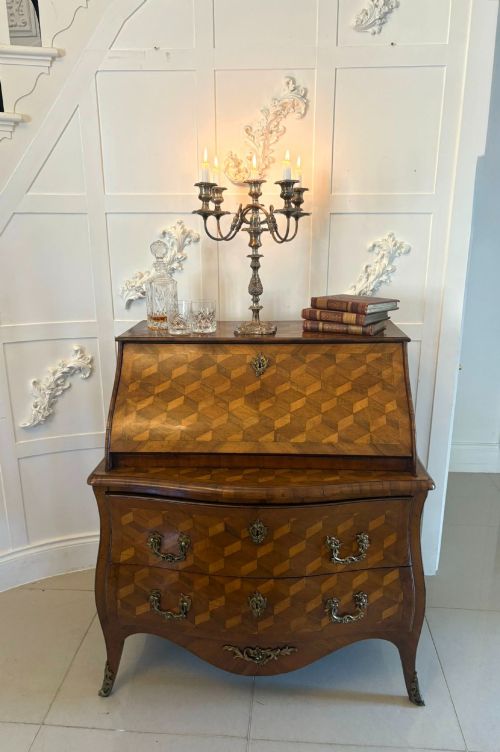
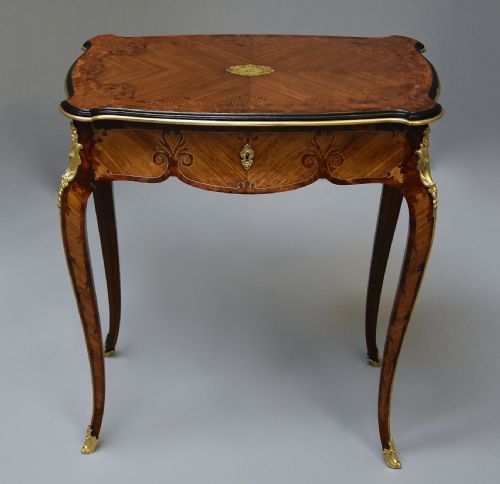
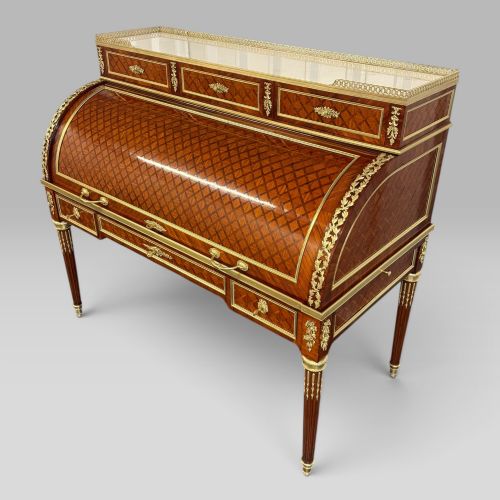
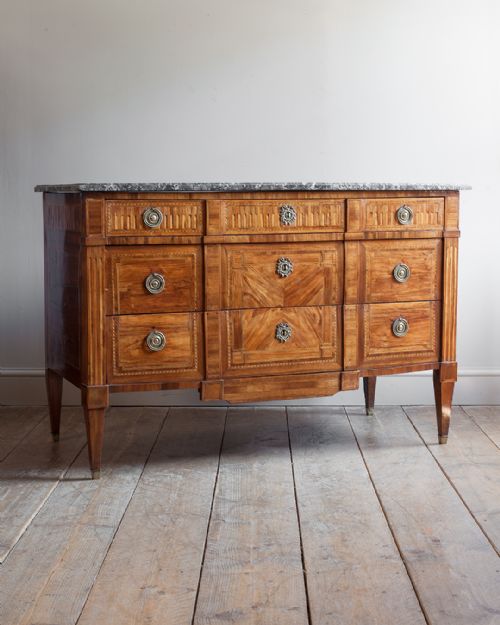
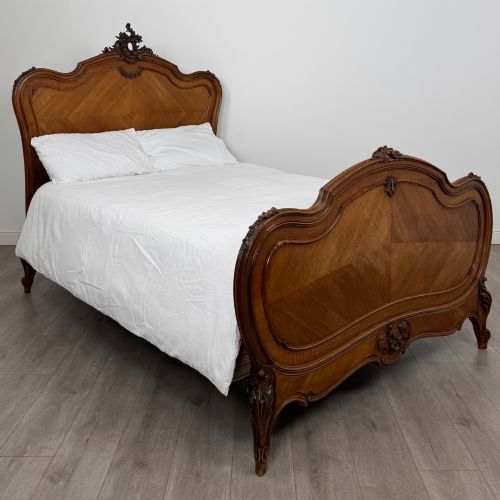
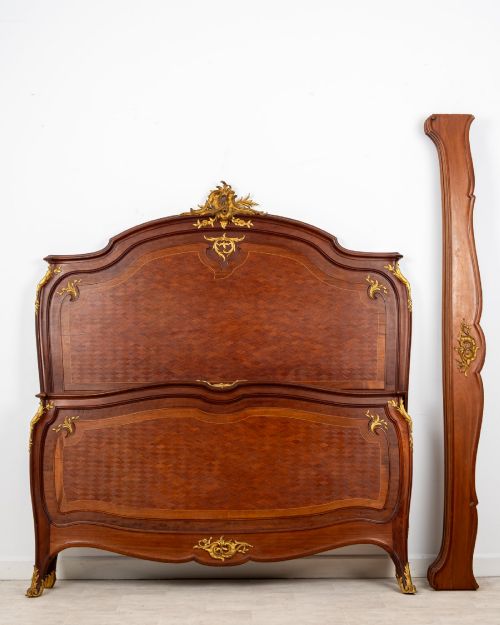
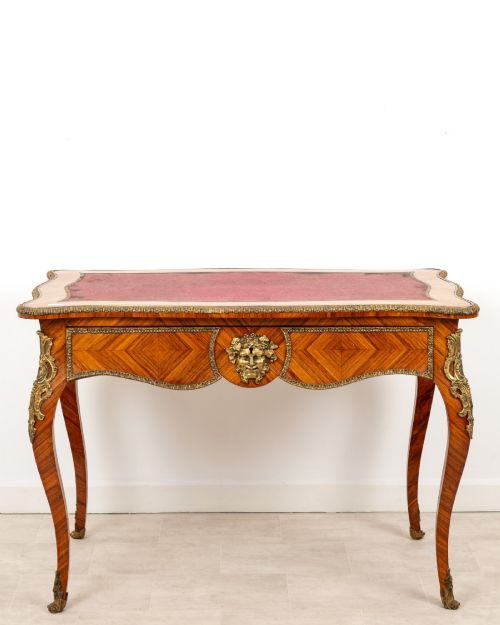
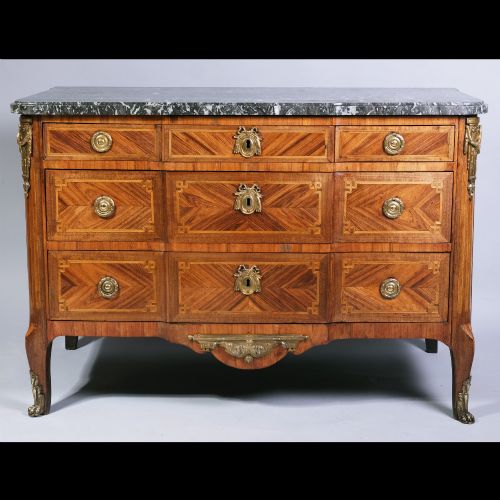
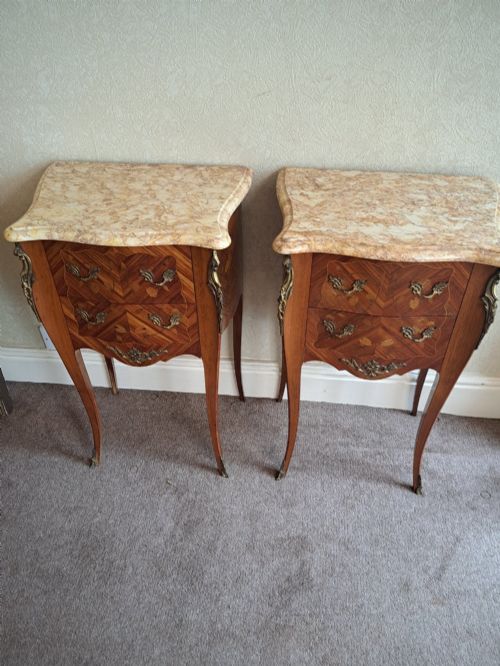
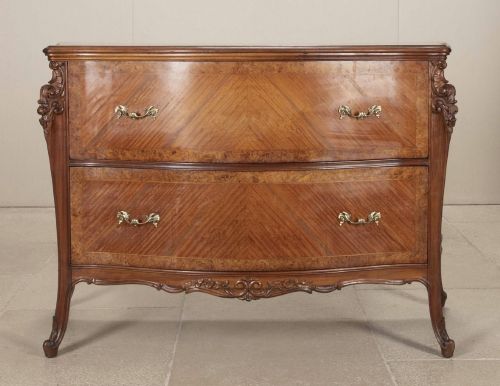
French parquetry furniture consists of wooden items decorated with geometric wood veneers arranged in patterns, alongside related marquetry pieces. When searching for French parquetry furniture, buyers encounter items ranging from eighteenth-century walnut commodes to nineteenth-century kingwood desks and twentieth-century bedside tables.
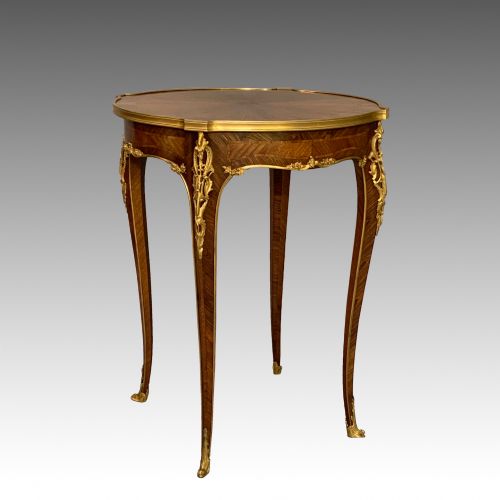
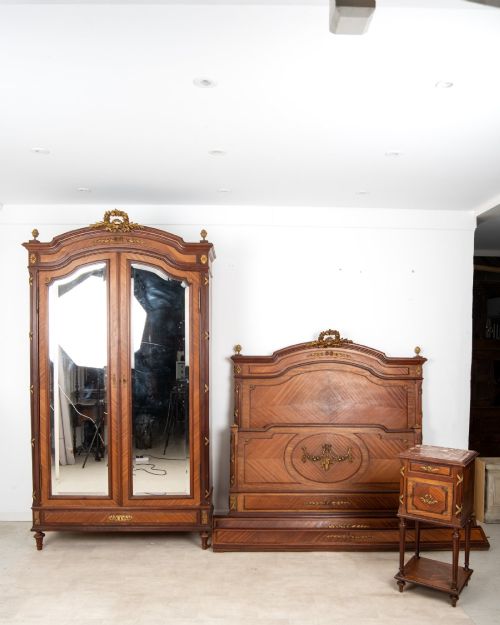
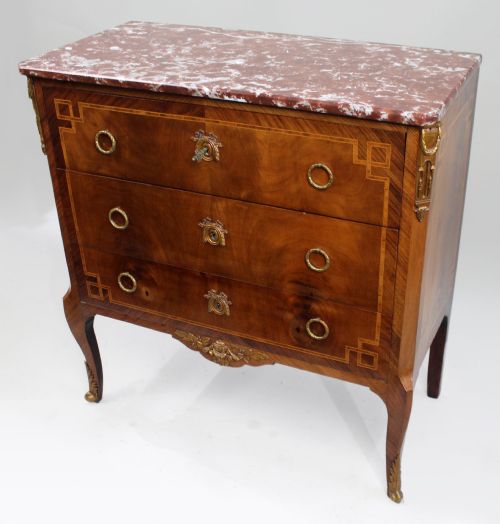
The selection on this page centres heavily on nineteenth-century interpretations of Louis XV and Louis XVI styles, alongside eighteenth-century originals. Forms span practical household items including chests of drawers, occasional tables, writing desks, commodes and vitrines.
How they were made
Cabinet makers utilised dense timbers such as kingwood, walnut, rosewood, mahogany and satinwood, cut into thin veneers to construct geometric surface patterns. These woods provide natural colour contrasts that define the parquetry arrangements across the panels of each piece.
Constructors mounted cast ormolu and brass onto the corners, drawer edges and legs, while finishing many surfaces with marble tops in rouge or standard varieties. Selected items incorporate porcelain plaques, scagliola or hand-painted floral panels to supplement the woodwork.
French Parquetry Furniture Retail Price Guide 2026
Typical asking prices for french parquetry furniture among the pieces listed under this phrase on Sellingantiques today, from the lower quarter to the upper quarter. They describe what is for sale here now, not the wider market.
Listings feature items spanning the seventeenth, eighteenth, nineteenth and twentieth centuries, using materials such as ormolu, kingwood, marble, walnut and porcelain.
What varies in quality
The standard of timber selection and the precision of the veneer cutting dictate the baseline quality of each item. Tighter geometric alignment and richer wood figuring distinguish superior examples from standard production.
The weight, chiselling and integration of the ormolu mounts vary significantly across different workshops. Heavier, finely chased gilt bronze mounts combined with original marble tops elevate a piece above simpler alternatives.
JAS Shoolbred·Joseph-Emmanuel Zwiener·Blake London·G T Morant London·Sormani·L.Martin of Paris·Donald Ross
The French Parquetry Furniture Glossary
- Parquetry
- Geometric wood mosaic work formed by laying small pieces of veneer onto a carcase. It creates repeating patterns such as cubes, lozenges and herringbone.
- Ormolu
- Gilt bronze mounts applied to the angles, feet and handles of furniture. It protects vulnerable corners and adds decorative contrast to the wood.
- Commode
- A low chest of drawers, frequently fitted with a marble top. Eighteenth-century and revival examples often feature serpentine fronts.
- Kingwood
- A dense, heavily figured Brazilian timber utilised extensively for decorative veneers. Its dark brown colouring contrasts with lighter woods in parquetry designs.
- Bombe
- A swelling, outward-curved contour found on the front and sides of case pieces. This voluptuous profile requires advanced cabinet-making skill to veneer accurately.
French Parquetry Furniture: Frequently Asked Questions
How do I clean marble tops?
Wipe the surface gently with a soft cloth dampened in warm water and mild soap. Avoid acidic cleaners that etch polished stone.
Dry the marble thoroughly afterwards to prevent water marks or dull patches on the vintage finish.
Can these desks be used daily?
Writing tables and cylinder desks function adequately for modern writing tasks when treated with care. Use proper blotters to protect delicate wood and veneer surfaces.
Keep humidity stable in the room to prevent the timber and glue from shifting over time.
How do I identify Louis XV style?
Louis XV pieces rely on asymmetrical curves, cabriole legs and rococo motifs. The lines flow smoothly without rigid straight edges.
Parquetry on these items often follows serpentine contours across commodes and small tables.
What is the difference between parquetry and marquetry?
Parquetry uses geometric shapes like squares, triangles and cubes to form abstract repeating patterns. It depends entirely on the natural grain and colour contrasts of the timber.
Marquetry employs pictorial veneers to create floral scenes, landscapes or scrolls, often utilising dyed woods and shell.