


French Repeating Mantel Clock
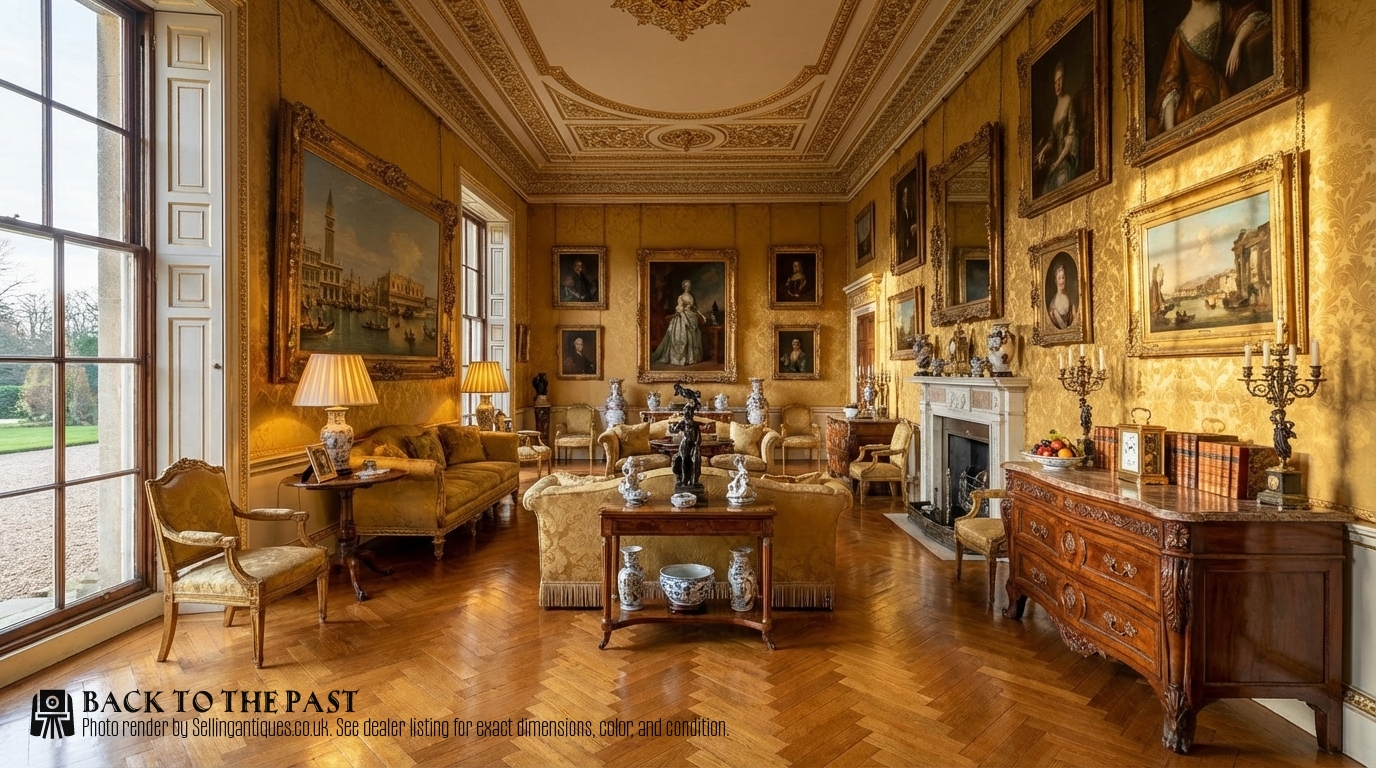
A french repeating mantel clock brings precise timekeeping and substantial brass and glass architecture into a room.
French Repeating Mantel Clock
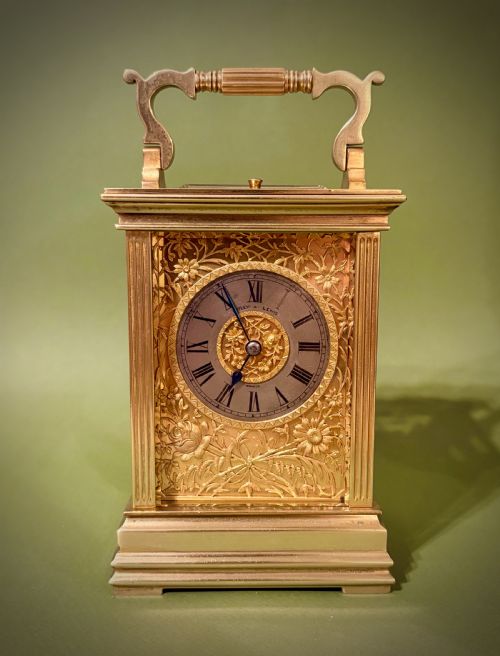
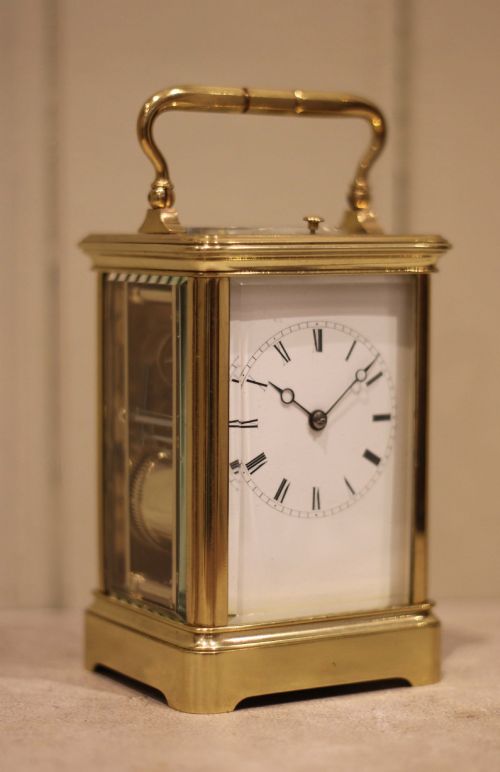
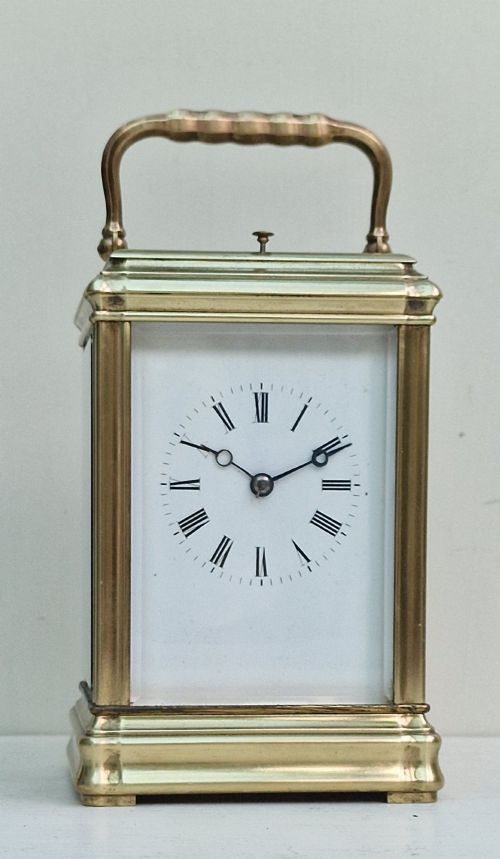
A french repeating mantel clock is primarily represented on this page by carriage clocks originating in the nineteenth century, spanning periods from the eighteen-fifties through to nineteen-twenty. These portable timepieces house mechanical movements capable of striking the hours and quarters upon demand via a plunger on the case.
The dominant forms include standard brass cases, gorge cases, and doucine profiles alongside rarer oval shapes and silver gilt finishes. Pieces frequently incorporate enamel dials, enamel bandings, and painted floral or figural designs within glazed brass housing.
Materials and construction
These clocks rely on heavy brass and gilt bronze frames fitted with bevelled glass panels to display the internal mechanics. Dials and decorative bands utilise white enamel, whilst steel components govern the strike and repeat gear trains.
Cases receive surface treatments ranging from polished brass to full gilding and engraved detailing. Movement platforms incorporate escapements visible through glazed openings, accompanied by hand-painted enamel elements.
Listings span the nineteenth century into the early twentieth, utilising brass, gilt bronze, glass, and enamel across carriage clock formats.
Distinctions in quality
Quality rests in the complexity of the movement, separating standard striking models from grand sonnerie and petit sonnerie complications with alarm or date work. Maker attribution to established horologists also elevates a piece.
Case execution defines the upper tier, where fully engraved brass, silver gilt, and bespoke enamel painted panels distinguish fine examples from plain housing.
DROCOURT·Henry Jacot·Alfred Drocourt·DWERRIHOUSE & BELL·J.W.BENSON
The French Repeating Mantel Clock Glossary
- Carriage clock
- A portable spring-driven timepiece designed for travel during the nineteenth century. These clocks typically feature brass and glass cases with folding handles.
- Repeating movement
- A mechanism that sounds the last hour or quarter-hour when a button or pendant is pressed. This function allowed time reading in the dark.
- Grand sonnerie
- A complex striking train that chimes the hours and quarters automatically as each quarter passes, in addition to repeating on demand.
- Mask
- The gilt brass decorative plate surrounding the enamel dial face. It often displays fine floral or geometric engraving.
French Repeating Mantel Clock: Frequently Asked Questions
How does the repeater mechanism work?
Pressing the plunger on the top of the case triggers the strike train to sound the most recent hour and quarter-hour.
This mechanical function operated independently of the main clock striking sequence, intended for checking the time in darkness.
What is a gorge case?
A gorge case denotes a heavy brass housing with stepped mouldings at the top and base edges.
This architectural style appeared frequently on nineteenth-century French carriage clocks produced by premier makers.
How do I wind the clock?
A dedicated winding key fits into arbours located on the underside or back plate of the movement.
Careful rotation tensions the internal springs, which power both the timekeeping train and the striking mechanism.
What is the difference between striking and sonnerie?
A standard striking clock sounds the hours and sometimes the half-hours on the passing of time.
A sonnerie movement chimes the hours and quarters automatically without requiring manual intervention from the user.