



French Renaissance Revival
French Renaissance Revival pieces bring heavy carved oak, rich walnut, and classical bronze into nineteenth-century interiors with undeniable architectural presence.
French Renaissance Revival
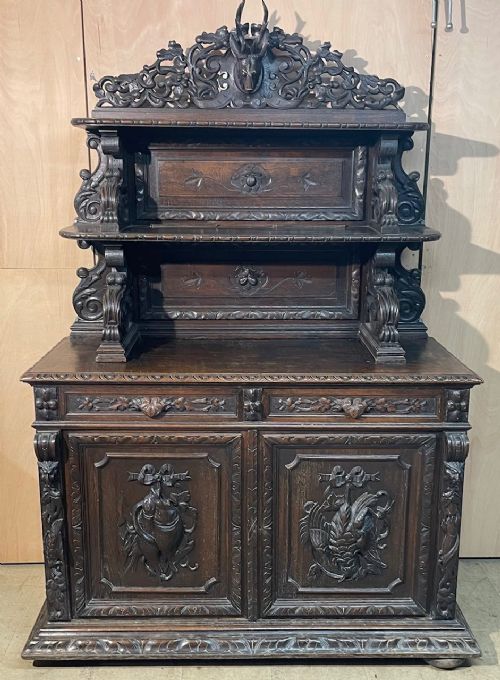
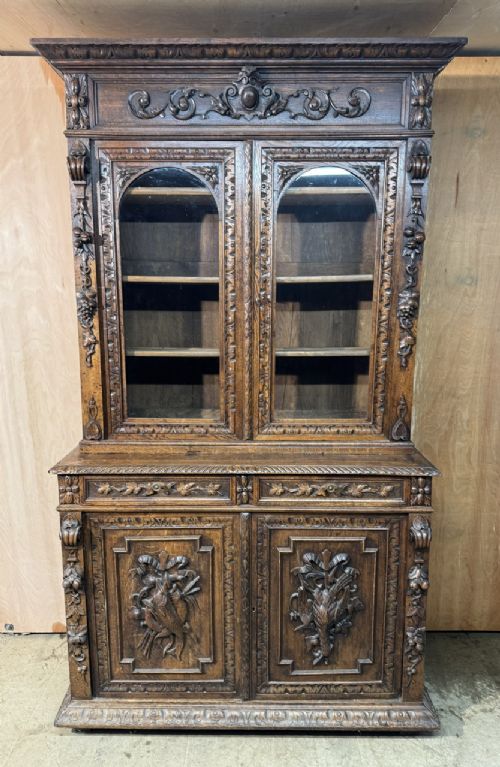
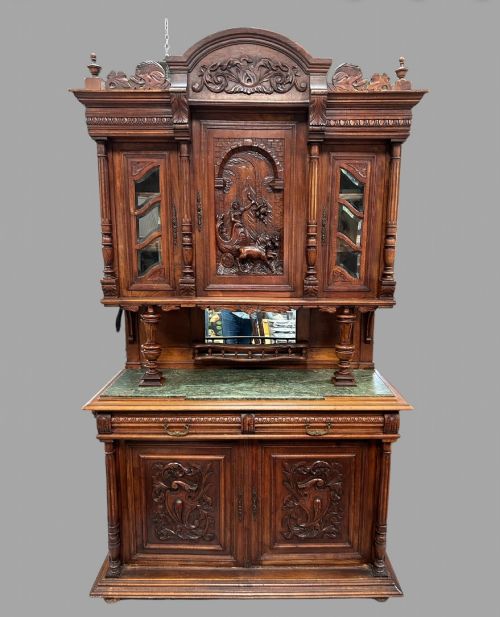
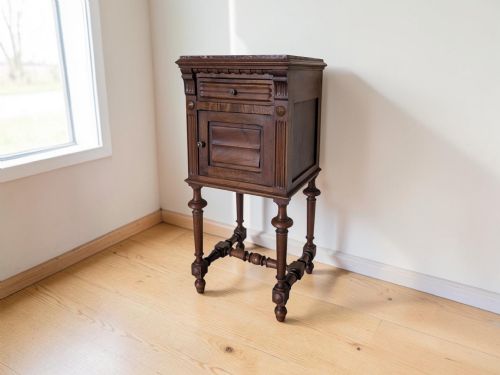
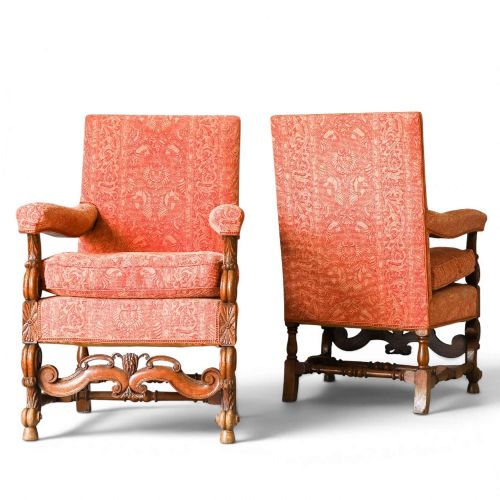
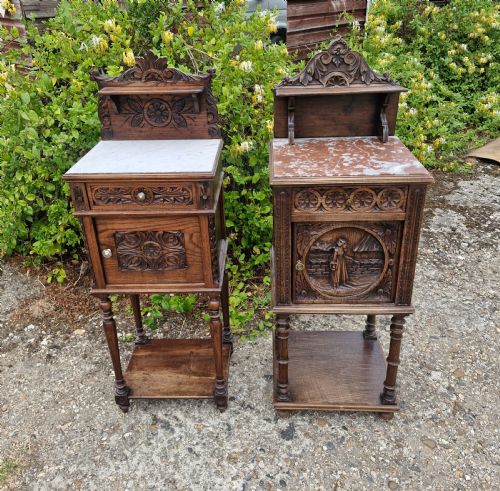
French Renaissance Revival furniture and decorative arts draw heavily on sixteenth-century forms, reinterpreted during the nineteenth century across the Victorian era and decades leading to nineteen hundred. Pieces of French Renaissance Revival on this page include substantial carved oak sideboards, walnut armchairs, marble-topped cabinets, and bronze mantel clocks.
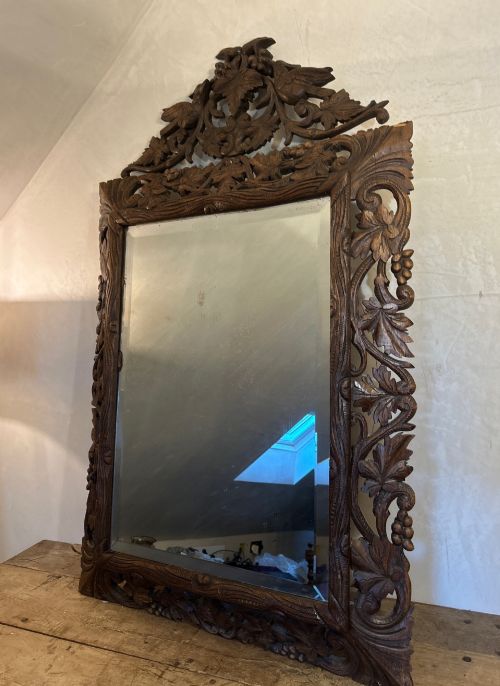
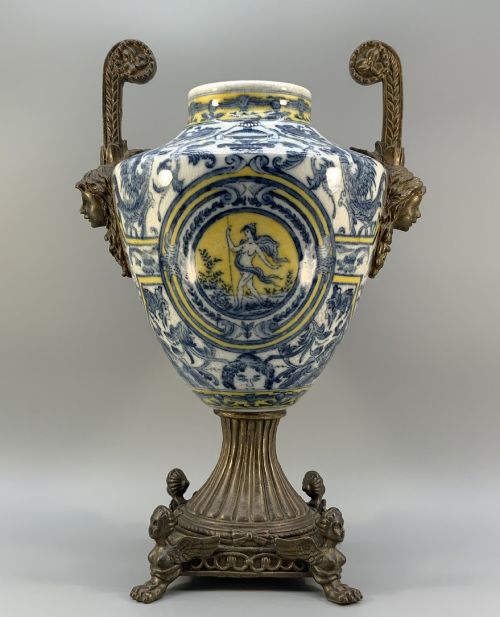
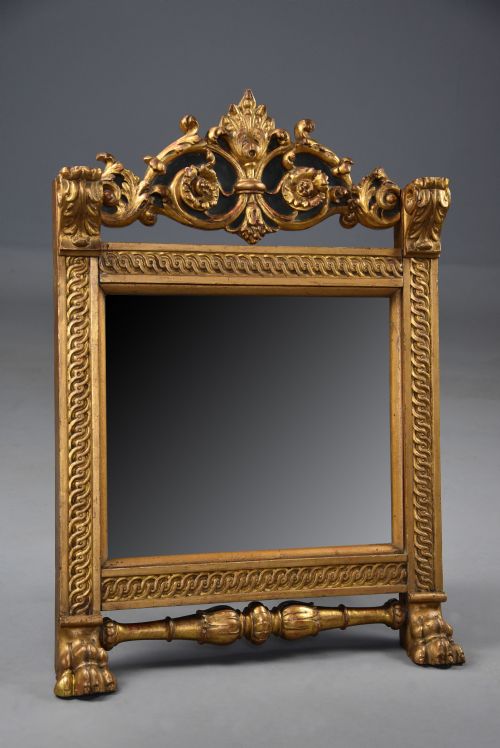
Makers and workshops of this period embraced historicism, producing heavily carved buffets, wall mirrors with side columns, and faience vases mounted in bronze. The aesthetic spans large architectural case pieces like hunting cabinets down to smaller decorative objects such as brass candlesticks and Limoges enamel plaques.
How they were made
Craftsmen relied on solid oak and walnut, chosen for stability and deep grain, which allowed for elaborate relief carving depicting mythological figures, grotesques, and hunting motifs. Joinery involved traditional pegged and panelled construction for large case pieces like sideboards and buffets.
Metal components combined cast bronze, gilt bronze, brass, and spelter, frequently mounted onto ceramics or marble structures. Decorative surfaces also integrated painted faience from makers like Gien, alongside enamel panels on copper.
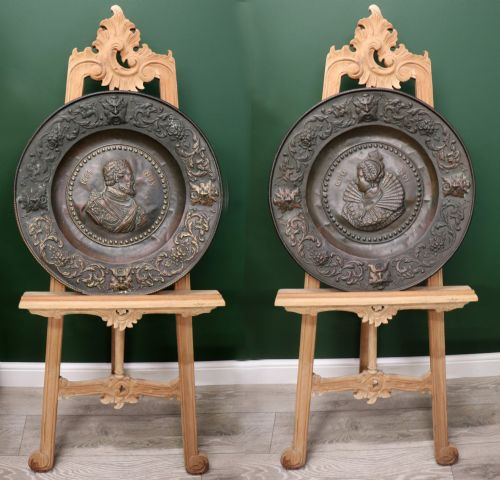
Queen Marie de' Médicis and Henry the Fourth gaze steadily from copper wall chargers, keeping royal company long past the nineteenth century.
What varies in quality
Quality rests primarily on the depth and crispness of the hand carving, where sharply articulated figures and clean undercut foliage distinguish superior workshop output from simpler provincial work. Timber selection matters equally, as dense, well-figured walnut and quarter-sawn oak provide a better canvas for classical ornamentation than plain utility woods.
The integration of secondary materials defines the upper tier of production, seen in heavy fire-gilded bronze mounts, carefully fitted marble tops, and detailed enamel work. Structural integrity and original hardware, from key escutcheons to hinges, complete the distinction between standard commercial output and exceptional cabinetmaking.
The French Renaissance Revival Glossary
- Faience
- Tin-glazed earthenware decorated with painted historical or mythological scenes. Examples on this page often feature elaborate cherub and figure decoration.
- Spelter
- A zinc alloy cast into figures and candlesticks during the nineteenth century. It frequently received a bronze-tone finish to imitate costlier metalwork.
- Henri II
- A sixteenth-century French design vocabulary widely copied during the nineteenth century. It is characterised by architectural symmetry, strapwork, and robust column supports.
- Majolica
- A colourful tin-glazed earthenware type popular in nineteenth-century decorative pieces. It often appears combined with bronze mounts on lamps and wall brackets.
French Renaissance Revival: Frequently Asked Questions
What is French Renaissance Revival furniture?
It is nineteenth-century decorative art and furniture that imitates sixteenth-century French design. Cabinetmakers drew inspiration from the reigns of Francis the First and Henri the Second.
The style relies on dark woods like oak and walnut, featuring prominent cornices, column supports, and deep relief carvings of classical figures.
How do I identify Henri II style?
Look for architectural lines, geometric strapwork panels, and symmetrical column details. Furniture in this category often includes heavy carved mouldings and figural reliefs.
Cabinets and sideboards frequently display protruding upper cornices supported by carved caryatids or pilasters.
Where were these decorative objects made?
Most pieces originated in France during the nineteenth century, spanning various regional workshops and larger Parisian factories. Faience items often came from centres like Gien and Limoges.
Production flourished particularly from eighteen-sixty through nineteen hundred as historic revival movements dominated European domestic interior design.
How should I care for carved oak furniture?
Maintain solid oak and walnut pieces by keeping them away from direct heat sources and sudden humidity changes. Apply a microcrystalline wax occasionally to protect the dry timber.
Dust intricate carvings gently with a soft brush to prevent accumulation in the deep recesses of the relief work.