


Antique Ormolu Bust
An antique ormolu bust brings sculptural presence to a room, combining golden metalwork with carved stone to anchor a classical interior.
Antique Ormolu Bust
When you search for an antique ormolu bust, you encounter sculptural portraits executed in metal alongside complementary supports. The selections appearing here span the nineteenth century, including Victorian, Edwardian, and Regency periods.
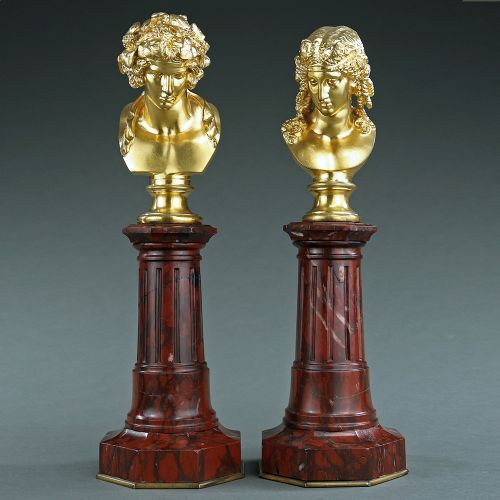
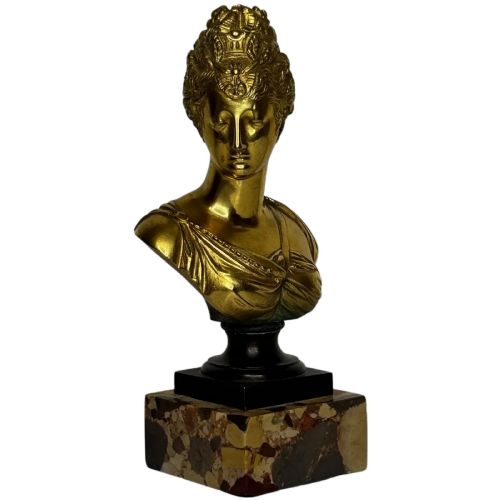
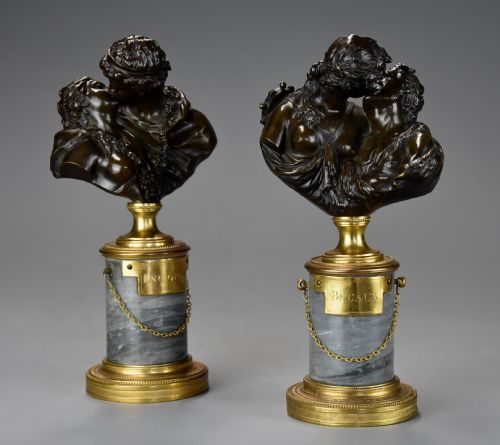
Most examples present historical figures or mythological subjects rendered in bronze or gilt metal. These works frequently incorporate pedestals, columns, or mantel clocks as part of their composition.
The aesthetic draws heavily on French Empire, Neoclassical, and Renaissance Revival traditions. Pieces often pair golden ormolu mounts with contrasting materials such as marble or onyx.
Judging quality and execution
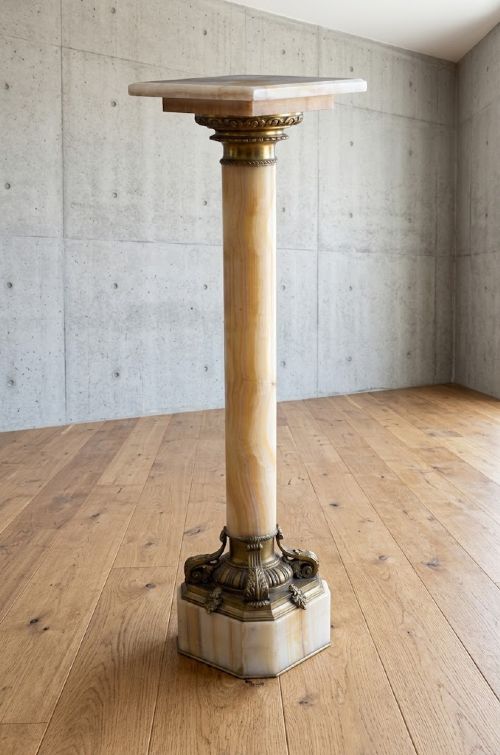
The choice of supporting materials significantly affects the character of the work. Dense, finely veined marble or onyx columns paired with substantial gilt bronze elevate the overall presence of the bust.
Listings feature works in gilt bronze, marble, onyx, and mahogany across Neoclassical and French Empire styles.
G.V. Vaerenbergh·P.H MOUREY
The Antique Ormolu Bust Glossary
- Ormolu
- Gilt bronze produced by applying a finely ground mercury and gold amalgam to a bronze object, which is then fired. This technique creates a durable, luminous golden finish characteristic of nineteenth-century decorative arts.
- Gilt bronze
- Metal cast in bronze and subsequently covered with a layer of gold leaf or gold wash. It shares visual similarities with ormolu but encompasses various methods of gilding.
- Neoclassical
- A style inspired by the classical art and architecture of ancient Greece and Rome. It emphasises symmetry, proportion, and restrained ornamentation in portraiture and furniture.
- Patinated
- The surface appearance acquired by metal through age, chemical treatment, or handling. This darkens the bronze beneath the gilding to create depth and contrast.
Antique Ormolu Bust: Frequently Asked Questions
What is ormolu?
Ormolu refers to gilded bronze mounts and decorative elements applied to furniture, clocks, and sculptures during the eighteenth and nineteenth centuries.
The process involves fusing a gold and mercury mixture to a bronze base using heat, which produces a rich golden surface that resists tarnishing over time.
How do I display an antique bust?
These sculptures suit placement on sturdy mantelpieces, side tables, or dedicated pedestals and columns.
Matching the bust with a stone or mahogany column creates a balanced focal point within a room, especially when the heights align with eye level.
Are these pieces French in origin?
Many works from this category reflect French design traditions, particularly the Empire, Rococo, and Neoclassical styles popular in Paris during the nineteenth century.
French workshops frequently exported these sophisticated bronze and marble compositions across Europe.
How do I date a marble and ormolu piece?
Dating relies on stylistic clues, casting techniques, and the materials used for the columns and mounts.
Nineteenth-century examples often exhibit Regency, Victorian, or Edwardian characteristics that tie them to specific decades.