



French Provincial Counter
These french provincial counter examples bring honest utility to a room, offering the robust timbers and practical workspace of nineteenth-century trade.
French Provincial Counter
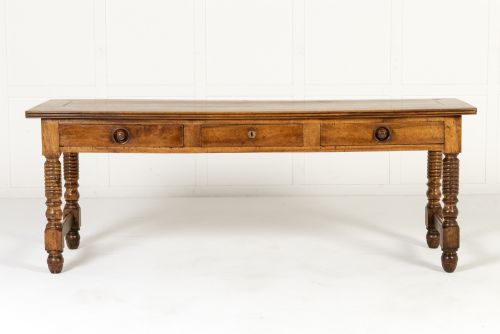
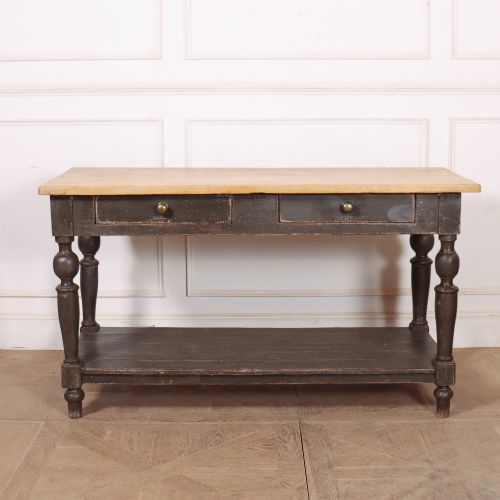
A french provincial counter brings the heavy utility of nineteenth-century trade straight into a modern domestic interior. These practical pieces serve diverse roles, ranging from long drapers tables and shop counters to butchers blocks and banks of drawers.
Most examples you will encounter date from the nineteenth century, built to withstand daily commercial work in provincial shops and workshops. Their generous proportions and sturdy construction make them ideal for modern kitchens, hallways, or living spaces needing anchor furniture.
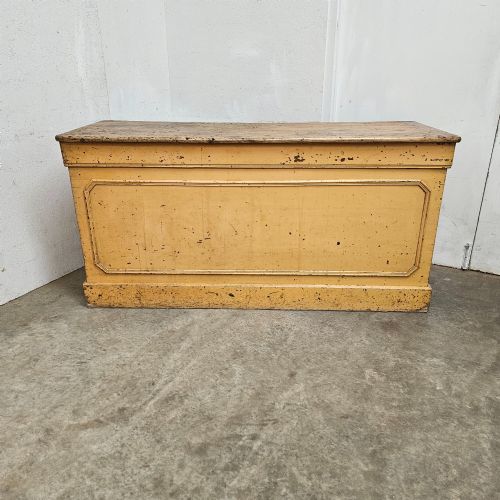
Makers designed these items for hard use rather than display, incorporating deep surfaces and heavy timbers suited to preparation or storage. The selection includes specific regional variants like bleached oak tables and painted pine counters.
How they were made
Workshops constructed these pieces primarily from solid pine and oak, selecting durable native timbers capable of bearing heavy loads. Artisans often applied paint finishes to pine structures, while other surfaces remained as bare timber or underwent bleaching.
Makers integrated functional hardware in iron and brass to secure drawers, joints, and operational fittings. Structural joinery prioritised strength, using thick planks and robust framing that survived decades of commercial wear.
French Provincial Counter Retail Price Guide 2026
Typical asking prices for french provincial counter among the pieces listed under this phrase on Sellingantiques today, from the lower quarter to the upper quarter. They describe what is for sale here now, not the wider market.
Nineteenth-century shop assistants measured endless yards of cloth across these very timbers before they retired to domestic kitchens.
What varies in quality
The distinction between ordinary utility items and superior examples lies in the integrity of the original surfaces and structural timber. Pieces retaining untouched paint finishes or naturally weathered bleached oak show greater character than heavily restored equivalents.
Proportion and scale dictate the relative success of a piece, with longer drapers tables and substantial shop counters holding a commanding presence. The quality of the underlying pine or oak framing ensures the item remains stable and fit for daily use.
Trussant And Cie
The French Provincial Counter Glossary
- Drapers Table
- A long, narrow timber table originally designed for measuring and displaying textiles in a drapery shop. These tables usually feature lower shelves and multiple narrow drawers.
- Shop Counter
- A substantial timber workspace positioned at the front of a nineteenth-century business to handle customer transactions. They often combine display surfaces with deep storage compartments.
- Butchers Block
- A heavy, thick-topped preparation table constructed from end-grain timber to absorb the impact of cleavers and chopping. They represent the ultimate in utilitarian provincial craftsmanship.
- Bleached Oak
- A timber treatment that lightens the natural dark tone of oak to a pale, matte finish. This process highlights the grain while giving the wood a weathered, neutral appearance.
French Provincial Counter: Frequently Asked Questions
What rooms suit a french provincial counter?
These versatile pieces work exceptionally well as kitchen islands, sideboards in dining rooms, or console tables in large hallways. Their generous proportions provide useful surface area and practical storage.
Because they originate from working environments, they blend easily with both traditional and contemporary interiors without looking overly formal.
How should I clean original painted wood?
Maintain painted pine surfaces by dusting with a dry cloth and wiping gently with a barely damp sponge when necessary. Avoid harsh chemical cleaners that can strip or soften historic paint layers.
Preserving the aged patina requires a gentle touch and an acceptance of the minor knocks accumulated over a century of use.
Are these counters suitable for daily food preparation?
Many examples, particularly drapers tables and butchers blocks, feature solid timber tops well suited to everyday use. Treating the wood with appropriate food-safe oils helps protect the surface from moisture.
Users should check whether the surface has historic paint or finishes that require care before using them directly for culinary tasks.
How do I identify nineteenth-century provincial timber?
Examine the boards for hand-sawn tool marks, irregular widths, and the distinct grain patterns characteristic of nineteenth-century pine and oak. Genuine pieces show natural wear consistent with commercial use over generations.
Construction details like pegged joints and period hardware provide further confirmation of the era.