


Painted Pine Counter
These painted pine counter pieces are sturdy commercial and domestic furnishings built to last, offering rustic charm and practical storage for any room.
Painted Pine Counter
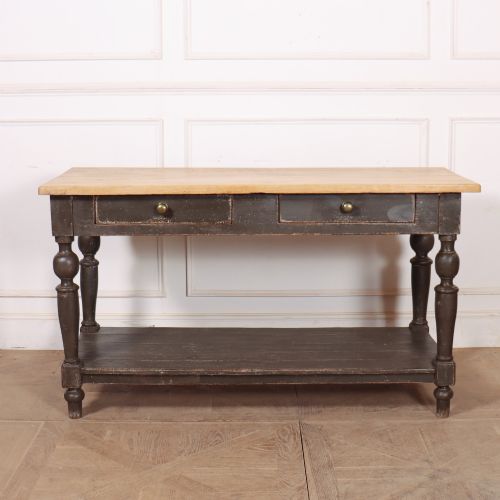
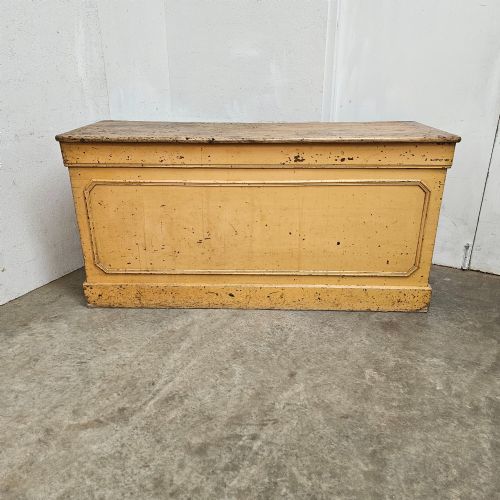
A painted pine counter sits at the intersection of utilitarian shop fittings and domestic furniture, serving as a functional surface with integrated storage. When you search for a painted pine counter, you encounter substantial items built for trade and daily utility during the nineteenth century. These pieces originate from various regional traditions including French, Hungarian, and Scandinavian workshops.
Materials and construction methods
Makers built these pieces using solid pine and timber carcasses, frequently incorporating metal, iron, and brass hardware such as drawer pulls and hinges. The structural joinery relied on sturdy methods suited to heavy commercial use in drapers shops and general stores. Surfaces often feature zinc tops or heavy wooden boards designed to withstand daily wear.
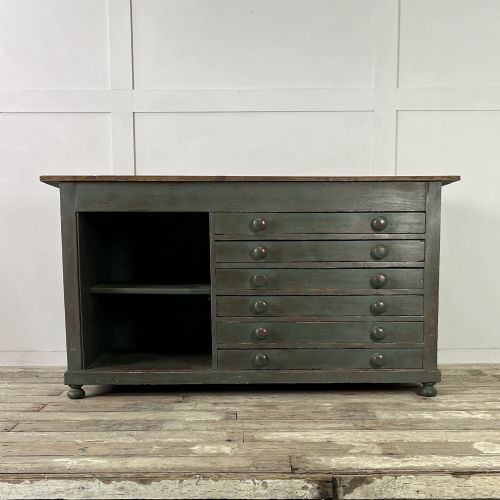
The defining characteristic of these items is the application of paint directly to the timber, with many examples retaining their original white, cream, green, or multi-layered painted finishes. Over decades of use, this paint developed a distinct patina through natural chipping and ageing. Workshops prioritized durability and practicality, ensuring the timber frames could support numerous drawers and heavy loads.
Listings feature pieces from the Victorian era and the nineteenth century, utilising pine, hardwood, iron, and brass.
Assessing quality in painted pine pieces
Quality in these pieces depends heavily on the integrity of the original painted surface and the extent of subsequent restoration. Examples retaining their initial coat of paint without heavy modern repainting command greater interest from collectors of authentic commercial antiquities. The complexity and scale of the piece, particularly multi-drawer configurations like fifty-drawer shop fittings, also influence the overall stature of the item.
The underlying timber construction dictates the structural longevity of the counter. Pieces constructed from solid pine and hardwood with tight joints and original brass or iron hardware represent superior manufacturing standards compared to heavily altered items. The balance between utilitarian wear and preserved decorative character defines the upper tier of these furnishings.
The Painted Pine Counter Glossary
- Shop counter
- A large piece of furniture traditionally used in retail establishments for serving customers and displaying goods. These counters often incorporate extensive drawer storage at the rear.
- Drapers table
- A long work table or counter utilised in fabric and textile shops for measuring and cutting cloth. They typically feature a generous surface area and sturdy timber legs.
- Shop fitting
- Custom-built furniture and fixtures designed specifically for commercial retail spaces. This category includes multi-drawer units and banks of drawers made for organising stock.
- Bank of drawers
- A multi-drawer storage unit integrated into a counter or freestanding cabinet. These units provided systematic organisation for small merchant wares.
- Patina
- The surface sheen and wear accumulated on timber and paint over decades of use. It serves as a visual indicator of age and authenticity.
Painted Pine Counter: Frequently Asked Questions
What is a painted pine counter?
A painted pine counter is a heavy-duty commercial or domestic furnishing originating from nineteenth-century shops and workspaces. They combine a large working surface with substantial storage options like drawers or cupboards.
These pieces were built from solid pine and timber, then finished with paint that has often aged into a distinctive patina over generations of use.
How were these counters used originally?
Merchants and shopkeepers utilised these counters in retail environments such as drapers and general stores to serve customers, wrap goods, and display merchandise. The numerous drawers and compartments kept inventory organised and accessible behind the main serving surface.
Over time, many of these commercial fittings transitioned into domestic settings as kitchen islands, sideboards, or statement work tables.
How do I style a painted pine counter at home?
You can integrate these substantial pieces into modern kitchens as freestanding islands or utilise them in hallways and living spaces for practical storage. Their rustic painted finishes complement neutral interiors and add textural contrast to contemporary rooms.
Pairing the counter with simple accessories highlights the original timber construction and historical character without overwhelming the space.
How do I identify a Victorian shop counter?
Victorian shop counters and shop fittings are distinguished by their solid pine construction, functional multi-drawer layouts, and nineteenth-century joinery techniques. Evidence of heavy commercial use, such as worn zinc tops or original layered paint, often points to this period.
Regional variations, including French and Hungarian provincial styles, provide further clues regarding the workshop origin and manufacturing date.