
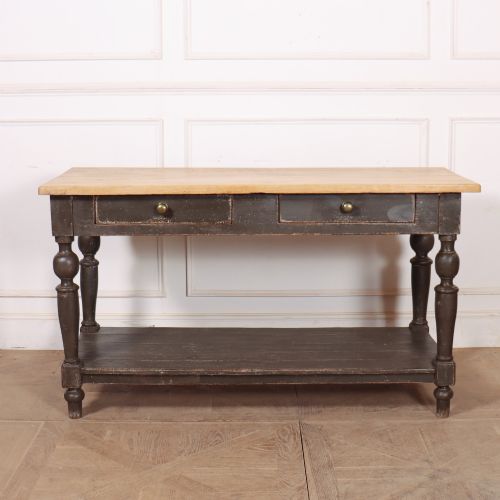
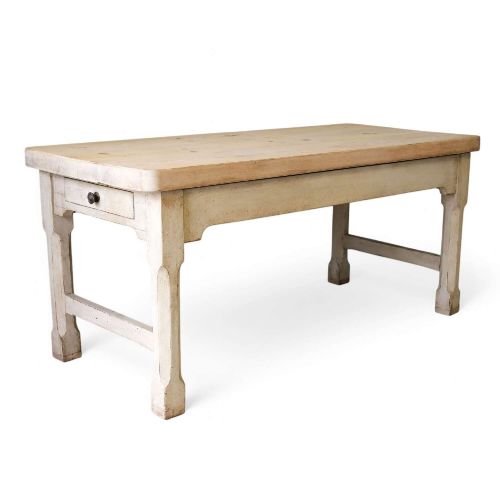
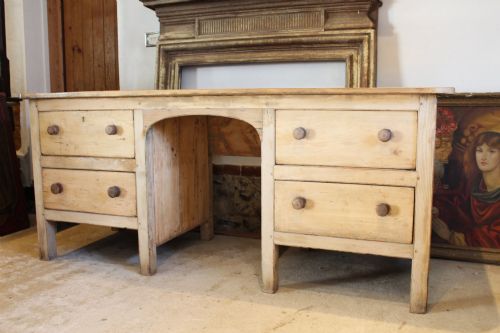
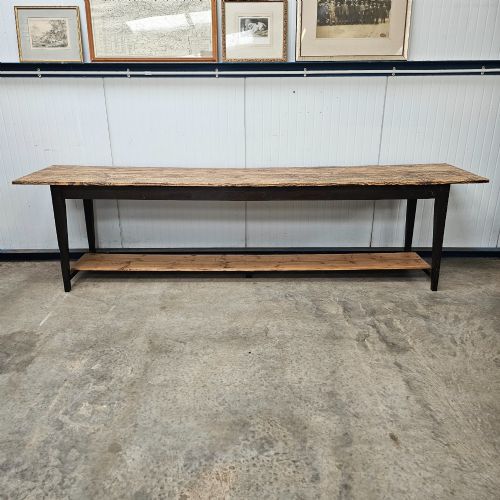


Pine Top Kitchen Island
A pine top kitchen island is a practical domestic workspace built to last, offering generous timber surfaces and sturdy utility for daily food preparation.
Pine Top Kitchen Island
A pine top kitchen island brings honest utilitarian charm into domestic spaces, functioning as the central hub for food preparation and communal gathering. When buyers search for a pine top kitchen island, they encounter substantial tables and counters originally built for demanding domestic or commercial environments.
The selections on this page span the nineteenth century, encompassing forms such as prep tables, drapers tables, shop counters, and harvest tables. These sturdy tables combine thick wooden tops with robust frames in pine, oak, sycamore, and painted wood.
Originating from French and English traditions, these pieces reflect regional vernacular styles from the Georgian, Victorian, and rustic farmhouse eras. Buyers are most likely to meet nineteenth-century English and French examples featuring generous proportions and practical under-tier storage or drawers.
How they were made
Construction relies on solid timber boards joined securely to form thick, durable working surfaces suited to heavy daily use. Pine provides the primary expansive top, often complemented by robust oak or sycamore components for structural integrity.
Frames are frequently strengthened with utilitarian elements in metal, brass, and ceramic, whilst later painted finishes appear on bases and shop counters. Traditional joinery methods ensure stability across large formats like harvest tables and long prep benches.
Listings span the nineteenth century, incorporating pine, oak, sycamore, painted wood, and brass components across various prep tables and shop counters.
What varies in quality
Quality separates everyday utility pieces from finer examples through the selection of timber and the integrity of the original construction. Thick solid pine tops with pleasing natural patination and harmonious proportions command greater appreciation.
The presence of secondary timbers like sycamore, integrated drawers, or two-tier shelving adds complexity and utility that elevate the piece. Surviving historic paint layers or untouched period surfaces also distinguish standard workshop tables from exceptional country house examples.
The Pine Top Kitchen Island Glossary
- Prep table
- A sturdy utilitarian work table designed for food preparation in large country houses or commercial kitchens. These pieces prioritize a thick timber top and stable legs over decorative embellishment.
- Drapers table
- A long counter or table historically used in textile shops for folding and measuring cloth. Their extended proportions make them highly sought after for modern domestic living spaces.
- Harvest table
- An exceptionally long dining or work table built to accommodate large groups during seasonal agricultural gatherings. They typically feature narrow widths and substantial length.
- Shop counter
- A commercial display and transaction surface often fitted with drawers and painted bases. These heavy pieces served mercantile environments before finding new life in domestic interiors.
- Patina
- The deep sheen and surface character developed on wood through decades of use, cleaning, and exposure. This gradual ageing process is valued by collectors for its visual warmth.
Pine Top Kitchen Island: Frequently Asked Questions
What is a pine top kitchen island?
A pine top kitchen island is a heavy work table or counter featuring a thick wooden surface made from pine. These versatile pieces serve as central workspace and storage units in domestic kitchens.
The listings on this page include nineteenth-century prep tables, shop counters, and harvest tables adapted for modern culinary use.
How do I choose the right size?
Consider the floor space available in your kitchen, ensuring enough clearance for movement and opening drawers around the table. Lengths vary significantly, from standard kitchen tables to large harvest tables spanning over nine feet.
Measure doorways and hallways carefully to guarantee safe access when placing a substantial multi-material table into your home.
Are these pieces suitable for daily cooking?
These tables were originally built for demanding domestic preparation, drapers' shops, and farmhouses, making them inherently practical for modern culinary tasks. The solid wood surfaces handle everyday kitchen activities with enduring strength.
Regular maintenance with appropriate oils helps protect the timber surface while preserving the historic character of the piece.
How can I tell the period?
Dating relies on examining construction techniques, joinery methods, hardware in brass or metal, and signs of wear consistent with nineteenth-century manufacture. Stylistic indicators point towards Georgian or Victorian vernacular traditions.
Descriptions often note specific eras such as around eighteen-hundred or eighteen-eighty, helping buyers connect pieces to their historical context.