
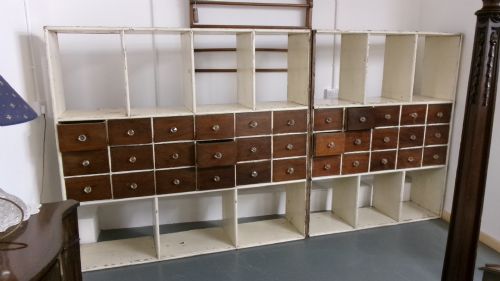


Painted Shop Fittings
These painted shop fittings are commercial survivors like banks of drawers and display cabinets that bring working history directly into the home.
Painted Shop Fittings
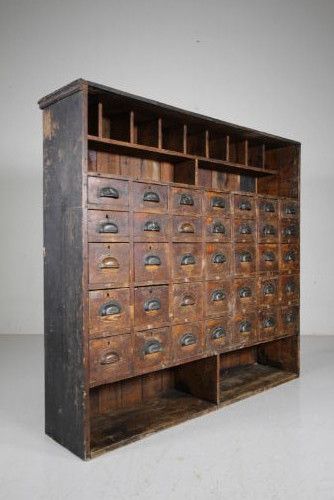
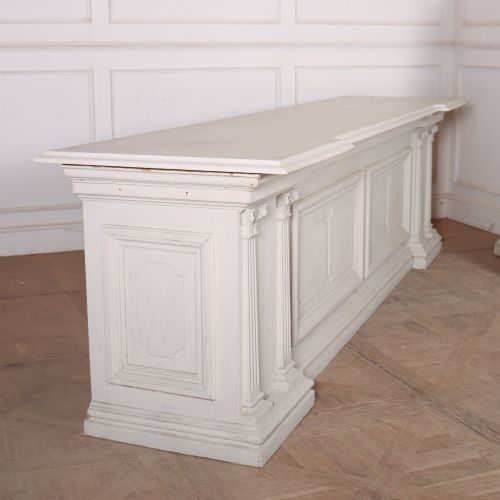
When you search for painted shop fittings, you encounter utilitarian pieces built for commerce that now find places in domestic interiors. These items encompass banks of drawers, display cabinets, shop counters, and storage boxes designed for nineteenth and early twentieth-century trade.
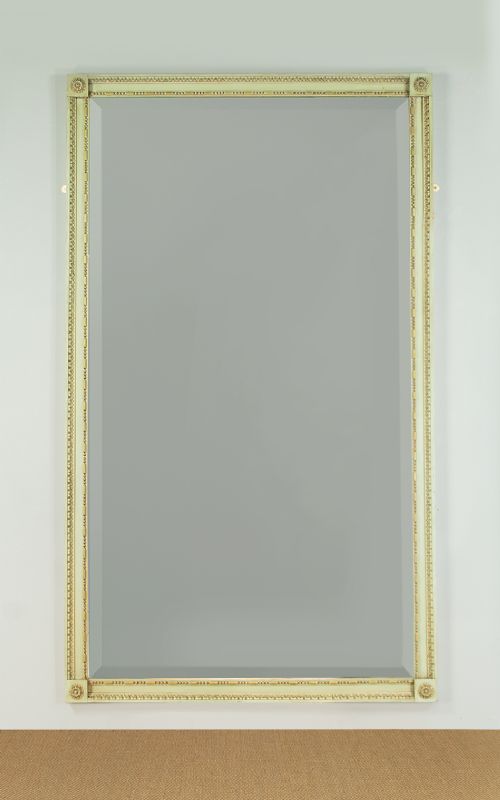
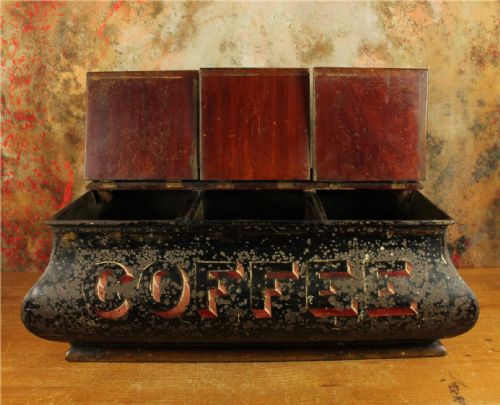
The most common examples on this page are banks of drawers and shop counters originating from Victorian England, France, and Hungary. Alongside these large fixtures appear smaller accessories including chemist jars, toleware boxes, mirrors, and advertising mannequins.
The materials reflect a purely practical origin, predominantly utilising pine, oak, and painted wood strengthened with glass, iron, and brass. Such furniture served demanding commercial environments before transitioning into sought-after storage for modern homes.
What varies in quality
Quality rests upon the originality of the painted surface and the integrity of the timber structure. Pieces retaining their early or original paint schemes hold distinct character compared to those stripped or repeatedly recoated.
Scale and complexity also define the better examples, such as multi-drawer banks and glazed display cabinets. Intact original details like sign-written merchant lettering elevate the standing of a piece considerably.
The listings feature pieces spanning the nineteenth century, Victorian era, and early twentieth century up to the 1930s, using pine, oak, glass, and iron.
The Painted Shop Fittings Glossary
- Bank of Drawers
- A multi-drawer cabinetry unit designed for efficient stock organisation in a shop or mercantile business. These units often feature numerous small compartments for haberdashery or hardware.
- Toleware
- Painted or japanned metalware produced for domestic and commercial utility. These tin items frequently served as storage boxes and shop containers.
- Chemist Shop Fitting
- Specialised cabinetry and glassware created for nineteenth-century apothecary and pharmacy use. These items include multi-drawer banks and labeled storage jars.
- Haberdashery Cabinet
- A glass-fronted or multi-drawer display unit built for cloth merchants and drapers. They allowed customers to view small textiles and sewing goods easily.
- Sign-Written
- Lettering applied by hand directly onto timber surfaces to advertise merchant names or contents. This traditional trade craft appears on shop counters and drawer fronts.
Painted Shop Fittings: Frequently Asked Questions
What are painted shop fittings?
They are commercial fixtures like banks of drawers, counters, and display cabinets originally built for nineteenth and early twentieth-century shops.
These utilitarian pieces were constructed from sturdy timbers like pine and oak, then painted for trade environments.
How were shop counters used?
Shop counters provided a sturdy workspace for merchants to serve customers, wrap goods, and display merchandise.
Many incorporated built-in storage drawers beneath the top surface to keep trade tools and stock organised.
How do I style a bank of drawers?
A bank of drawers offers substantial storage, making it practical for kitchens, hallways, or living rooms as a sideboard or console.
The numerous small compartments suit modern organisation while retaining industrial and provincial character.
How do I identify Victorian pieces?
Victorian pieces often feature dense pine or oak construction paired with traditional joinery and period paint colours such as cream, white, or green.
Original hand sign-writing and heavy brass or iron hardware further point toward nineteenth-century commercial origins.