


Panelled Pine Sideboard
A panelled pine sideboard brings rustic utility and honest timber grain into a room, offering sturdy storage rooted in country craftsmanship.
Panelled Pine Sideboard
When you search for a panelled pine sideboard, you encounter practical storage pieces built from softwood, often finished with painted surfaces or natural wax. The examples seen on this page span the nineteenth century, encompassing Victorian, Regency, and continental country styles.
Most items taking this form originate as cupboards, chiffoniers, shop counters, and dressers rather than formal dining room servers. These practical pieces reflect rural workshops and domestic utility from English and Scandinavian traditions.
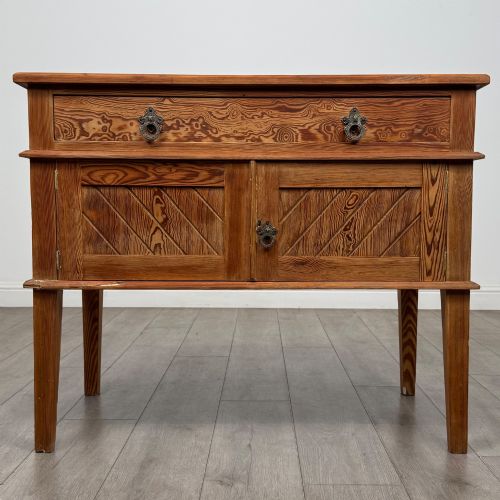
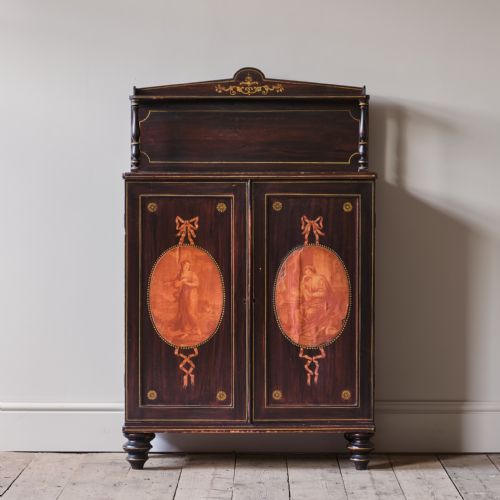
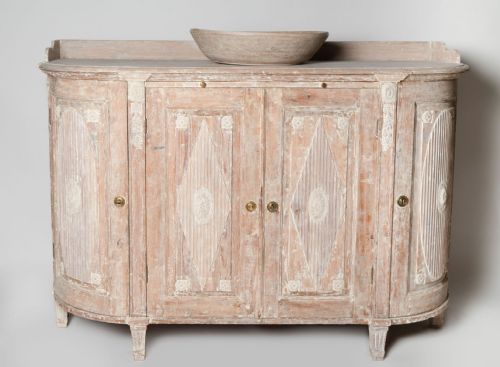
Buyers find pieces ranging from stripped pitch pine with visible grain to painted surfaces in simulated rosewood or muted country hues. The utility of these items makes them adaptable for modern hallways, living spaces, and kitchens.
How they were made
Construction relies primarily on pine and pitch pine, joined using traditional methods suited to everyday domestic and shop furniture. Iron and brass hardware appear on doors and drawers, providing functional hinges and pulls.
Surface treatments vary between natural waxed finishes and applied paintwork, including simulated rosewood effects. Workshops utilised painted timber to elevate simpler woods, drawing on Scandinavian and English country aesthetics.
Several pieces disguise humble pine beneath clever paintwork pretending to be grand rosewood.
What varies in quality
Quality rests in the structural integrity of the pine framework and the proportion of the panelling. Pieces built with dense pitch pine or well-executed painted surfaces display greater longevity and visual depth.
The sophistication of the original finish distinguishes standard utility items from finer decorative pieces. Surviving paintwork, whether Gustavian pale tones or simulated exotic woods, alters the character and desirability of the object.
The Panelled Pine Sideboard Glossary
- Pitch pine
- A dense, resinous variety of pine known for a prominent grain pattern. It provides durable surfaces on nineteenth-century storage pieces.
- Chiffonier
- A low sideboard or cabinet featuring doors enclosing shelves, popular during the nineteenth century. It often includes a small shelf or upstand on the top surface.
- Gustavian
- The Swedish interpretation of neoclassical style, characterised by restrained carving and pale painted finishes. This aesthetic appears frequently in Scandinavian country furniture.
- Simulated paint
- A decorative technique mimicking expensive hardwoods like rosewood using common timber. Painters applied pigments over a pine base to achieve a grander appearance.
Panelled Pine Sideboard: Frequently Asked Questions
What is a panelled pine sideboard used for?
These items serve primarily as storage furniture in domestic settings, holding household goods, linen, or tableware. Their flat top surfaces also provide space for display.
Historically, similar cabinets functioned in shops, country houses, and rural dwellings for daily organisation.
How do I date a pine sideboard?
Dating relies on construction methods, timber selection, and hardware types visible on the piece. Nineteenth-century examples often display hand-cut joints and distinct tool marks.
Stylistic cues such as Victorian proportions or Regency painted finishes also help determine the era of manufacture.
Are these pieces painted or natural wood?
Listings feature both stripped natural pine and painted timber surfaces. Some pieces retain original or later paint finishes in muted country tones.
Others showcase the warm grain of pitch pine enhanced through waxing.
Where do these sideboards originate?
Origin points span English country workshops and Scandinavian regions including Sweden. Continental pieces often display distinct painted aesthetics.
English examples tend to feature utilitarian designs rooted in rural domestic traditions.