





Antique Store Counter
These antique store counter pieces are utilitarian fixtures of trade, sought for their robust timber construction and glazed display compartments.
Antique Store Counter
An antique store counter serves as the primary transaction and display surface in historic retail environments, often incorporating glazed sections for merchandise. These pieces originate across the nineteenth and early twentieth centuries, spanning Victorian, Edwardian, and Art Deco design movements.
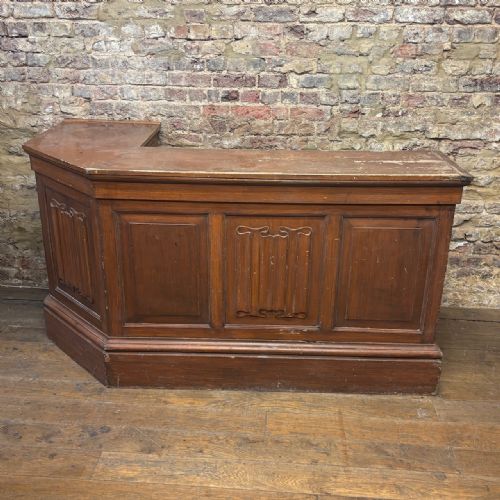
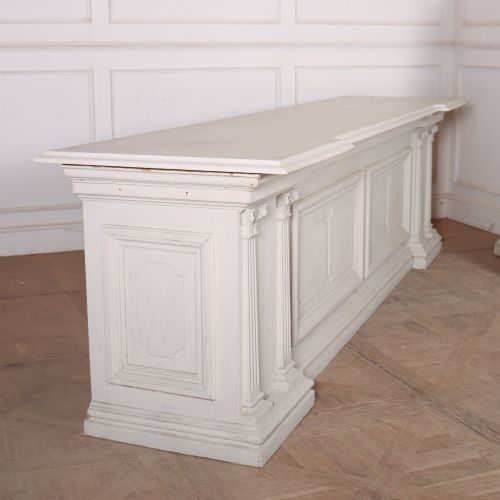
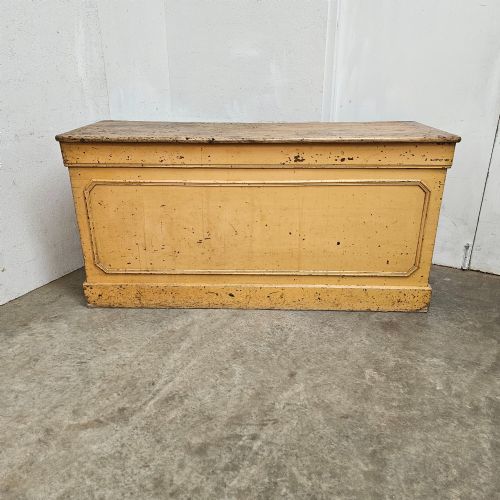
The version most commonly met on this page is the timber shop counter, constructed from oak, mahogany, or pine, frequently fitted with glass panels or drawers. Commercial fittings range from large drapers chests and haberdashery cabinets to smaller tabletop display units.
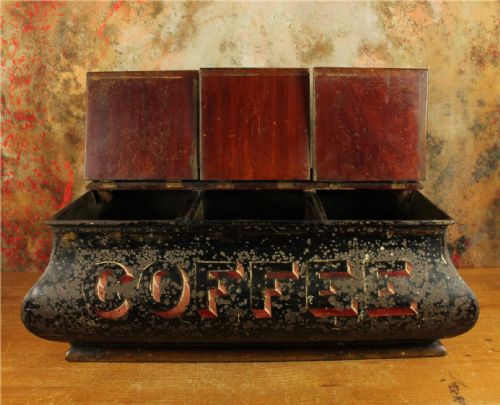
Origins vary between British workshops, French provincial ateliers, and American commercial manufacturers. Alongside traditional counters, related shop fittings such as advertising cabinets, display cases, and storage boxes appear within the selection.
Materials and construction
Construction relies heavily on dense hardwoods like oak and mahogany alongside utilitarian pine, chosen for their capacity to endure heavy daily retail use. Metal elements such as brass or bronze framing provide structural support for glazed display sections.
Surfaces exhibit either polished wood finishes, painted treatments, or original commercial signwriting. Joinery techniques reflect standard period commercial cabinet-making, prioritising utility, modular drawers, and adjustable feet.
Several counters retain the faint aroma of tobacco and biscuits from decades spent serving customers in Victorian high street shops.
Assessing quality and finish
Quality rests upon the integrity of the timber frame, the retention of original glass panes, and the preservation of authentic surface finishes like old paint or polished wood. Pieces retaining maker plates or original hardware command particular attention.
Proportion and scale dictate desirability, with longer drapers counters and finely detailed brass-framed display cases representing more ambitious commercial commissions. The presence of functional original elements, such as maker-stamped drawers or glazing bars, distinguishes finer examples from simpler utilitarian boxes.
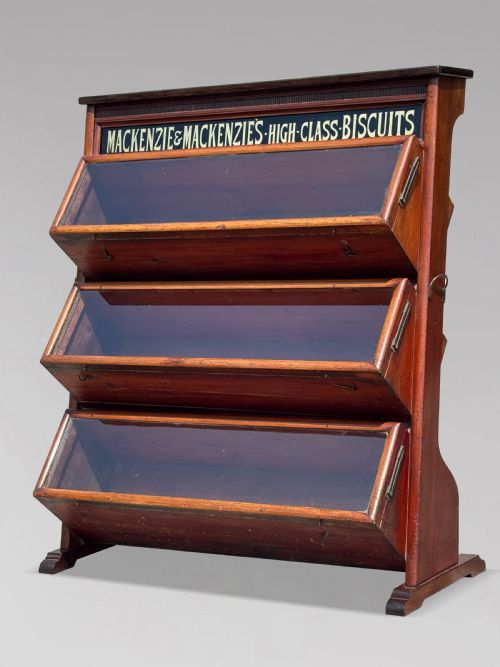
Mackenzie's Biscuits·Saml. Elliott & Sons·Quincy Showcase Works Illinois·Pierre Iman
The Antique Store Counter Glossary
- Drapers counter
- A long timber shop counter traditionally used in fabric and textile retail, often featuring banks of drawers on the attendant side.
- Shop fitting
- A permanent or semi-permanent fixture designed for commercial interiors, including shelving units, bookcases, and specialised display cabinets.
- Toleware
- Painted or enamelled metalware used for domestic or commercial storage, frequently seen in multi-compartment canisters and boxes.
- Advertising display
- A specialised retail fixture incorporating brand names or imagery, designed to promote specific goods directly on the counter.
- Apothecary box
- A small compartmentalised wooden chest or box originally utilised for storing medicines, herbs, or small dry goods.
Antique Store Counter: Frequently Asked Questions
How were store counters used originally?
Store counters functioned as the physical barrier between shopkeeper and customer, serving both as a transaction surface and a secure display area for goods.
Glazed top sections protected delicate items like biscuits, haberdashery, and tobacco while allowing buyers to inspect wares before purchase.
How do I clean an antique counter?
Maintenance requires gentle cleaning with a soft, dry cloth to remove dust without disturbing historic wood surfaces or original painted finishes.
Harsh chemical polishes should be avoided, particularly on pieces with aged patination, exposed pine, or delicate advertising lettering.
Are these counters suitable for modern kitchens?
These timber fixtures adapt well to contemporary domestic spaces, functioning effectively as kitchen islands, sideboards, or storage consoles.
The deep drawers and sturdy wooden tops provide practical workspace and organisation in modern residential settings.
How do I identify the period of a counter?
Dating relies on observing structural characteristics, timber choices, and hardware styles associated with nineteenth and early twentieth-century manufacturing.
Victorian and Edwardian pieces typically showcase heavier oak or mahogany framing, whereas later Art Deco examples introduce streamlined bronze and brass detailing.