


French Provincial Bed Frame
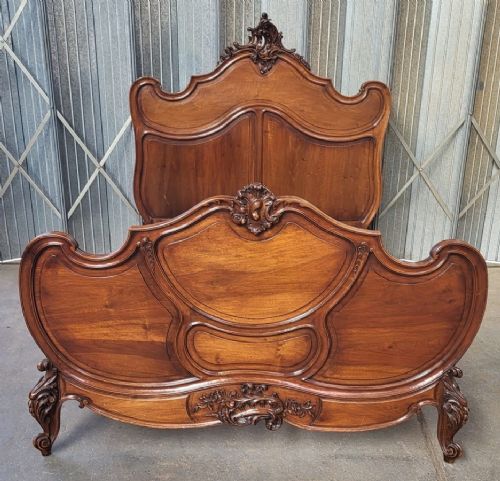
A french provincial bed frame brings immediate warmth and classical shape to a bedroom, built from walnut and beech with carved details.
Understanding French Provincial Bed Frame
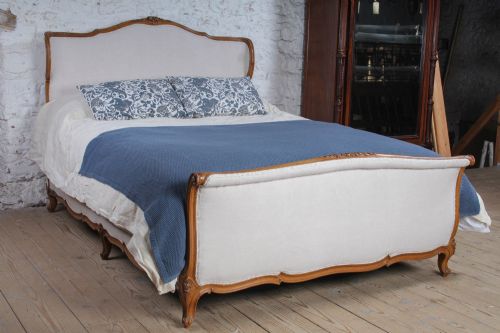
A french provincial bed frame offers substantial sleeping furniture rooted in 19th Century, Edwardian, and early 20th Century traditions. These frames combine regional French design sensibilities with robust proportions suited to modern master bedrooms.
Most examples found here span the period from 1910 through the 1920s, alongside late 19th Century pieces. Buyers will encounter both double and king size formats, often accompanied by matching bedside cabinetry.
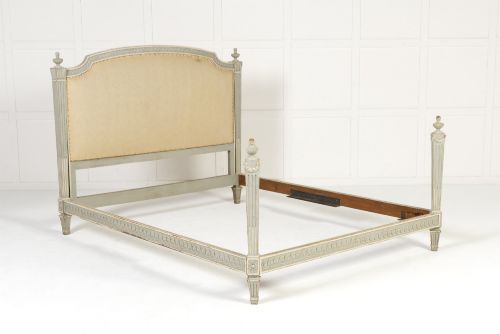
Stylistic influences range from explicit French Provincial and French Chateau aesthetics to Louis XVI Style interpretations. The forms rely on curved woodwork, shaped wooden frames, and occasionally integrated caning.
Materials and Construction
The primary structure relies on solid timber, with walnut and beech forming the backbone of these bed frames. Artisans shaped the wood through traditional carving techniques, producing shaped profiles and decorative crests.
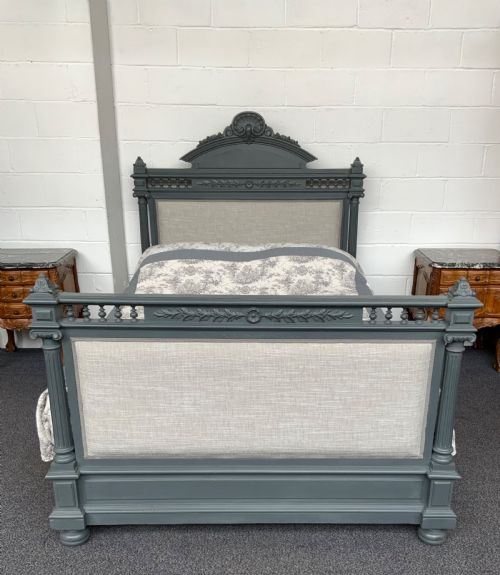
Surface finishes include painted treatments, often highlighted with gold leaf accents to accentuate the carved details. Caning appears on headboards and footboards, woven tightly into wooden frames to create texture and lightness.
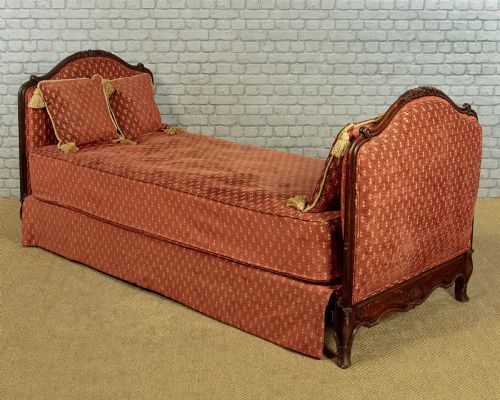
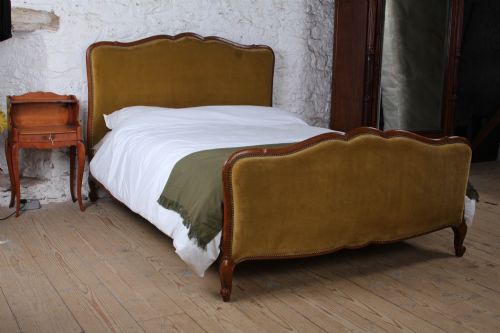
Upholstered versions incorporate textiles such as velvet, secured directly to padded panels within the wooden framework. Brass elements sometimes appear on fittings and mounts, completing the material palette.
Retail Price Guide 2026
Typical UK retail prices for french provincial bed frame, calculated from the Sellingantiques database of over a million retail prices indexed since 2003. This retail price guide relies exclusively on Sellingantiques data; no external sources or auction records are used, so the figures do not describe the wider market.
Listings span the late 19th Century through the 1920s, featuring walnut, beech, cane, velvet, and brass.
Assessing Quality and Execution
Quality reveals itself in the depth and sharpness of the hand carving on the solid walnut or beech. Finer examples display crisp, purposeful chisel work that flows naturally with the curves of the frame, rather than shallow or mechanical stamping.
The integrity of the structural joinery separates standard production from superior pieces. Well-made frames retain their rigidity and alignment over decades of use, supporting larger mattress sizes without wobble.
Secondary elements such as hand-woven caning or applied gold leaf show varying degrees of preservation and artisanal skill. Tight, uniform caning and evenly applied surface finishes indicate a higher standard of original workshop production.
The French Provincial Bed Frame Glossary
- Bedstead
- A framework of a bed supporting the mattress and springs, distinct from the mattress itself. These often feature decorative headboards and footboards.
- Caning
- Woven rattan material used to create open, patterned panels on headboards and footboards. It provides a lighter visual weight to heavy wooden furniture.
- Louis XVI Style
- A neoclassical design style characterised by straight lines, symmetry, and classical motifs such as fluting and ribbons. It heavily influences French provincial furniture.
- Walnut
- A dense, dark hardwood prized for its rich grain and stability in carved furniture. It forms the primary material for the finer bed frames in this selection.
Frequently Asked Questions
What sizes do these bed frames come in?
The selection includes double and king size proportions, alongside larger super king formats. These variations accommodate modern mattress standards while retaining antique wooden frames.
Buyers should verify internal dimensions carefully, as older French sizing conventions differ slightly from contemporary British standards.
How do I care for a caned headboard?
Caned panels require gentle dusting with a soft brush and occasional light moisture to keep the rattan flexible. Avoid placing these beds near direct heat sources which can dry out the natural fibres.
If the caning begins to sag slightly, gentle dampening on the reverse side can help the material tighten as it dries.
Do these beds require special mattresses?
Most antique bed frames accommodate standard modern mattresses if supported by appropriate modern slatted bases. Custom or adjusted mattress widths may be necessary for older French dimensions.
Consulting the specific frame measurements ensures proper fit before sourcing a mattress.
How do I distinguish between periods?
Late 19th Century pieces typically display heavier, deeper hand carving and darker walnut tones. Edwardian and 1920s examples often introduce painted finishes, gold leaf, and lighter proportions.
Examining the tool marks on the timber and the style of the joinery helps clarify the manufacturing era.