

French Ormolu Putto
These french ormolu putto pieces bring sculptural charm and decorative brilliance to nineteenth-century interiors through finely cast bronze and classical figures.
French Ormolu Putto
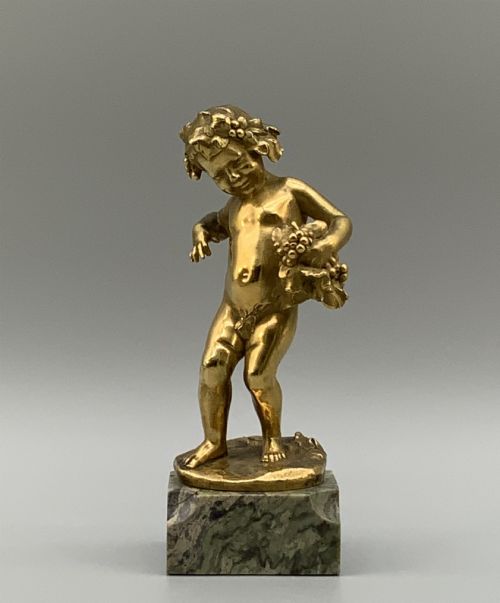
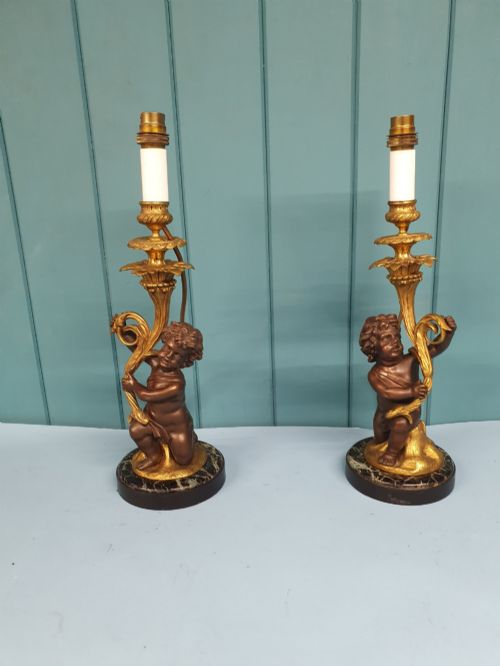
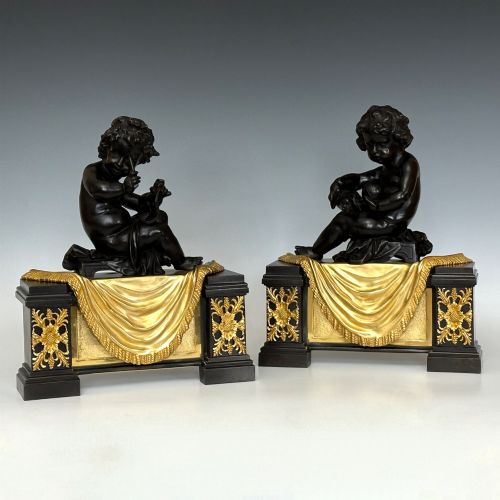
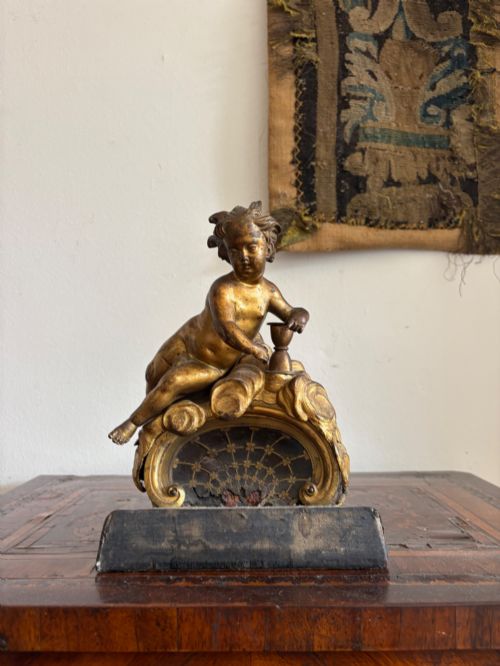
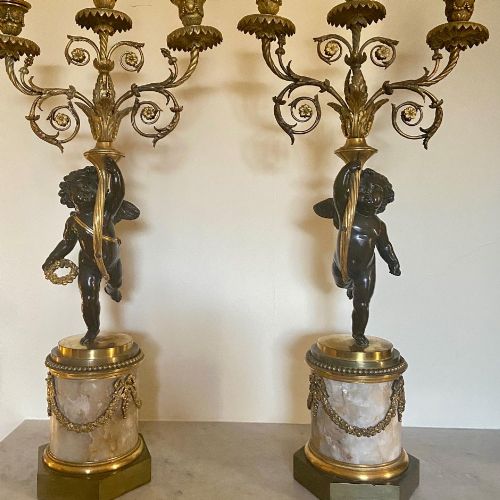
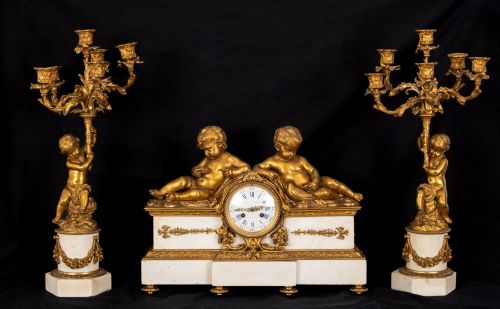
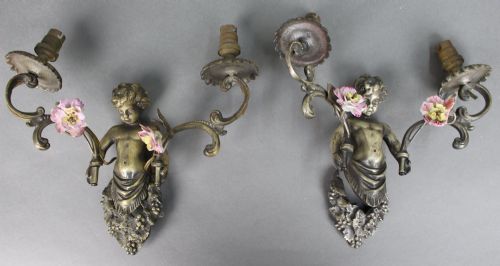
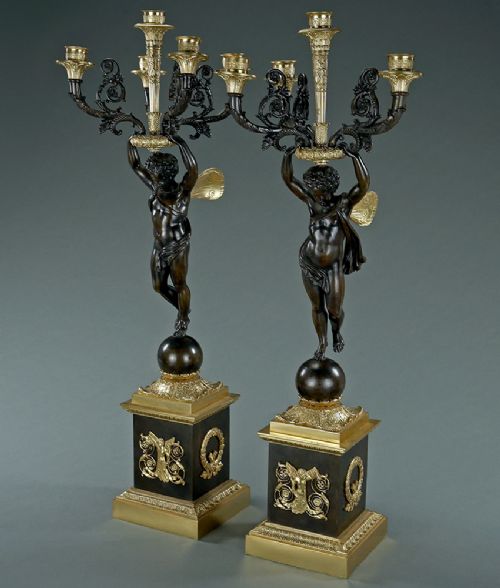
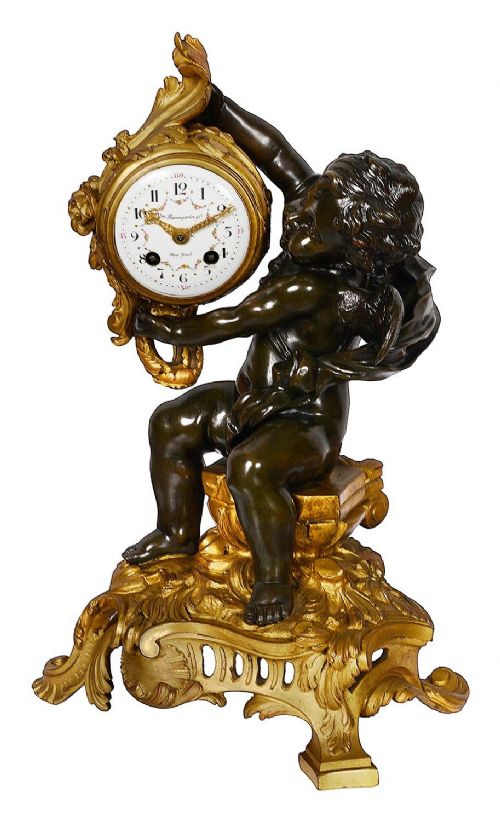
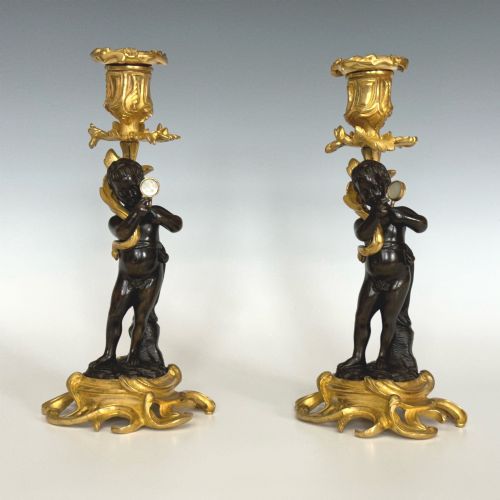
A french ormolu putto represents winged mythological infants rendered in gilded bronze, frequently appearing upon nineteenth-century mantel clocks, candelabra, and chenets.
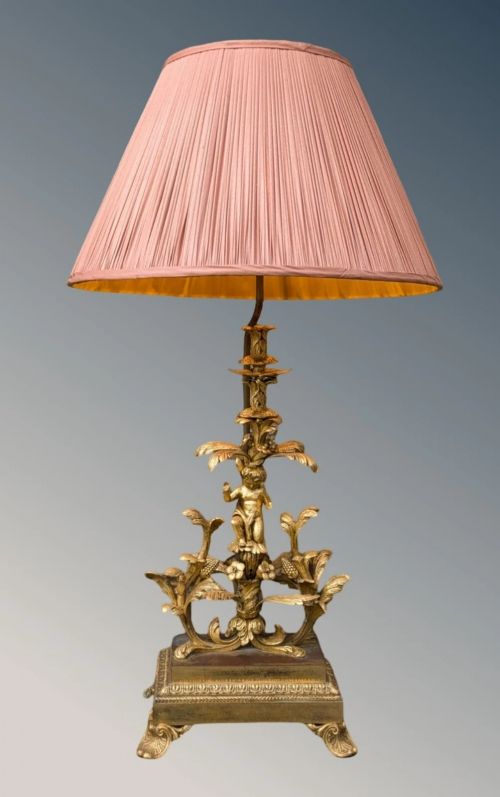
Buyers encounter these charming figures integrated into functional household objects spanning the Victorian era, Napoleon III period, and Louis XVI revival styles.
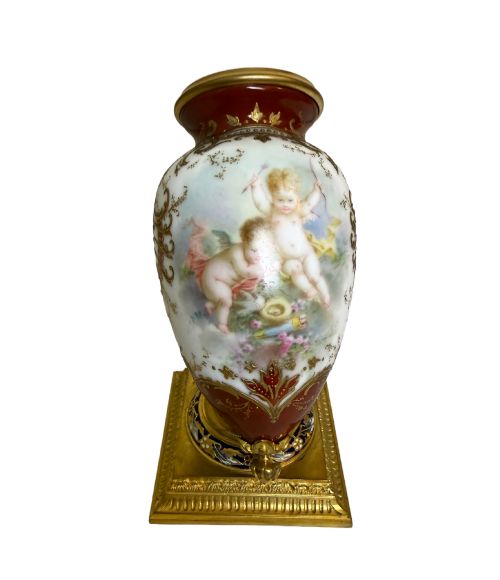
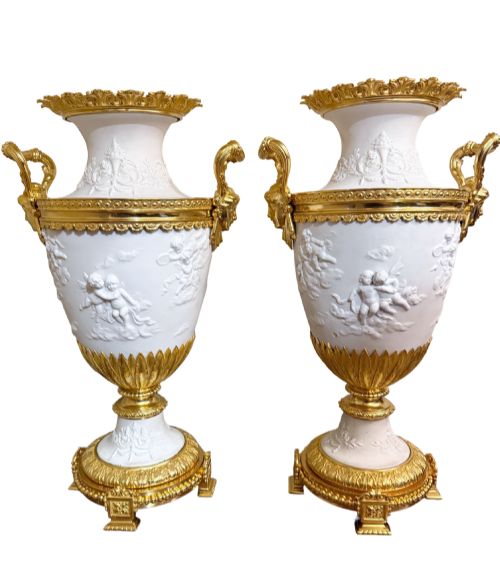
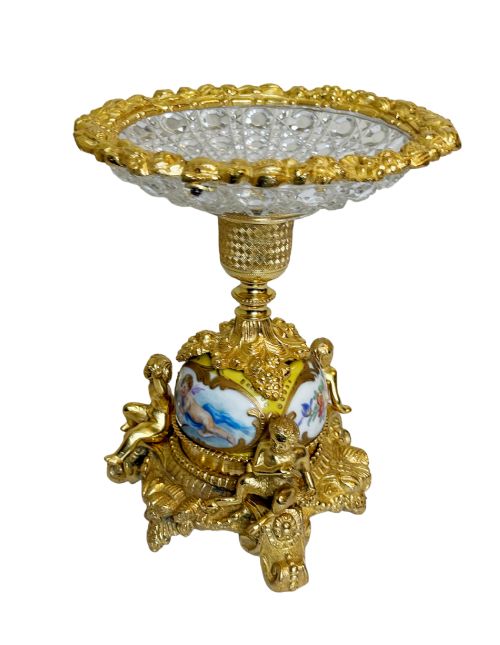
The selections on this page range from small finial ornaments to monumental clock garnitures and porcelain vases mounted with bronze cherubs.
Materials and Construction
Craftsmen utilised bronze and brass as core metals, applying mercury gilding to produce the distinctive golden ormolu surface finish.
Many items combine cast gilt bronze with contrasting white marble bases, hand-painted porcelain components, and cut crystal elements.
Foundries employed lost-wax and sand casting methods to achieve the intricate detail visible on the cherub sculptures and decorative mounts.
Several bronze putti double as fierce fireplace guardians while simultaneously playing musical instruments and floating on clouds.
Markers of Quality
The crispness of the chasing on the bronze surface distinguishes finer examples from softer, more mechanically finished castings.
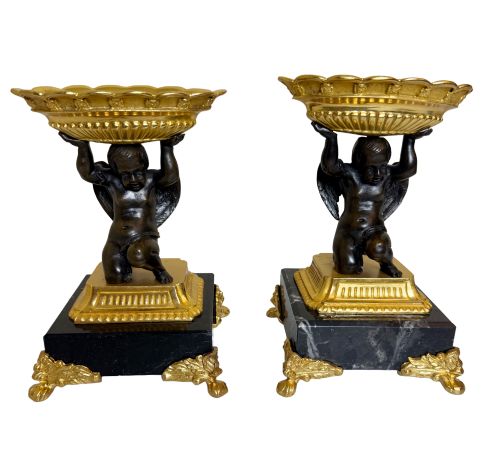
Integration between diverse materials, such as the mounting of bronze putti onto marble plinths or porcelain bodies, reveals the maker's skill.
Original fire gilding exhibits a deep, warm lustre that contrasts with the brighter, flatter tone of modern electroplating.
Charles Louis Malric·Susse Freres·Francois Redmond·Le Roy·Leon Message·Jollet et Cie
The French Ormolu Putto Glossary
- Ormolu
- Gilded bronze produced by applying a mercury and gold amalgam to a bronze base and heating it. This technique creates a durable golden finish characteristic of decorative metalwork.
- Putto
- A plump, naked child figure, frequently winged, derived from classical art. These cherubic motifs appear constantly in nineteenth-century French metalwork.
- Chenet
- A decorative iron or bronze support placed at the front of a fireplace. Pairs often feature cast putti or classical figures.
- Garniture
- A set of matching ornamental objects designed for display together, typically comprising a mantel clock flanked by candelabra or vases.
- Tazza
- A shallow saucer-like dish mounted on a stem and foot. These pieces frequently incorporate gilt bronze mounts and marble bases.
French Ormolu Putto: Frequently Asked Questions
What is french ormolu?
French ormolu refers to gilded bronze decorative objects created using mercury gilding techniques during the eighteenth and nineteenth centuries.
The process produces a rich golden surface that resists tarnish and highlights the chased details of the bronze casting.
How were putti used in decor?
Putti served as decorative cherubic motifs on functional household items like mantel clocks, candelabra, and chenets.
Craftsmen integrated these winged figures to add classical movement and pastoral charm to formal rooms.
How do I date a clock garniture?
Dating relies on examining the clock movement, dial construction, marble types, and stylistic revival indicators.
Nineteenth-century pieces often combine Louis XIV or Louis XVI revival motifs with cast bronze numbers and mechanical improvements.
How do I clean ormolu?
Cleaning requires only gentle dusting with a soft brush or a dry microfiber cloth to protect the delicate surface.
Harsh metal polishes and abrasive cleaners will strip the historic mercury gilding and ruin the antique finish.