


Cupid Bronze Figure
These cupid bronze figure pieces bring classical mythology into nineteenth-century interiors through sculptural metalwork.
Cupid Bronze Figure
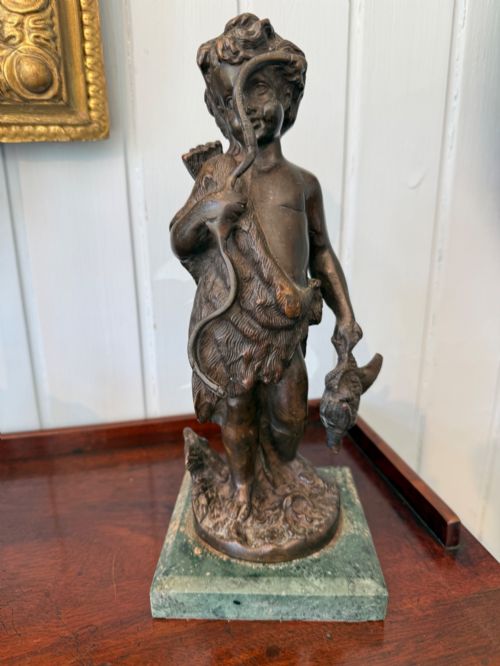
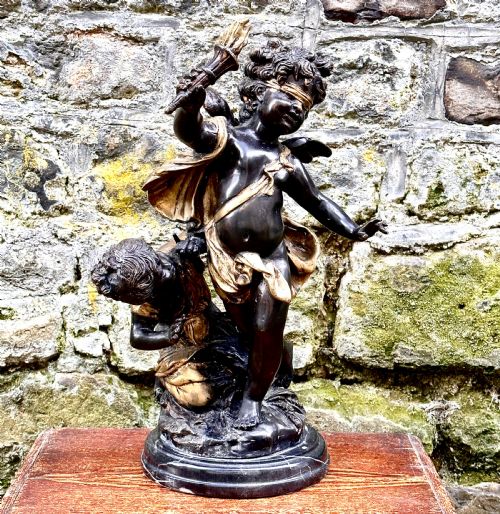
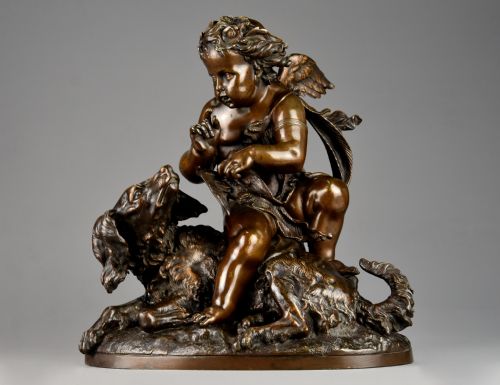
When searching for a cupid bronze figure, collectors encounter nineteenth-century decorative sculptures and statues originating mainly from French workshops and classical traditions. These pieces depict winged putti, Eros, and mythological figures engaged in activities like forging arrows or playing musical instruments.
The most frequent examples on this page are nineteenth-century French bronzes, often featuring patinated or gilt surfaces mounted on marble or wood bases. Alongside single figures, buyers find pairs, bookends, and larger sculptural groups involving mother and child compositions.
The forms span Neoclassical and Victorian styles, reflecting nineteenth-century French classical tastes. Many carry signatures from known makers or foundries, connecting them directly to the period's commercial bronze production.
How they were made
The construction relies on bronze casting techniques, yielding solid or patinated metal forms that capture fine anatomical details and feather textures on wings. Foundries in Paris and elsewhere utilised traditional methods to produce these sculptures, sometimes finishing the metal with a dark patina or gilding.
Many figures are paired with integral or added bases made of red marble, marble, or inlaid wood, while some functional items like bookends incorporate brass elements. The combination of cast bronze and stone plinths provides stability and weight to the finished pieces.
Current listings feature materials including bronze, marble, gilt bronze, patinated bronze, red marble, brass, and wood across nineteenth-century periods.
What varies in quality
Quality in a cupid bronze figure rests upon the crispness of the metal chasing and the sensitivity of the sculptural modelling. Finer pieces display sharply defined facial expressions, detailed hair, and intricate feather work on the wings rather than softened contours from worn moulds.
The choice of base materials and the integration of the figure with its marble or wood plinth also influence the overall character. Signed works associated with named sculptors and founders generally represent the higher tier of nineteenth-century production.
Louis Auguste Moreau·Aug Moreau·Ferrand·Clodion·Vauthier Thiebu Founders Paris
The Cupid Bronze Figure Glossary
- Putto
- A plump, often winged child figure derived from classical art. These motifs appear frequently in nineteenth-century sculptures and decorative objects.
- Patinated Bronze
- Bronze treated with chemical solutions to produce a specific surface colour, typically dark brown or green. This finish protects the metal and defines sculptural details.
- Neoclassical
- A style reviving classical Greek and Roman aesthetic principles, visible in nineteenth-century French bronzes. It emphasises restraint, proportion, and mythological subjects.
- Grand Tour
- The nineteenth-century practice of travelling through Europe to collect art and antiquities. Figures from this context often reproduce classical statuary.
- Gilt Bronze
- Bronze coated with a thin layer of gold or gold paint. This technique adds a bright, reflective surface to decorative figures.
Cupid Bronze Figure: Frequently Asked Questions
How do I identify a nineteenth-century cupid bronze figure?
Examine the casting quality, the style of the patina, and any signatures or foundry marks on the base. Nineteenth-century French pieces often display Neoclassical or Victorian characteristics.
Look closely at the metal colour and the mounting on marble or wood plinths, which help date the sculpture to the 1800s.
Were these figures used as bookends?
Some pieces were manufactured specifically as bookends, often in matched pairs to support volumes on a desk or shelf. These combine sculptural figures with sturdy bases.
Other examples are purely decorative statues designed for display on mantelpieces or cabinets.
What is the difference between cupid and putti?
Cupid specifically represents the Roman god of erotic love, usually shown with a bow, arrow, or wings. Putti are generic winged infant figures common in classical art.
In nineteenth-century bronze sculpture, both terms are frequently used to describe similar winged child motifs.
How should I clean a bronze figure?
Dust the surface gently with a soft, dry cloth to remove accumulated particles. Avoid using commercial metal polishes or water, which can damage the patinated or gilt finish.
Preserving the original surface treatment maintains the historical integrity of the piece.