


French Ormolu Porcelain Lamp
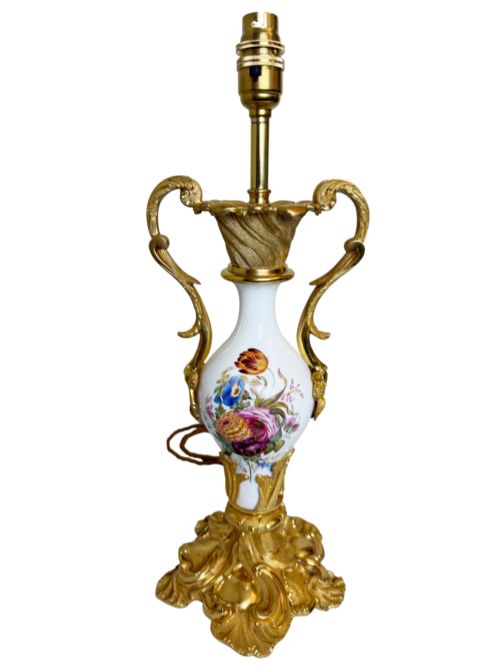
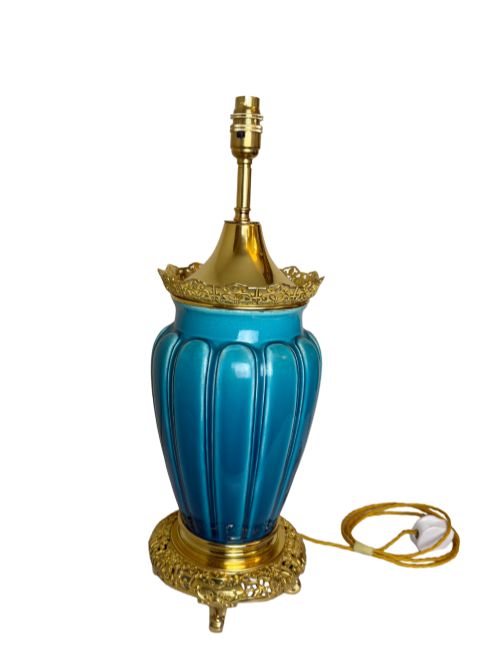
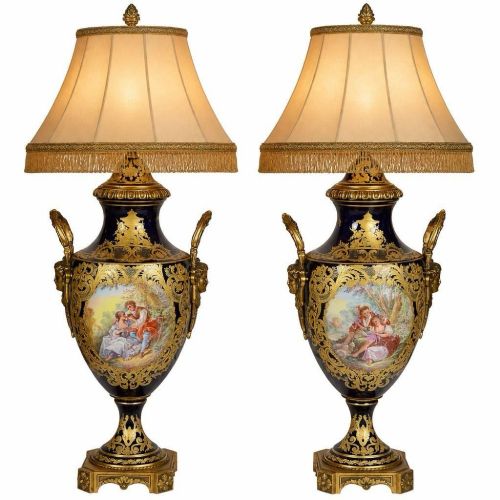
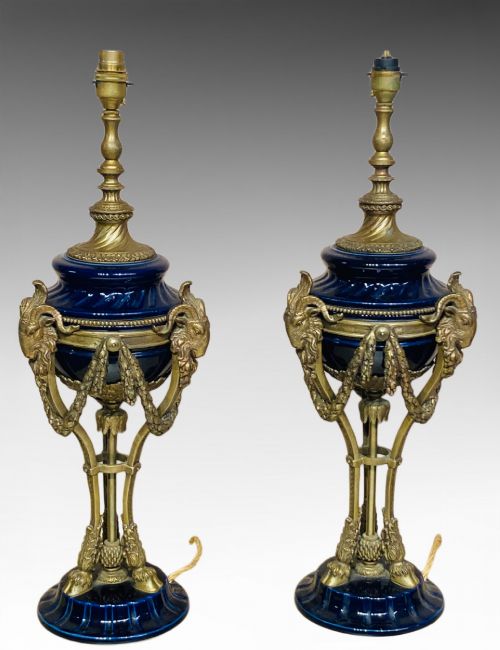
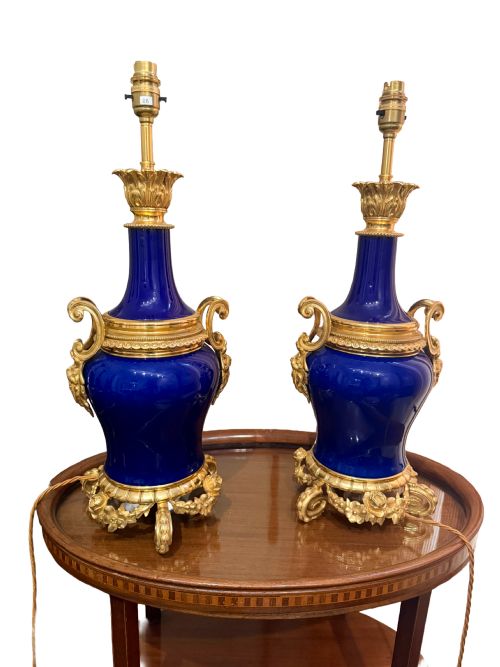
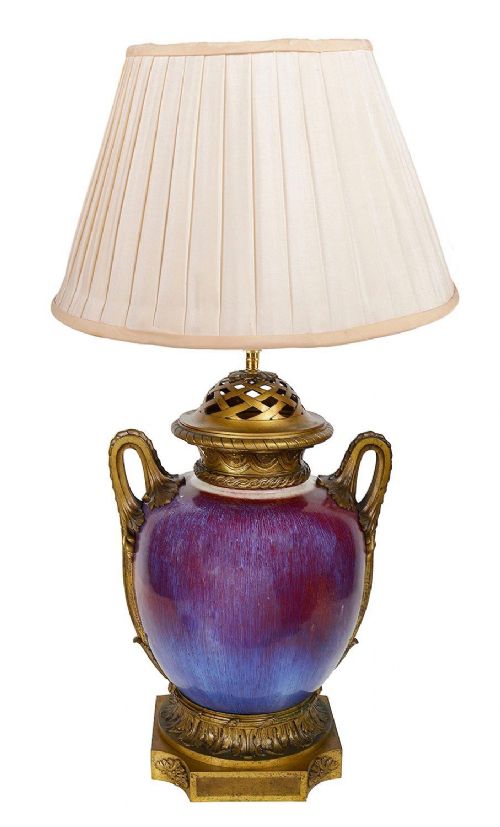
These french ormolu porcelain lamp examples combine gilt metal mounts with ceramic bodies to bring height and a warm glow to a room.
French Ormolu Porcelain Lamp
A french ormolu porcelain lamp typically pairs a ceramic body with cast metal mounts. Many pieces take the form of table lamps built from earlier vases.
The ceramic bodies draw heavily on European and Asian traditions, including Chinese export wares and French factory styles. These ceramic bodies range from monochrome turquoise and powder blue to hand-painted cobalt and vibrant famille rose palettes.
The metalwork supporting these ceramic bodies utilises ormolu, gilt bronze, and brass. These mounts wrap around necks, bases, and handles, anchoring the delicate ceramic vessels into functional lighting.
Materials and construction
Makers shaped the ceramic components through traditional glazing, hand-painting, and specialised techniques like pâte-sur-pâte. These ceramic bodies then received metal fittings cast and gilded to frame the porcelain.
The metal mounts rely on bronze or brass treated with mercury gilding or gold leaf to produce the distinct ormolu finish. These metal elements were cast separately and secured to the ceramic vessels with pins, screws, or collars.
An eighteenth-century Chinese lidded jar finds a second career casting light across a Victorian parlour.
Assessing quality
Quality rests on the crispness of the metal chasing and the artistry of the porcelain painting. Finer mounts display sharp, deep relief work in the bronze, while lesser examples appear soft and shallow in their cast detail.
The integration between ceramic and metal also dictates the standing of a piece. Superior lamps feature custom-fitted mounts that follow the exact contours of the vase without awkward gaps.
Samson·Gien
The French Ormolu Porcelain Lamp Glossary
- Ormolu
- Gilt bronze mounts created by applying finely ground gold-mercury amalgam to bronze. This technique yields a deep, warm metallic lustre on the decorative fittings.
- Sevres style
- Ceramic decoration mimicking the blue grounds, hand-painted reserves, and gilded accents associated with the royal French factory. Pieces carrying this descriptor often date from later revival periods.
- Famille rose
- A ceramic palette dominated by opaque pink enamel, introduced during the Qing dynasty. This style appears frequently on Chinese export vases later converted into lamps.
- Pâte-sur-pâte
- A method where an artist builds up layers of liquid clay slip onto a ceramic background to create a low relief cameo effect. This technique produces tactile, translucent white designs against coloured porcelain.
French Ormolu Porcelain Lamp: Frequently Asked Questions
Were these always lamps?
Most pieces started life as decorative vases, jars, or cisterns before receiving electrical fittings and bases at a later date. The conversion process often involved drilling the ceramic body to run internal wiring.
This adaptation preserves the decorative value of antique ceramics while making them useful for modern domestic lighting.
How do I spot Sevres style?
Look for rich blue ground colours such as bleu celeste or bleu royale, combined with hand-painted pastoral scenes or floral reserves. Gilt scrollwork often frames these painted panels.
Many nineteenth-century French workshops produced this aesthetic to satisfy strong demand for eighteenth-century court designs.
What is pate sur pate?
This decorative method involves painting successive layers of liquid white porcelain slip onto a darker ceramic body. The technique creates a raised, semi-translucent design that resembles carved cameo glass.
Pieces featuring this detail require close inspection to appreciate the subtle relief work against the coloured background.
How do I care for ormolu?
Dust the gilt bronze mounts gently with a soft, dry cloth to prevent dirt accumulation. Avoid harsh chemical cleaners that can strip away the historic gold leaf or gilding.
Keep the lamp away from direct moisture and bright sunlight to protect both the metal surface and the painted porcelain body.