
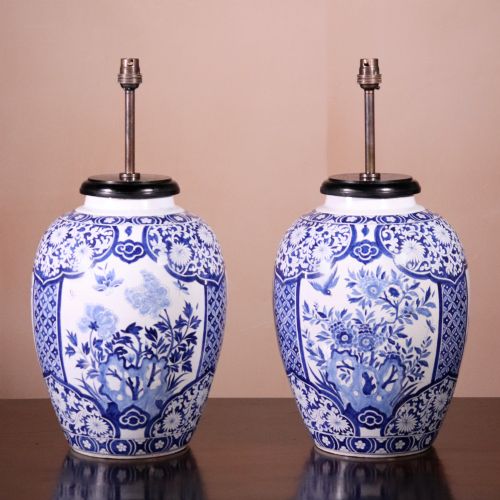


Chinese Ginger Jar Lamps
Chinese ginger jar lamps bring a rich decorative presence to a room, fashioned from antique vessels and wired for modern light.
Chinese Ginger Jar Lamps
Chinese ginger jar lamps combine traditional ceramic storage vessels with functional electric lighting, creating striking decorative objects for a room. When you examine Chinese ginger jar lamps on this page, you encounter forms that originated as lidded jars used for storing spices or preserved herbs before being converted into lamps.
The pieces available span the nineteenth century and incorporate distinct decorative palettes such as blue and white, famille rose, and famille verte. Many examples arrive as matched pairs, while others stand as single vases mounted on wooden or metal bases.
Makers adapted these ceramic bodies during later periods, often adding silk fabric shades and brass or ormolu mounts to complete the transformation into table lamps. These conversions draw upon styles including Chinese export, Qing dynasty, and French chinoiserie.
Materials and Construction
Potters shaped the primary vessel from high-fired porcelain, applying mineral pigments under or over the glaze before firing the ceramic body. Artisans then fitted these vases with brass or ormolu mounts, securing the electrical wiring through drilled bases or custom collars.
Secondary elements include carved wooden bases that steady the rounded ceramic bodies, alongside hand-sewn fabric or silk shades positioned at the top. Gilding with gold leaf occasionally highlights the metal mounts and ceramic rims on finer examples.
Listings feature nineteenth-century porcelain bodies paired with silk fabrics, brass, ormolu, and carved wood.
Evaluating Quality and Execution
Quality rests in the crispness of the hand-painted decoration on the porcelain and the harmony of the metal mounts. Finer examples display finely detailed cobalt blue work or delicately applied famille rose enamels that maintain clarity across the curved surface.
The integration of the conversion work dictates the overall standard, separating simple alterations from pieces fitted with substantial ormolu or heavy brass hardware. Matched pairs showing consistent glaze tones and balanced proportions stand at the upper end of the selection.
Samson Porcelain
The Chinese Ginger Jar Lamps Glossary
- Famille Rose
- A palette of opaque enamels dominated by pink or rose colours, introduced during the Qing dynasty. This technique allowed for nuanced shading in floral and figural designs.
- Famille Verte
- A translucent green enamel palette characteristic of Qing ceramics. It frequently incorporates iron red, yellow, and blue to create vibrant pictorial scenes.
- Ormolu
- Gilt bronze mounts used to ornament the base and neck of ceramic vessels. This French technique adds structural support and decorative weight to lamp conversions.
- Crackleware
- A porcelain glaze intentionally patterned with a network of fine microscopic cracks. This finish mimics older antique ceramic traditions.
- Chinoiserie
- European artistic styles reflecting Chinese motifs and decorative techniques. Artisans applied these interpretations to furniture, porcelain, and interior fittings.
Chinese Ginger Jar Lamps: Frequently Asked Questions
How do I date a Chinese ginger jar lamp?
Dating relies on examining the ceramic body, the style of the hand-painted decoration, and the characteristics of the associated mounts. Nineteenth-century examples often display specific porcelain potting traits and hand-mixed mineral pigments.
The conversion work itself provides further clues, as nineteenth-century wiring methods and brass fittings differ markedly from later electrical components. Comparing the glaze wear and the base construction helps confirm the period of the original vessel.
Are these lamps made from old jars?
The ceramic bodies originate from antique Chinese vases and storage jars, many dating to the nineteenth century. Artisans converted these traditional vessels into lamps by adding electrical fittings and stable bases.
While the porcelain is historic, the wiring, lamp holders, and fabric shades represent modern safety updates required for daily domestic use.
How do I choose between blue and white and famille rose?
Blue and white pieces offer a classic, high-contrast aesthetic defined by cobalt pigments painted directly onto the porcelain body before glazing. These jars suit traditional and contemporary interiors alike through their restrained palette.
Famille rose and famille verte examples introduce polychrome enamels, offering richer colours and detailed figurative or botanical scenes. Your choice depends on whether you prefer subtle cobalt patterns or vibrant multi-coloured enamel work.
Where should I place a ginger jar lamp?
These lamps function well on side tables, sideboards, or console tables where their substantial ceramic forms serve as focal points. Their height and decorative presence suit spaces that benefit from ambient accent lighting.
Keep them away from high-traffic edges where the rounded porcelain body or silk shade might be accidentally knocked.