

Oriental Bedside Lamp
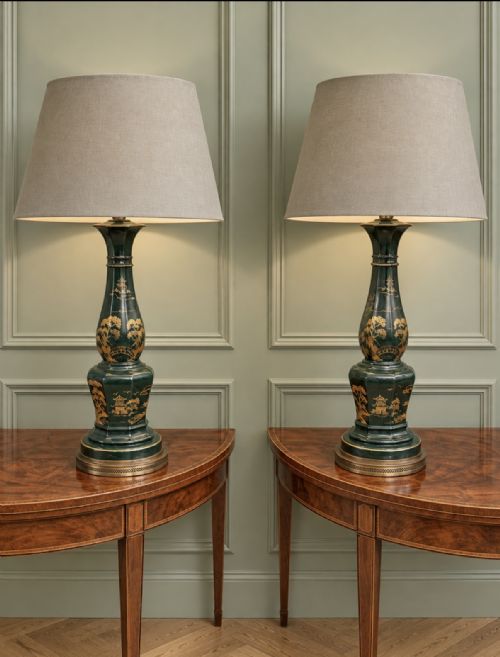
An oriental bedside lamp brings hand-painted porcelain, bronze, and lacquer into a bedroom scheme, offering soft illumination alongside historic craftsmanship.
Oriental Bedside Lamp
An oriental bedside lamp brings historic East Asian and South Asian vessels into domestic interiors, repurposed as lighting from the nineteenth and early twentieth centuries. Buyers seeking this phrase encounter converted vases, ginger jars, and tea canisters adapted for electricity during the Victorian, Edwardian, and later decades.
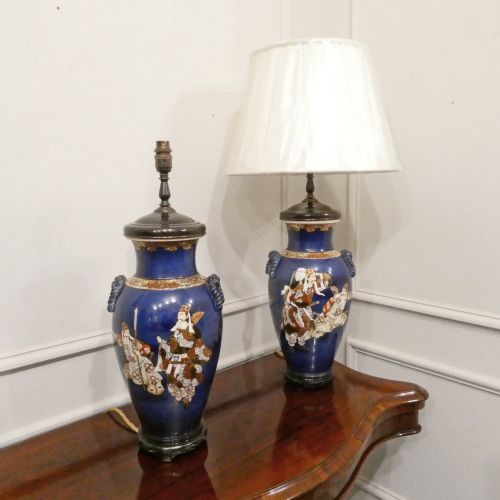
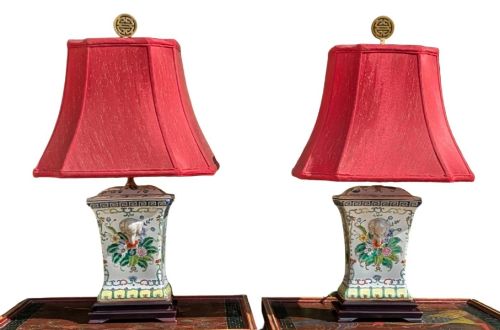
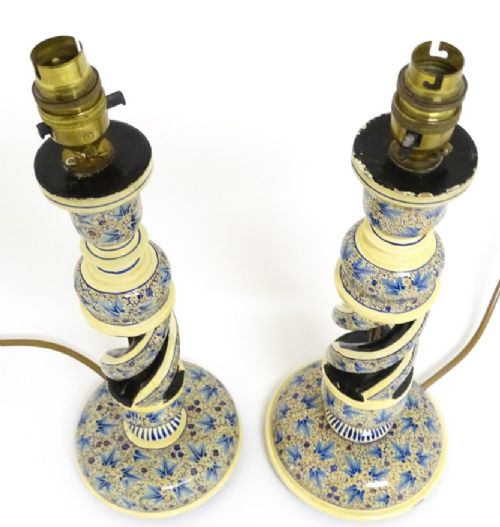
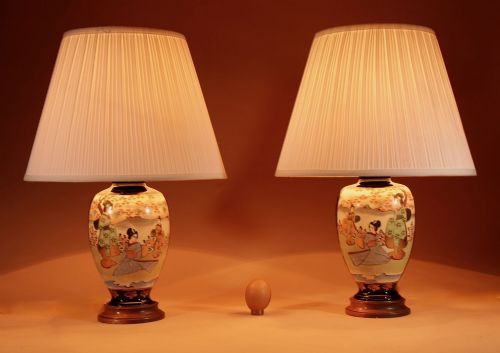
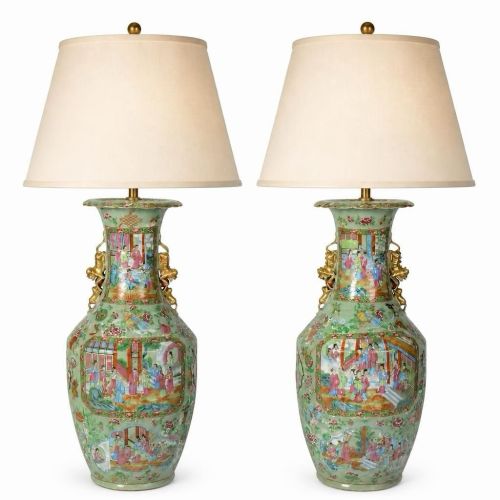
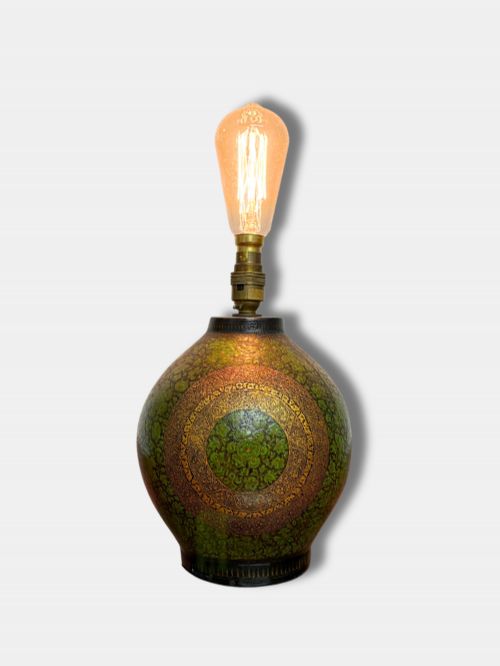
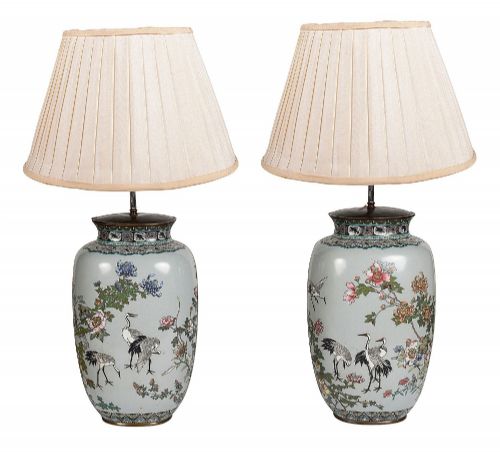
The selections on this page concentrate heavily on Japanese Satsuma pottery, Chinese porcelain such as Famille Verte and Rose Medallion, and Kashmiri hand-painted woodwork. These objects combine traditional regional motifs with functional table lighting suited to smaller spaces.
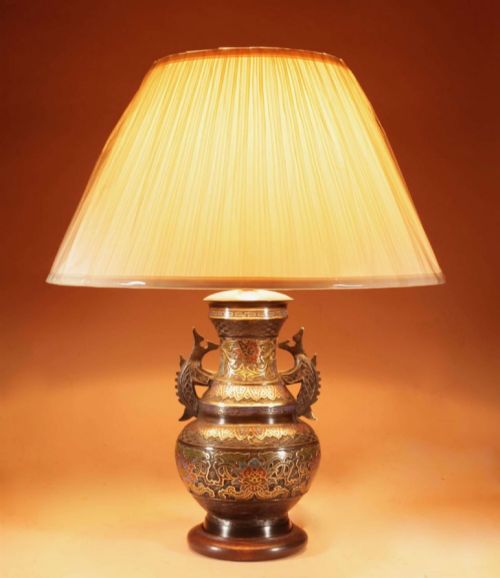
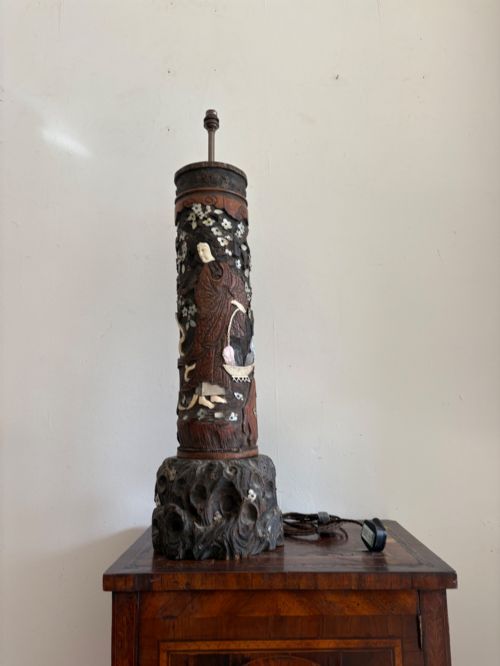
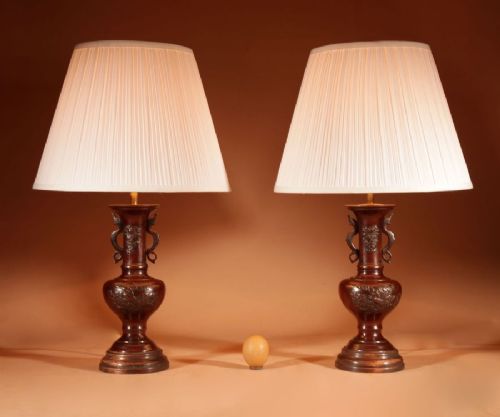
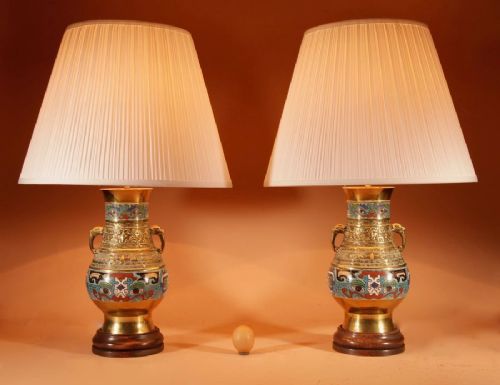
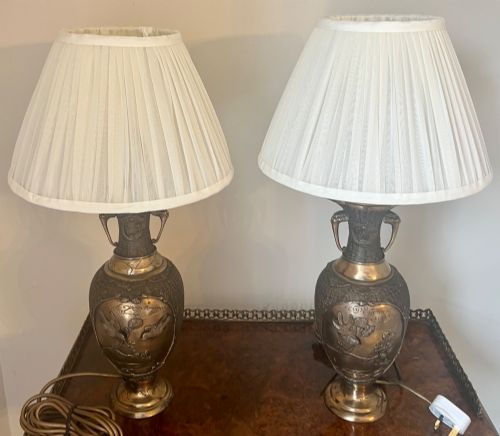
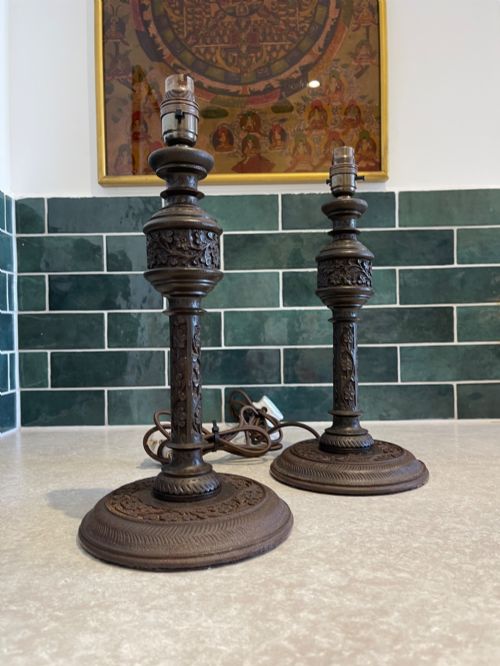
Alongside ceramic and lacquer forms, the listings include bronze, brass, and champlevé enamel pieces originating from Meiji period workshops and Chinese export production. Such lamps offer varied silhouettes ranging from ginger jar bodies to slender carved brush pots.
How they were made
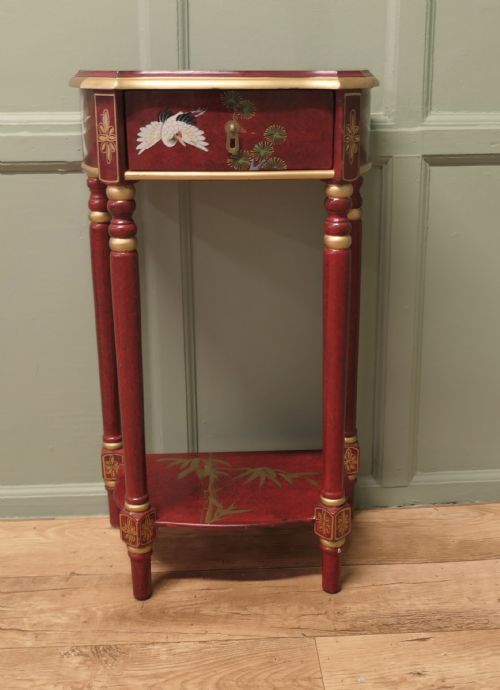
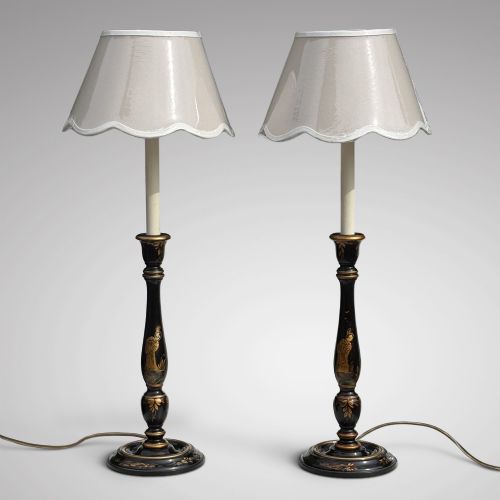
Makers utilised rigid substrates and fine metals, combining carved hardwood, cast bronze, and heavy brass with delicate ceramic bodies. Surface decoration involved layered red lacquer, champlevé enamel work, and hand-applied gilt detailing over porcelain or metal bases.
Many ceramic examples began life as lidded vases, ginger jars, or tea canisters before undergoing professional conversion into table lamps. Artisans applied polychrome pigments, underglaze blue, and intricate enamel work during the nineteenth and early twentieth centuries.
Several converted vessels started life holding tea or ginger before retiring to illuminate bedside tables.
What varies in quality
The standard of an oriental bedside lamp rests on the crispness of the hand-painted detail and the stability of the conversion. Pieces decorated with tightly controlled Satsuma enamel or fine cloisonné wirework sit above simpler painted designs.
The integrity of the original vessel dictates the overall merit, particularly whether drilling for electrical wiring compromised the primary decorative surface. Furthermore, matching pairs command greater interest than single converted jars.
The Oriental Bedside Lamp Glossary
- Satsuma
- A type of Japanese earthenware featuring a crackle-glaze ivory ground decorated with polychrome enamels and raised gilt. It became popular during the Meiji period for export markets.
- Champlevé
- An enamelling technique where troughs are carved into a metal base like bronze or brass and filled with vitreous enamel powder before firing. This creates raised metal outlines around coloured glass areas.
- Cloisonné
- Enamelling work where metal wires are soldered to a vase body to form compartments that are subsequently filled with coloured paste and fired. The resulting surface shows distinct metallic cellular boundaries.
- Ginger jar
- A broad-shouldered ceramic storage vessel with a domed lid, frequently utilised for conversion into table lamps. These jars typically display blue and white or Famille Rose palette designs.
- Meiji Period
- The era of Japanese history spanning from 1868 to 1912, associated with intensive craft production for Western export. Pieces from this time often exhibit meticulous metalwork and porcelain decoration.
Oriental Bedside Lamp: Frequently Asked Questions
Are these lamps converted from old vases?
Many examples began as nineteenth-century Chinese export vases, ginger jars, or tea canisters subsequently fitted for electrical wiring.
This method of adaptation preserves the historic ceramic body while updating the object for domestic utility.
How do I identify a Meiji period lamp?
Japanese pieces from the Meiji era often display dense Satsuma decoration, intricate bronze casting, or detailed cloisonné enamel work.
They reflect the export styles popular between the late nineteenth and early twentieth centuries.
What is Kashmiri hand-painted lighting?
These pieces feature wooden bodies ornamented with detailed hand-painted floral or geometric motifs, predominantly emerging from early twentieth-century workshops.
They offer a distinct regional aesthetic compared to porcelain counterparts.
Do these lamps require special care?
Dusting with a dry, soft cloth protects delicate lacquered surfaces and hand-painted enamel details from abrasion.
Avoiding moisture prevents damage to older wooden bases and metallic finishes.