



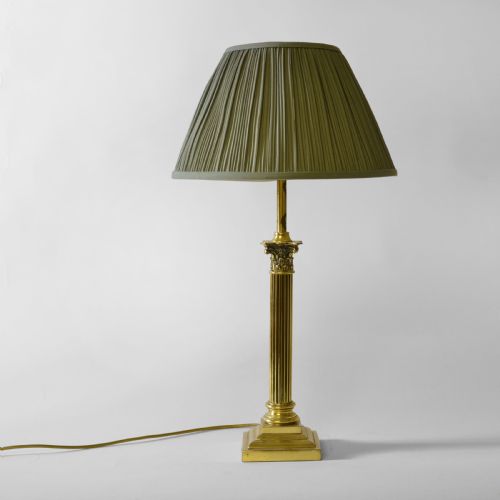
Pleated Shade Table Light
These pleated shade table light fixtures combine period ceramic or metal bodies with soft fabric diffusers, offering a warm domestic glow.
Pleated Shade Table Light
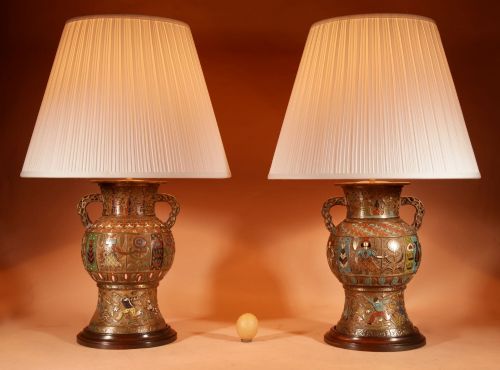
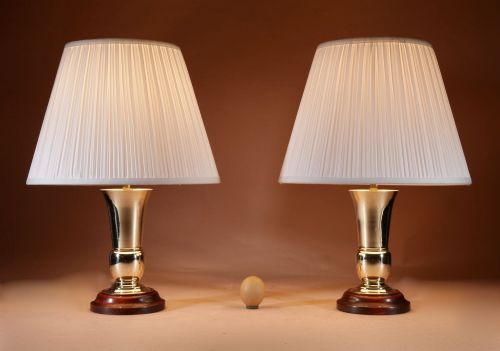
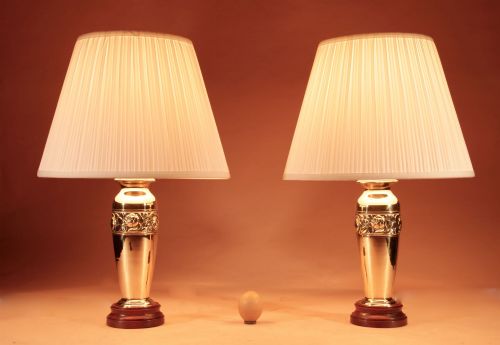
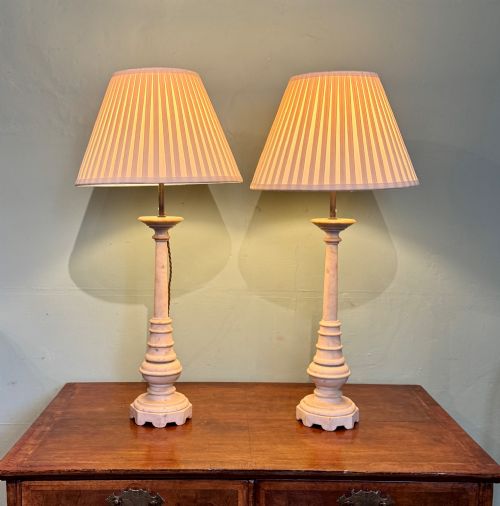
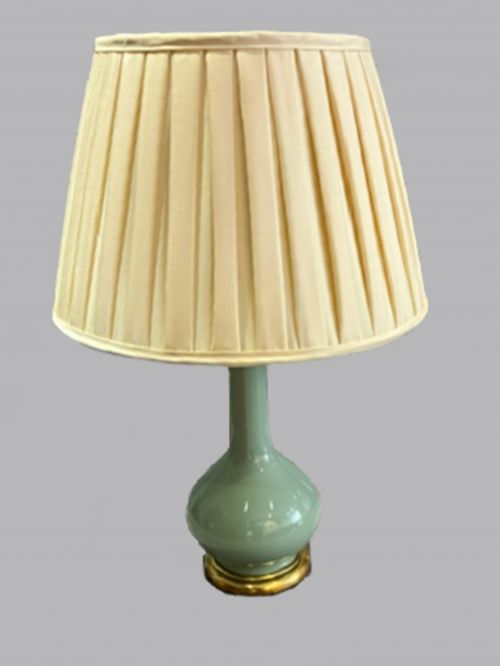
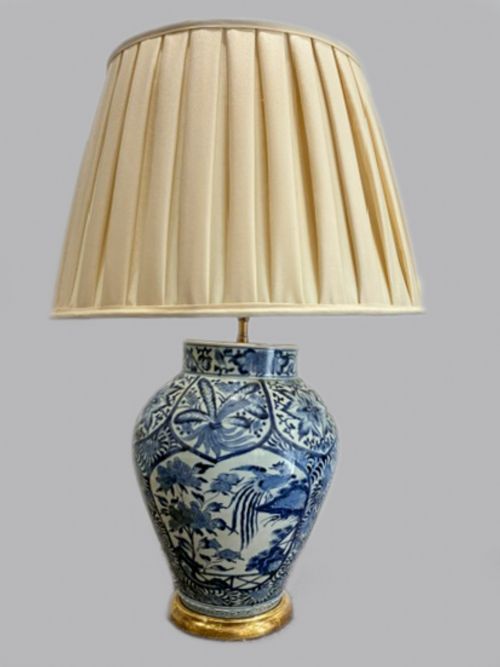
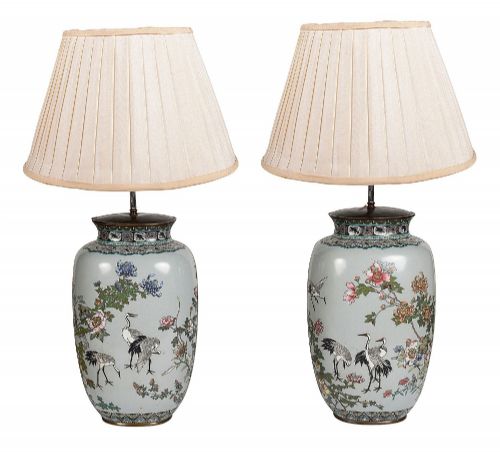
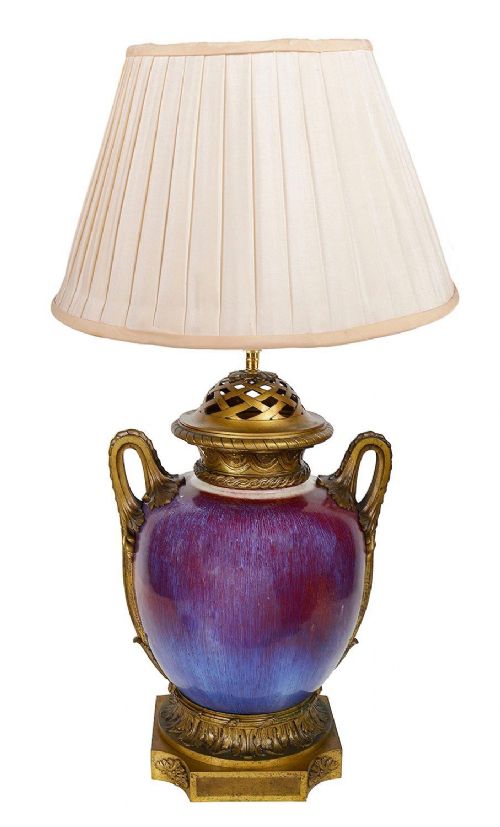
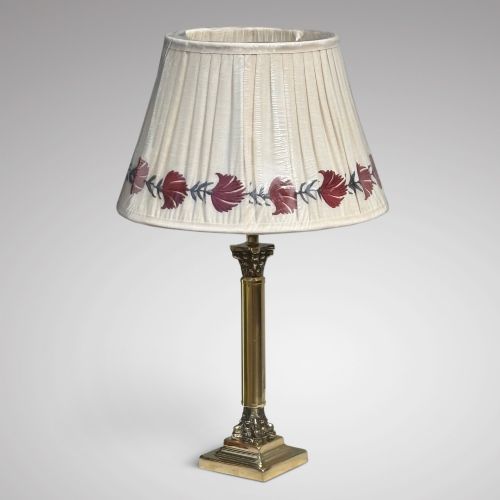
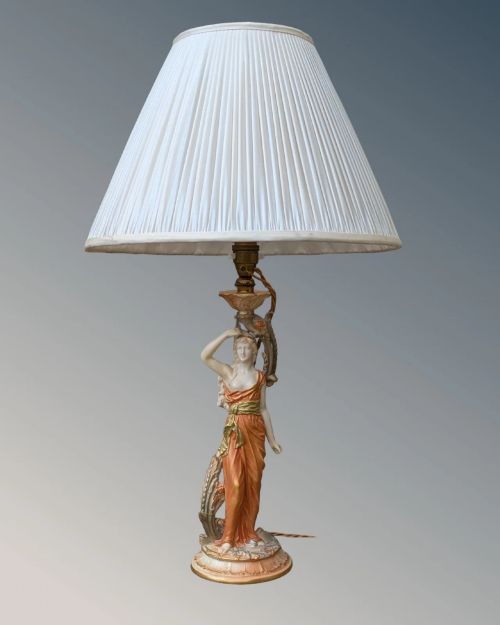
A pleated shade table light brings together a decorative base and a tailored fabric diffuser to create focused downward illumination and soft ambient spread. When looking for a pleated shade table light, buyers encounter pieces fashioned from converted porcelain vases, turned brass columns, and carved stone bodies spanning the nineteenth and early twentieth centuries.
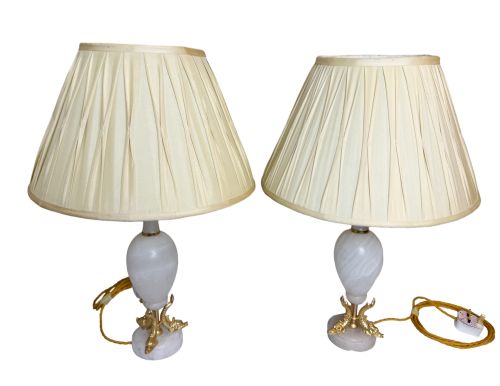
The selection ranges from Victorian brass Corinthian column designs and French Neoclassical gilt metal mounts to Japanese Satsuma and Chinese blue and white porcelain conversions. Many examples originate as earlier vases or tea canisters adapted for electricity during the Edwardian or Art Deco eras, pairing traditional craftsmanship with period wiring adaptations.
Proportions vary from small boudoir lamps to large decorative pairs suited for mantelpieces or sideboards. The dominant forms rely on classical symmetry, whether expressed through French Louise Seize styling or the clean geometric lines of the Art Deco period.
Materials and construction methods
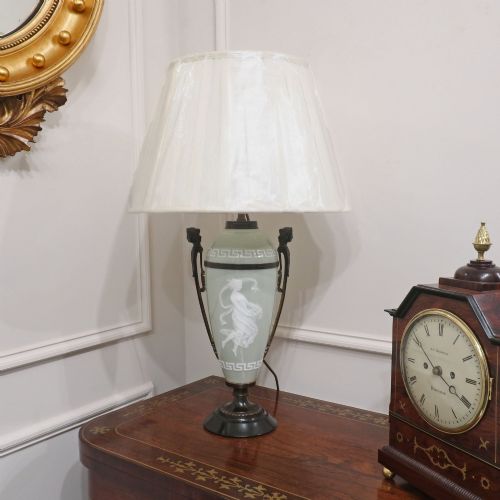
Makers utilised rigid structural materials including cast brass, gilt bronze, carved alabaster, marble, and patinated white metal to form stable weighted bases. Porcelain and ceramic bodies, often originating from Chinese, Japanese, or European potteries, were drilled and fitted with metal mounts or threaded rods to secure the lamp holder.
Surface decoration involved hand-applied gilding, cloisonné enamel work, intricate patination, and hand-carved wood or plaster details. Fabric and silk shades featured tight pleating stitched over internal wire frames, diffusing light evenly across the room.
Factors influencing quality and execution
The quality of a pleated shade table light rests on the original pedigree of the base vessel and the precision of its metal mounts. Superior pieces feature crisp chasing on gilt bronze, finely potted porcelain with hand-painted underglaze detail, and solid marble or alabaster turned without internal flaws.
Integration matters significantly; top-tier conversions maintain the structural integrity of the antique vase without damaging principal decorative zones, pairing the body with balanced proportions and appropriate period hardware rather than generic replacement components.
The Pleated Shade Table Light Glossary
- Patination
- The natural surface change and wear accumulated on metal or wood over decades of exposure and handling. This subtle ageing process helps confirm the genuine age of a bronze or brass base.
- Cloisonné
- An enamelling technique where thin metal wires form raised cells on a metallic surface to hold coloured enamel pastes before firing. It appears frequently on nineteenth-century Japanese vase lamps.
- Gilt bronze
- Copper alloy cast and finished with a layer of finely applied gold leaf or mercury gilding. It provides a durable, lustrous surface seen on French Neoclassical and Rococo style bases.
- Pate sur pate
- A ceramic decorating method where successive layers of white porcelain slip are painted onto a contrasting coloured body to create a low relief cameo effect.
Pleated Shade Table Light: Frequently Asked Questions
How do I date an antique lamp base?
Dating relies on examining the manufacturing marks, metal casting quality, and the style of the base material. Stylistic cues from periods like the Victorian or Edwardian eras provide the primary chronological framework.
Fittings and internal wiring components often undergo replacement over time, so the physical vessel itself offers the most reliable indicator of original manufacture.
Are these lamps converted from older vases?
Many examples began life as decorative ceramic vases, tea canisters, or oil lamps before receiving electrical fittings. Artisans adapted these vessels during the nineteenth and early twentieth centuries to meet modern domestic lighting demands.
This conversion process preserves historical porcelain and metalwork while repurposing them for contemporary functional use.
How should I clean a pleated fabric shade?
Dust accumulates within the folds of silk and fabric shades over time, requiring gentle maintenance with a soft brush or a low-suction vacuum attachment. Avoiding moisture prevents the adhesive binding the pleats from degrading.
Firm handling ensures the delicate folds retain their sharp geometric crease without crushing the textile.