


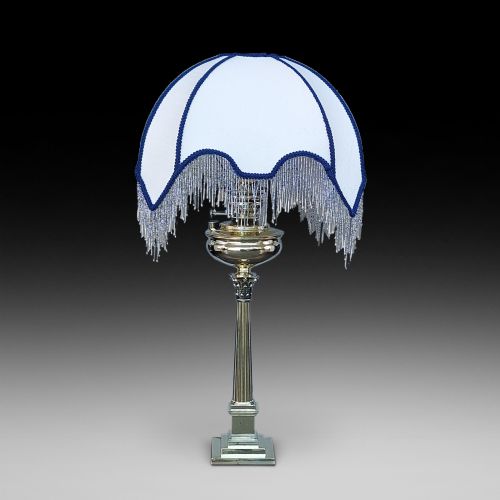


Fringed Lampshade Table Lamp
A fringed lampshade table lamp brings soft warmth and textured depth to a room through period lighting.
Fringed Lampshade Table Lamp
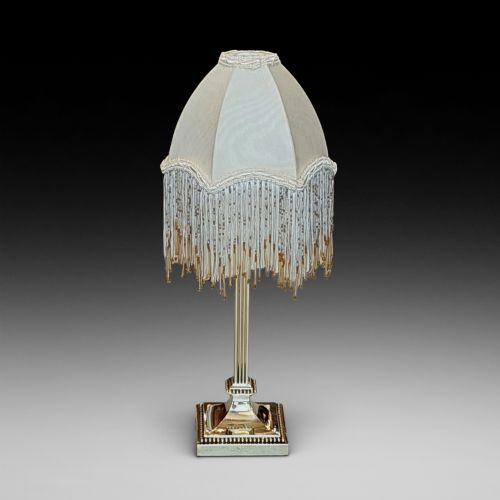
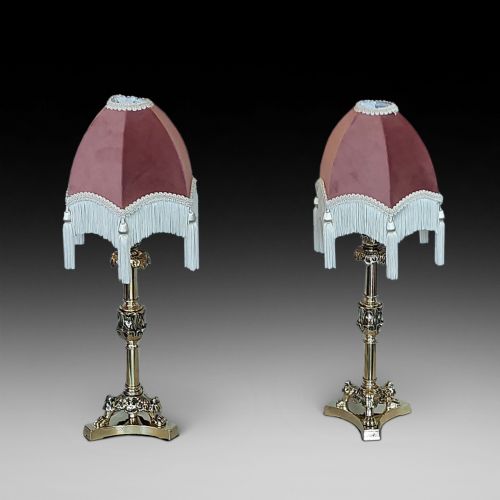
A fringed lampshade table lamp combines historical lighting fixtures and converted oil lamps with decorative textile shades. Buyers hunting for a fringed lampshade table lamp encounter pieces spanning the Victorian, Edwardian, and early twentieth-century eras.
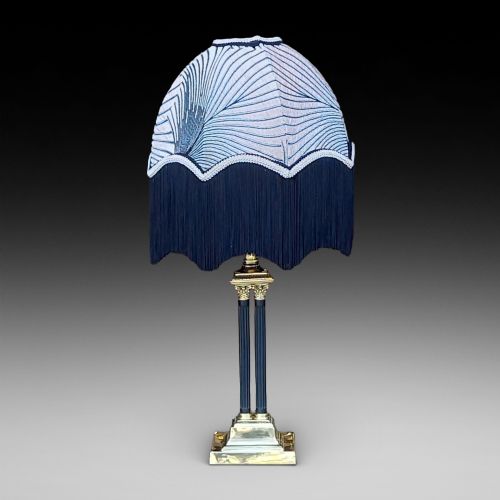
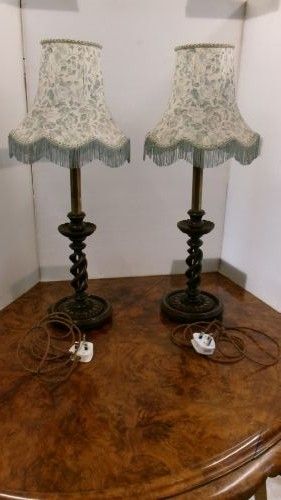
The selection ranges from Corinthian column brass pillars and altar candlesticks to carved wooden figures and Majolica bases. Many examples utilise converted oil lamps or classical columns paired with fabric and thread treatments.
Materials and construction
Makers utilised cast and pressed brass, bronze, copper, and carved wood alongside glass and majolica ceramics. Metal components often feature classical detailing such as Corinthian capitals or Gothic revival motifs.
Shades incorporate silk, fabric, thread, and glass beads to create layered textural detail. Bases range from heavy weighted brass to carved giltwood and rootwood.
Current listings feature pieces spanning the Victorian, Edwardian, and Arts and Crafts periods, utilising brass, bronze, copper, wood, and majolica.
Distinctions in quality
Quality rests in the heaviness of the metalwork, the crispness of the casting, and the integrity of the conversion work. Solid brass Corinthian columns and cold-painted bronze hold greater weight than pressed brass alternatives.
The sophistication of the base materials, from carved Italian giltwood to substantial altar candlesticks, dictates the standing of the piece. Period consistency between the foundational base and the accompanying shade defines the composition.
The Fringed Lampshade Table Lamp Glossary
- Corinthian column
- A classical architectural pillar form featuring ornate acanthus leaf capitals. This shape appears frequently on nineteenth-century brass table lamps.
- Cold-painted bronze
- A method where bronze figures receive a non-fired paint finish. This technique distinguishes decorative figural oil lamp bases.
- Majolica
- Opaque tin-glazed earthenware decorated with colourful lead glazes. It provides vibrant colour contrast on Edwardian lamp bases.
- Altar candlestick
- Heavy ecclesiastical metal candlesticks adapted for domestic illumination. These tall supports anchor Gothic revival lighting.
- Giltwood
- Wood carved and covered with a thin layer of gold leaf. Italian examples demonstrate this decorative surface treatment.
Fringed Lampshade Table Lamp: Frequently Asked Questions
How do I date a brass table lamp?
Dating relies on manufacturing techniques, component assembly, and stylistic revival cues. Heavy sand-cast brass elements and threaded internal fixings point to nineteenth-century origins.
Later pieces from the early twentieth century often utilise lighter pressed brass construction and distinct wiring apertures reflecting modern domestic conversion.
Are these lamps converted from oil lamps?
Many examples began life as nineteenth-century oil lamps or candlesticks before receiving modern electrical fittings. Burner mechanisms are typically replaced or adapted to house bulb holders.
This conversion history is a standard characteristic of period lighting found within these categories.
How do I place these lamps in a modern room?
These lamps function effectively on side tables, desks, or chests where their varied heights and tactile shades can be appreciated. Brass columns and carved wooden bases introduce traditional vertical emphasis.
Pairing them with neutral walls allows the metallic patinas and fabric fringes to provide textural contrast.
What styles are common in these listings?
The inventory encompasses Victorian, Edwardian, Gothic Revival, Arts and Crafts, and Neoclassical revival movements. Brass Corinthian columns and altar sticks dominate the architectural forms.
Art Nouveau and Art Deco examples also appear alongside carved wooden figures and continental ceramic vases.