
French Ormolu Mounted Commode
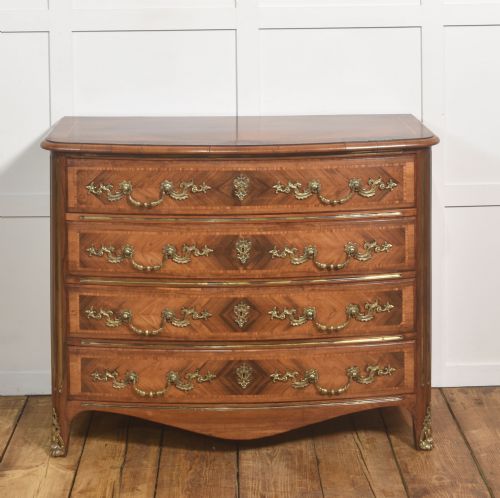
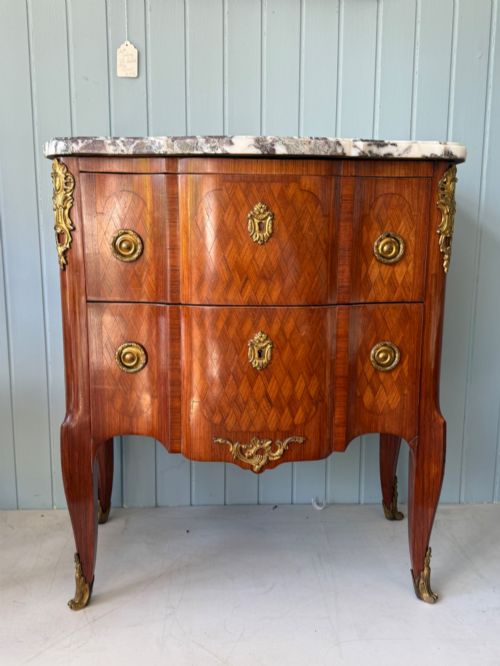
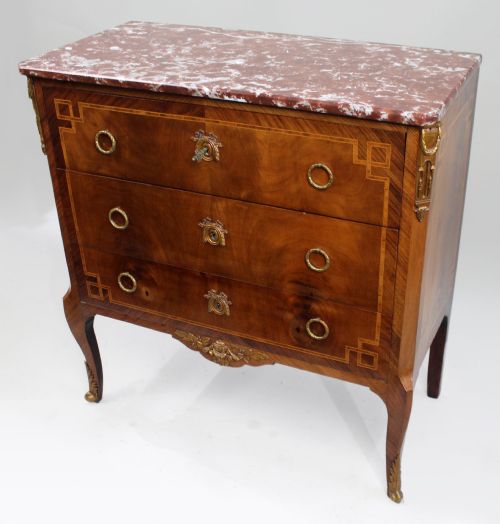
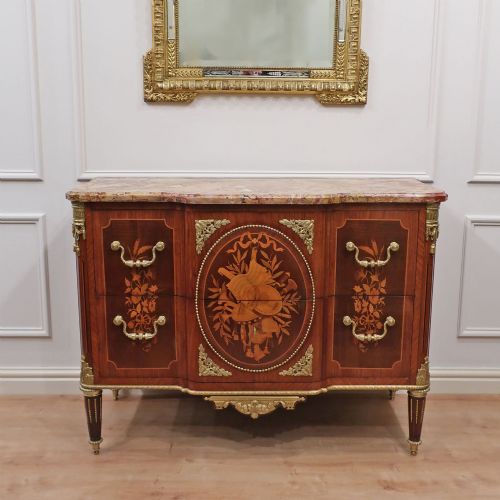
A french ormolu mounted commode brings opulent 18th-century design and heavy cast bronze mounts into a grand salon.
French Ormolu Mounted Commode
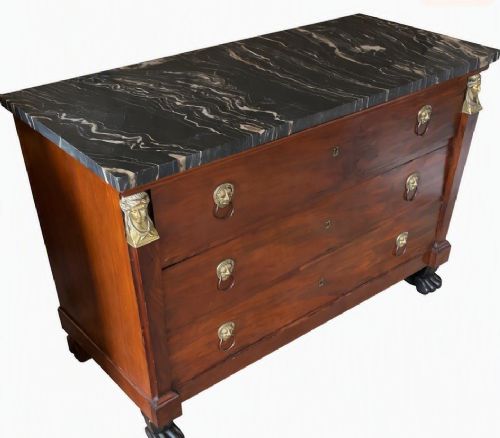
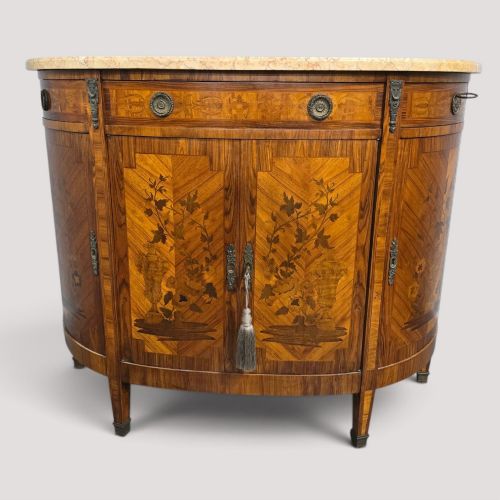
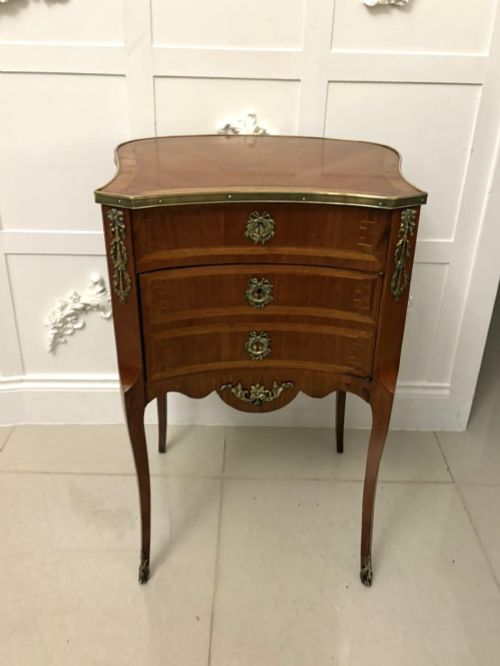
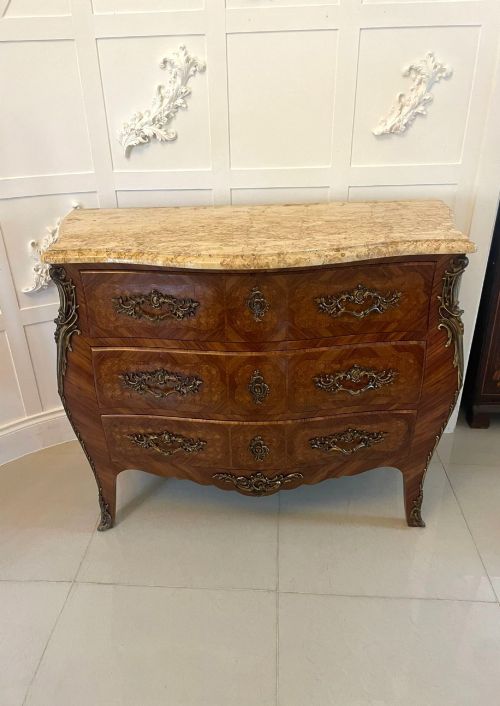
A french ormolu mounted commode is a decorative chest of drawers or low cabinet designed for formal reception rooms, featuring prominent gilt-bronze mounts.
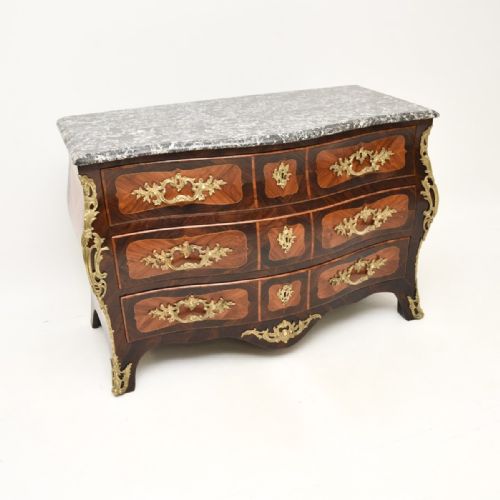
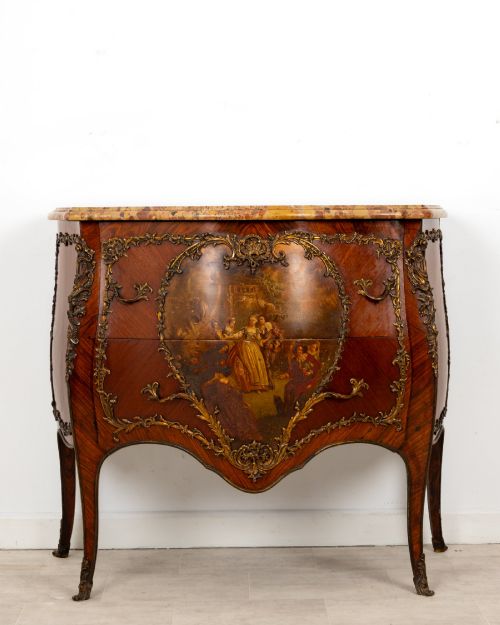
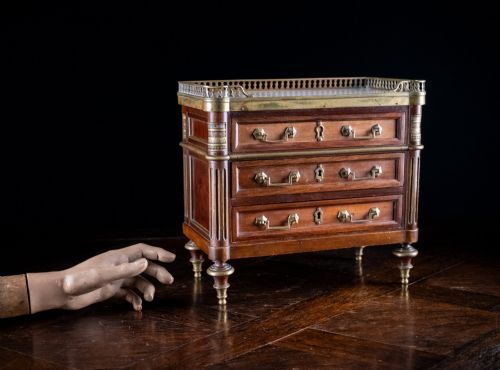
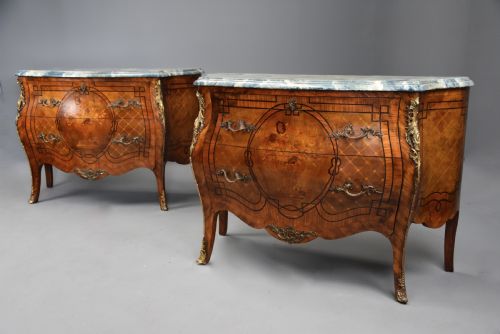
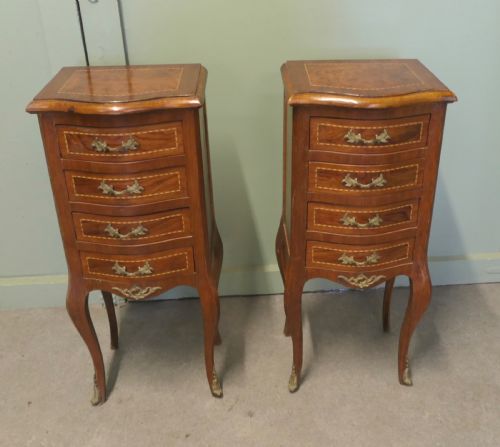
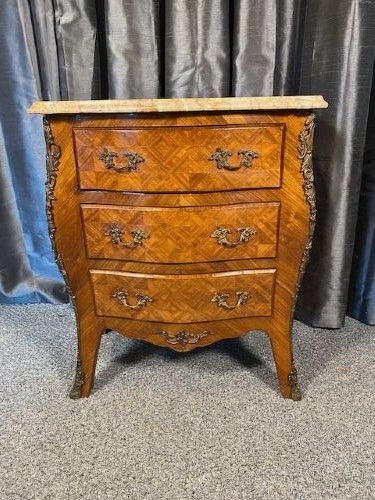
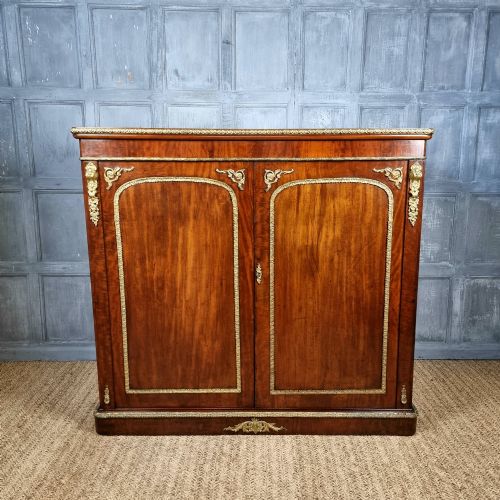
These pieces appear primarily as serpentine or bombe chests, side cabinets, and bedside tables originating from 18th-century traditions through to 19th-century revivals.
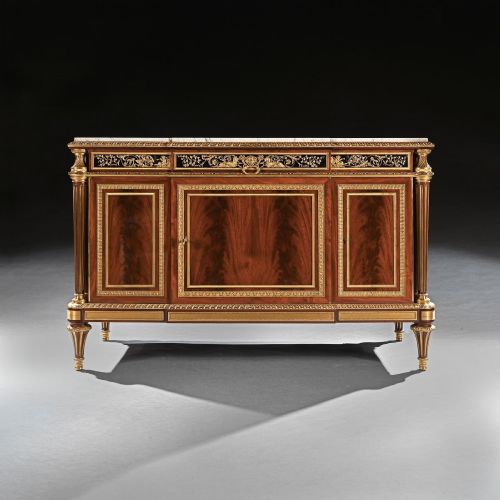
The most common examples on this page date from the 19th century and early 20th century, adopting the sweeping curves of Louis XV and the symmetrical restraint of Louis XVI.
How They Were Made
Cabinetmakers constructed carcass frames from native and exotic timbers such as walnut, mahogany, rosewood, tulipwood, and kingwood, often laid as intricate marquetry or geometric parquetry.
Slab tops of heavy marble, including rouge and fossilised varieties, sit precisely upon the upper frames to provide a cool, polished surface.
Foundry workers cast ormolu and gilt bronze into scrolling mounts, handles, and sabots, which were then chased by hand and fixed securely to the wooden bodies.
Current listings feature pieces built from rosewood, mahogany, walnut, and kingwood, finished with marble and ormolu.
What Varies in Quality
The standard of execution rests heavily on the crispness and depth of the ormolu casting, where sharper chiselling and heavier gilding distinguish superior work from softer, mass-produced mounts.
Cabinet work demonstrates quality through the tightness of the wood joints, the precision of the veneer matching across curved drawer fronts, and the integrity of the underlying carcase.
Originality dictates value, particularly the retention of matching period marble tops and the untouched synchronicity between the brass hardware and the timber body.
Jacques Bircklé·Henry Dasson·Gillows·Thomas Hache·Sormani·E. Kahn·Hopillart and Leroy·Weisweiler
The French Ormolu Mounted Commode Glossary
- Ormolu
- Gilded bronze used for decorative mounts and hardware. The term derives from the French for milled or ground gold.
- Bombe
- A swollen, bulging contour of furniture sides and drawer fronts. This swelling shape is typical of mid-18th-century cabinet design.
- Marquetry
- Decorative veneer patterns formed from pieces of various coloured woods. Artisans assemble these thin sheets to create floral or pictorial scenes.
- Parquetry
- Geometric patterns formed by small wood veneers. Squares, triangles, and diamonds lock together to form structured parquet surfaces.
- Vernis Martin
- A type of simulated Japanese lacquer developed in France. Furniture makers applied multiple coats of varnish to achieve a glossy painted finish.
French Ormolu Mounted Commode: Frequently Asked Questions
What is a french ormolu mounted commode?
A french ormolu mounted commode is an ornamental chest of drawers embellished with gilded bronze mounts and rich wood veneers.
Originating in royal French palaces, these decorative storage pieces served both functional and aesthetic purposes in formal drawing rooms.
How do I tell Louis XV from Louis XVI commodes?
Louis XV commodes display sweeping serpentine curves, asymmetrical ormolu mounts, and bombe profiles that reject straight lines.
Louis XVI commodes return to neoclassical straight lines, rectangular carcases, fluted pilasters, and strict symmetrical geometry.
Where should I place a commode at home?
These decorative cabinets work well in entryways, formal dining rooms, or living spaces as statement furniture pieces.
The marble top surface safely accommodates lamps, vases, and sculptures while protecting the wooden body below.
Why are marble tops used on these?
Heavy stone slabs provided a durable, stain-resistant surface that balanced the visual weight of the elaborate gilt-bronze mounts.
Quarried marble also added structural stability to the timber frames as temperatures and humidity fluctuated.