


Parquetry Kingwood Commode
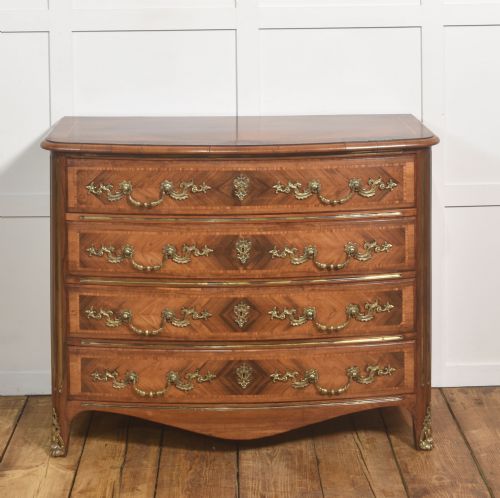
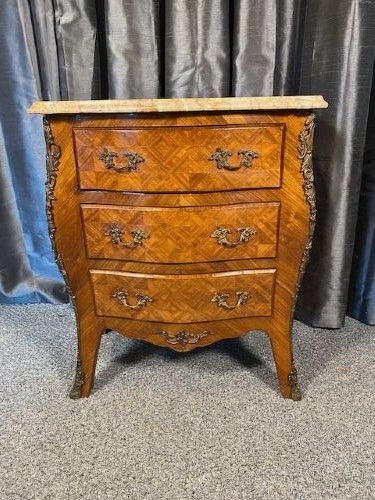
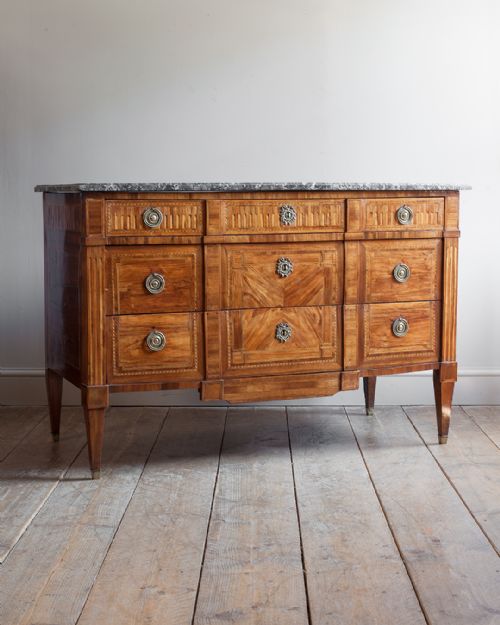
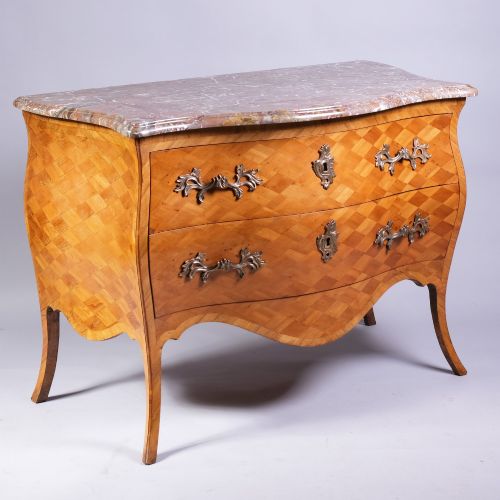
A parquetry kingwood commode brings together geometric wood patterns and rich timber tones in a substantial storage piece.
Parquetry Kingwood Commode
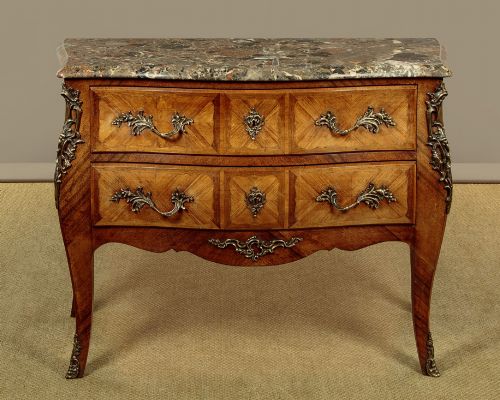
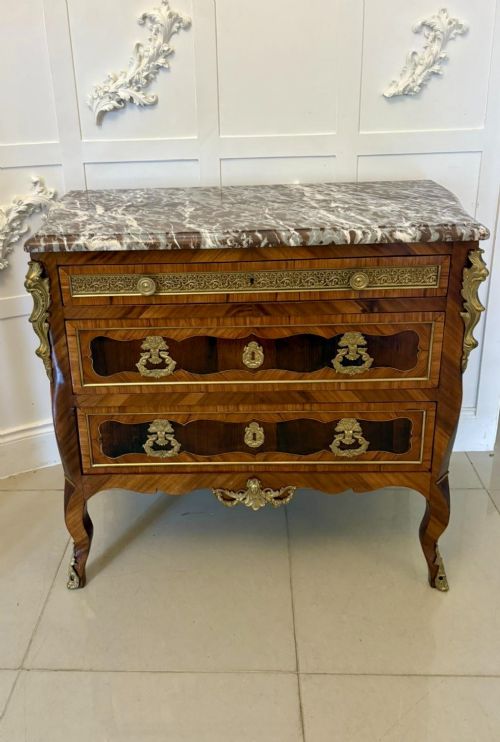
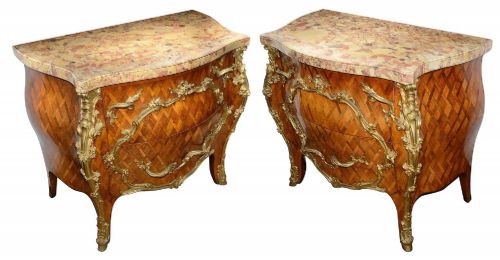
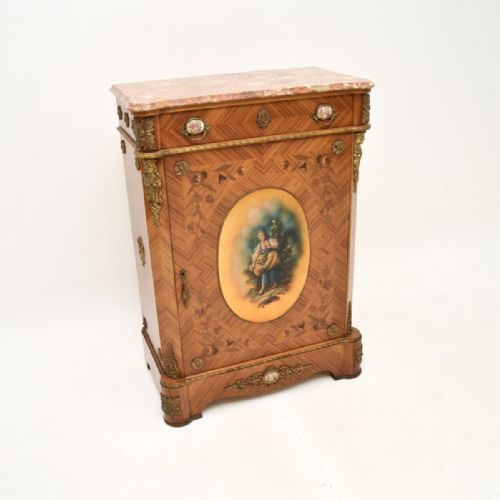
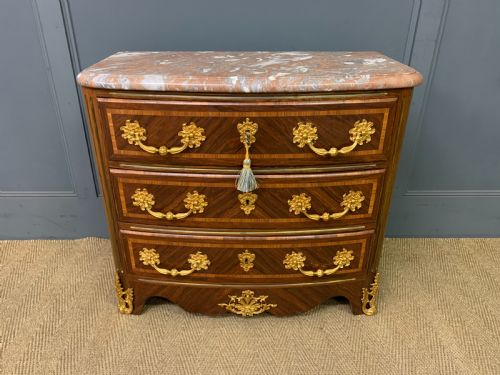
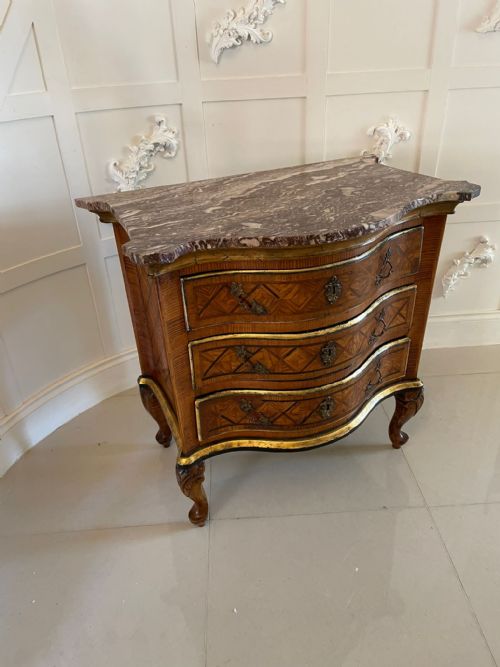
A parquetry kingwood commode is a low storage chest designed with geometric wood veneer patterns, most often seen in French designs from the eighteenth and nineteenth centuries. These pieces typically present serpentine or bombe profiles supported by slender legs.
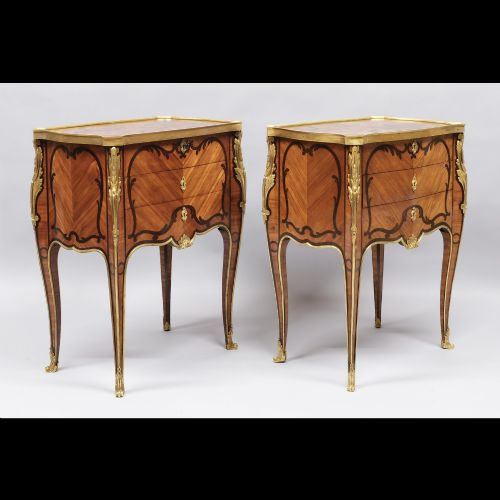
The version most commonly met on this page is the nineteenth-century revival piece drawing on Louis styles, frequently topped with marble and fitted with gilt bronze mounts. Alongside full-sized chests of drawers, listings include smaller bedside cabinets and side tables sharing the same timber vocabulary.
Materials and construction
Makers constructed these cabinets by applying fine veneers of kingwood, walnut, rosewood, and tulipwood over a secondary carcass timber in geometric parquetry or floral marquetry arrangements. This technique allowed craftsmen to create complex contrasting patterns across curved drawer fronts and sides.
Heavy marble slabs, often shaped to follow the serpentine or bow front, rest on the upper surface, while cast ormolu and brass mounts edge the corners, aprons, and handles to protect and accent the timber.
Materials recorded across the inventory include kingwood, marble, ormolu, walnut, brass, gilt bronze, bronze, and rosewood.
Judging execution and finish
Quality rests in the precision of the veneer work and the crispness of the bronze or ormolu mounts rather than the mere presence of decoration. Superior examples display seamless alignment of geometric patterns across moving drawer junctions and complex curved surfaces.
The weight and detail of the cast mounts and the selection of the marble top distinguish standard production from exceptional workshop output. Finer pieces maintain smooth drawer movement and tightly fitted joints despite the seasonal expansion of the underlying timber.
Maison Millet·Paul Sormani·Charles Cressant
The Parquetry Kingwood Commode Glossary
- Parquetry
- Geometric wood mosaic work formed by fitting small veneer pieces together in patterns such as cubes or chequers. This technique decorates the flat and curved surfaces of the carcass.
- Kingwood
- A dense South American timber showing rich brown and violet tones with distinct dark grain marking. Cabinet makers prized it for decorative veneers.
- Bombe
- A swelling, outward-curved contour found on the sides and fronts of eighteenth-century and revival storage furniture. This shape requires considerable skill in veneer application.
- Ormolu
- Gilt bronze mounts used to edge and protect the corners and handles of fine furniture. The technique involves applying a gold amalgam to cast bronze.
- Marquetry
- The art of forming decorative pictures or patterns using various tinted wood veneers. It differs from parquetry through its pictorial or floral designs.
Parquetry Kingwood Commode: Frequently Asked Questions
What rooms suit a kingwood commode?
These pieces function well in drawing rooms, bedrooms, or hallways as focal storage units. Their decorative timber surfaces complement both traditional and modern interior schemes.
Compact versions, such as bedside cabinets and side tables, fit easily beside seating or beds while providing concealed surface space.
How do I care for the marble top?
Marble surfaces require gentle cleaning with warm water and mild soap to avoid dulling the polish. Acidic liquids like wine or citrus juice should be wiped away immediately to prevent staining.
Applying a neutral stone wax periodically helps protect the surface from everyday wear and moisture.
How do I distinguish eighteenth-century pieces from later revivals?
Eighteenth-century originals generally display hand-cut construction details and timber ageing consistent with centuries of use. Examining the secondary timbers inside the drawers often reveals period-specific sawing techniques.
Nineteenth-century revival pieces, while finely made by workshops, frequently show standardised construction methods and nineteenth-century hardware fixings.
Why do some commodes have curved fronts?
Curved serpentine and bombe forms were developed by cabinet makers to demonstrate technical mastery and to soften the rigid silhouette of standard storage chests. These shapes catch the light differently across the parquetry veneer panels.
Crafting curved drawer fronts required specialised framing to prevent the wood from splitting as it aged.