
French Ormolu Mounted Chest
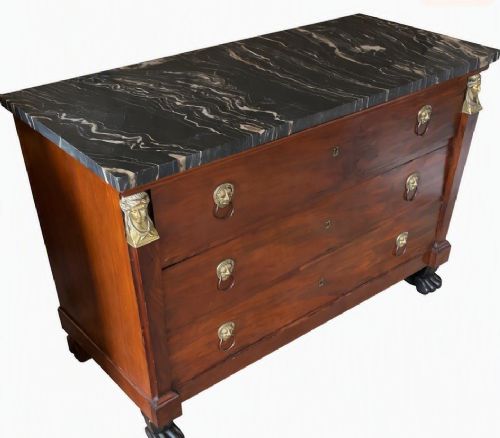
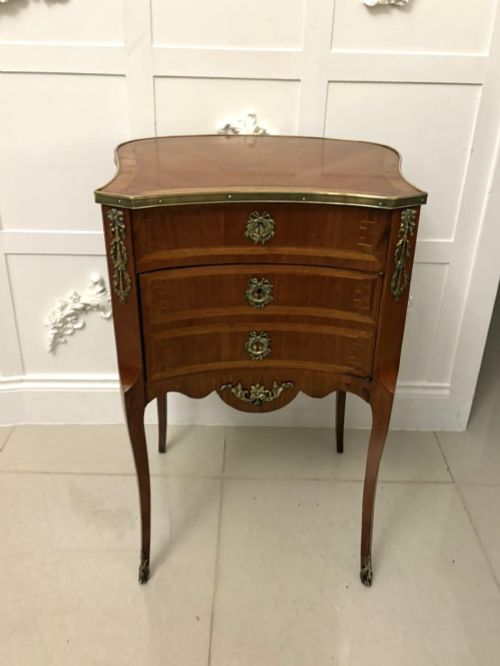
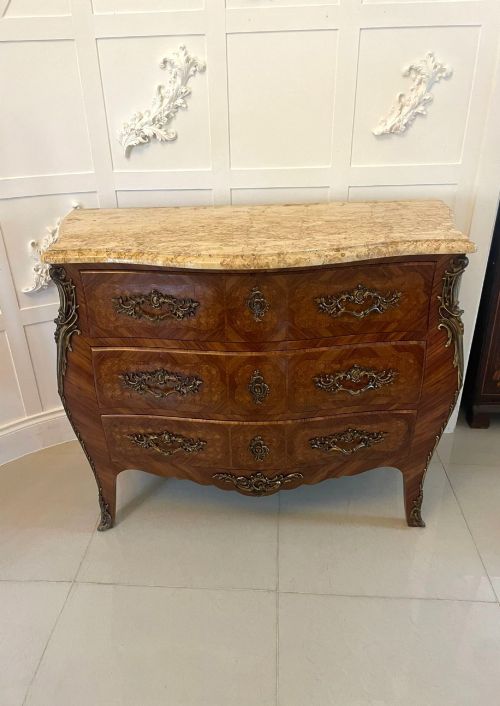
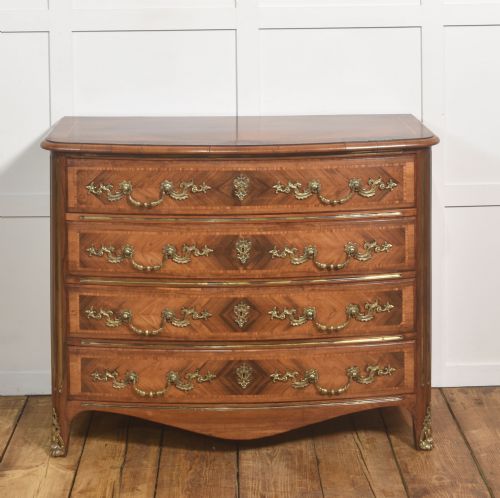
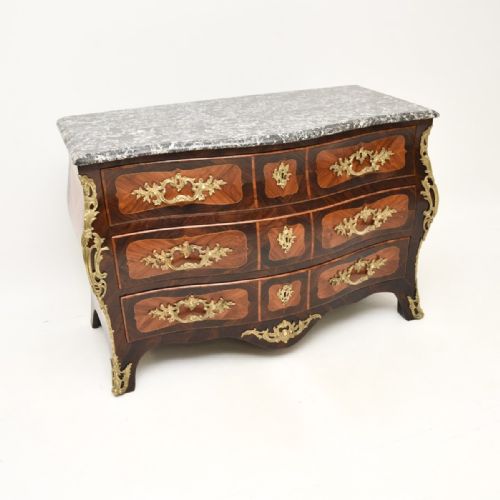
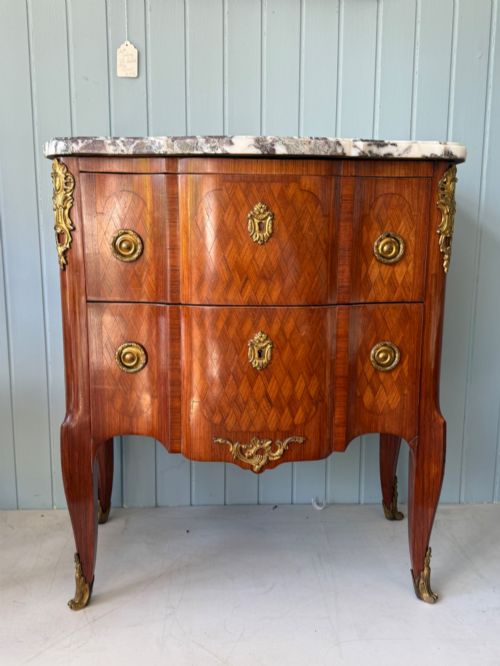
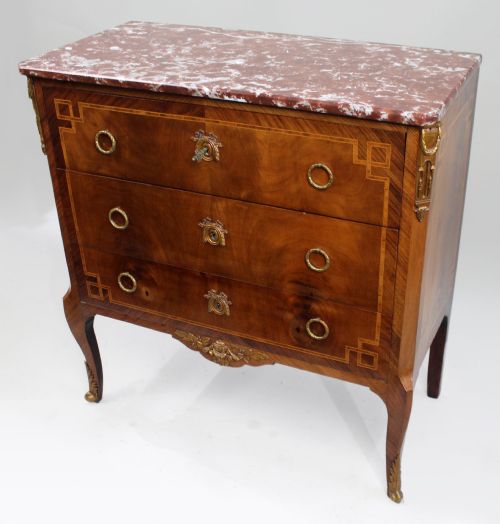
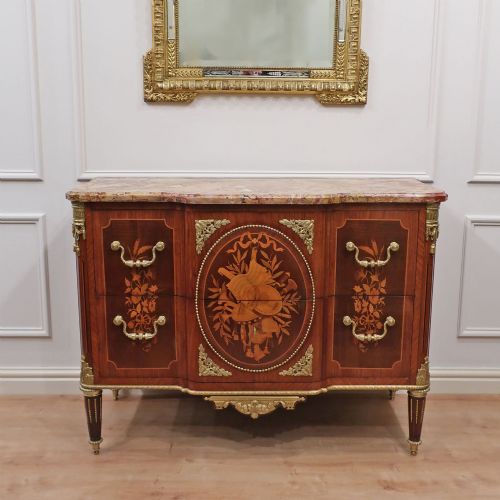
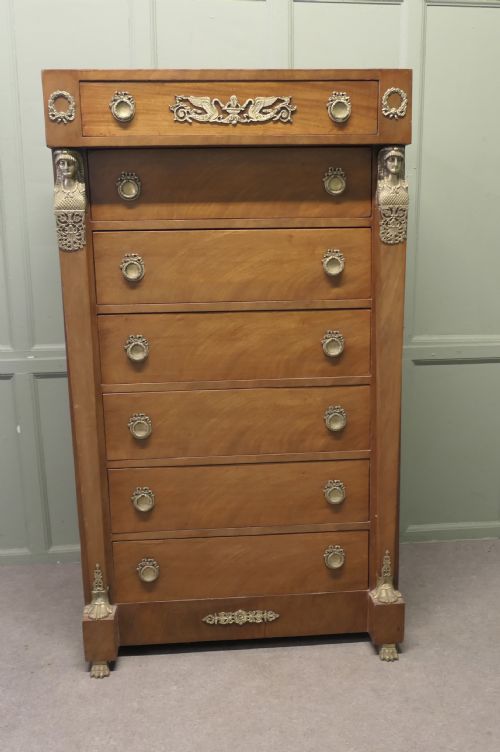
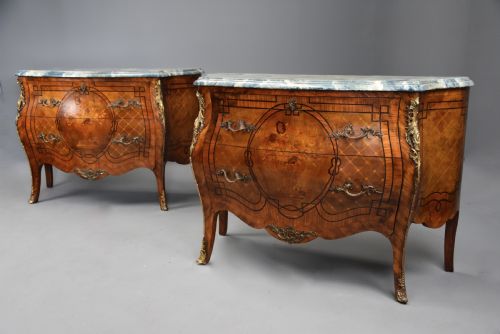
These french ormolu mounted chest pieces combine polished marble tops with gilt bronze mounts on rich veneered timbers, bringing continental elegance to a room.
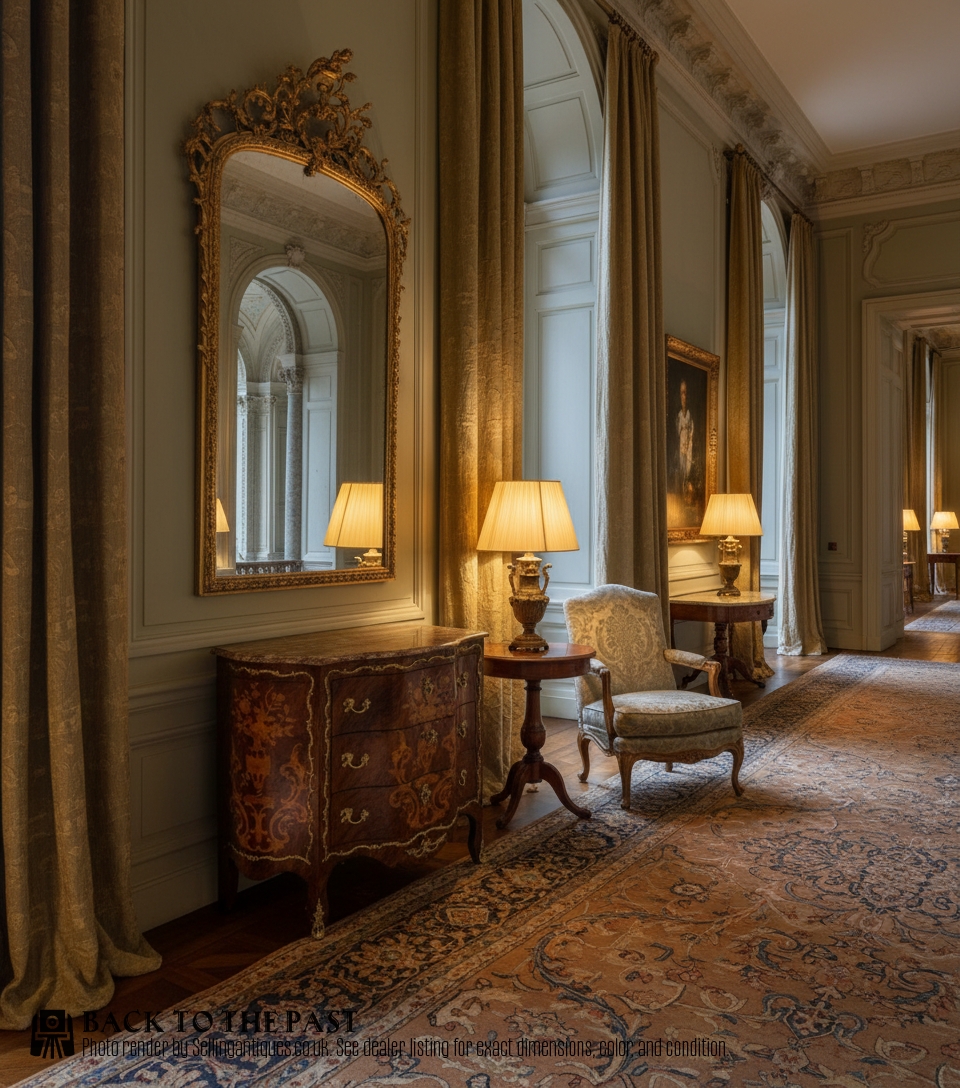
French Ormolu Mounted Chest
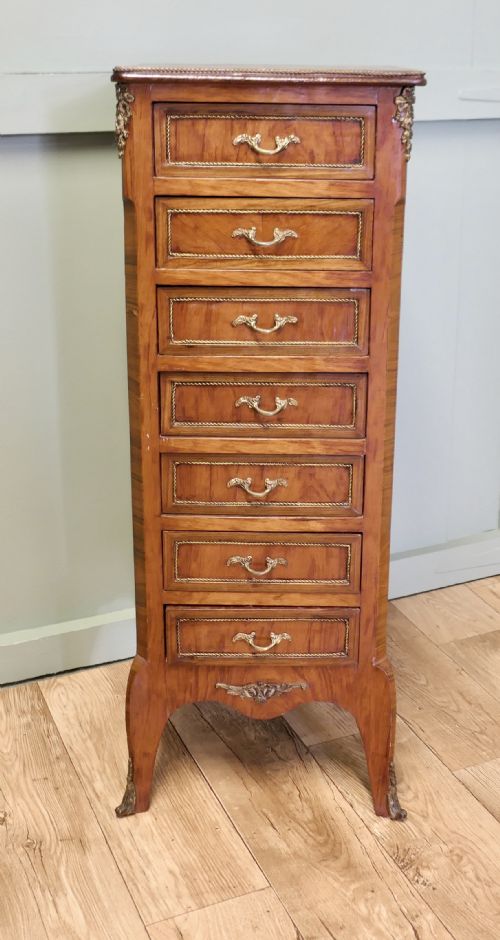
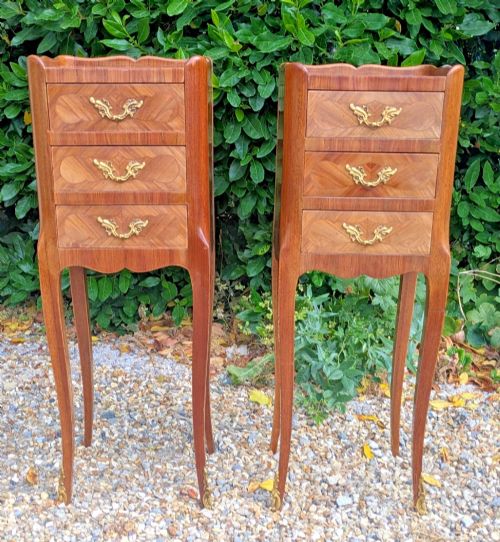
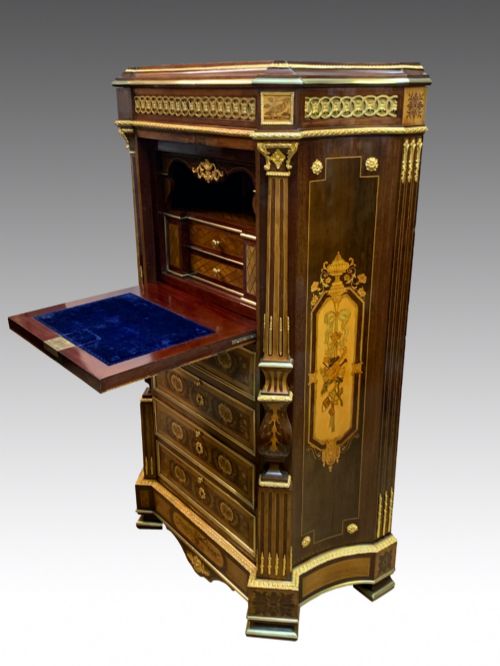
When searching for a french ormolu mounted chest, buyers encounter grand commodes, serpentine bedside cabinets, and tall chests of drawers dating from the eighteenth century into the early twentieth century. The selection spans revival movements such as Louis XV and Louis XVI alongside Empire and Neo-Classical forms.
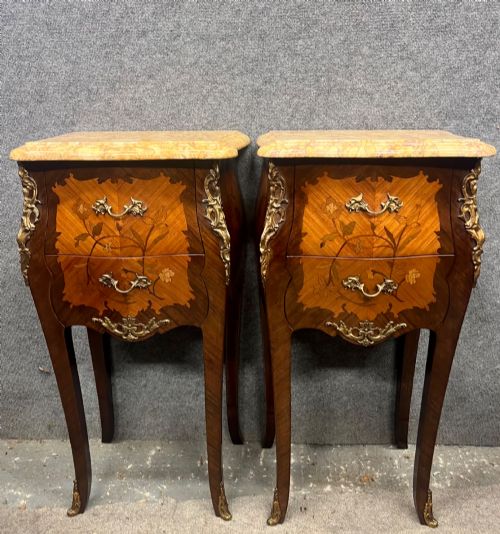
Most examples found on this page adopt the commode or bedside cabinet format, often paired with marble tops in shades of rouge or white. These storage pieces originate from French workshops, with makers ranging from provincial cabinetmakers to major Parisian houses.
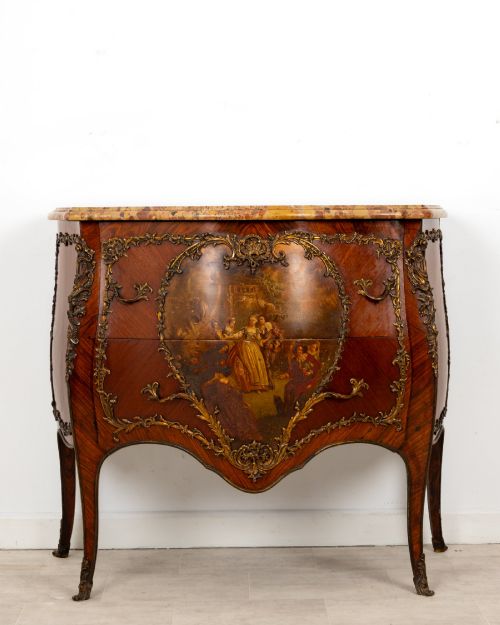
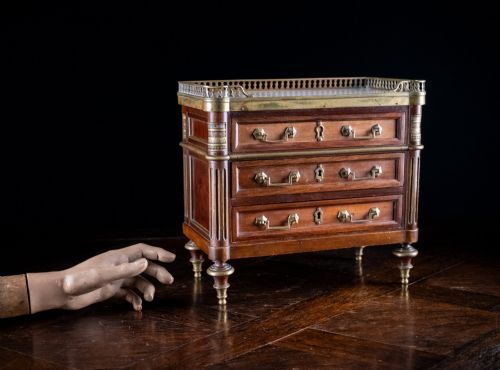
Forms vary from straight-fronted proportions to bombe profiles featuring elaborate marquetry and parquetry patterns in kingwood, walnut, and mahogany. Smaller variations include miniature chests and bedside lamp tables designed for compact spaces.
How they were made
Craftsmen built these pieces using native and exotic timbers including kingwood, rosewood, and walnut over robust carcases, often applying intricate parquetry or floral marquetry veneers. Surfaces received rich finishes, sometimes incorporating Vernis Martin painted panels alongside polished marble slabs.
Cast gilt bronze and ormolu mounts were chased by hand and pinned to corners, handles, and aprons to accentuate the curvaceous lines of Louis XV and Louis XVI styles. Brass details and mounts provided structural reinforcement while framing the decorative wood grain.
Listings feature items spanning from the 18th century to the 1930s, constructed in marble, ormolu, kingwood, walnut, and mahogany.
What varies in quality
The standard of a piece rests upon the crispness of the gilt bronze chasing and the weight of the ormolu mounts rather than surface shine alone. Heavier, deeply detailed mounts indicate superior foundry work from established Parisian makers.
Construction quality shows in the precision of the marquetry inlay, the thickness and matching of the marble tops, and the smooth operation of drawer runners. Superior examples display seamless timber joints and restrained balance in their proportions.
Jacques Bircklé·Maison Krieger·Henry Dasson·Weisweiler·Gillows·E. Kahn·Thomas Hache·Sormani
The French Ormolu Mounted Chest Glossary
- Ormolu
- A gilt bronze finish applied to decorative mounts and ornaments. It involves treating metal with a gold amalgam to produce a bright golden surface.
- Marquetry
- The art of applying pieces of veneer to a structure to form decorative patterns. Craftsmen utilise various coloured woods to create floral or geometric designs.
- Bombe
- A swelling, outward-curved furniture shape characteristic of continental case pieces. This profile requires skilled veneer work to follow the rounded contours.
- Parquetry
- Geometric wood inlay work arranged in repeating patterns such as cubes or chequers. It differs from pictorial marquetry through its strict geometric symmetry.
French Ormolu Mounted Chest: Frequently Asked Questions
How do I clean the marble top?
Wipe the surface gently with a soft cloth dampened in warm water and mild soap. Avoid acidic cleaners, vinegar, or harsh chemicals that can etch the polished stone.
Dry the marble thoroughly afterwards with a lint-free cloth to maintain its sheen and prevent water marks from settling into the porous material.
Where should I place a commode?
These chests suit living rooms, hallways, and bedrooms as focal storage points. Pair them with a mirror or lamp to balance the decorative ormolu mounts.
Keep them away from direct sunlight and strong heat sources to protect the delicate wood veneers and prevent the timber from drying out.
How do I distinguish Louis XV from Louis XVI?
Louis XV pieces feature asymmetrical curves, serpentine fronts, and flowing rococo scrolls. The mounts emphasise organic, sweeping lines.
Louis XVI furniture introduces straight tapered legs, neoclassical symmetry, and geometric parquetry. The overall aesthetic feels more restrained and architectural.
Are these chests suitable for daily use?
Most examples function well for everyday storage when handled with care. The drawers accommodate items such as linens, papers, or tableware depending on the chest's scale.
Avoid overloading the drawers and lift objects rather than sliding them across the marble or veneered top to preserve the antique finish.