
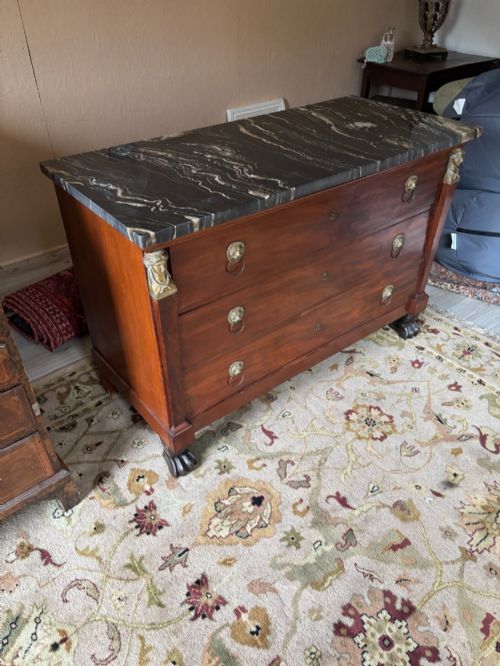
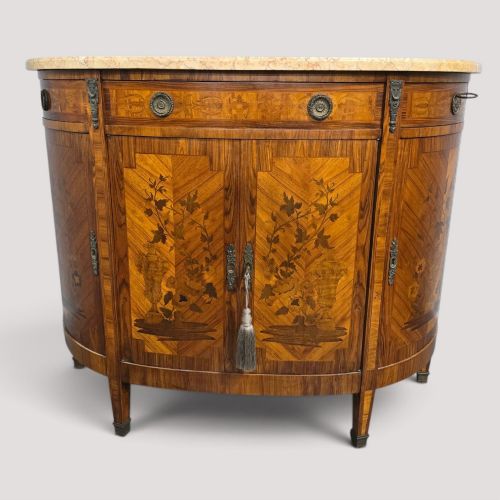
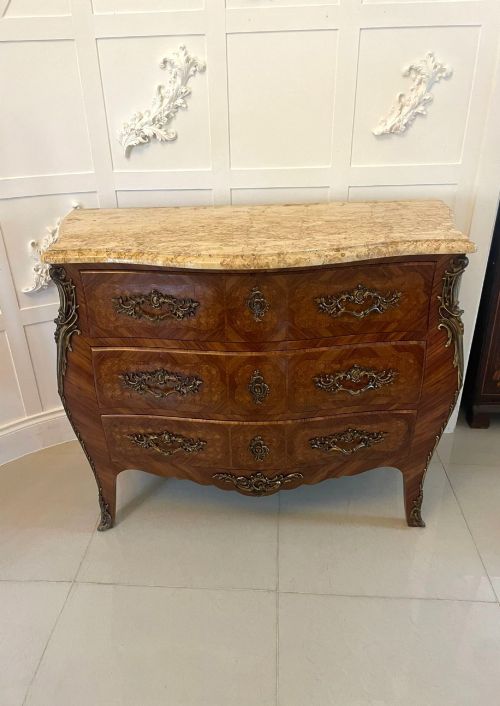
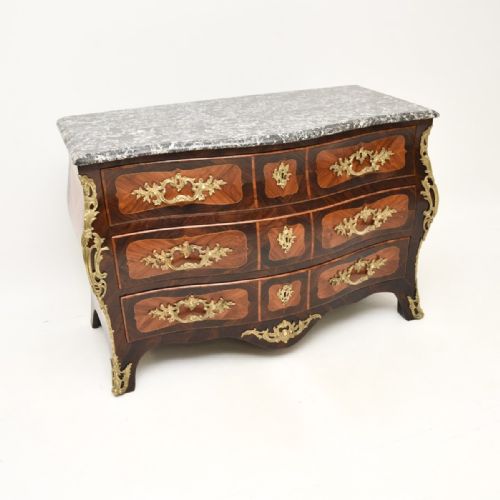
French Ormolu Marble Commode
A French ormolu marble commode brings sculptural weight and polished stone into a room, uniting heavy timber with cast bronze and cool marble.

French Ormolu Marble Commode
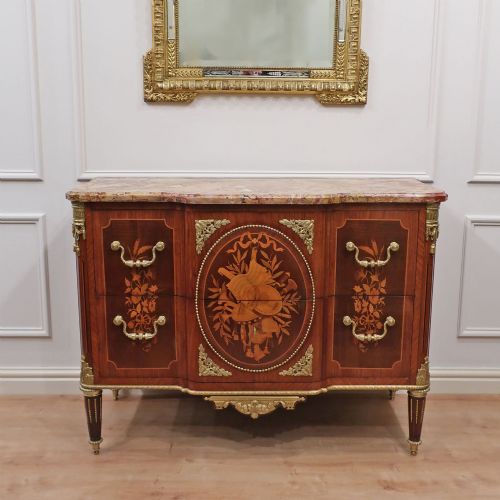
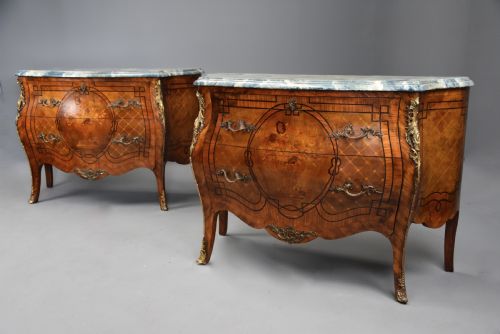
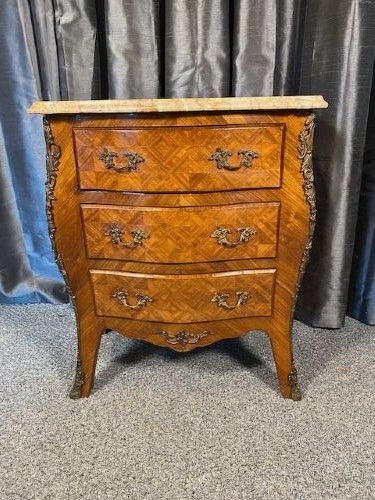
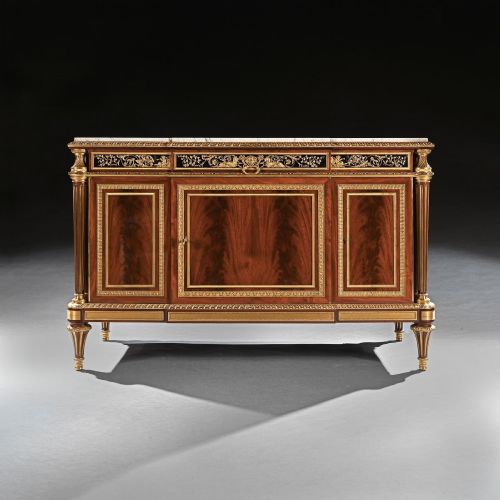
A French ormolu marble commode is a low chest of drawers or storage cabinet designed with stone tops and gilt metal mounts, emerging primarily from 18th and 19th-century cabinet-making traditions. Buyers examining this page will find pieces spanning from the 18th century through to 1930, encompassing various revival movements.
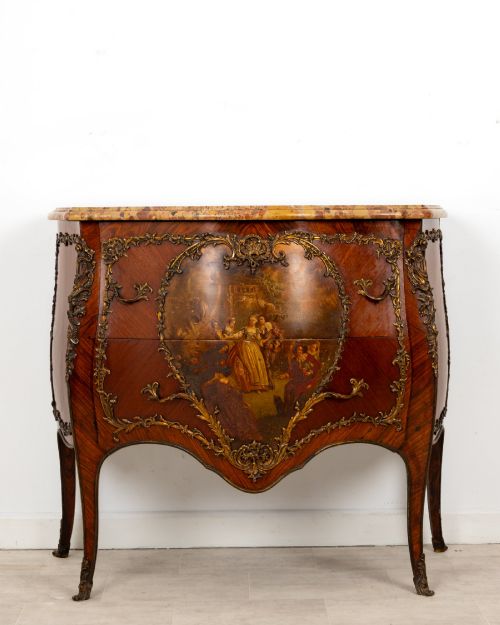
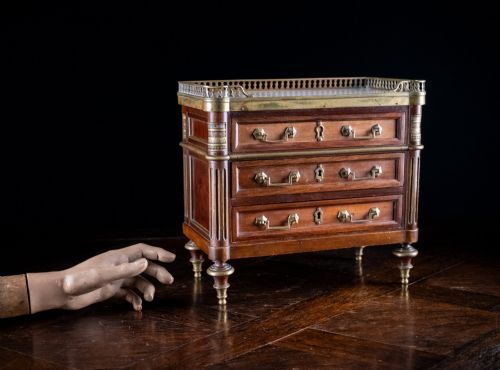
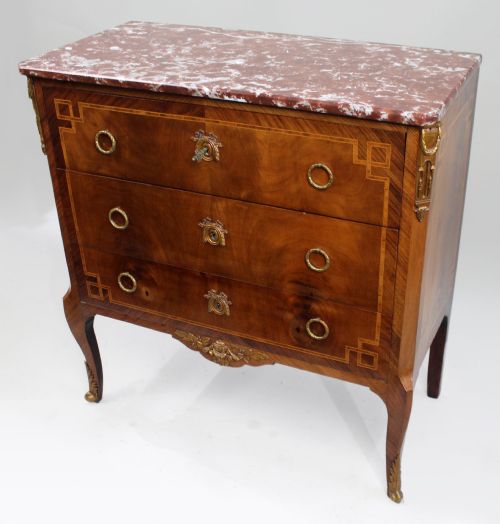
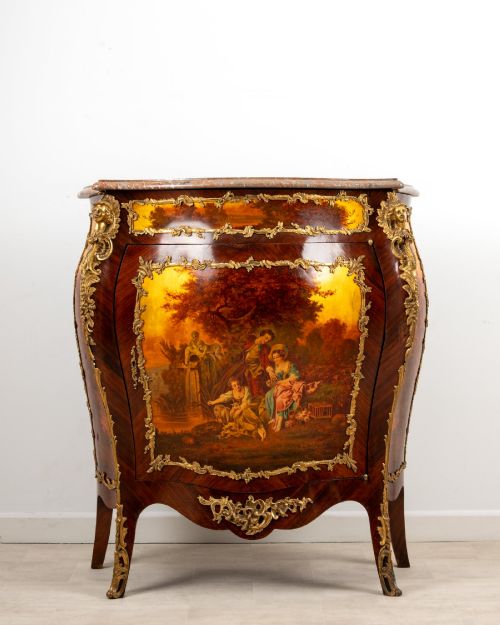
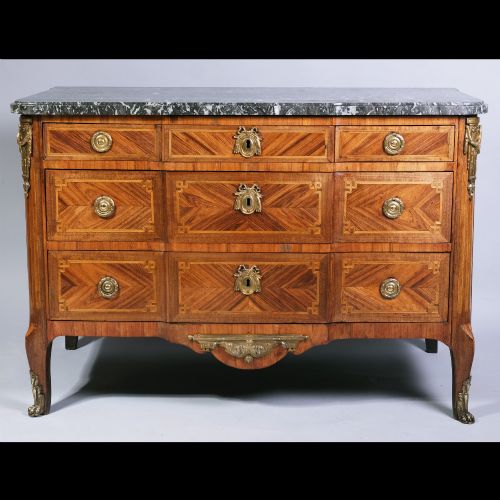
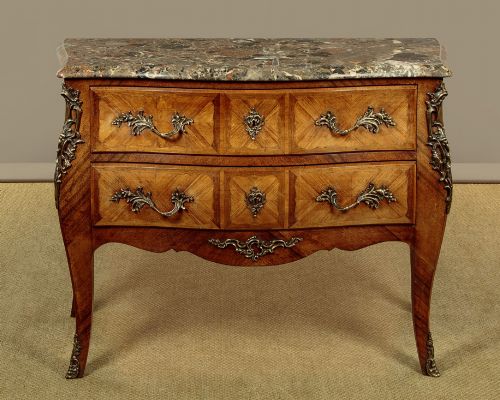
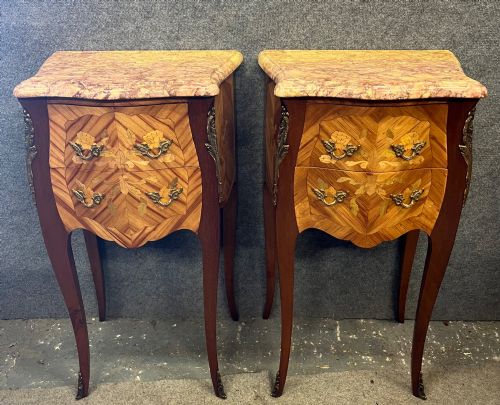
The forms on this page range from serpentine and bombe profiles to rectilinear bedside chests and breakfront cabinets. Pieces emerge from periods including Louis XV, Louis XVI, Régence, Empire, and later Victorian revivals.
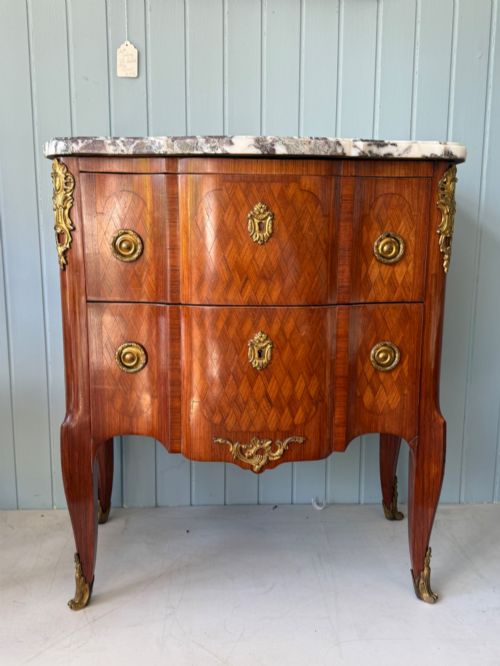
Most items encountered here utilise traditional French carcass construction, often displaying parquetry, marquetry, or painted finishes beneath their heavy stone surfaces.
Construction and materials
Makers built the foundational carcasses from secondary timbers such as oak or pine, then applied face veneers of kingwood, walnut, mahogany, rosewood, tulipwood, or burr walnut.
Surface decoration frequently involves intricate parquetry and floral marquetry, alongside painted Vernis Martin panels on select examples.
Gilt bronze or ormolu mounts are chased and secured to corners, feet, and drawer fronts, while slabs of marble, including rouge and fossilised varieties, sit unattached or bedded upon the upper surface.
Pieces span the 18th century, 19th century, and early 20th century up to 1930, covering Louis XV, Louis XVI, and Empire styles.
Evaluating the pieces
The precision of the cabinetmaker's marquetry patterns and the weight and crispness of the cast ormolu mounts dictate the baseline standard of a piece. Finer examples display deeply chased gilt bronze rather than flat, machine-finished metal.
The selection of timber veneers and the thickness and geological quality of the marble slab define the upper tiers of manufacture. Original marble tops that match the exact serpentine contour of the wooden carcass indicate a higher level of bespoke craftsmanship.
Jacques Bircklé·Henry Dasson·E. Kahn·Weisweiler
The French Ormolu Marble Commode Glossary
- Ormolu
- Gilded bronze mounts applied to furniture. This technique involves coating cast bronze with a mercury and gold amalgam before heating.
- Bombe
- A swelling, outward-curving chest profile. This shape requires advanced timber bending and veneer fitting skills.
- Marquetry
- Inlaid wood pieces forming pictorial or geometric patterns. Craftsmen veneer these designs onto the structural carcass.
- Parquetry
- Geometric wood inlay patterns such as cubes or chequers. This technique creates structured, repeating surface designs.
- Vernis Martin
- A type of simulated Japanese lacquer developed in France. Furniture makers used this glossy varnish to decorate panels with scenes.
French Ormolu Marble Commode: Frequently Asked Questions
What rooms suit a commode?
These pieces function well in drawing rooms, hallways, or bedrooms where surface display space and enclosed drawer storage are both required.
The substantial stone tops provide a durable surface for lamps, vases, or decorative objects without risking wood damage.
How do I identify Louis XV style?
Louis XV pieces rely on asymmetrical curves, cabriole legs, and naturalistic floral marquetry. The overall aesthetic is fluid and avoids rigid straight lines.
Ormolu mounts on these items typically take the form of scrolling foliage and acanthus leaves.
How do I identify Louis XVI style?
Louis XVI furniture shifts towards neoclassical symmetry, straight fluted legs, and geometric parquetry patterns. Rectilinear and breakfront carcass shapes dominate this aesthetic.
Ormolu mounts feature architectural motifs, ribbons, and classical urns rather than flowing rococo asymmetry.
Are the marble tops original?
Many surviving pieces retain their original marble slabs, which are cut to follow the specific curves of the wooden frame underneath. Replacement marble is occasionally fitted during later restorations.
Examining the underside and edges of the stone helps determine if it shares the age of the carcass.