



Antique Bombee Chest
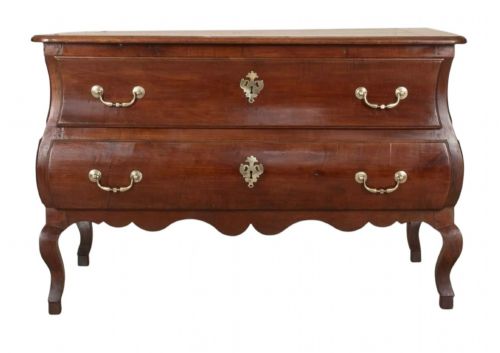
An antique bombee chest brings sweeping, curved baroque lines into a room, offering both generous storage and rich walnut or kingwood surfaces.
Materials and construction
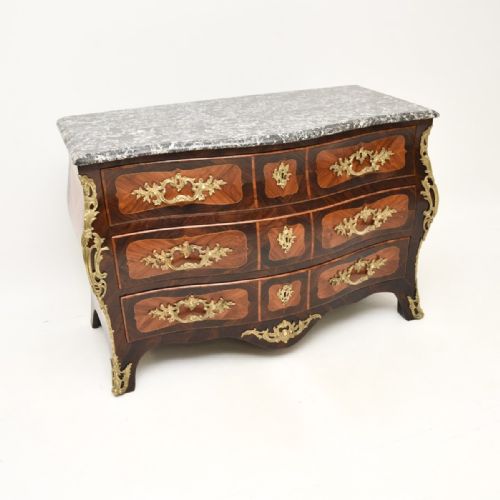
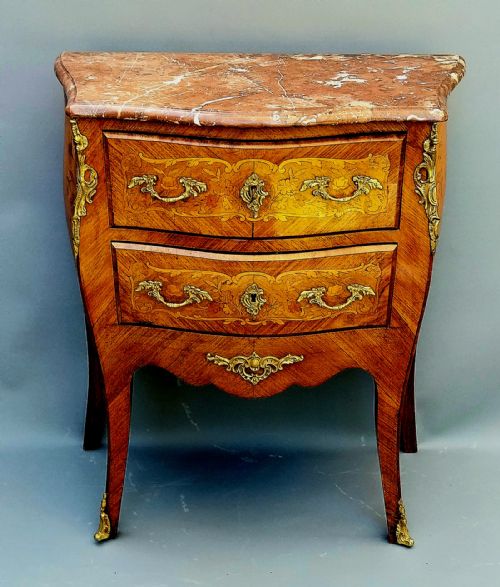
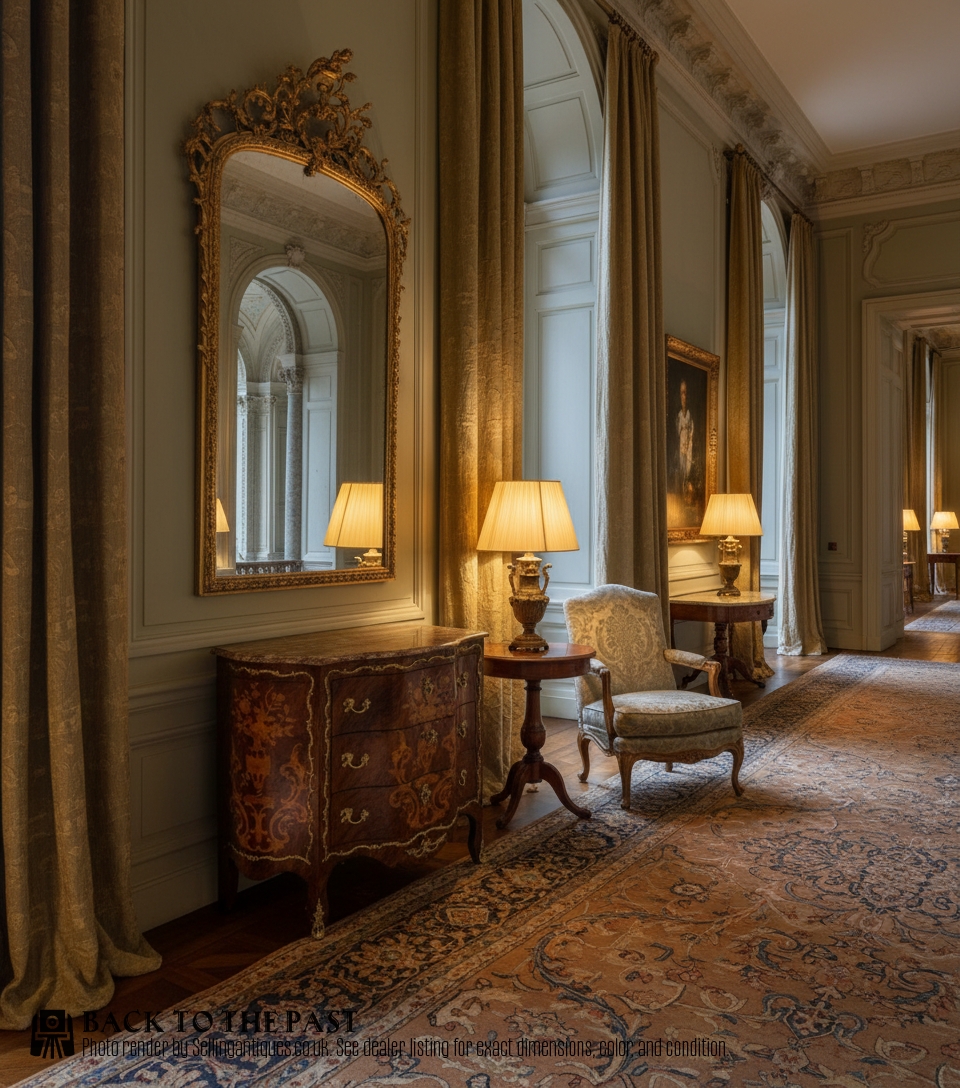
Cabinetmakers constructed these carcases using native and exotic timbers such as oak, fruitwood, and kingwood, laying elaborate veneers and marquetry across the swelling contours. The undulating surfaces required precise craftsmanship to bend wood or fit segmental veneers without splitting.
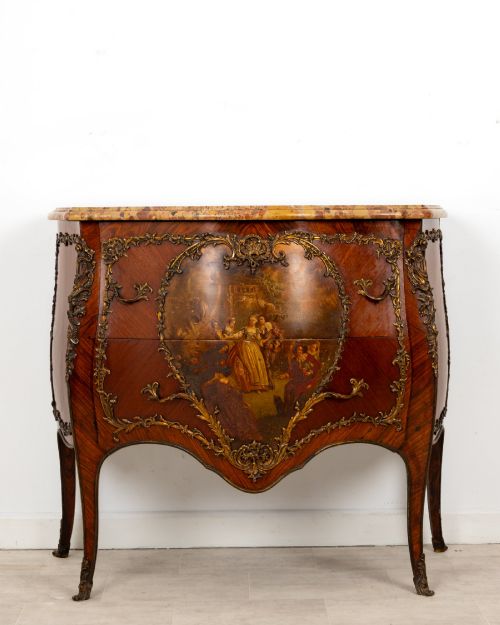
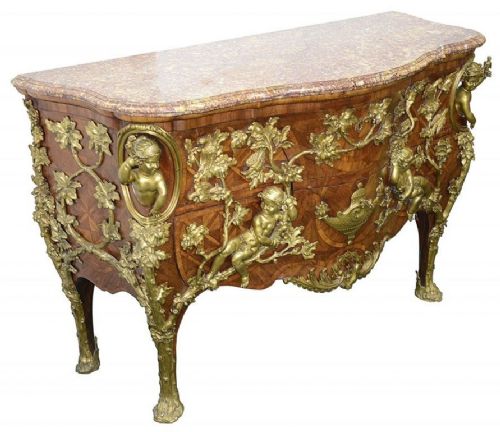
Gilt bronze and ormolu mounts were cast and chased to protect vulnerable corners and frame the drawers, whilst thick slabs of marble were heavily shaped to follow the exact serpentine outline of the wooden top beneath.
Assessing quality in bombee furniture
Quality rests upon the fluency of the curved silhouette and the crispness of the bronze or ormolu mounts, where finely chased detailing distinguishes superior workshop output from simpler provincial work. The integration of the marble top to the exact contour of the carcase indicates higher cabinetmaking skill.
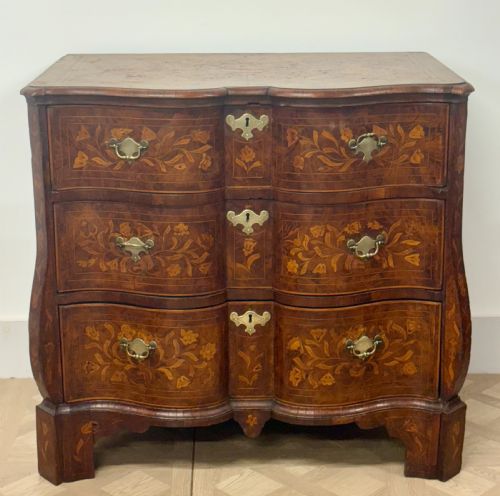
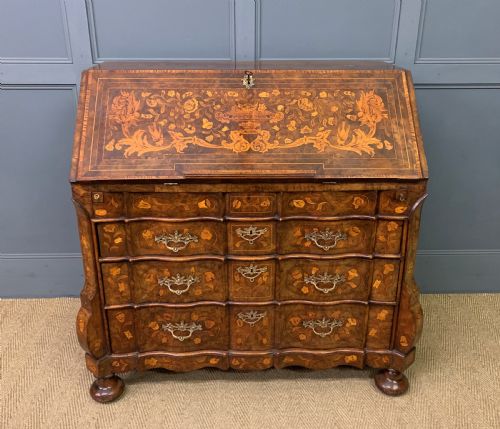
The complexity and preservation of the floral marquetry or grain matching across the drawer fronts further separates standard items from exceptional examples, alongside the internal integrity of the oak drawer linings and original construction joints.
Intricate marquetry flowers bloom permanently across walnut drawer fronts, requiring no water yet surviving centuries of domestic life.
Jacques Bircklé·Charles Cressant
The Antique Bombee Chest Glossary
- Bombe
- A swelling or bulging profile characteristic of eighteenth-century furniture design. This convex shaping requires specialised veneering techniques to follow the curving lines.
- Marquetry
- Decorative patterns formed by fitting together small pieces of veneer into wooden panels. Craftsmen utilise various coloured woods to depict floral and botanical scenes.
- Ormolu
- Gilded bronze mounts applied to furniture edges and handles for decoration. The technique involves applying a mercury-gold amalgam to cast bronze.
- Commode
- A decorative low chest of drawers originating in France. These pieces typically feature multiple drawer tiers and prominent surface marble.
Antique Bombee Chest: Frequently Asked Questions
How were these chests used historically?
These decorative pieces functioned primarily as commodes or storage chests within affluent European domestic interiors. Their generous drawer space held clothing, linens, or personal valuables.
Miniature versions served as apprentice showpieces or specialised cabinet furniture, whilst bedside variants provided accessible storage in private chambers.
How do I care for a marble top?
Marble surfaces require simple maintenance using damp cloths and mild, non-acidic soap to prevent staining. Avoid placing citrus or harsh chemical cleaners directly on the stone.
Protect the polished surface from scratches by using coasters or felt pads beneath decorative objects placed on top.
How do I distinguish Dutch from French styles?
Dutch examples often feature dense floral marquetry and darker walnut timbers with a pronounced bombastic swell. French pieces frequently incorporate gilt-bronze mounts and shaped marble tops influenced by Louis XV court aesthetics.
Regional preferences also appear in the leg forms and the complexity of the veneer patterns across the drawer fronts.