


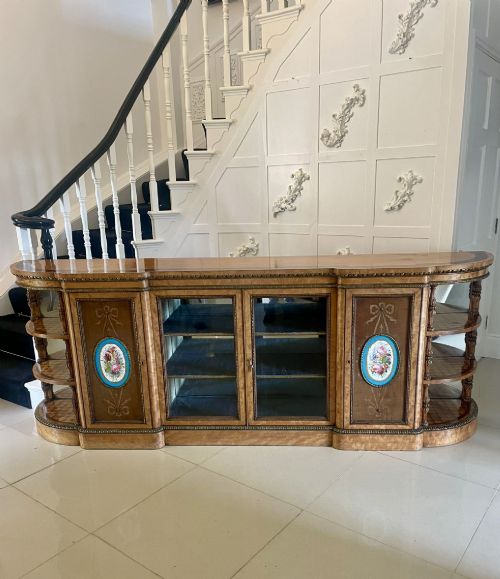
French Ormolu Display Cabinet
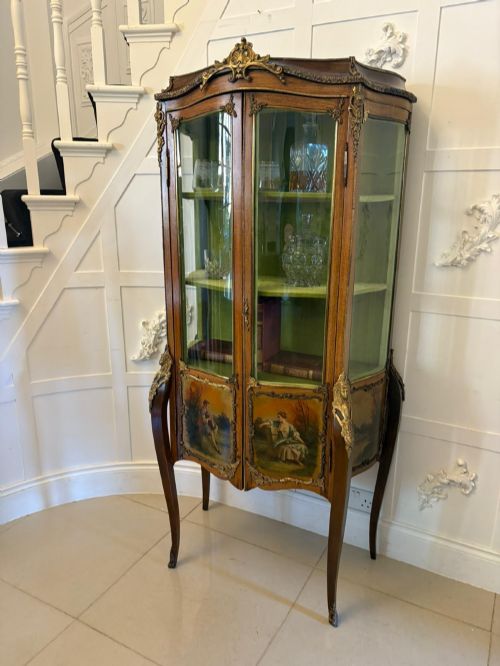
A French ormolu display cabinet brings together gilt bronze mounts and fine cabinet woods to showcase precious objects.
French Ormolu Display Cabinet
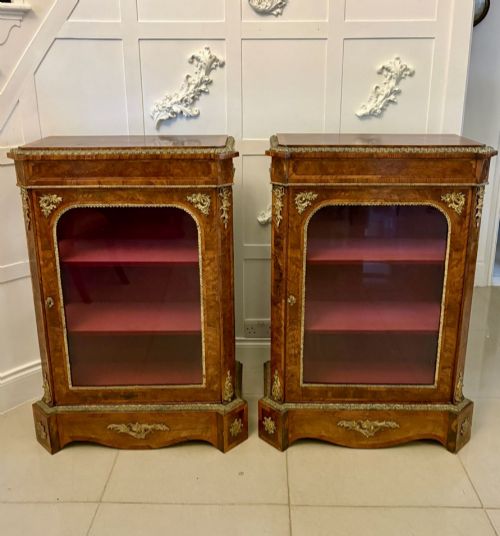
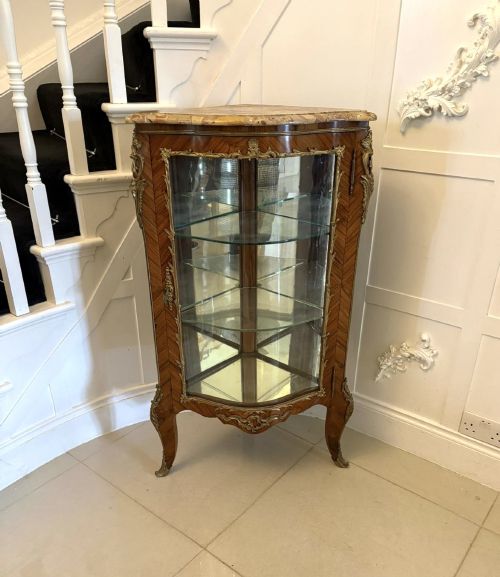
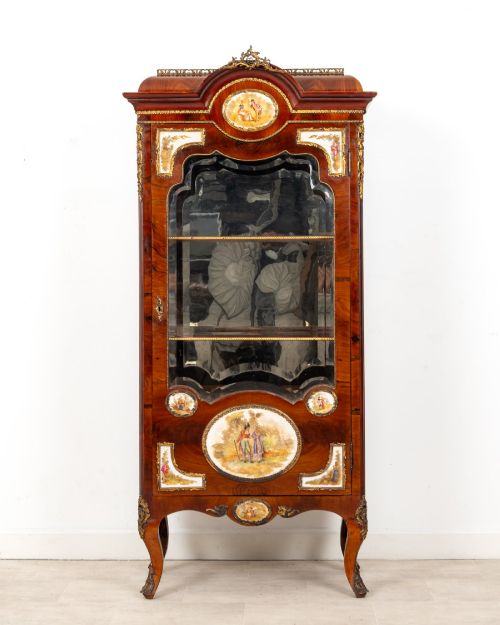
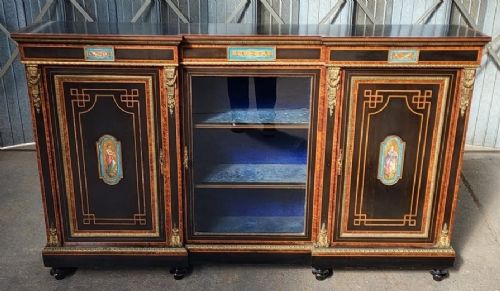
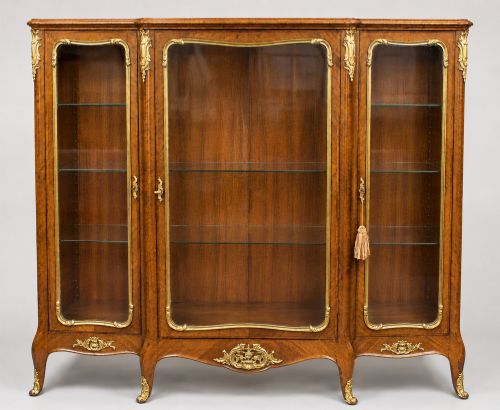
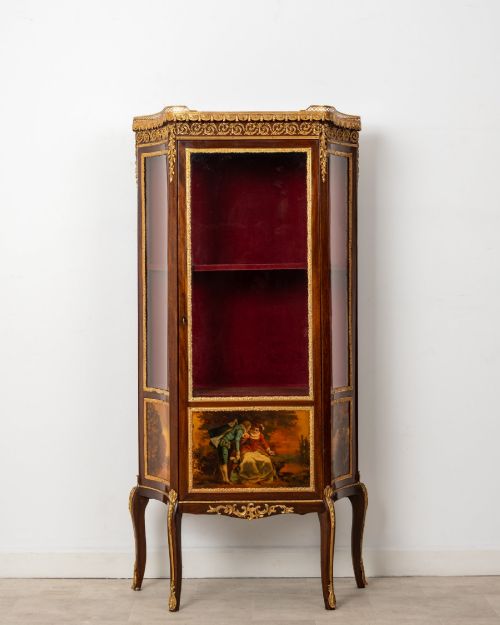
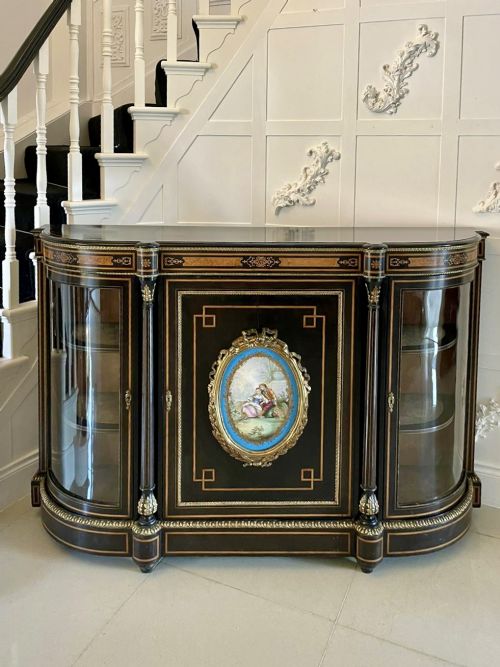
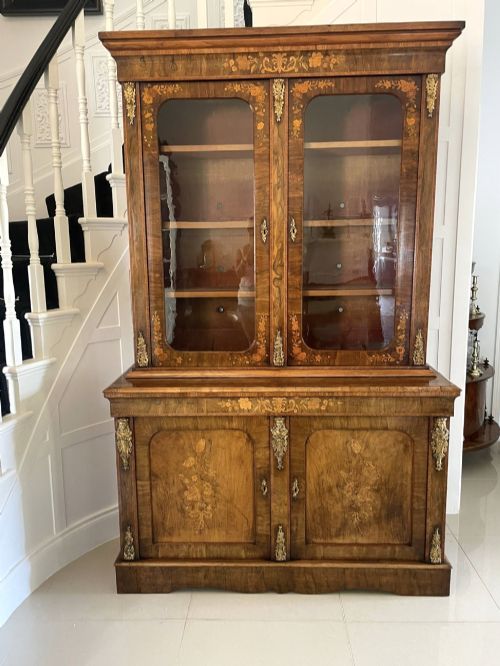
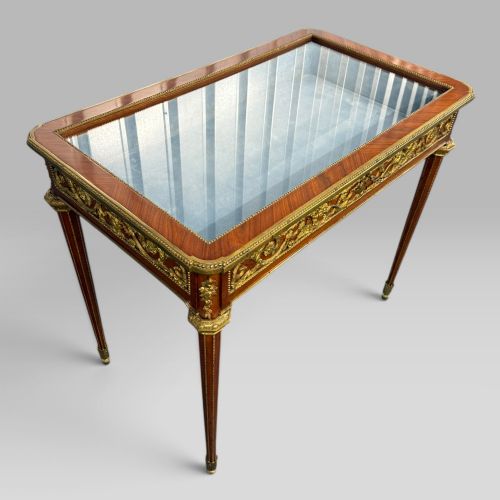
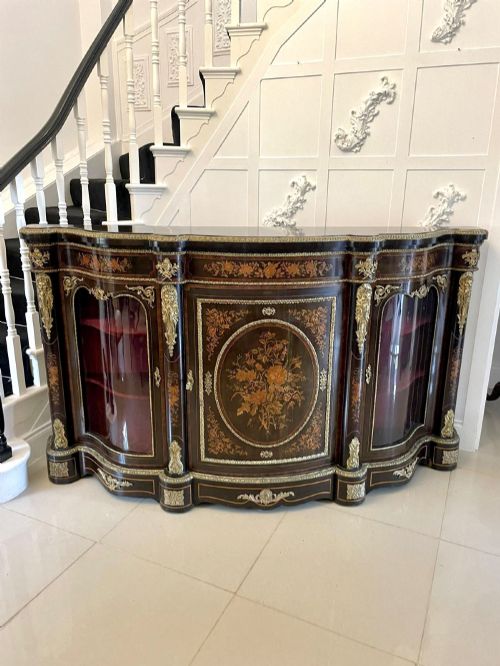
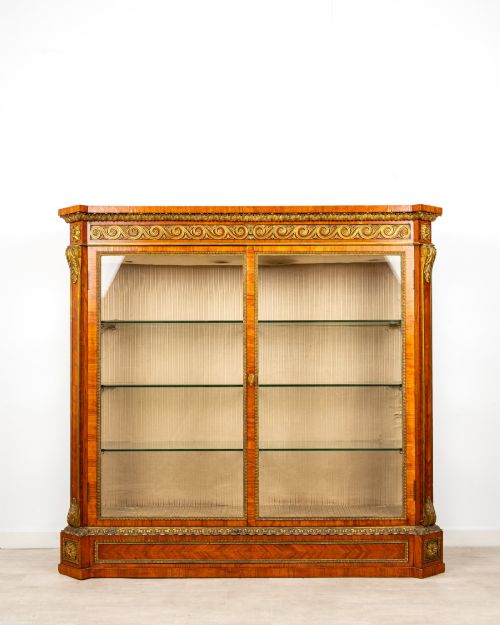
A french ormolu display cabinet encompasses vitrines, credenzas, and pier cabinets originating primarily from the nineteenth century and revival periods. These pieces combine glass panels and shelved interiors designed to display porcelain, books, and decorative items. Common forms range from tall freestanding vitrines to serpentine credenzas and low bijouterie tables.
Makers and workshops working in the French taste utilised various revival styles, notably Louis XV, Louis XVI, and Napoleon III. Pieces frequently incorporate curved glass, marble tops, and painted Vernis Martin panels alongside gilt bronze mounts. Walnut, kingwood, mahogany, and burr walnut provide the primary carcases for these display items.
How they were made
Cabinetmakers constructed the carcases using dense timbers such as mahogany, walnut, and kingwood, often applying intricate marquetry or amboyna veneers. Surface decoration frequently included hand-painted Vernis Martin panels depicting pastoral scenes.
Gilt bronze, or ormolu, mounts were cast, chased, and applied to corners, borders, and feet to accentuate the structural lines. Marble tops and bevelled glass panes were integrated into the upper display sections and cabinet doors.
Some display cabinets hid secrets behind Vernis Martin panels while gilt bronze cherubs watched silently over porcelain teacups.
What varies in quality
The precision of the ormolu casting and the depth of the hand-chasing separate standard production from exceptional examples. Crisp detailing in the bronze mounts indicates superior workshop output.
The complexity of the timber veneers, such as floral marquetry and burr walnut figuring, alongside the finish of painted panels, determines the standing of an individual cabinet.
François Linke·H. J. Hatfield And Sons·Edward Holmes Baldock·Maison Gagneau
The French Ormolu Display Cabinet Glossary
- Ormolu
- Gilt bronze mounts applied as decorative ornaments to furniture carcases. This technique creates a rich metallic contrast against dark cabinet woods.
- Vitrine
- A glass-fronted cabinet designed for displaying porcelain and small objects. These pieces feature glazed doors and sides to maximise visibility.
- Vernis Martin
- A simulated Japanese lacquer technique developed in France, used for painted decorative panels on cabinets. The finish involves multiple layers of varnish.
- Credenza
- A low sideboard or cabinet featuring cupboards and central display space. Victorian and French examples often include marquetry inlay and marble tops.
- Marquetry
- The art of applying pieces of veneer to a structure to form decorative patterns. Craftsmen utilised various exotic woods to create floral and geometric designs.
French Ormolu Display Cabinet: Frequently Asked Questions
What is a french ormolu display cabinet?
A french ormolu display cabinet is a glazed piece of furniture decorated with gilt bronze mounts designed to exhibit decorative objects. These cabinets emerged in various revival styles during the nineteenth century.
They combine timber carcases such as kingwood and walnut with glass panels and ornamental metalwork. Interior shelving accommodates porcelain, books, and small collections.
Where were these cabinets placed?
These cabinets stood in formal reception rooms and drawing rooms to display valuable possessions to visitors. Pier cabinets fitted into narrow wall spaces between windows.
Larger credenzas and vitrines anchored main walls, reflecting light through glass doors and polished marble tops. Their placement depended on the room layout and the need for illumination.
How do I care for marble and wood?
Protect marble tops from acidic spills and clean timber surfaces using soft cloths without harsh chemicals. Stable room humidity prevents wood from warping and veneers from lifting.
Handle ormolu mounts carefully during cleaning to avoid damaging the gilt surface. Gentle dusting preserves both the metal ornaments and the underlying polish.
How do I identify the period?
Period identification relies on matching wood types, mount styles, and construction methods to documented nineteenth-century revival movements. Cabinet forms often reflect Louis XV or Louis XVI design revivals.
Maker stamps, signature mounts, and specific veneer choices help narrow down the date of manufacture. Comparing piece construction with dated examples provides further clarity.