
French Painted Display Cabinet
A French painted display cabinet brings delicate hand-painted decoration, glazed panels, and gilt bronze mounts together to showcase cherished objects.
French Painted Display Cabinet
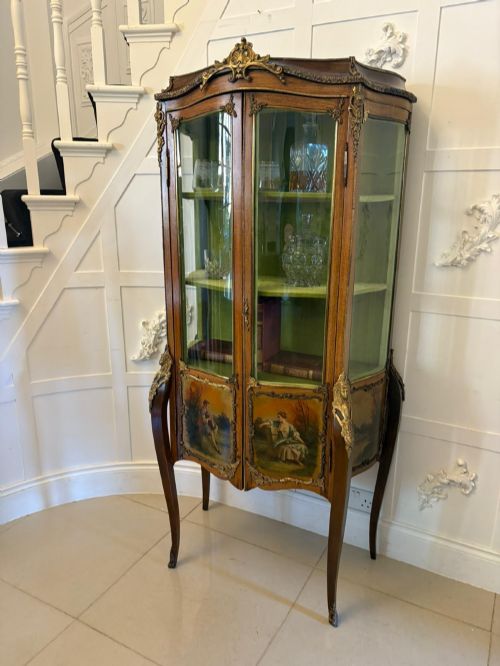
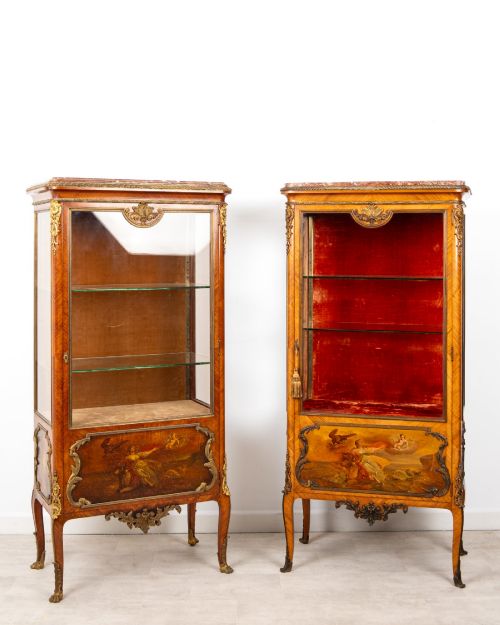
A french painted display cabinet is primarily designed to showcase porcelain, glassware, and small collectibles behind glazed doors or glass panels. These items span from grand nineteenth-century vitrines and bookcases down to smaller wall shelves and pier cabinets.
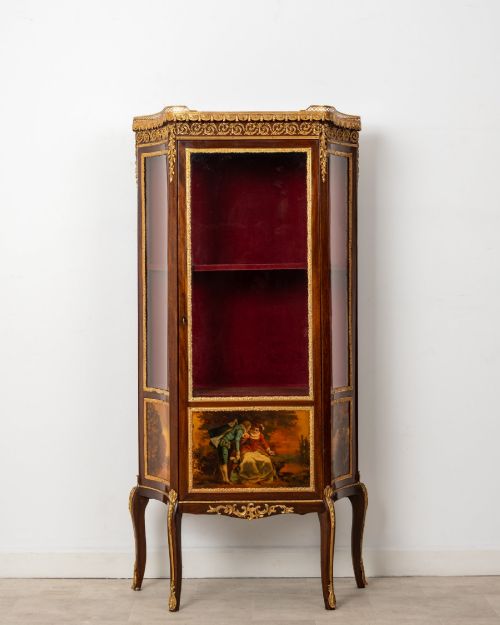
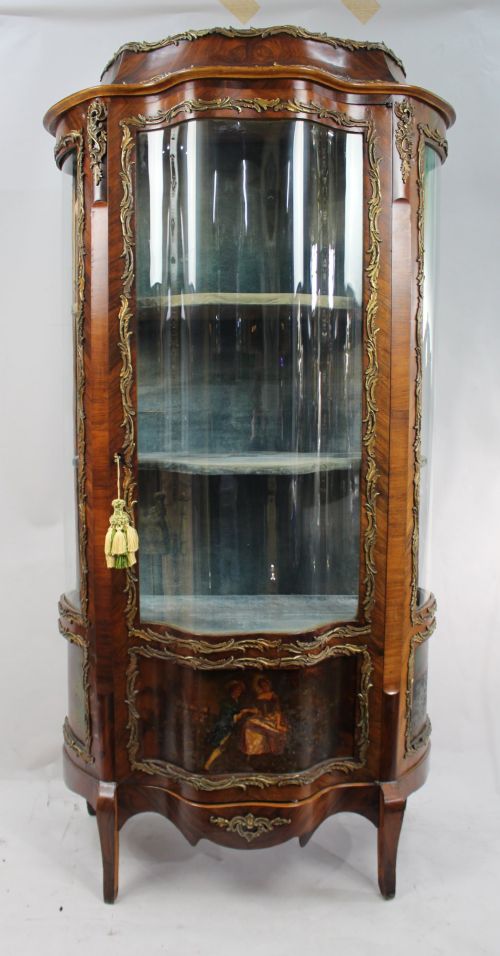
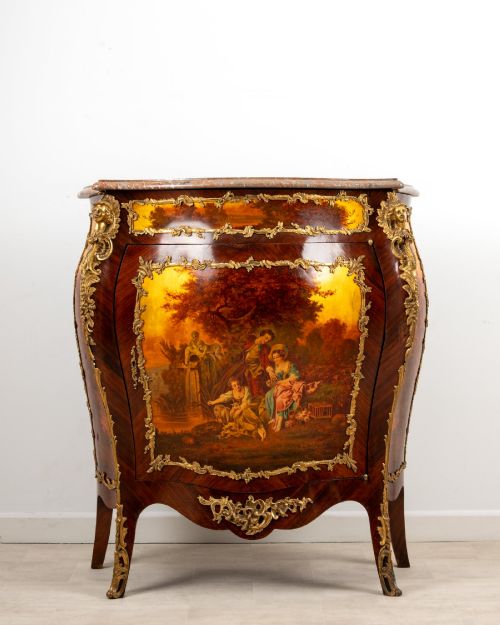
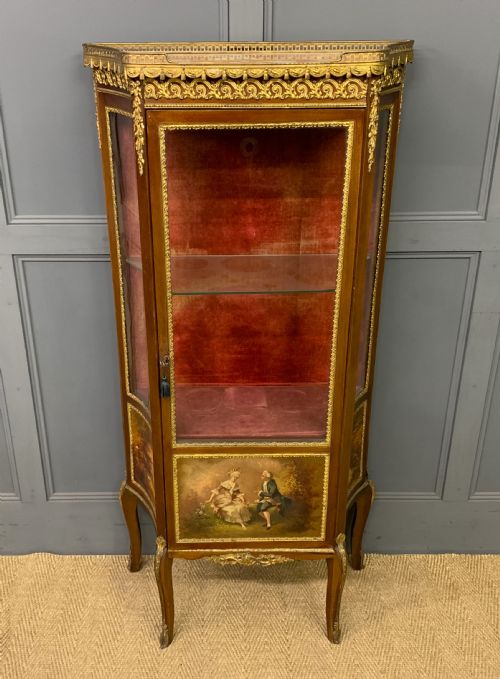
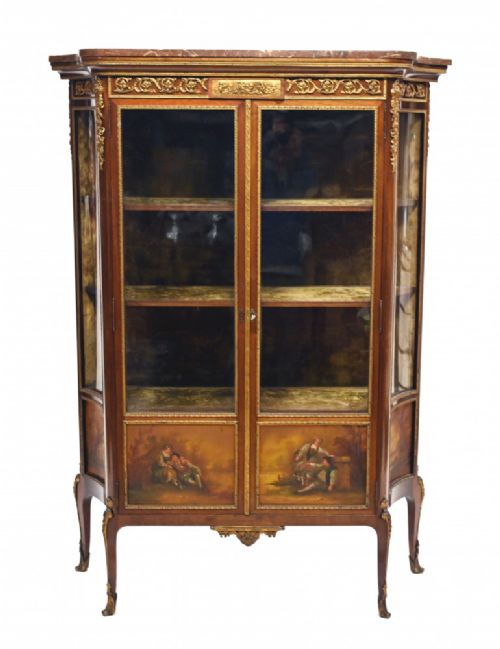
The prevailing style draws heavily from eighteenth-century revivals, particularly Louis XV and Louis XVI designs, alongside provincial and rustic interpretations. Surviving examples frequently exhibit serpentine fronts, bombé profiles, or slender cabriole legs suited to formal reception rooms.
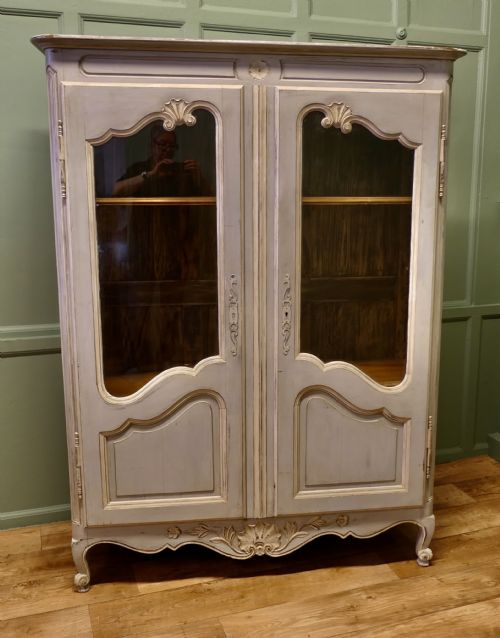
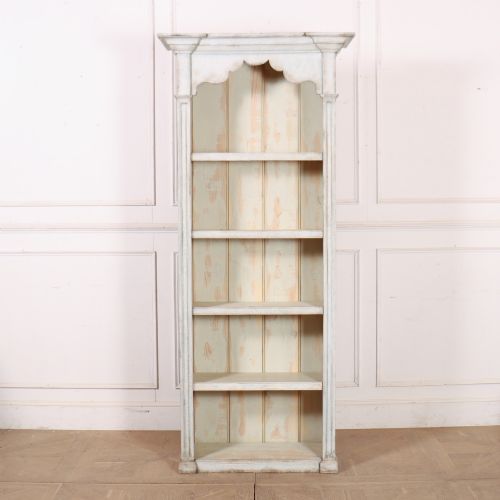
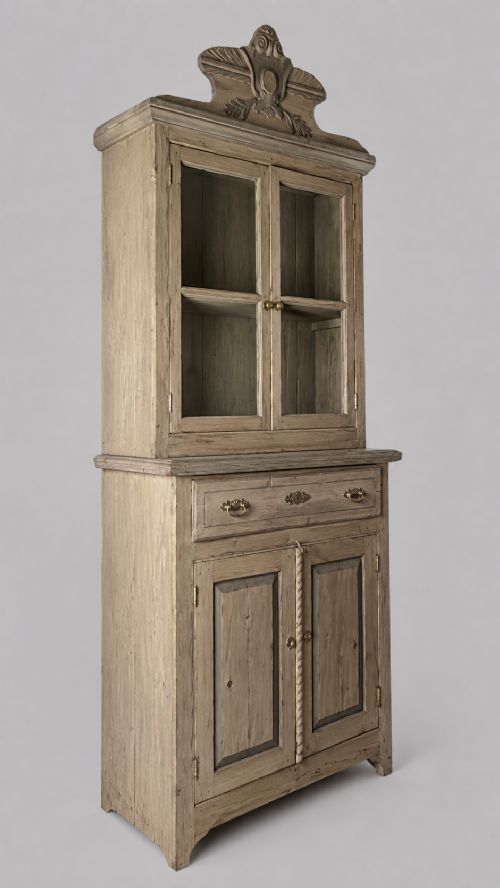
Most entries belong to the nineteenth and early twentieth centuries, capturing periods when revivalism dominated cabinet making. Alongside freestanding vitrines, buyers will encounter glazed cupboards and bookcases finished in historic paint schemes.
How they were made
Makers built the foundational carcases using sturdy timbers such as mahogany, kingwood, rosewood, and pine, often applying layered paint finishes directly to the wood. Decorative surfaces frequently incorporate Vernis Martin techniques, replicating European lacquerwork with delicate hand-painted pastoral scenes.
Gilt bronze, known as ormolu, and brass embellishments accent the structural corners, mounts, and cornices of finer pieces. Marble tops in white or coloured varieties frequently cap the upper surfaces of bombé and serpentine cabinets.
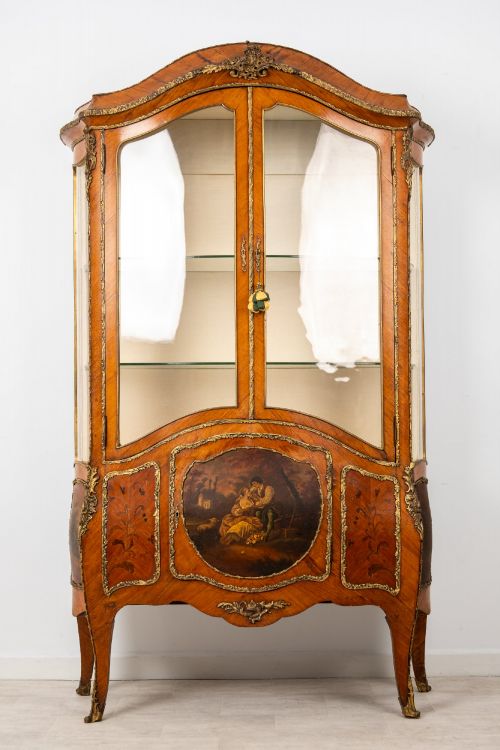
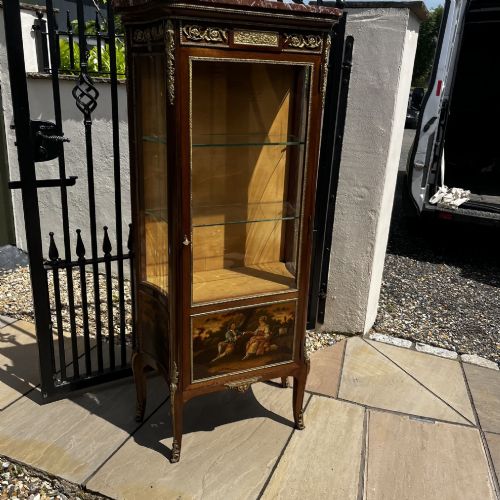
Glazing techniques utilise curved and concave glass panes fitted into slender timber frames to maximise interior visibility. Hand-painted panels featuring romantic subjects or floral motifs are integrated directly into the lower cabinet doors.
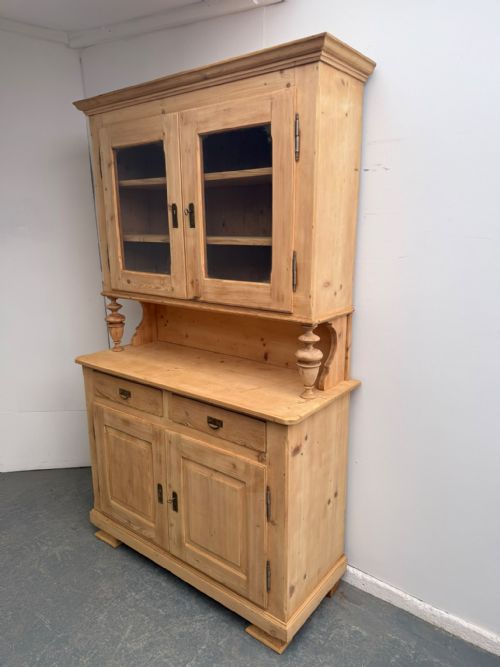
One unexpected survivor wears later hand-written signage advertising the Rhone valley vineyards of Chateauneuf-du-Pape.
What varies in quality
The refinement of the painted decoration establishes a major tier in overall quality, ranging from simple monochrome finishes to intricate multi-layered Vernis Martin artistry. Master painters achieved depth and clarity in figurative scenes that lesser workshops failed to replicate.
The heaviness and crispness of the ormolu mounts dictate another clear division between standard production and top-tier pieces. Finely chased bronze mounts fit flush against the timber contours rather than appearing clumsy or mass-cast.
Structural complexity, such as double-curved bombé shaping or custom concave glass panels, separates ambitious cabinet making from straightforward rectangular joinery.
Darte Brothers·Pucher Deroche
The French Painted Display Cabinet Glossary
- Vernis Martin
- A simulated lacquer finish developed in eighteenth-century France, utilising multiple resin layers over painted decorations. It appears frequently on revival vitrines and cabinets.
- Ormolu
- Gilt bronze mounts applied to furniture edges and feet for decorative contrast. Higher quality mounts feature sharp hand-chasing after casting.
- Vitrine
- A glass-fronted display cabinet intended for showing ceramics and curiosities. They often stand on slender cabriole legs.
- Bombé
- A swelling, outward-curving profile found on the fronts and sides of select cabinets. This curved form required advanced woodworking skill.
- Étagère
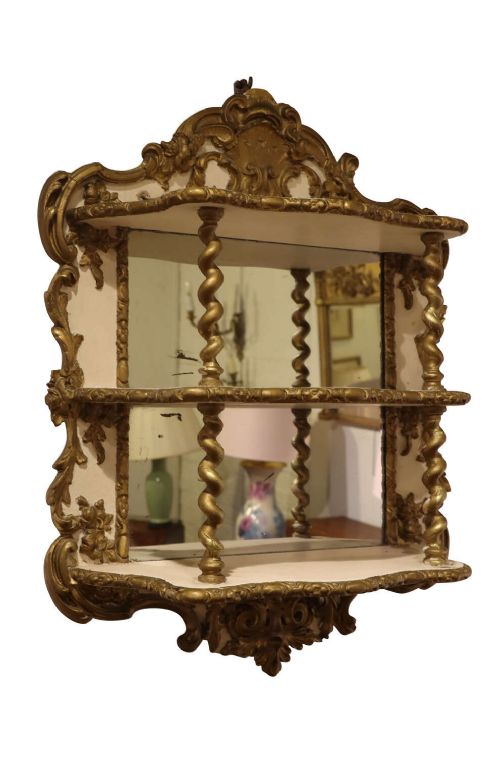
- An open-shelving unit used for decorative display on walls or floors. These pieces often feature painted and gilded wooden framing.
French Painted Display Cabinet: Frequently Asked Questions
Where should I place a display cabinet?
These cabinets suit drawing rooms, dining spaces, or hallways where natural light can pass through the glass panels. Their decorative painted surfaces work best away from direct, harsh sunlight to protect historic finishes.
Ensure the floor is level, particularly with older serpentine or bombé forms, to maintain proper door alignment and glass stability.
How do I care for painted wood?
Dust surfaces gently with a dry, soft cloth, avoiding commercial polishes that can degrade historic painted layers. Keep cabinets away from sudden temperature shifts and radiators to prevent timber movement.
Treat marble tops with care, wiping spills immediately to prevent staining on porous stone surfaces.
What is Vernis Martin?
Vernis Martin is a decorative lacquer technique developed to imitate Asian lacquerware using European resin varnishes. Artisans painted pastoral scenes or motifs before sealing them beneath translucent layers.
This finish is characteristic of finer display furniture produced during revival periods.
How do I identify a revival period piece?
Revival pieces draw on eighteenth-century Louis styles, featuring characteristic elements like cabriole legs, floral marquetry, and ormolu mounts. Construction details, hardware, and timber patination help distinguish nineteenth-century interpretations from earlier originals.
Look for machine-sawn timber elements and modern fixings to confirm nineteenth or early twentieth-century manufacture.