

French Neoclassical Chairs
French neoclassical chairs bring formal symmetry and restrained classical ornament into a room.
French Neoclassical Chairs
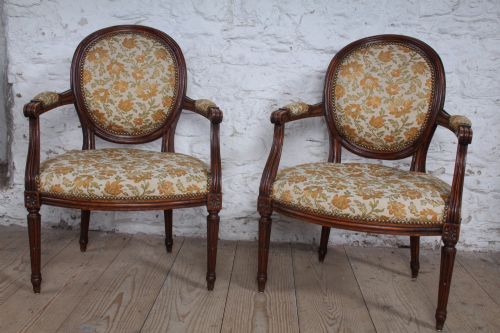
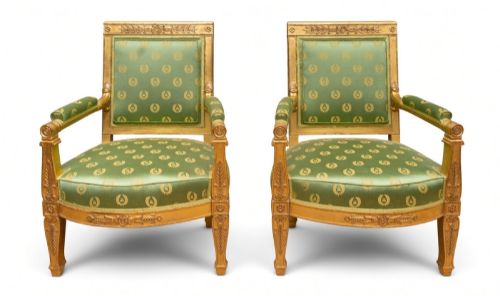
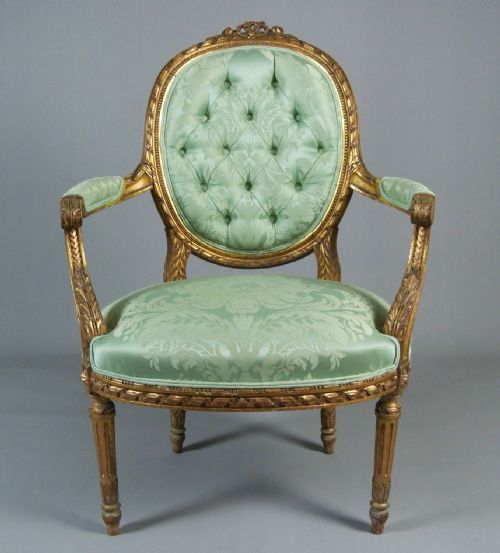
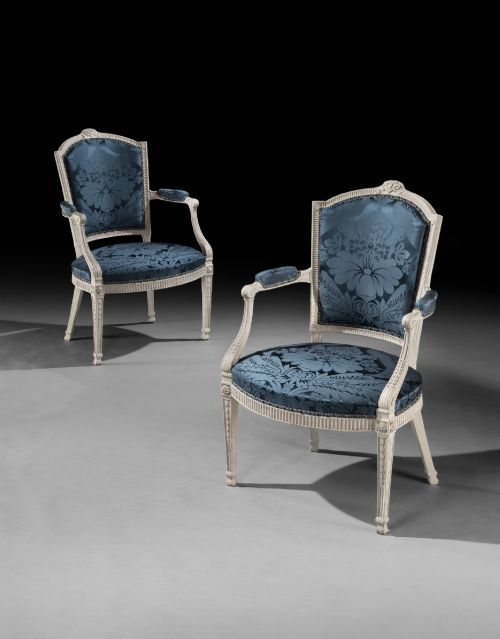
When searching for french neoclassical chairs, buyers encounter forms ranging from open armchairs and giltwood fauteuils to large dining sets and cane-seated side chairs spanning the eighteenth, nineteenth, and early twentieth centuries.
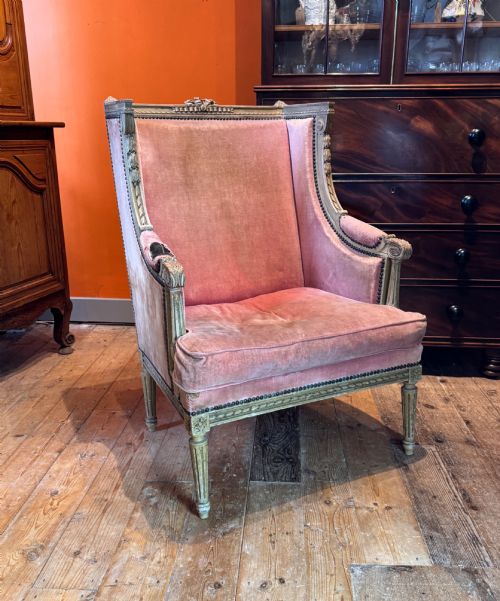
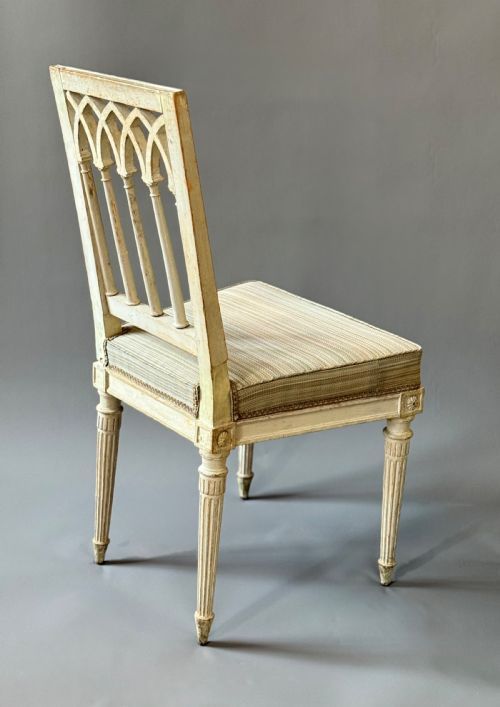
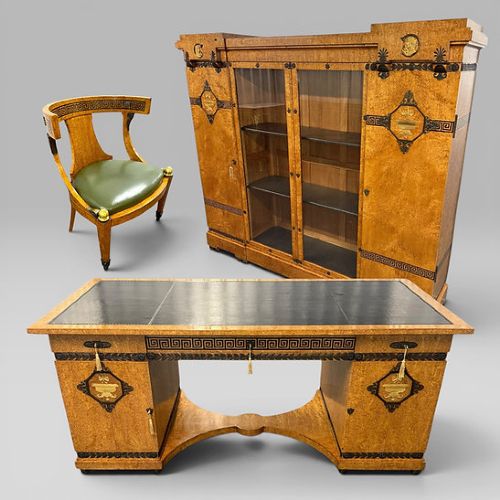
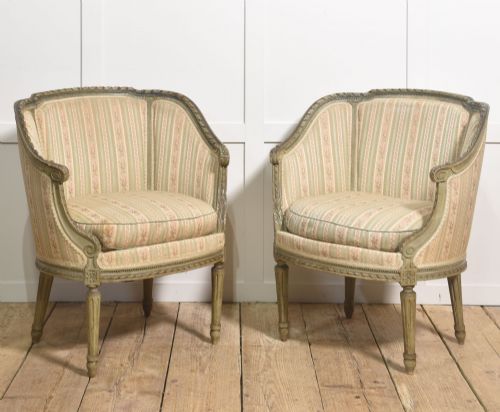
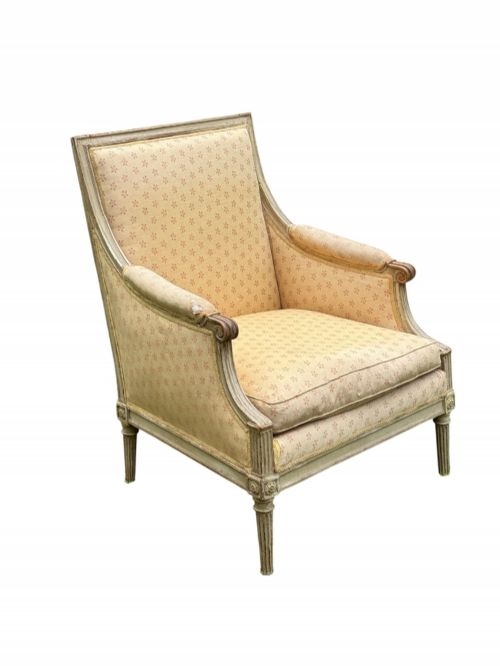
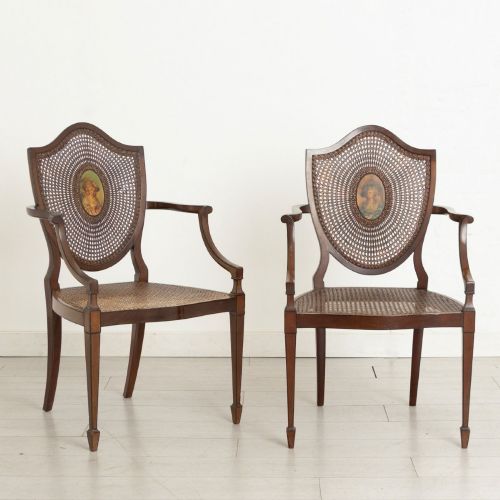
Forms include specific desk chairs, tub chairs, and salon suites upholstered in silk damask, velvet, or needlepoint tapestry, reflecting classical architectural lines such as fluted columns and straight tapered legs.
How they were made
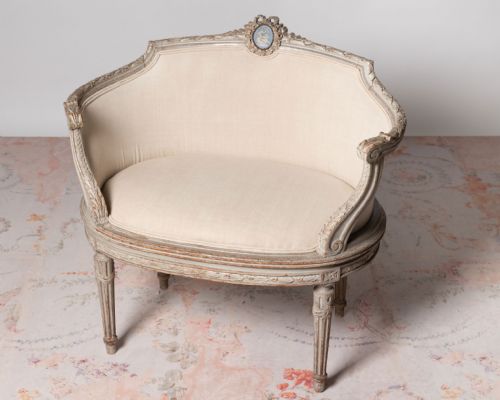
The framework of these seats relies on native hardwoods like beech and walnut, carved by hand with motifs derived from classical antiquity such as laurel wreaths, acanthus leaves, and fluting.
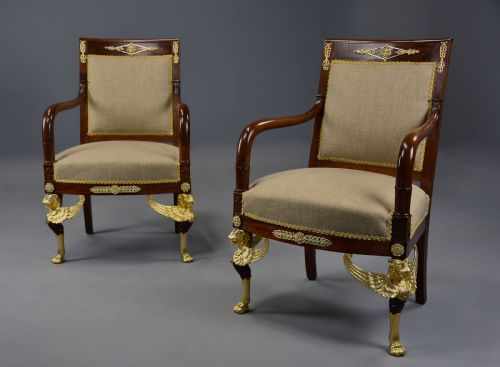
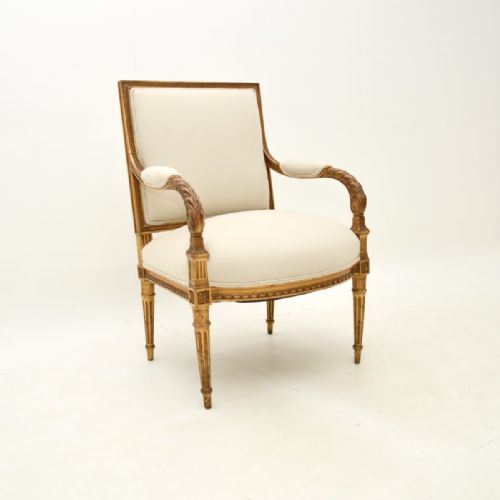
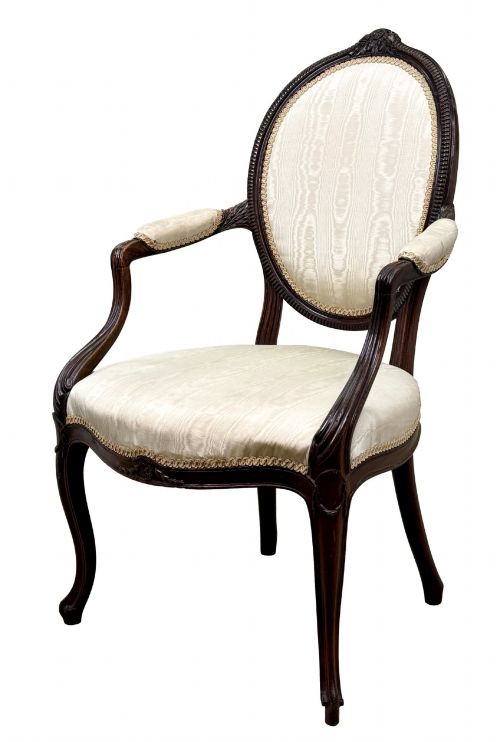
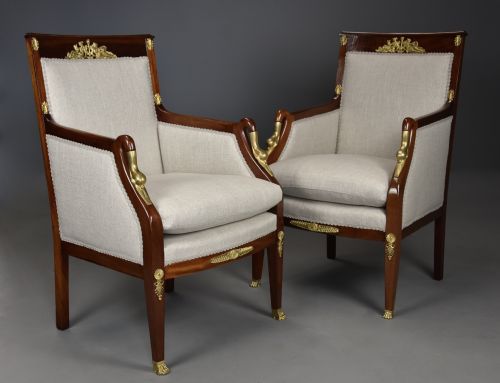
Surface finishes include original paint schemes, giltwood applied over gesso, and polished mahogany, frequently accented with cast or chased ormolu mounts made of brass.
Upholstery techniques utilise traditional webbing and stuffing secured beneath textiles like silk damask, velvet, tapestry panels, or woven cane.
Listings span eighteenth-century origins through nineteenth-century revival movements, utilising materials from mahogany and giltwood to brass and original painted finishes.
What varies in quality
The distinction between ordinary and exceptional examples rests in the crispness of the wood carving and the integrity of the original surface, whether giltwood or layered paint.
Proportion and structural harmony dictate value, separating workshop productions with balanced classical geometry from later mass-produced revival pieces.
Retaining authentic period upholstery elements, such as eighteenth-century needlepoint panels or early silk damask, elevates the historical weight of a given seat.
Jacob-Desmalter·Thomas Chippendale·Mercier Frères·Henri Jacob
The French Neoclassical Chairs Glossary
- Fauteuil
- An open-framed upholstered armchair with exposed wooden arms, characteristic of French seating design from the Louis periods onward.
- Ormolu
- Gilded bronze or brass mounts applied to furniture surfaces to highlight structural joints and decorative motifs.
- Giltwood
- Timber coated with a thin layer of gold leaf applied over a prepared gesso ground.
- Caning
- Woven rattan or split cane used to form breathable seat and back panels.
- Directoire style
- A transitional French design phase bridging classical restraint and early Empire severity, noted for sparse ornamentation.
French Neoclassical Chairs: Frequently Asked Questions
How do I identify a Louis XVI chair?
Louis XVI chairs are distinguished by straight tapered legs, often fluted like a classical column, and geometric frames featuring oval, square, or medallion backs.
They break away from the sweeping curves of the earlier rococo period in favour of strict symmetry and architectural straight lines.
What is the difference between an armchair and a fauteuil?
In standard terminology, a fauteuil is simply the specific French term for an open-framed armchair featuring upholstered armrests left uncovered by fabric.
English-language listings often use both terms interchangeably to describe open-sided formal seating.
How should I care for gilded wooden furniture?
Giltwood surfaces require gentle dusting with a soft, dry brush to avoid disturbing the fragile gold leaf applied over the underlying gesso layers.
Keep these pieces away from direct sunlight and moisture fluctuations to prevent the wood from shifting and the finish from cracking.
Are eighteenth-century chairs sturdy enough for daily use?
Original eighteenth-century seating can support normal sitting provided the mortise and tenon joints remain tight and the internal frame has not been compromised by woodworm or dryness.
Many collectors choose to reinforce older frames discreetly or reserve them for lighter daily interaction.