


Blue Painted Armchairs
Blue painted armchairs bring vibrant colour and classic continental character to a room, ranging from grand eighteenth-century forms to relaxed provincial designs.
Blue Painted Armchairs
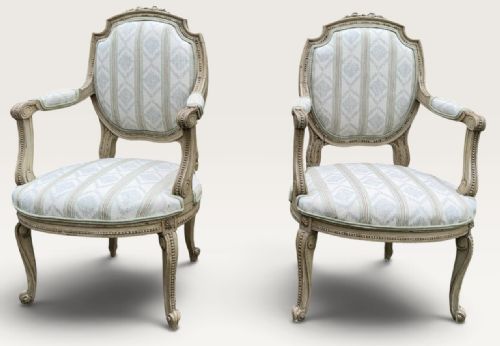
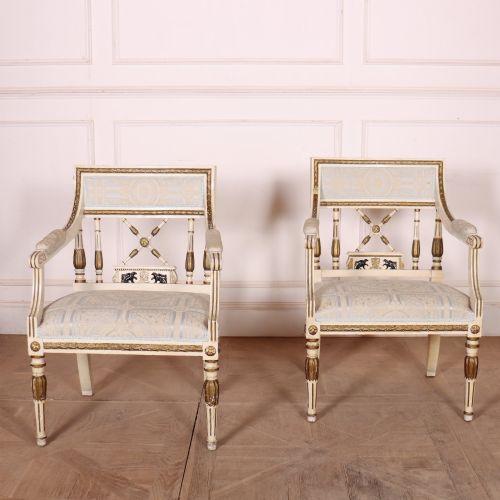
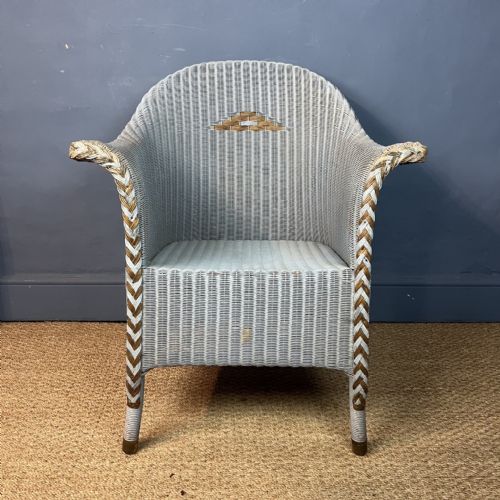
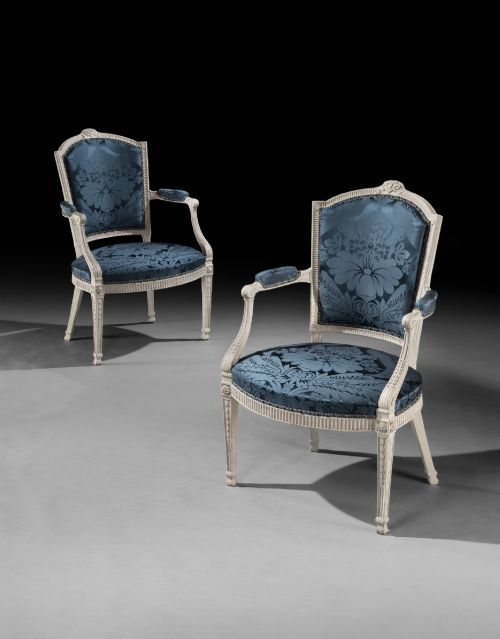
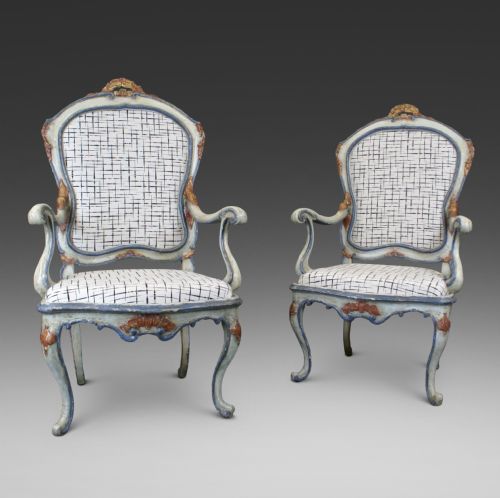
Blue painted armchairs encompass a diverse group of seating furniture created across several centuries, primarily drawing on French, Swedish, and Italian traditions. When you search for blue painted armchairs, you encounter everything from eighteenth-century George III and Barocchetto pieces to nineteenth-century Louis Revival examples and later twentieth-century styles.
How they were made
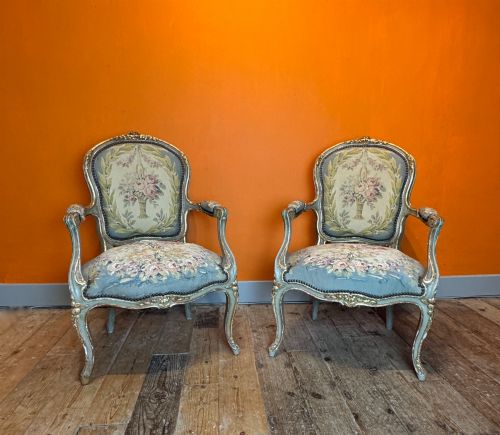
Cabinetmakers and joiners constructed these frames using sturdy timbers such as beech, shaping the wood to follow prevailing classical and provincial fashions. Craftsmen applied preparatory grounds like gesso before painting the wooden surfaces, occasionally highlighting carved details with gold leaf.
Upholstery completed the seating, utilising traditional textiles, tapestry, and fabric to provide comfort alongside visual elegance. Many surviving examples retain traces of their original painted finishes, bearing witness to decades or centuries of use.
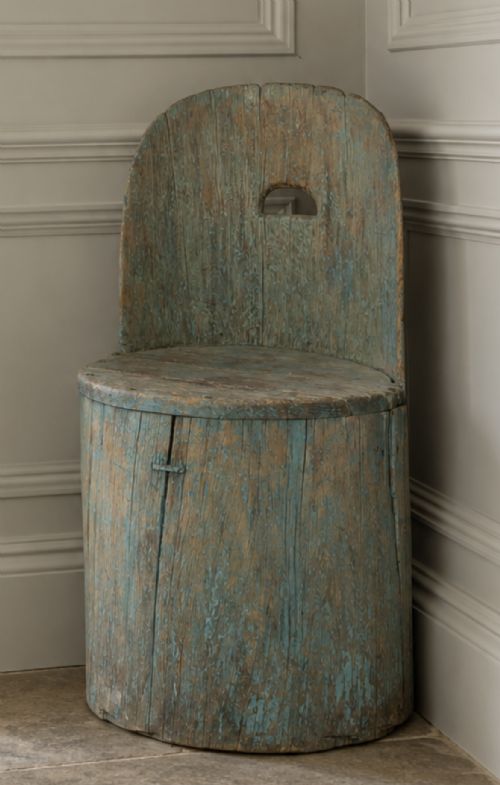
Several armchairs manage to look delightfully defiant while wearing decades of chipped blue paint.
What varies in quality
The distinction between ordinary and exceptional pieces lies in the crispness of the original woodwork carving and the authenticity of the surface finish. Higher quality examples show refined proportions and harmonious integration between the structural frame and the decorative paint.
The integrity of the painted surface significantly influences the character of each chair, with untouched original pigment holding greater visual depth than later repainting. Structural joinery and the survival of period upholstery or appropriate textile choices further differentiate individual items.
The Blue Painted Armchairs Glossary
- Fauteuil
- An open-arm armchair originating in France, featuring upholstered back and seat with exposed wooden arms. These chairs became central to interior decoration during the seventeenth and eighteenth centuries.
- Bergère
- A closed-arm upholstered armchair with padded sides enclosed by woodwork or cane. This form provides a deeper, more enclosed seat than an open armchair.
- Gesso
- A plaster-like mixture applied to wooden furniture frames as a smooth base for paint or gold leaf gilding. It allows for sharp definition on carved decorative motifs.
- Parcel Gilt
- A decorative technique where specific carved details on a painted surface are highlighted with gold leaf. It adds subtle contrast and richness to the overall design.
- Barocchetto
- The Italian iteration of the Rococo style, characterised by flowing asymmetrical lines and ornate carved decoration. Pieces from this movement display distinct regional flair.
Blue Painted Armchairs: Frequently Asked Questions
How do I date a blue painted armchair?
Dating relies on examining the structural joinery, the timber used, and the style of the carved ornament. Comparing the silhouette against known period designs helps narrow down the decade of manufacture.
Paint analysis and surface wear also offer strong clues regarding age. Original paint layers beneath later decoration often confirm the true period of the piece.
Are painted finishes usually original?
Many antique chairs have been repainted during their long histories to suit changing interior fashions. Finding a piece with undisturbed original paint is a notable discovery for collectors.
Signs of age, such as craquelure and underlying wear, help distinguish original surfaces from later decorative refreshing. Professional examination can often reveal the history of paint layers.
How do I care for antique painted furniture?
Keep painted armchairs away from direct sunlight and strong heat sources to prevent the wood from drying and the paint from flaking. Gentle dusting with a soft cloth is usually sufficient for routine maintenance.
Avoid using modern chemical cleaners or polishes on historic painted surfaces. Consult a conservator if the paintwork shows signs of lifting or instability.
Where were these painted chairs made?
The majority of these chairs originate from continental workshops in France, Sweden, and Italy. Each region developed distinct interpretations of court styles adapted for local tastes.
English cabinetmakers also produced painted seating, particularly during the neoclassical periods inspired by continental designs. Regional construction techniques often reveal the specific geographic origin of a frame.