





Italian Carved Carvers
Italian carved carvers are substantial seating pieces bearing sculptural woodwork that brings distinct presence and historical depth to any room.
Italian Carved Carvers
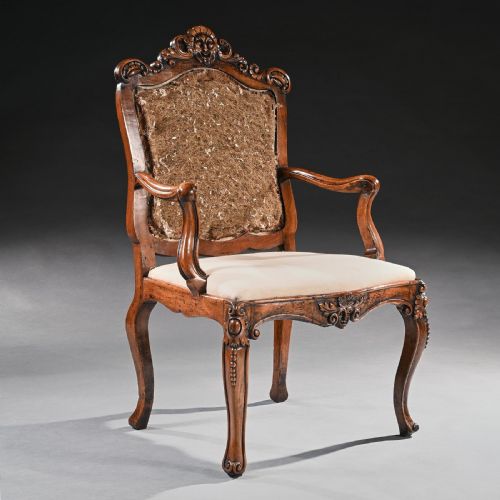
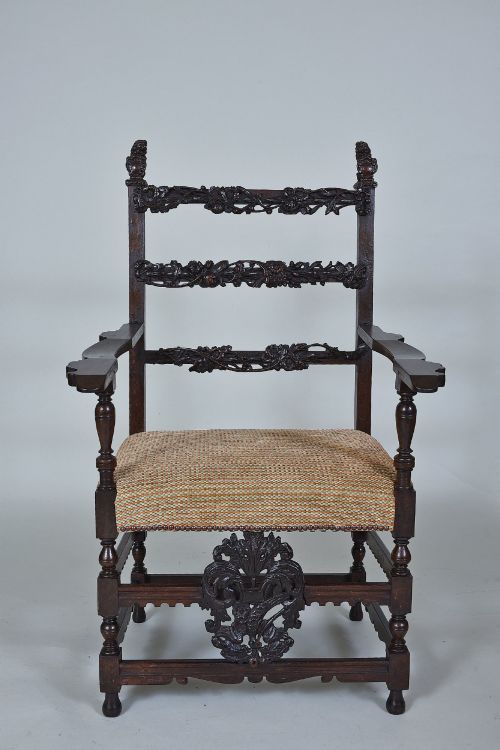
When buyers search for Italian carved carvers, they encounter formal seating and armchairs originating from the eighteenth and nineteenth centuries. These pieces display elaborate woodwork traditions ranging from Barocchetto to Neoclassical and Renaissance Revival styles.
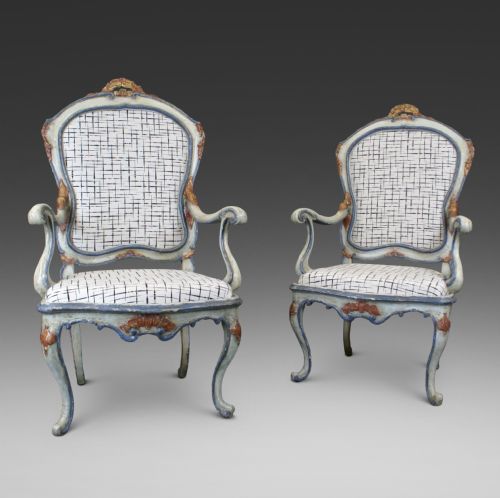
Examples span from mid-eighteenth-century walnut armchairs with extravagant head rails to late-nineteenth-century giltwood pairs. Sculptural details distinguish these forms from standard domestic seating of the period.
Materials and construction
Master carvers shaped these pieces from solid hardwoods like walnut and mahogany, allowing for deep relief work and structural integrity. Workshops also applied gesso and silver gilt to wooden frames for heightened visual impact.
Artisans executed intricate motifs by hand, employing traditional joinery appropriate for grand salons. Upholstery fabrics and textiles were then fitted to complete the formal seating.
Listings feature walnut, mahogany, and giltwood constructions spanning the eighteenth and nineteenth centuries.
Judging the work
Quality in these pieces rests upon the depth, precision, and crispness of the hand carving across the wooden frame. Master carvers achieved fluid lines and balanced proportions that separate exceptional works from simpler production.
The integration of original gilding and the preservation of secondary woods further distinguish finer examples. Scale and ambition of design dictate the visual weight and presence of each piece.
Luigi Frullini·Henry Thomas Peters
The Italian Carved Carvers Glossary
- Carver
- An armchair with wooden arms, often larger and more elaborate than side chairs. These pieces served as principal seats in formal rooms.
- Giltwood
- Timber coated with thin gold leaf over a prepared gesso surface. This finish reflects light and highlights carved details.
- Barocchetto
- An Italian variation of the Rococo style characterised by lively asymmetry and curved forms. It appears frequently in eighteenth-century seating.
- Walnut
- A dense, dark timber favoured by furniture makers for its stable qualities under intricate hand tools. It forms the primary structure of many historical Italian chairs.
Italian Carved Carvers: Frequently Asked Questions
What defines an Italian carved carver?
These pieces are formal armchairs featuring elaborate wooden relief work created by skilled artisans. They serve as sculptural elements within a room while retaining their original function as seating.
Craftsmen utilised regional styles from the eighteenth and nineteenth centuries, including Baroque, Rococo, and Neoclassical designs. Their substantial scale and detailed woodwork set them apart from standard domestic furniture.
How do I care for giltwood frames?
Giltwood surfaces require gentle dusting with a soft, dry brush to prevent damage to the delicate gold leaf layer. Avoid moisture and chemical cleaning agents entirely.
Keep these pieces away from direct sunlight and temperature fluctuations to protect the underlying gesso and wood. Proper placement ensures the finish remains stable over time.
How do I distinguish nineteenth-century revival styles?
Revival pieces draw heavily upon earlier eighteenth-century motifs while incorporating the denser proportions typical of later periods. Makers referenced Renaissance and Baroque vocabularies with renewed enthusiasm.
Examining the tool marks and the condition of the timber helps determine the period of manufacture. Master carvers of the nineteenth century matched the ambition of their predecessors.