
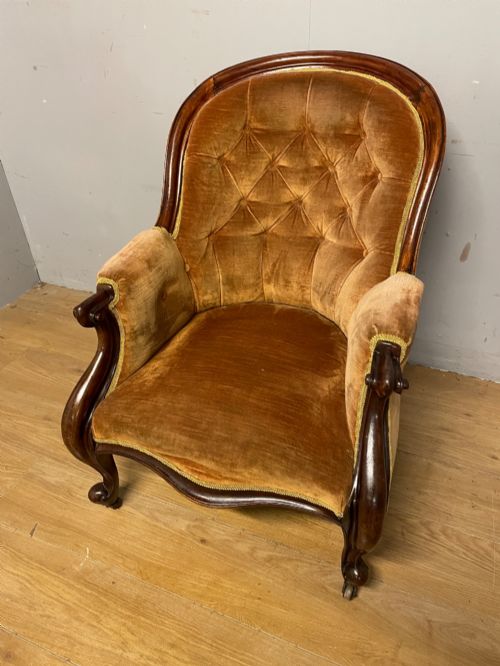
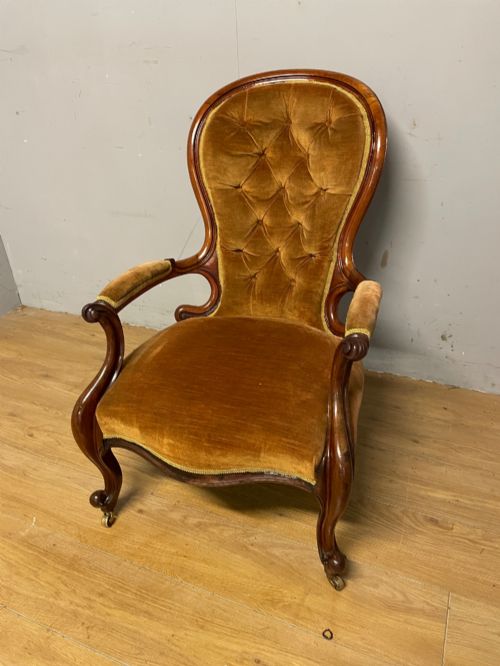
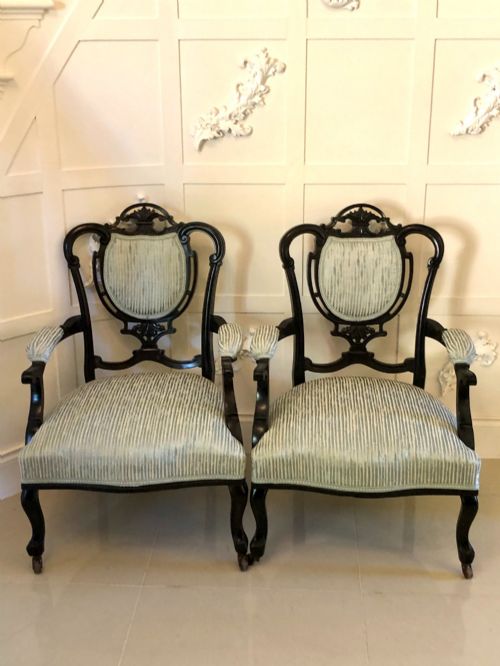
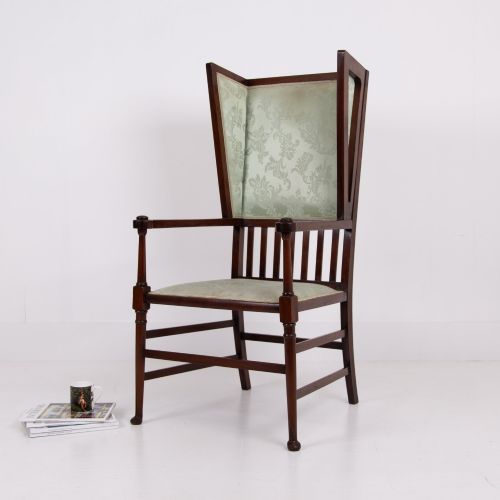
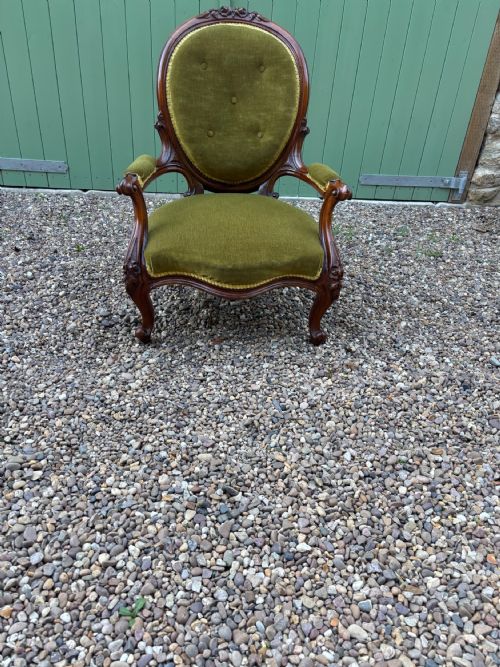
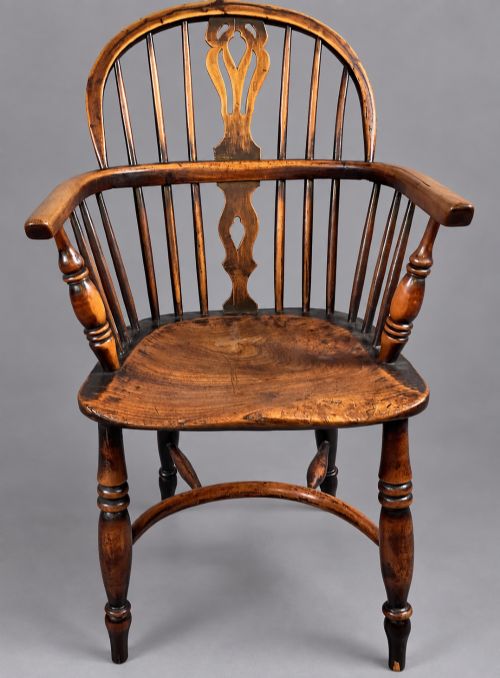
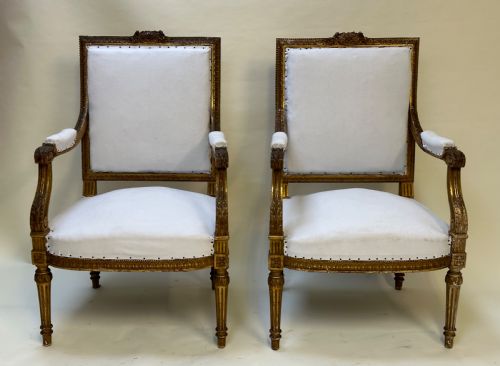
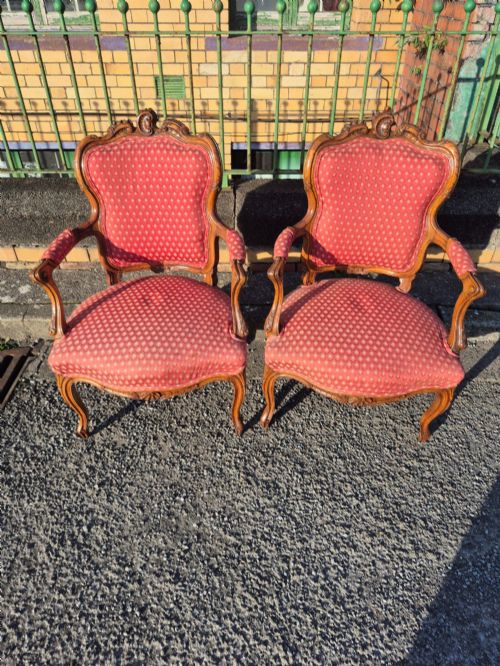
Carved Accent Armchairs
These carved accent armchairs bring distinct period presence into a room, offering functional seating shaped by centuries of stylistic evolution.
Carved Accent Armchairs
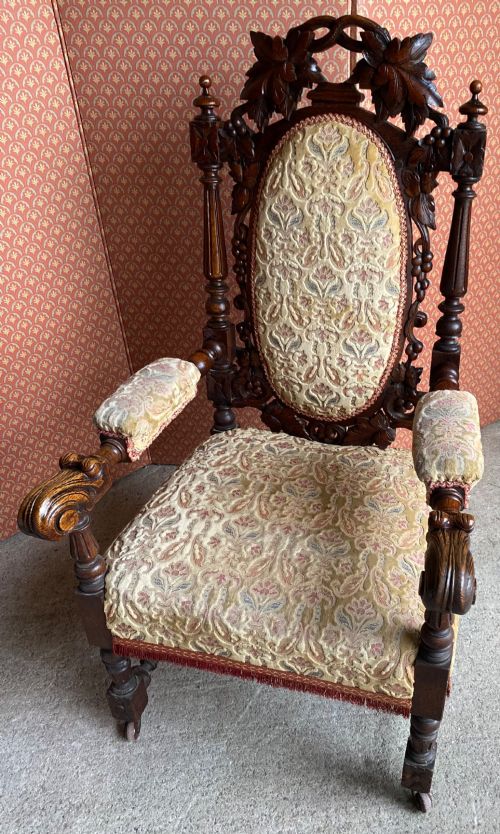
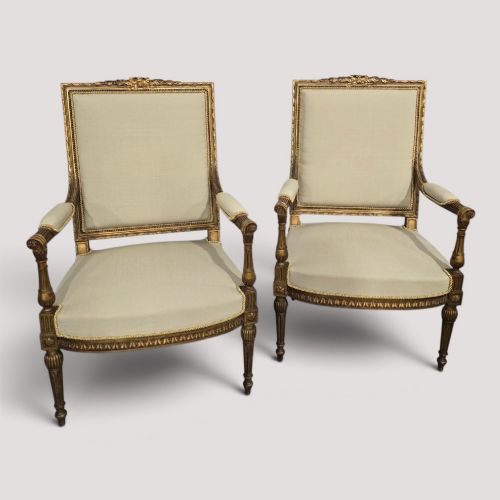
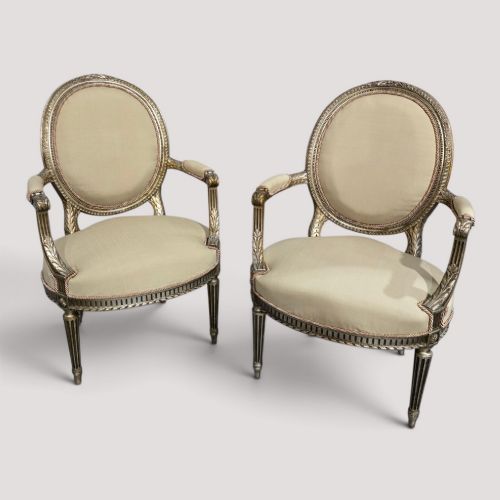
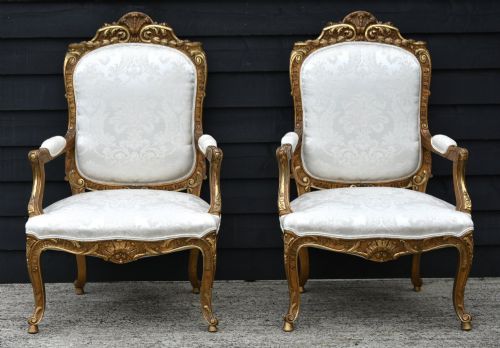
Carved accent armchairs encompass diverse seating forms designed to stand out within a room, including library chairs, salon chairs, and occasional seats. These examples bridge utilitarian function and decorative ambition across multiple centuries of design.
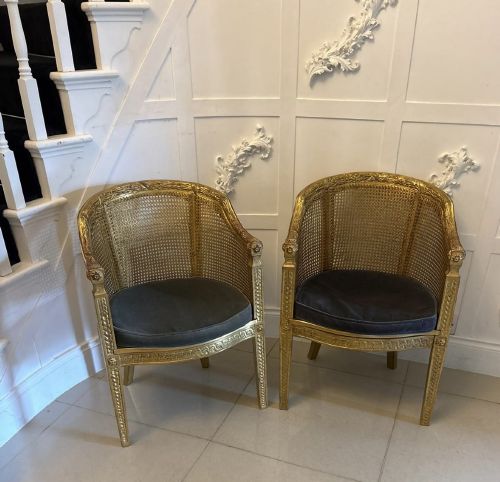
The selections range from robust 17th-century walnut and oak seating to ornate 19th-century giltwood frames and early 20th-century creations. French and Italian influences appear frequently alongside English and Scottish workshop traditions.
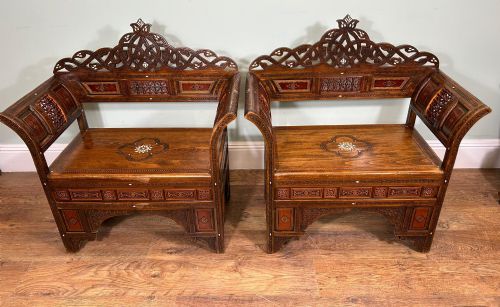
Buyers encounter distinct regional variations, from Swedish Empire and French Louis XVI styles to Syrian mother-of-pearl inlaid items and Burmese carved thistle chairs. These pieces serve primarily as focal points rather than matching dining sets.
How they were made
Cabinetmakers shaped structural frames from hardwoods such as walnut, mahogany, oak, and rosewood, often employing intricate hand-carving to define arms, legs, and crest rails. Parcel-gilt and painted finishes frequently highlight these wooden surfaces.
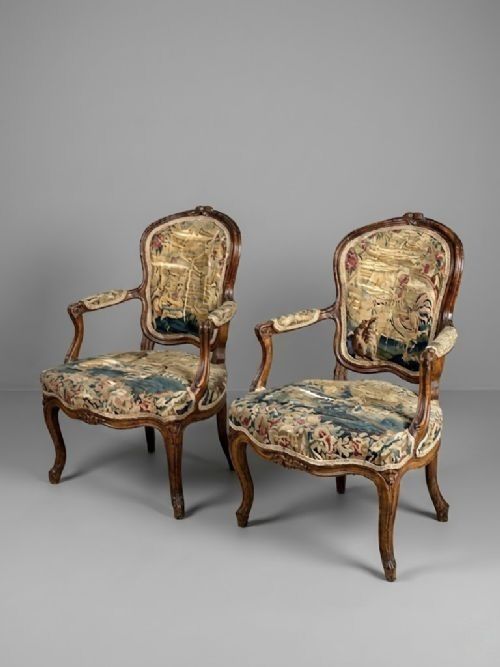
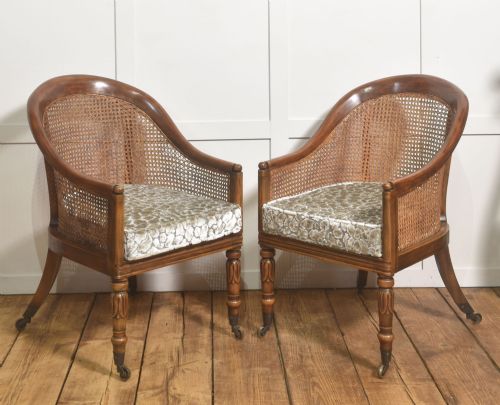
Upholstery methods utilised traditional stuffing secured beneath materials like leather, velvet, silk, tapestry, and modern woven fabrics. Caning and split cane panels also appear within structural backrests and seat bases.
Several armchairs incorporate unexpected elements, including ram heads, mother-of-pearl inlay, and thistle carvings.
What varies in quality
The distinction between standard seating and exceptional examples lies in the crispness and depth of the hand-carved detail on the wooden frame. Master carvers achieved flowing lines and balanced proportions that lesser workshops missed.
Originality of surface finish and the integrity of the timber frame determine the overall standing of an armchair. Pieces retaining their primary gilding, paint, or patinated wood display greater historical coherence.
Jacob-Desmalter·Colefax and Fowler·Andrea Brustolon
The Carved Accent Armchairs Glossary
- Bergère
- An enclosed upholstered armchair with wooden framing around the sides and back. This French form often incorporates cane work.
- Parcel-gilt
- Woodwork partially decorated with gold leaf or gold paint over a base layer. This technique highlights specific carved details on the frame.
- Fauteuil
- An open-framed upholstered armchair originating in France. The wooden arms remain exposed rather than padded over.
- Giltwood
- Timber coated with a thin layer of gold leaf. It defines opulent seating from various European periods.
- Ropeback
- A chair back featuring carved decoration resembling twisted rope. This detail appears frequently on Georgian mahogany seating.
Carved Accent Armchairs: Frequently Asked Questions
Where should I place an accent armchair?
These seats suit corners of sitting rooms, bedrooms, or entrance halls where their carved frames and upholstery provide a distinct visual focal point.
They function well independently rather than grouped around a standard dining table.
How do I identify the period of an armchair?
Study the turning of the legs, the profile of the arm supports, and the specific carving motifs relative to known historical styles. Oak and walnut point toward earlier centuries, while rosewood and mahogany often indicate Georgian or Victorian eras.
Material finishes and construction joints further clarify the timeline.
Are these chairs comfortable for daily use?
Comfort depends upon the internal stuffing and the ergonomic design of the specific historical form, such as a deep library chair or a formal salon seat.
Many period examples offer generous proportions suitable for reading or relaxing.
What is the difference between an armchair and a salon chair?
Armchairs generally provide robust, substantial seating intended for studies, libraries, or main living spaces. Salon chairs often feature lighter proportions designed for formal reception rooms.
Both categories utilise decorative carving to enhance their visual appeal.