


Cream Painted French Chairs
Cream painted french chairs bring period character to a room, offering classic seating forms finished in distressed or original paint.
Cream Painted French Chairs
Cream painted french chairs encompass a variety of seating forms designed for the salon, boudoir, and dining room. When searching for cream painted french chairs, buyers encounter armchairs, side chairs, and settees originating from different historical periods. These seating options display distinct regional and stylistic traits that define historical french furniture making.
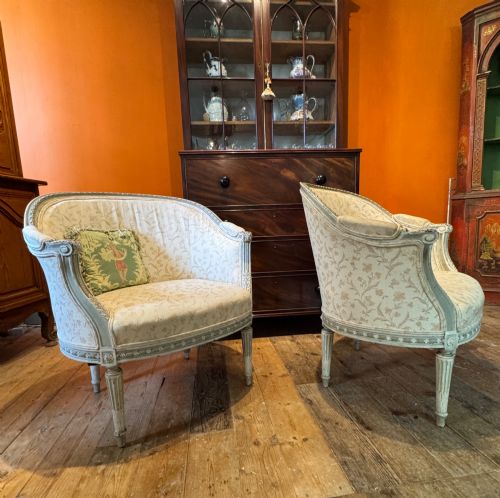
The pieces appearing on this page span several centuries, reaching from the eighteenth century through to the mid twentieth century. Eighteenth century examples and nineteenth century revivals sit alongside pieces from the early twentieth century. Armchairs and bergere tub armchairs appear frequently alongside side chairs and dining chairs.
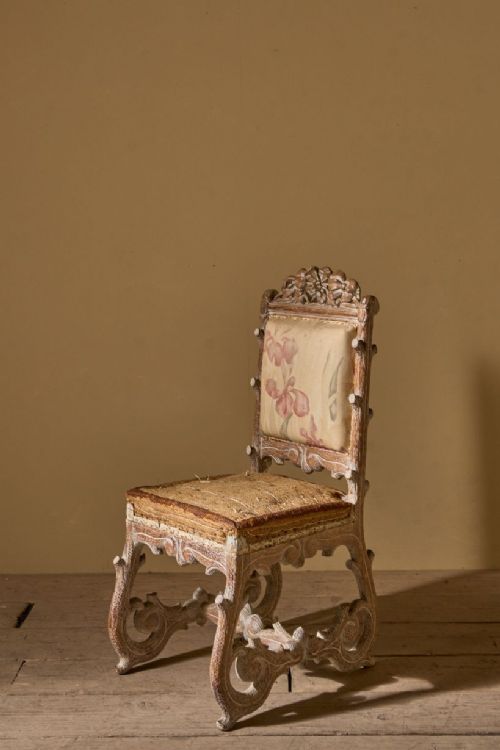
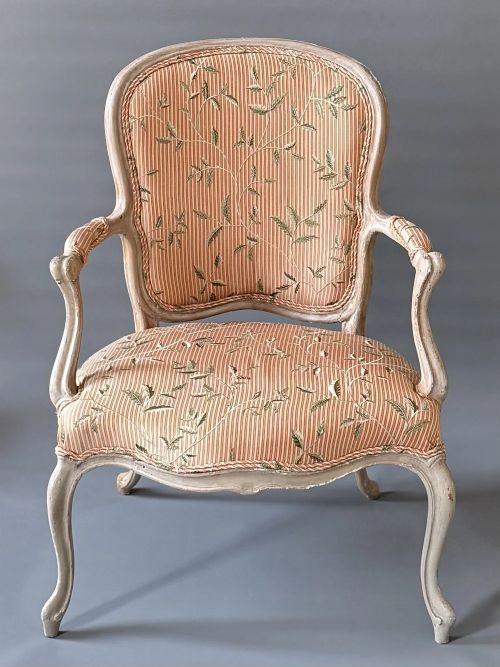
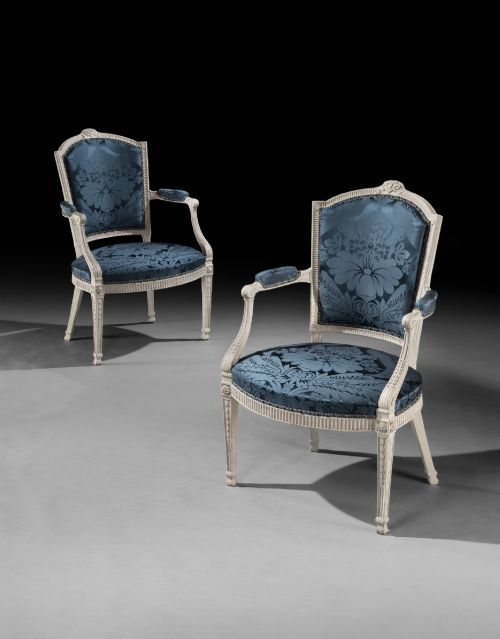
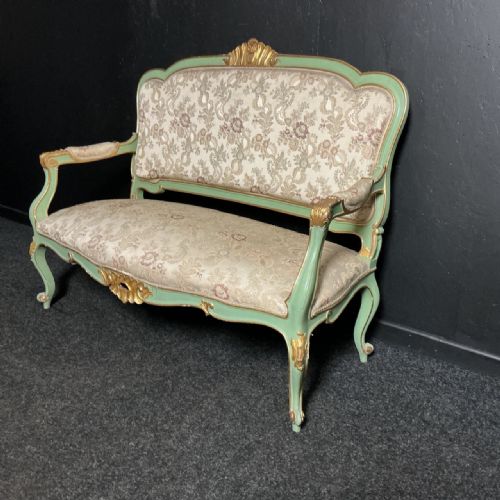
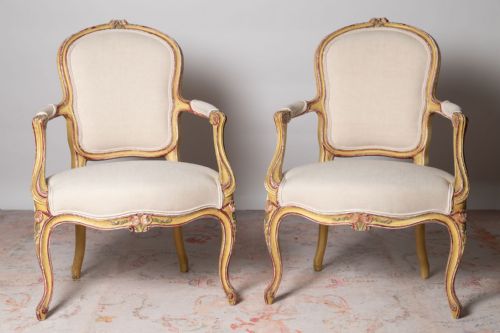
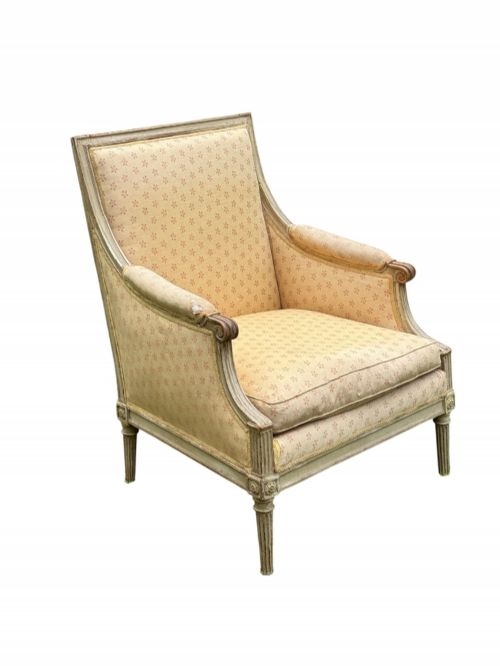
Stylistic influences draw heavily on royal french court aesthetics, specifically the Louis XV and Louis XVI designs, alongside provincial interpretations. Pieces exhibit curved cabriole legs, neoclassical straight tapered legs, or carved wooden frames finished in layered paint. Original paint surfaces and later decorative paint applications both feature across the selection.
Materials and construction methods
Frames rely predominantly on timber construction, utilising beech, walnut, and general hardwoods selected for their strength and suitability for carving. Artisans shaped these woods into structural components, applying intricate carved details to the crest rails, arms, and aprons of the chairs. Joinery techniques varied according to the period, securing the load bearing joints of armchairs and side chairs.
Surface finishing involved the application of paint directly onto the wood, often building up layers over a gesso base or applying coats directly to create the characteristic painted skin. Over decades, this paint layer developed natural wear, chipping, and patination. Gilding with gold leaf occasionally highlights specific carved motifs on salon chairs.
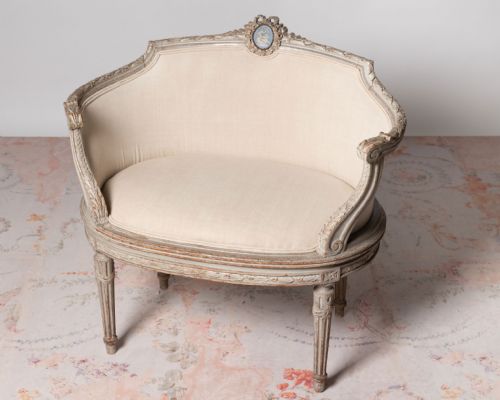
Upholstery materials range from modern fabric and linen to period needlework, supported by traditional stuffing and internal webbing. Caning provides a taut, breathable panel for the backrests and seats of specific bergere chairs. These elements work together to form the upholstered compartments of fauteuils and boudoir seating.
The selection includes architectural elements like faux bois side chairs alongside classic Louis XV and Louis XVI revival armchairs.
Assessing quality in period seating
The integrity of the wooden frame dictates the structural merit of a chair. Deeply carved details executed with precision distinguish finer workshops from simpler provincial output. Crispness in the foliage, ribbons, or floral motifs carved into the beech or walnut reveals the hand of a skilled artisan.
The condition and history of the paint surface heavily influence the character of each piece. Original paint layers retaining natural patination hold distinct interest compared to later, heavier repainting efforts. The harmonious interaction between the exposed wood, the remaining paint skin, and any underlying gesso defines the visual depth of the finish.
Upholstery execution and the retention of period textiles contribute to the overall standard of the piece. Hand-stitched needlework or traditional fabric choices that complement the scale of the frame demonstrate careful curation. The tension of caned panels and the stability of internal stuffing complete the structural assessment.
Henri Jacob
The Cream Painted French Chairs Glossary
- Fauteuil
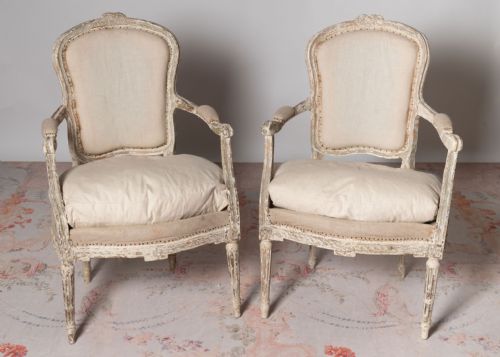
- An open-armed armchair with upholstered back and seat, typically featuring exposed wooden framing. This form became popular during the seventeenth and eighteenth centuries in France.
- Bergere
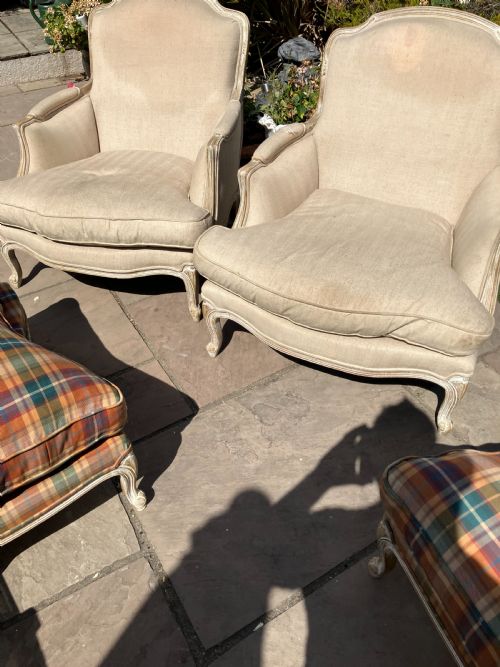
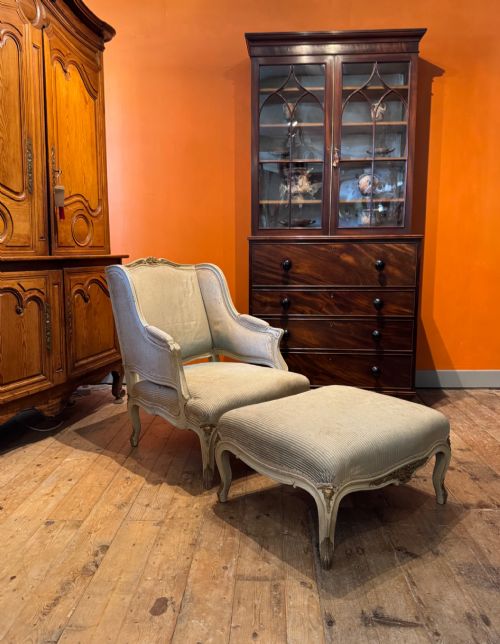
- An enclosed armchair featuring upholstered sides and a padded backrest, often incorporating a loose seat cushion. The design offers deep, comfortable seating.
- Duchesse Brisee
- A chaise longue comprising a chair accompanied by a matching footstool or two armchairs joined by a low stool. This form allows for reclined seating.
- Caning
- A woven lattice made from rattan or cane strips used to form supportive panels for chair backs and seats. It provides a lightweight and decorative alternative to solid upholstery.
- Louis XVI Style
- A neoclassical design movement characterised by straight tapered legs, geometric symmetry, and classical ornamentation. It contrasts with the earlier curving lines of the Louis XV aesthetic.
Cream Painted French Chairs: Frequently Asked Questions
How do I identify a Louis XV style chair?
Louis XV style chairs feature asymmetrical curves, cabriole legs, and organic floral carvings. The frames avoid straight lines in favour of flowing contours.
These chairs often display cartouche shaped backrests and swept arms designed to fit the relaxed etiquette of the eighteenth century salon.
What is the difference between a fauteuil and a bergere?
A fauteuil is an open-armed armchair with exposed wooden sides between the armrest and the seat. This allows for lighter movement and formal posture.
A bergere is a closed armchair where the space beneath the armrests is filled in with upholstery or cane work, creating a more enclosed seat.
Are cream painted chairs original to the eighteenth century?
Many eighteenth century chairs were originally gilded, polished wood, or painted in various bright or neutral tones. Cream paint finishes often date from nineteenth century revivals or later decorative updates.
Some pieces retain original paint schemes, while others show layers of historic overpainting accumulated over decades of use.
How should I care for painted wooden chair frames?
Protect painted wooden frames by keeping them out of direct sunlight and away from rapid temperature fluctuations. Dust the carved surfaces gently with a dry, soft cloth.
Avoid liquid cleaning products that might soften or lift historic paint layers and fragile gesso foundations.
Can I use antique french chairs for daily dining?
Dining chairs and side chairs from the nineteenth or early twentieth centuries can serve everyday use if their wooden frames and joinery remain stable. Lighter decorative boudoir seating suits occasional placement.
Check the structural security of the legs and seat rails before subjecting antique seating to heavy daily wear.