

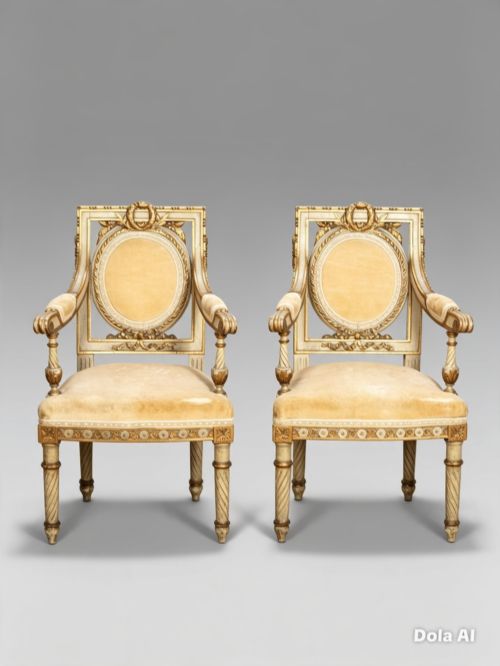


French Neoclassical Salon Chairs
French neoclassical salon chairs bring architectural balance and restrained classical ornament into a room, offering formal seating with deep historical roots.
French Neoclassical Salon Chairs
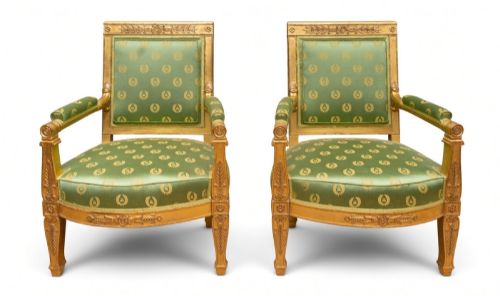
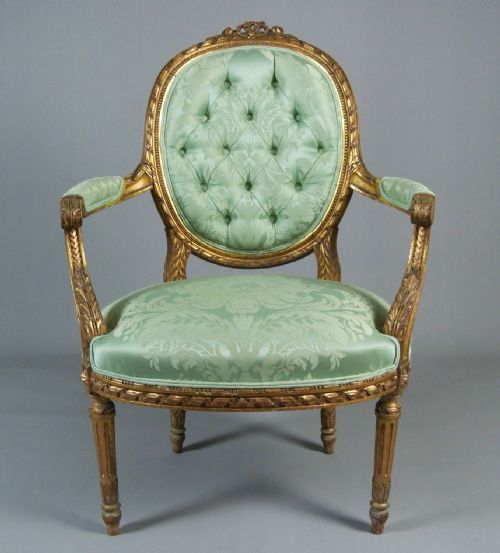
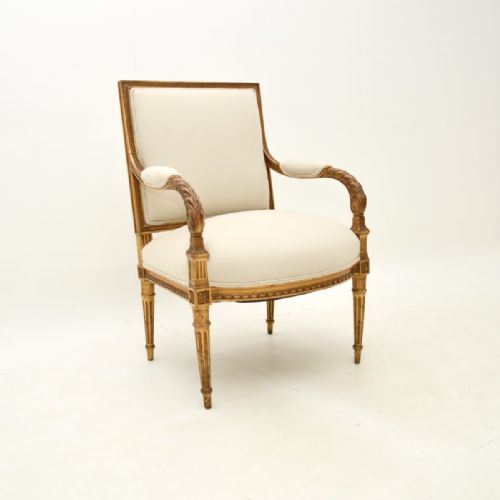
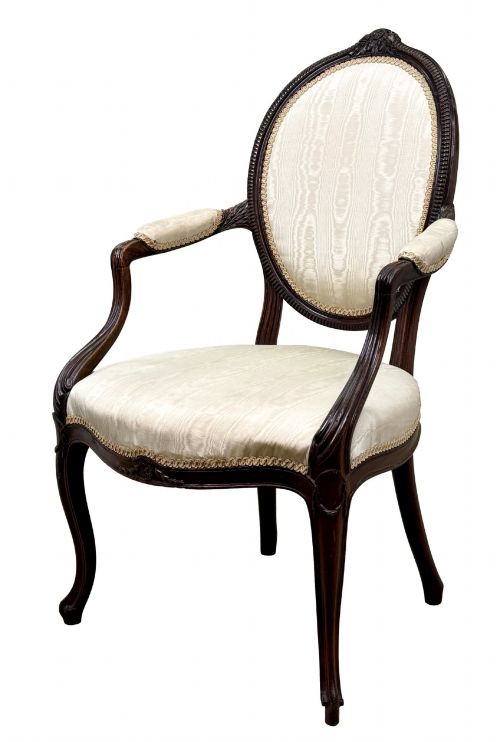
French neoclassical salon chairs embody the architectural clarity and classical restraint that emerged in the eighteenth century, drawing inspiration from ancient Roman and Greek designs. When searching for french neoclassical salon chairs, buyers encounter forms that range from authentic period pieces to later revivals spanning the nineteenth and early twentieth centuries.
The selections recorded here encompass armchairs, side chairs, and larger parlour suites designed for formal reception rooms. Makers constructed these seats in beech, mahogany, walnut, and giltwood, often pairing the carved timber frames with traditional silk, velvet, or contemporary fabric upholstery.
The aesthetic leans heavily toward Louis XVI and French Empire styles, alongside revival iterations produced around 1900. These seating options deliver both decorative impact and functional elegance to domestic interiors.
How french neoclassical salon chairs were made
Craftsmen shaped the structural frames of french neoclassical salon chairs from dense hardwoods including beech, mahogany, and walnut, frequently applying a gilded or painted finish to the exterior surfaces. Joinery relied upon traditional mortise and tenon techniques to ensure structural integrity under daily use.
Carvers decorated the wood with classical motifs such as fluting, paterae, and acanthus leaves, adhering to the strict symmetry characteristic of the neoclassical movement. Upholsterers then applied textile, silk, velvet, or standard fabric over internal stuffing to complete the seat.
Childrens salon chairs appear among the adult seating, proving that even eighteenth-century aristocrats needed miniature furniture for tiny courtiers.
What varies in quality in french neoclassical salon chairs
The crispness of the wood carving dictates much of the distinction between average and exceptional examples, particularly in the hand-chiselled details of acanthus leaves and fluted legs. Superior pieces retain deep, sharp definition in the ornamentation, whereas lesser examples often display softened or mechanically smoothed contours.
The selection of primary timber and the execution of the giltwood or painted finish also establish the tier of quality. Original gilding or well-preserved painted surfaces demonstrate greater workshop skill than hurried later refinishing, while sturdy hardwood frames prevent the structural wobble common in inferior seating.
Jacob Desmalter·Thomas Chippendale
The French Neoclassical Salon Chairs Glossary
- Fauteuil
- An open-armed armchair with upholstered back and seat, typically featuring exposed wooden framing. These chairs formed a staple of formal French seating arrangements.
- Giltwood
- Timber coated with a thin layer of gold leaf or gilt powder over a prepared gesso ground. This finish provided a brilliant reflective surface popular in neoclassical interiors.
- Louis XVI
- A design style characterised by straight lines, symmetry, and classical antiquity influences, replacing the curved lines of the preceding Rococo period. It remains central to the identity of french neoclassical salon chairs.
- Restauration
- A French historical and artistic period spanning the early nineteenth century that maintained classical proportions while introducing new decorative details. Pieces from this era bridge Empire styling and later revivals.
- Paterae
- Circular ornamental roundels carved in low relief, frequently seen on the corner blocks or friezes of neoclassical furniture. They provide a neat geometric punctuation to linear frame designs.
French Neoclassical Salon Chairs: Frequently Asked Questions
How do I identify a true period piece?
Examine the timber construction, joinery methods, and the wear patterns on the carved surfaces to assess age. Genuine eighteenth-century and early nineteenth-century examples display hand-cut joinery and period-appropriate wood species.
Compare the decorative motifs against documented examples from the Louis XVI or Empire eras. Subtle inconsistencies in hand-carved details often point toward later revival periods rather than original production.
Where should I place these chairs at home?
These seating pieces suit formal drawing rooms, libraries, or entry halls where their architectural lines can be appreciated. Their restrained profile allows them to function as statement seating without overwhelming smaller spaces.
Pair an armchair with a matching side chair to create a balanced reading corner or conversational grouping. Ensure they sit away from direct heat sources to protect the wood and delicate fabric upholstery.
Can I use original antique fabric?
Original upholstery textiles rarely survive in a usable condition for daily seating due to natural fibre degradation over centuries. Most pieces require re-upholstering in appropriate silks, velvets, or textiles to ensure structural support.
When commissioning new upholstery, select period-sympathetic fabrics that respect the historical context of the frame. Traditional techniques should be employed to maintain the correct sit and profile of the chair.
What is the difference between revival and original pieces?
Original pieces date from the primary historical period of the style, such as the eighteenth century or the Napoleonic era, reflecting contemporary design pressures. Revival pieces, produced during the late nineteenth or early twentieth century, copy these earlier forms with distinct manufacturing tolerances.
Both categories hold merit, but revival pieces often benefit from sturdier nineteenth-century workshop production while lacking the primary historical association of an original eighteenth-century work.