






French Neoclassical Bed Frame
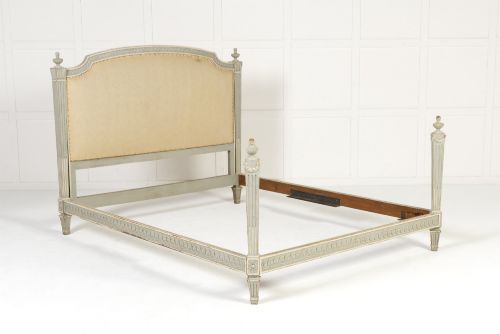
A French neoclassical bed frame brings architectural harmony to a bedroom through symmetry, crisp carving and classical proportions.
French Neoclassical Bed Frame
When you search for a French neoclassical bed frame, you look for substantial wooden bedsteads rooted in classical antiquity. These pieces draw heavily on Louis XVI design principles, featuring rectilinear geometry rather than the heavy curves of earlier rococo work.
The selections available here span the nineteenth and early twentieth centuries, including revival pieces from the decades around nineteen hundred. You will encounter double, king and super king sizes, along with occasional single frames and matched pairs.
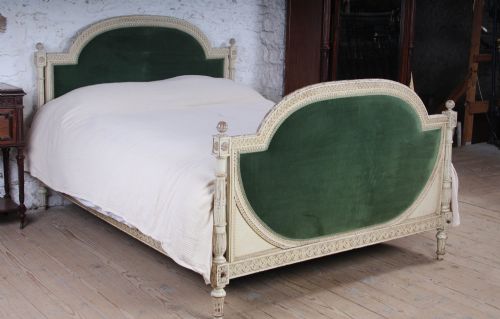
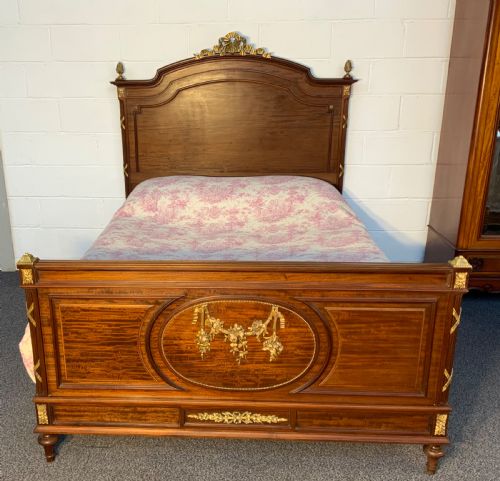
Forms range from restrained mahogany structures with parquetry to painted wooden frames carrying brass detailing or hand-painted portrait panels. Many incorporate carved detailing that reflects the restrained grandeur of chateau interiors.
How they were made
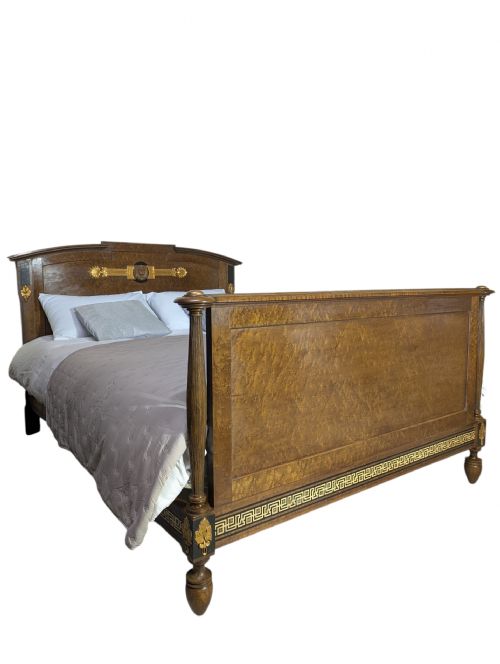
Cabinetmakers constructed these frames using timber such as mahogany, walnut, fruitwood and plum pudding mahogany, often laid over sturdy pine carcases. Parquetry and marquetry surfaces demonstrate precise geometric or floral wood veneers arranged by hand.
Metal ornament played a defining role in the construction, utilising cast or chased ormolu and brass mounts to highlight structural lines. Paint finishes, polychrome decoration and giltwood further embellished the timber, alongside natural cane applied to headboards and footboards.
What varies in quality
The distinction between standard production and exceptional work rests on the crispness of the carving and the weight of the metal mounts. Superior examples employ heavy ormolu fittings and tightly grained mahogany or walnut veneers that display careful pattern matching.
Subtlety of finish separates finer pieces from simpler counterparts, particularly where hand-painted portrait panels or delicate gilding are integrated. The structural integrity of the joints and the original proportions of the head and footboards dictate the overall architectural presence.
The French Neoclassical Bed Frame Glossary
- Ormolu
- Gilded bronze used for decorative mounts on furniture. It provides a bright metallic contrast against dark woods like mahogany.
- Parquetry
- Geometric wood inlay forming patterns across flat surfaces. Cabinetmakers use contrasting timbers to create these precise arrangements.
- Caning
- Woven rattan material used for open panels in headboards and footboards. It lightens the visual weight of large wooden beds.
- Marquetry
- Pictorial veneer work assembled from various tinted woods. This technique decorates panels with floral or classical motifs.
- Polychrome
- Decoration employing multiple colours on a painted surface. It appears on panels and frames to add decorative richness.
French Neoclassical Bed Frame: Frequently Asked Questions
Will a modern mattress fit these beds?
Most antique French beds were made to continental sizing standards that differ slightly from standard modern dimensions. You may need a custom-made mattress to ensure a proper fit within the wooden frame.
Support slats can usually be adjusted or added to accommodate modern mattress depths safely.
How do I distinguish Louis XVI style from Empire style?
Louis XVI style beds emphasise straight lines, fluted columns and neoclassical restraint, dating largely from the eighteenth century and subsequent nineteenth-century revivals. French Empire frames tend to be heavier and more imposing, often featuring military or classical imperial motifs.
Both styles draw on antiquity, but Empire work is typically bolder and less delicate than Louis XVI designs.
Are these beds easy to assemble?
These beds generally use traditional side-rail bolts and sturdy metal brackets that lock the headboard, footboard and rails together. Assembly requires two people to align the heavy timber components correctly without damaging the wood or mounts.
Care should be taken to tighten bolts evenly to keep the frame square.
How should I care for painted and gilded surfaces?
Painted woodwork and gilded details require gentle dusting with a soft, dry cloth rather than chemical polishes. Moisture can damage delicate paintwork and lift old gilding over time.
Keep these frames away from direct sunlight and radiators to prevent the wood from splitting and the paint from cracking.