






French King Bed Frame
These french king bed frame examples combine generous proportions with classical European styling, offering a practical sleeping centrepiece with genuine period character.
French King Bed Frame
A french king bed frame is a substantial sleeping platform designed to accommodate modern mattress dimensions while retaining traditional continental proportions. Buyers browsing this selection encounter pieces originating predominantly from the late nineteenth and early twentieth centuries, spanning periods from the 1870s through to the 1930s.
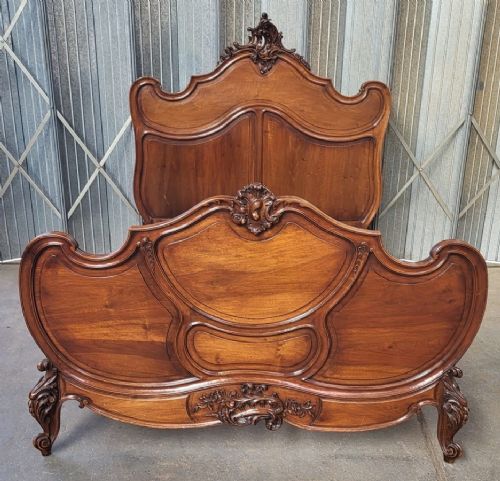
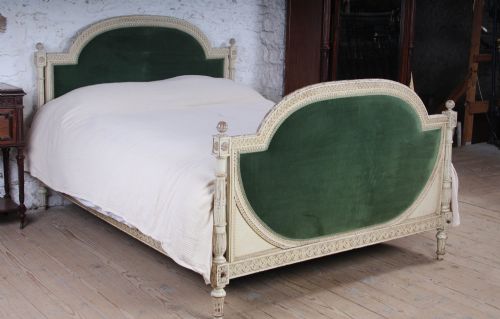
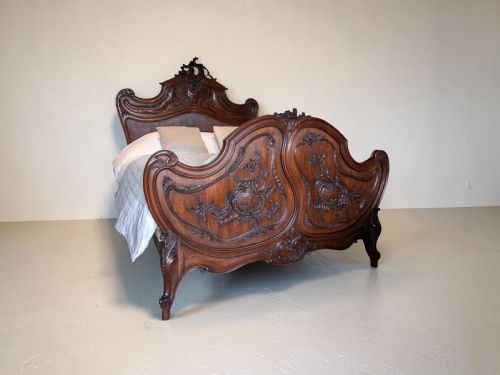
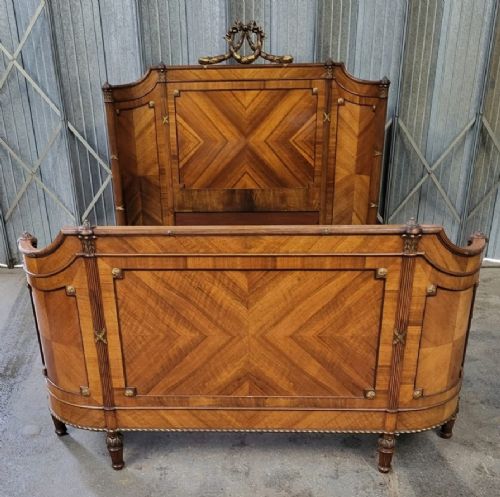
The physical forms vary from simple iron and brass hospital styles to elaborate carved wooden bedsteads and complete bedroom suites. Louis XV and Louis XVI stylistic influences appear frequently alongside French Empire and Rococo Revival designs, offering distinct ornamental details such as scrollwork, paneling, and parquetry.
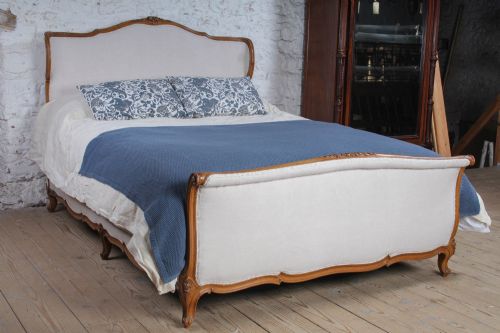
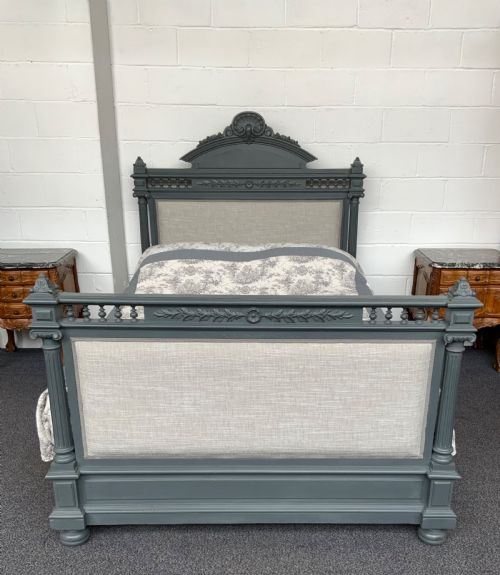
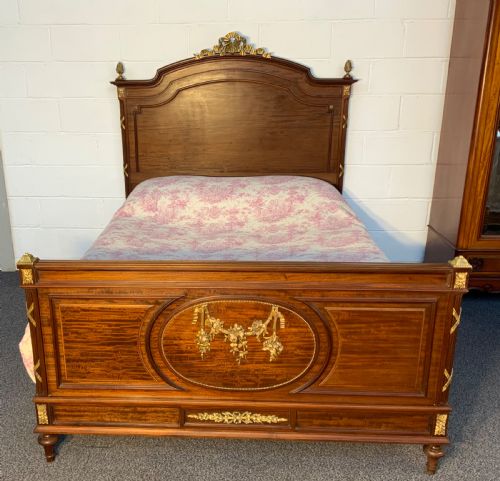
Wooden variants commonly employ walnut, mahogany, and painted timber, whilst metal examples utilise brass and iron combinations. Many frames incorporate cane work or modern fabric upholstery on the headboards and footboards, bridging historical manufacturing methods with contemporary domestic requirements.
How They Were Made
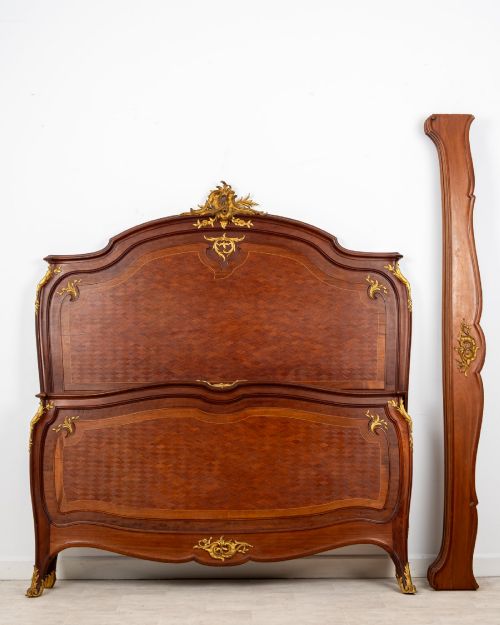
Cabinetmakers constructed these frames using dense hardwoods like walnut and mahogany, frequently applying quarter-veneered parquetry or fruitwood inlay to flat surfaces. Structural integrity relied on traditional joinery techniques combined with hand-carved decorative motifs on solid timber mouldings.
Metal bedframes utilised cast iron for structural strength paired with polished brass tubing, spindles, and decorative finials. Painted finishes involved the application of layers of oil-based or lead paint over prepared wood or metal substrates, sometimes incorporating hand-applied decorative details.
Caned components required skilled artisans to weave split rattan through pre-drilled holes in wooden frames, creating breathable panels for headboards and footboards. Upholstered sections utilised webbing, horsehair stuffing, and traditional stitching before receiving textile coverings.
Hospital style brass frames bring an unexpected clinical neatness to grand bedrooms, proving that even 1900s invalids slept with absolute continental flair.
What Varies in Quality
Quality manifests in the depth and crispness of hand-carving across the wooden frames, where deep relief work denotes superior craftsmanship compared to shallow machine routing. The choice of timbers also dictates standard, with figured walnut, quarter-veneered panels, and meticulous ormolu mounts indicating higher atelier production.
Metal construction quality depends on the gauge of the brass tubing and the solidity of the cast joints rather than lightweight hollow assemblies. Finish application, from hand-rubbed French polish on timber to well-applied paint and tight cane weaving, separates utilitarian pieces from fine architectural examples.
The French King Bed Frame Glossary
- Parquetry
- Geometric wood mosaic woodwork used for decorative surface patterns. Artisans cut small blocks of contrasting timbers like walnut and fruitwood to form intricate parquet designs on headboards.
- Ormolu
- Gilded bronze ornamentation mounted onto furniture pieces. This decorative technique adds metallic detailing to the corners and mounts of high-end French beds.
- Caning
- Woven rattan material used to create breathable panels in headboards and footboards. Skilled workers thread split cane through frame channels to form open mesh patterns.
- Bedstead
- A framework supporting a mattress and bed base. This traditional term refers to the complete structural assembly of posts, rails, headboard, and footboard.
- Quarter-Veneered
- Timber sliced into thin sheets and arranged so the grain patterns mirror each other in quarters. This technique creates symmetrical, decorative patterns across large wooden panels.
French King Bed Frame: Frequently Asked Questions
Will a standard mattress fit a French bed?
Most antique French frames feature dimensions specific to their period and region, meaning standard modern mattress sizes might require careful measurement before purchase.
Many listings specify exact widths such as five feet, so checking internal rail dimensions ensures your mattress rests securely within the side rails.
How do I care for antique wood and brass?
Wooden surfaces benefit from applications of natural beeswax to nourish the timber and maintain a soft lustre without building up artificial residues. Brass components can be dusted regularly with a dry cloth, avoiding harsh chemical metal polishes that strip protective aged patinas.
Keeping the frame away from direct heat sources and strong sunlight prevents timber shrinkage and finish cracking over time.
Are these beds easy to assemble?
Period bed frames typically utilise traditional iron bed bolts or slotted side rail brackets that allow the main components to separate easily for transport. Assembly usually requires only a spanner to tighten the internal corner bolts, making construction straightforward once positioned in the bedroom.
Having an extra pair of hands helps steady the heavy wooden headboards and footboards while securing the side rails into place.
How do I identify a Louis XV style frame?
Louis XV style pieces are characterised by asymmetric curves, cabriole legs, and organic cartouche carvings inspired by nature. These frames avoid rigid symmetry, favouring flowing scrollwork and floral motifs across the crest rails.
The overall silhouette remains graceful and undulating, distinguishing it from the straighter, neoclassical lines found in Louis XVI designs.