
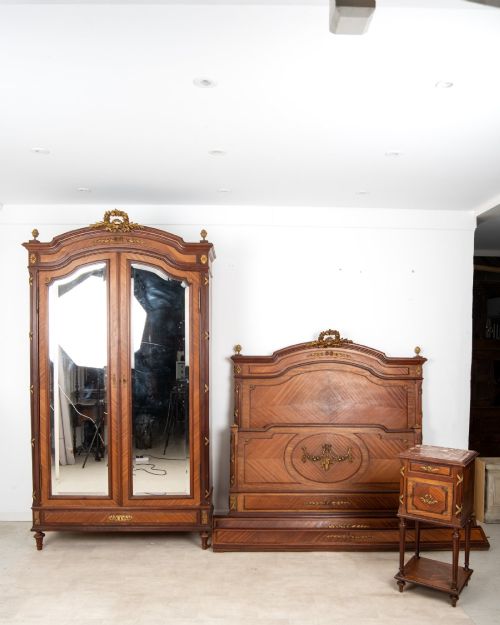
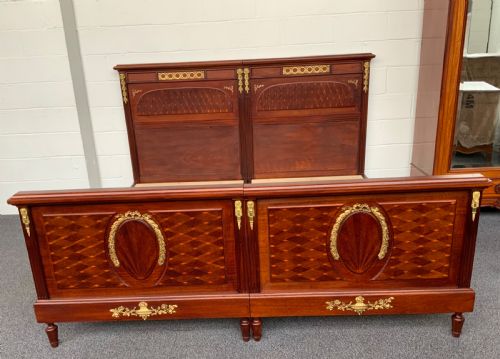
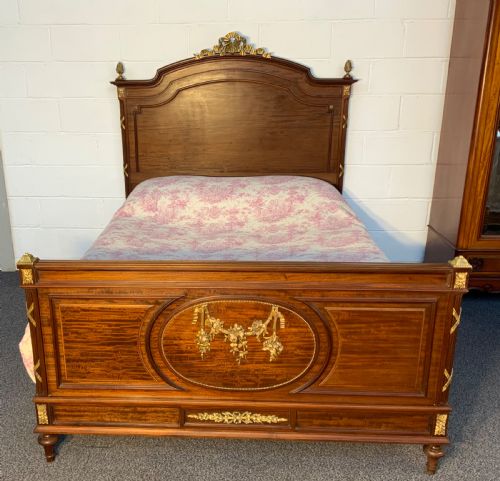


Ormolu Mounted Mahogany Bed
An ormolu mounted mahogany bed brings architectural gravity and gilded warmth to a bedroom through rich timber and cast bronze mounts.
Ormolu Mounted Mahogany Bed
When you search for an ormolu mounted mahogany bed, you are looking at substantial wooden bedframes adorned with cast and gilt metal details. These grand pieces emerge principally from nineteenth-century France, spanning revival movements like Louis XVI and Empire styles.
The standard forms on this page include double, king, and super king beds, alongside larger bedroom suites that incorporate matching wardrobes and bedside cabinets. You will also encounter daybeds and paired twin bedframes sharing uniform timber grains and metal fittings.
Most examples rely on classical proportions, straight or subtly curved headboards, and architectural column or pilaster supports. The visual weight of dark wood meets the bright flash of gilt bronze mounts along the crests and rails.
How they were made
Cabinetmakers constructed these bedframes using dense hardwoods, frequently selecting figured mahogany, plum pudding mahogany, burr, and fruitwood veneers over stable secondary timbers. Skilled joiners laid these veneers to create symmetrical grain patterns across large headboard and footboard panels.
Ornaments were cast in brass or bronze, then chased by hand to sharpen the leaf, scroll, or classical motifs before receiving a mercury or fire gilt finish known as ormolu. These metal mounts were screwed or pinned directly onto the polished wooden surfaces to frame the structure.
Some nineteenth-century beds were built wide enough to rule an empire, earning the grand title of emperor size.
What varies in quality
The distinction between ordinary and exceptional pieces rests upon the crispness of the bronze casting and the depth of the mahogany figure. Superior beds display hand-chased ormolu with sharp undercuts and varied surface textures, rather than smooth, factory-cast metal.
Timber selection drives value further, with figured grains like plum pudding or burr mahogany indicating high-end workshop production. The integration of matching side cabinets and complete bedroom suites points to cohesive, commission-grade furniture rather than assembled pairs.
The Ormolu Mounted Mahogany Bed Glossary
- Ormolu
- Gilded bronze or brass applied as decorative mounts onto furniture. The technique creates a durable gold-coloured surface that contrasts sharply with dark woods.
- Louis XVI Revival
- A nineteenth-century design movement copying the neoclassical restraint, straight lines, and ancient Roman motifs of eighteenth-century France. These pieces favour symmetry and rectangular panels.
- French Empire
- A monumental style popular during the early nineteenth century defined by military motifs, heavy mahogany surfaces, and bold ormolu mounts. It draws inspiration from classical Greece and Rome.
- Parquetry
- Geometric wood-mosaic work used to cover furniture surfaces in patterned veneer chips. It creates subtle tonal variations across headboards and tabletops.
Ormolu Mounted Mahogany Bed: Frequently Asked Questions
How do I fit a modern mattress?
Many nineteenth-century French beds feature non-standard dimensions that differ from contemporary mattress sizes. You may need custom-made mattresses or slight internal adjustments to wooden side rails to achieve a secure fit.
Support slats are typically added across the original iron or wood bearers to accommodate modern pocket-sprung bases safely.
Are these beds easy to dismantle?
Most antique bedframes utilise heavy iron bed bolts or wedge-and-slot corner brackets designed for straightforward assembly and breakdown. This modular construction allowed large furniture to move between rooms and properties easily.
Care should be taken when tightening historical metal threads into aged wood to avoid stripping the original housings.
How do I clean ormolu mounts?
Gilt bronze mounts require gentle dusting with a soft, dry brush to prevent abrasive particles from scratching the delicate gold surface. Avoid chemical metal cleaners entirely, as harsh solvents strip away the historical fire gilding.
Mahogany frames benefit from occasional application of quality beeswax to nourish the grain without building up sticky residue.
What defines Empire style?
Empire style draws directly from Napoleonic-era French design, focusing on architectural strength, dark unadorned timber expanses, and bold cast ormolu mounts. The silhouettes are imposing, symmetrical, and unapologetically grand.
Details often include scrolling swan necks, classical pilasters, and martial symbols that reflect ancient Roman grandeur.