


French Style Bed
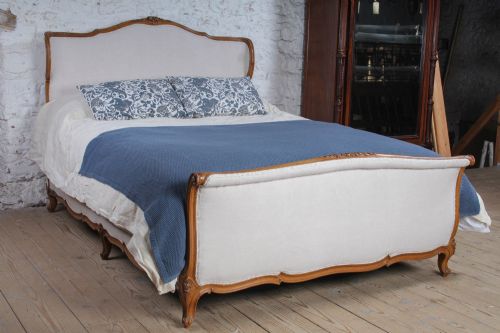
When choosing a french style bed, collectors encounter generous proportions and decorative carving drawn from nineteenth and early twentieth century revivals.
French Style Bed
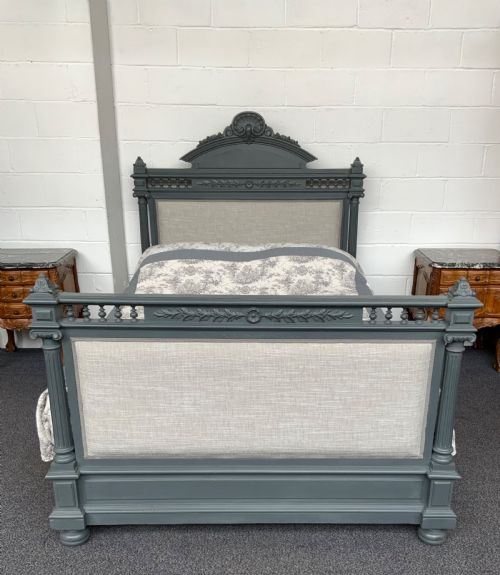
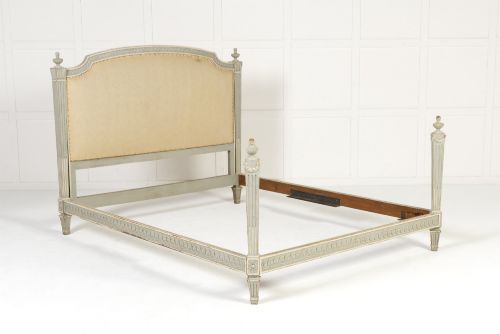
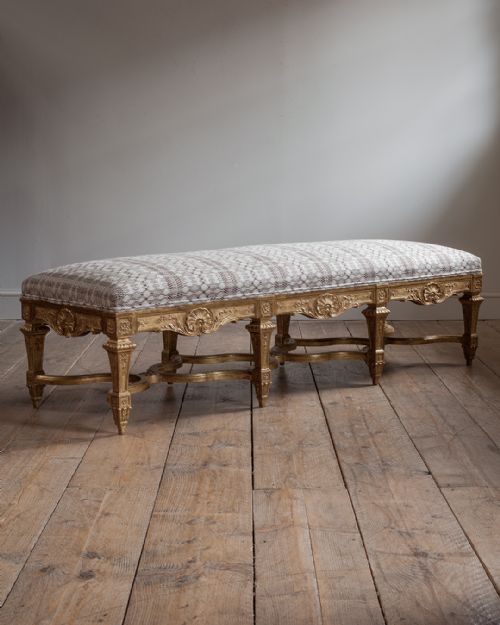
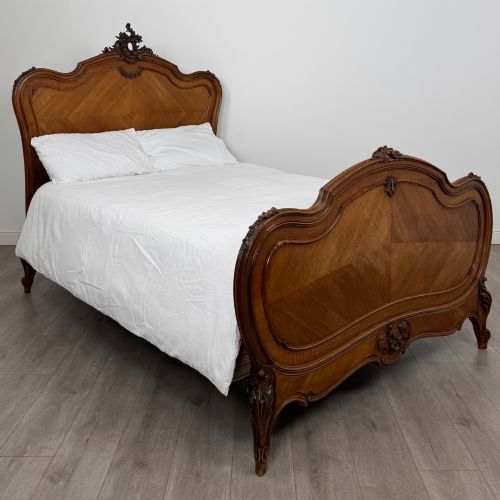
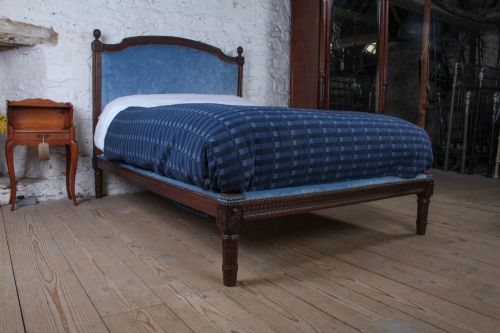
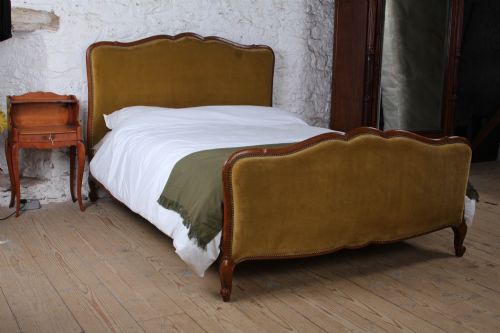
A french style bed embraces traditional continental forms ranging from Louis XV and Louis XVI revivals to Empire and provincial designs. These pieces function as central statements in a bedroom, combining architectural headboards and footboards with substantial wooden or metal frames.
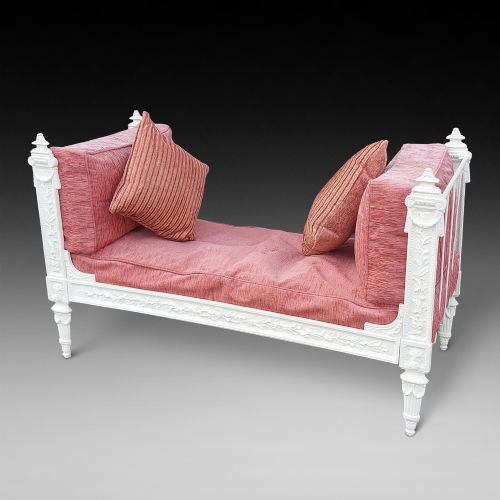
Most examples found in these listings date from the nineteenth century through the early decades of the twentieth century. They appear primarily as double, king, and super-king sizes, often accompanied by daybeds and associated sleeping forms.
The aesthetic draws heavily on historical design vocabulary, featuring symmetrical carving, painted finishes, and curved silhouettes. Buyers select these items to introduce character and historical depth into contemporary interiors.
Materials and construction
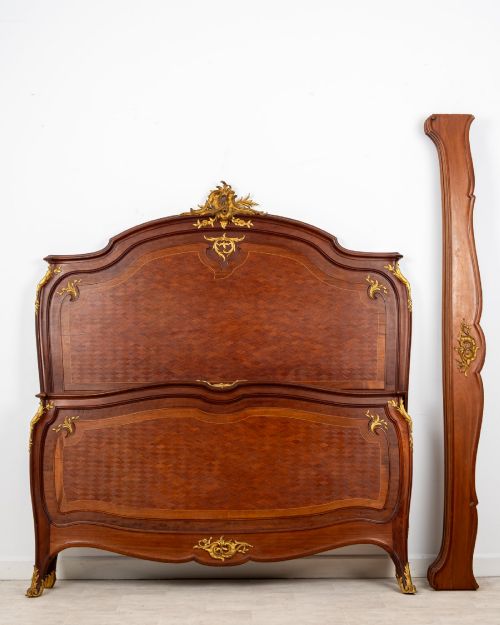
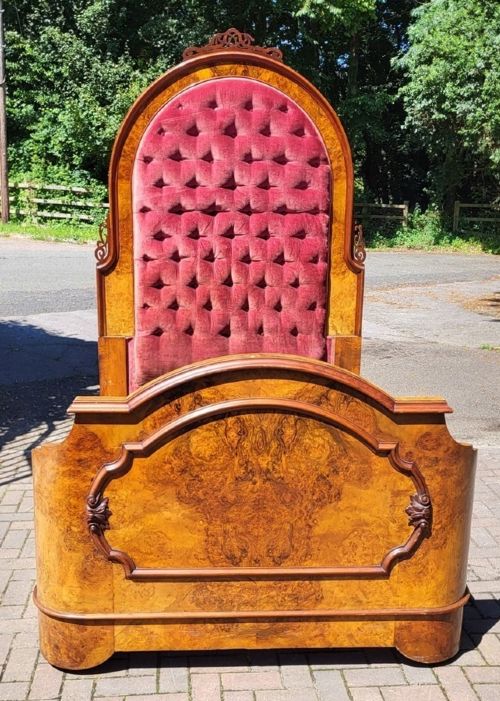
Cabinetmakers utilised dense timbers such as walnut, mahogany, and oak for structural integrity, frequently applying quarter veneers and parquetry patterns to visible surfaces. Softer woods also received painted finishes, giltwood highlights, or polychrome portrait panels.
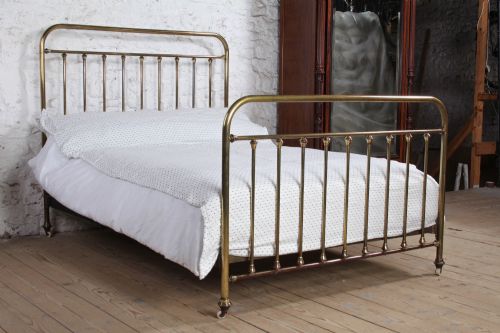
Metal components played a significant role, with cast iron utilised for daybeds and brass applied as decorative detailing or framing elements. Ormolu mounts and gilt bronze hardware frequently enhanced the finer mahogany and kingwood frames.
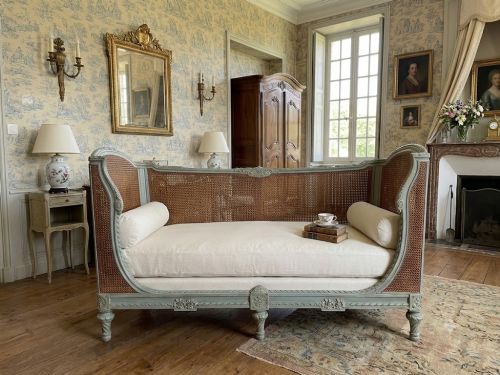
Upholstery techniques involved traditional stuffing and button-backing on headboards, utilising fabrics, leather, and cane inserts. Caning provided lightweight ventilation for panels, while carved wooden details demonstrated hand-chiselled depth.
French Style Bed Retail Price Guide 2026
Typical asking prices for french style bed among the pieces listed under this phrase on Sellingantiques today, from the lower quarter to the upper quarter. They describe what is for sale here now, not the wider market.
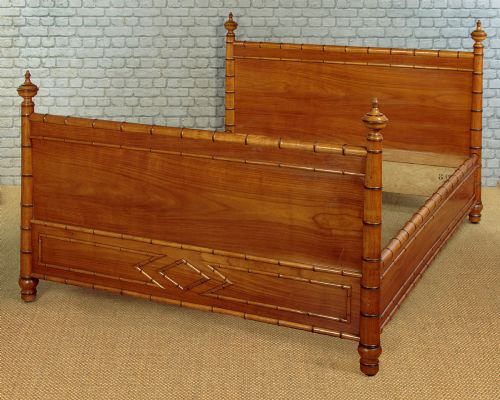
Several beds arrive with faux bamboo turning, proving that nineteenth-century makers enjoyed mimicking exotic grasses just as much as we do.
Distinguishing quality levels
Superior examples exhibit crisp, deep hand-carving where foliage and scrolls retain sharp edges rather than softening into moulded plaster or hurried chisel work. The precision of parquetry layout and the tightness of veneer joints indicate superior cabinetmaking skill.
Materials dictate baseline quality, with figured walnut, solid kingwood, and heavy cast mounts separating standard production from exceptional commissions. Ormolu or gilt bronze fittings that show careful chasing rather than rough casting elevate the status of a bedstead.
Finishing techniques reveal underlying craftsmanship, from multi-layered painted surfaces with subtle distressing to original gilding that has aged evenly. The integration of structural side irons with stable headboard and footboard joinery ensures functional longevity alongside aesthetic merit.
The French Style Bed Glossary
- Canapé corbeille
- A curved-back sofa or daybed resembling a basket shape, featuring enclosed upholstered sides that wrap around the sleeper.
- Ormolu
- Gilded bronze mounts applied to furniture for decorative accent, popular in neoclassical and Empire designs.
- Parquetry
- Geometric wood veneer mosaics arranged in repeating patterns across large surfaces such as headboards.
- Lit Bateau
- A boat bed featuring scrolled head and foot boards of equal or near-equal height that flare outward.
- Polychrome
- Decoration employing multiple distinct colours, frequently seen on hand-painted panels depicting figures or scenes.
French Style Bed: Frequently Asked Questions
How do I measure for a modern mattress?
Older continental frames often accommodate non-standard dimensions compared to modern metric standards. Buyers should measure the internal side irons carefully to confirm whether custom mattress sizing is necessary.
Many antique bedsteads require wooden slats or modern slatted bases to support contemporary mattresses securely. Checking the exact width and length between the headboard and footboard prevents sizing discrepancies.
Are these beds difficult to assemble?
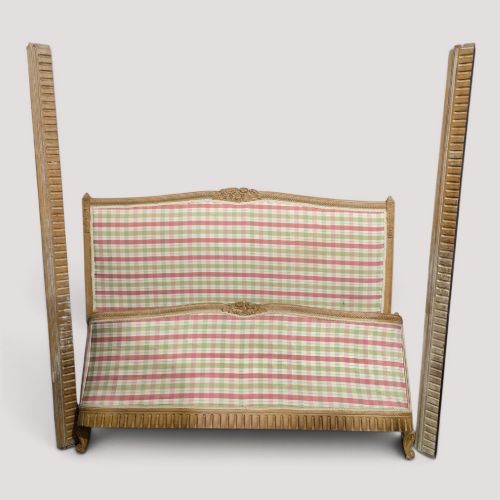
Most nineteenth-century wooden and metal frames utilise traditional bolt-in side rails that lock together with metal keys or nuts. This knockdown construction allowed large furniture pieces to travel easily between rooms.
Assembly typically requires two people to align the headboard, footboard, and side rails correctly. Ensuring the frame remains square during tightening protects historical joints from undue strain.
How should I clean painted wooden surfaces?
Painted and gilt surfaces require gentle maintenance using a dry, soft microfibre cloth to remove surface dust. Water and chemical cleaning agents can strip delicate historic paint layers and varnish.
Preserving the original patina involves avoiding abrasive polishes entirely. Minor marks should be left untouched to maintain the historical integrity of the piece.