

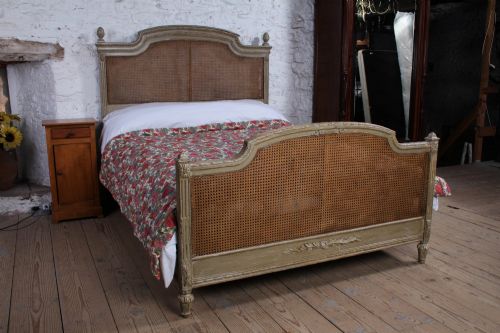


Louis XVI Double Bedstead
A louis xvi double bedstead brings unmistakable French symmetry and neoclassical proportion into the modern bedroom.
Louis XVI Double Bedstead
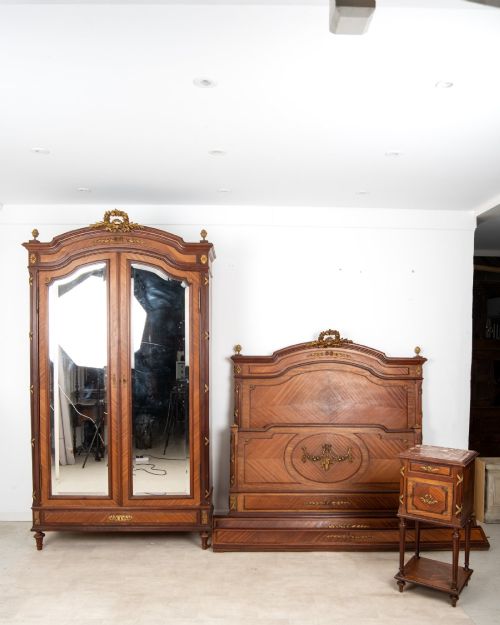
A louis xvi double bedstead embodies the restrained lines and classical symmetry of the eighteenth-century French style, frequently appearing in revivals from the nineteenth and early twentieth centuries. These large frames arrive in various forms, including low-end configurations, caned panels, and complete bedroom suites that incorporate matching wardrobes.
Makers across different decades adapted the aesthetic using timbers such as walnut, mahogany, oak, and beech, alongside painted and parcel gilt finishes. Buyers encounter pieces spanning the nineteenth century, the Edwardian era, and the nineteen-twenties, reflecting enduring popularity for French Provincial and chateau aesthetics.
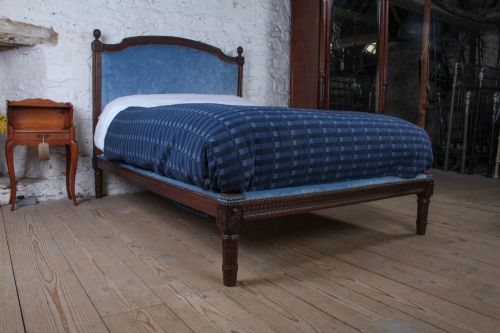
The scale ranges from standard double proportions up to king sizes, accommodating modern mattresses while retaining period character. Caned headboards and footboards frequently appear alongside carved wooden details, offering diverse visual weights for different bedroom interiors.
How they were made
Cabinetmakers constructed these frames using solid hardwoods like walnut, mahogany, oak, and beech, often applying delicate veneers and parquetry or marquetry patterns to large flat surfaces. Carved wooden ornamentation defines the style, utilising fluted columns, classical urns, and leaf motifs executed by hand.
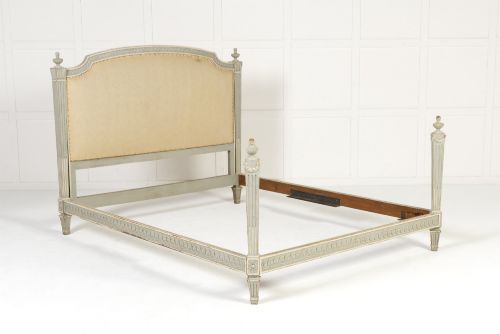
Finishes vary from natural polished wood and limed treatments to painted surfaces enhanced with parcel gilt highlights. Caned panels are woven from natural rattan to create light, breathable headboards and footboards within heavy timber structures.
Some beds arrive with matching wardrobes, proving that eighteenth-century matching habits died hard in the twentieth century.
What varies in quality
The distinction between standard and superior examples rests upon the crispness of the hand-carved wood ornamentation and the precision of the timber joints. Fine pieces display meticulously matched veneers, intricate parquetry, and high-grade caning that remains taut and undamaged.
Surface finish also dictates value, with original painted and parcel gilt treatments or rich, patinated French polish outperforming later, unsympathetic repainting. The structural integrity of the rails and the proportion of the classical motifs determine the overall architectural success of the bedstead.
The Louis XVI Double Bedstead Glossary
- Parquetry
- Geometric wood-mosaic work used for decorative flooring or furniture panels. Artisans arrange small blocks of contrasting timbers to create precise patterns.
- Marquetry
- Decorative veneer work forming pictures or designs on furniture using thin slices of wood. Craftsmen apply these elements to curved and flat surfaces alike.
- Caning
- Woven rattan material used for chair seats and bed panels. It provides a lightweight, decorative fill within solid wood frames.
- Parcel Gilt
- Partially gilded with gold leaf or paint over a painted or polished wood base. This technique accentuates specific carved details.
- Neoclassical
- A style reviving classical Roman and Greek forms, characterised by straight lines and symmetry. It forms the foundation of the Louis XVI aesthetic.
Louis XVI Double Bedstead: Frequently Asked Questions
Will a vintage French bed take a modern mattress?
Many of these antique and vintage frames accommodate modern standard mattress sizes, though exact dimensions can vary slightly from contemporary manufacturing standards.
Buyers should measure the interior rails carefully and consider custom mattress options if the proportions fall outside standard UK or European sizes.
How do I care for a caned headboard?
Natural cane requires gentle cleaning with a damp cloth and occasional light conditioning to prevent the organic material from drying out and becoming brittle.
Keeping the bedstead away from direct heat sources and excessive moisture preserves the elasticity and strength of the woven rattan.
What is the difference between Louis XVI style and French Provincial?
Louis XVI style draws inspiration from royal court furniture, featuring refined neoclassical proportions, straight fluted legs, and crisp architectural carvings.
French Provincial interprets these same classical motifs with a slightly more rustic, provincial charm suited to country houses rather than royal palaces.
How are these beds assembled?
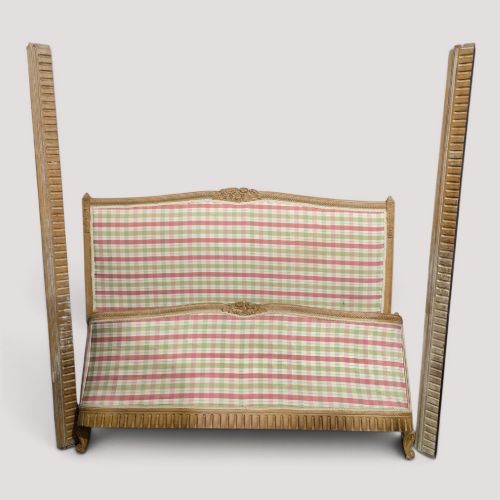
Most antique wooden bedframes utilise traditional side-rail bolts and metal brackets that slot together to lock the headboard, footboard, and rails securely in place.
Proper assembly requires checking that the frame remains square so the joints bear weight evenly without straining the timber.