




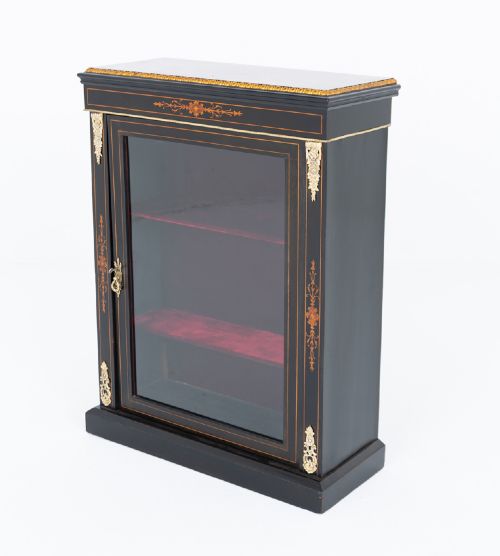
French Napoleon III Cabinet
The french napoleon iii cabinet brings together opulent materials and revivalist forms from the nineteenth century for striking interior display.
French Napoleon III Cabinet
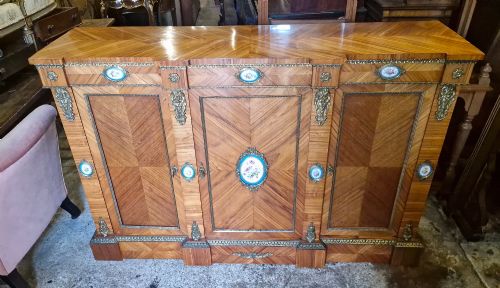
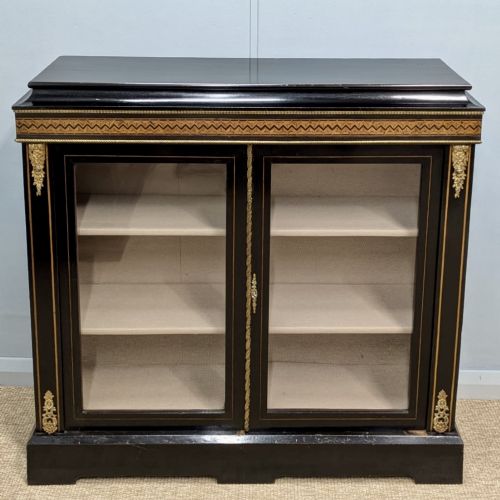
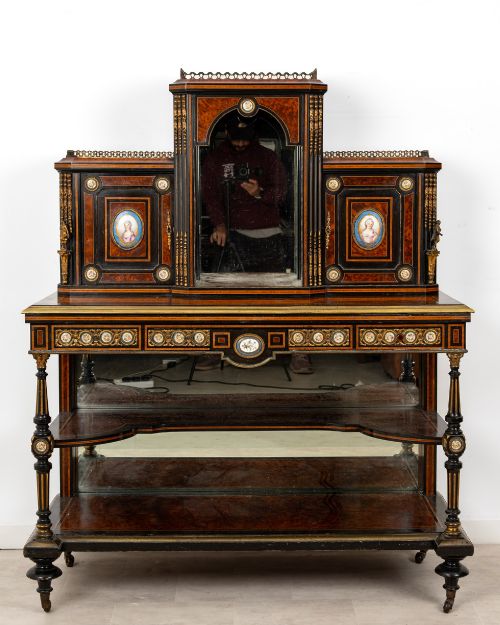
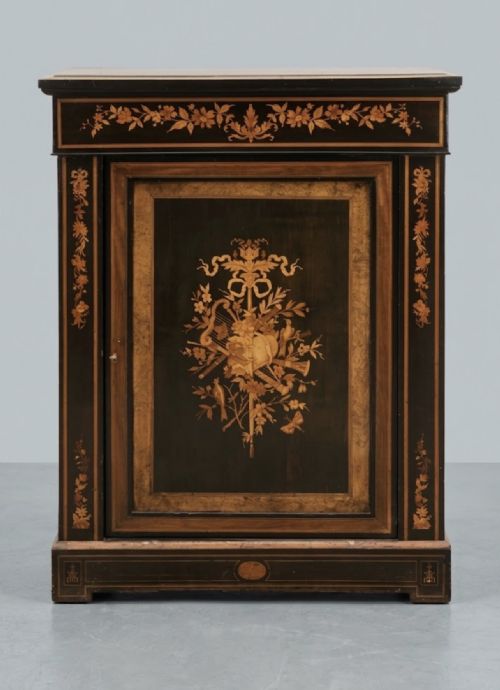
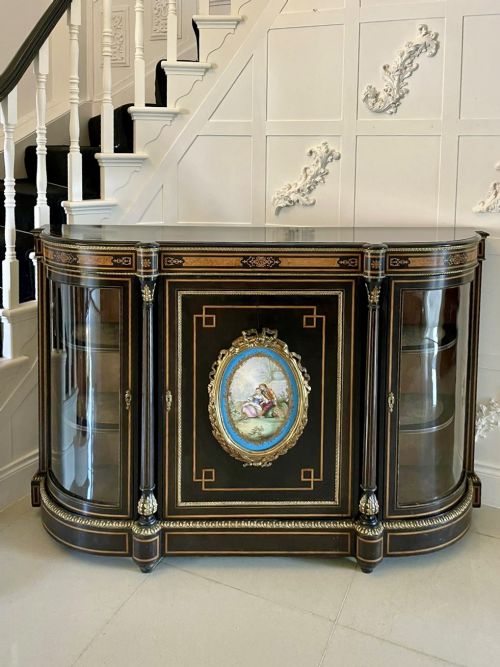
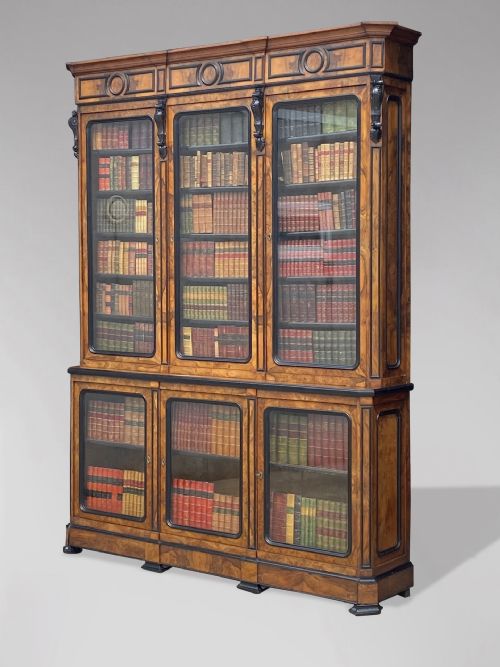
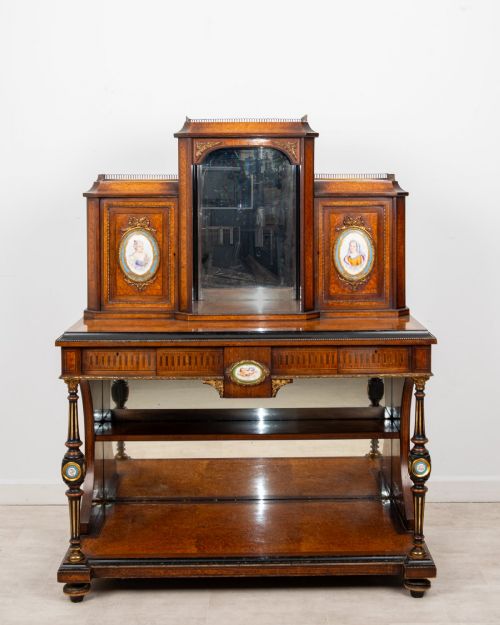
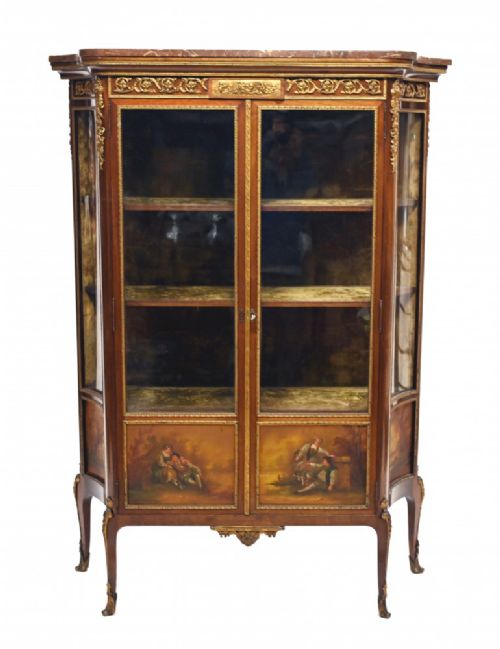
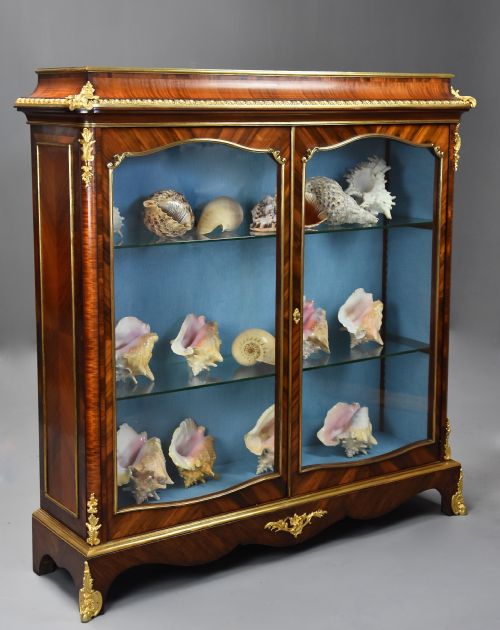
When you search for a french napoleon iii cabinet, you encounter a distinct nineteenth-century genre that encompasses pier cabinets, credenzas, bookcases, and display cabinets alongside smaller writing desks. These pieces emerged from the eclectic tastes of the Second Empire, blending historical French revivals like Louis XV and Louis XVI with grand chateau aesthetics.
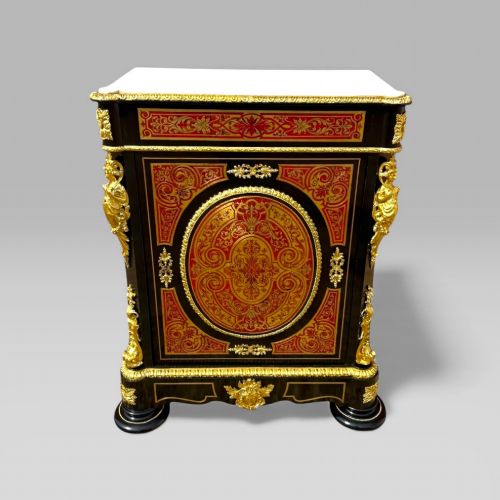
The most common examples on this page are pier cabinets and credenzas defined by rectangular proportions, often finished with marble tops. Many adopt compact footprints designed to fit between windows or against drawing-room walls, serving both utilitarian storage and decorative display functions.
Origins remain firmly rooted in nineteenth-century French workshops, though Victorian importers also brought significant quantities across the channel. Makers ranged from esteemed Parisian cabinet-makers supplying international exhibitions to regional workshops producing robust walnut and ebonised variants.
Materials and Technique
Construction relies heavily on dense carcasing timbers such as oak or pine overlaid with exotic decorative veneers like kingwood, rosewood, amboyna, and ebonised wood. Artisans employed meticulous parquetry and marquetry techniques to form geometric patterns or floral motifs across door panels and tabletops.
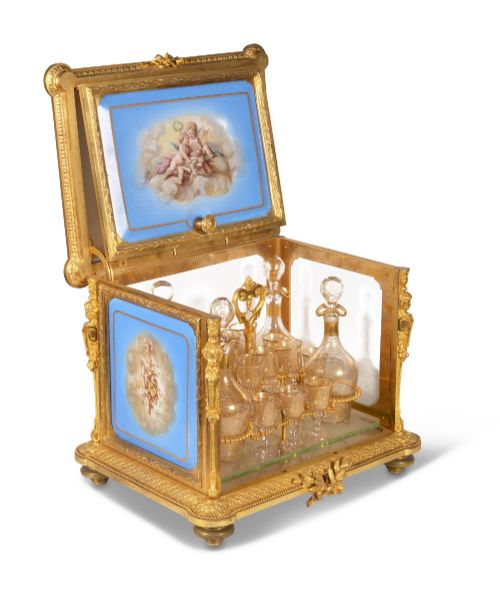
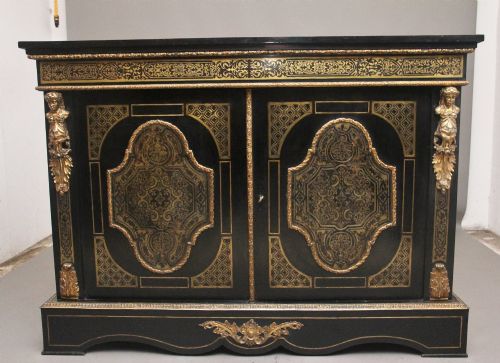
Surface adornment frequently incorporates intricate brass and tortoiseshell boulle marquetry, complemented by cast gilt-bronze or ormolu mounts fixed to corners, friezes, and feet. Glazed doors often open to velvet-lined interiors, while upper surfaces feature inset slabs of white or coloured marble.
French Napoleon III Cabinet Retail Price Guide 2026
Typical asking prices for french napoleon iii cabinet among the pieces listed under this phrase on Sellingantiques today, from the lower quarter to the upper quarter. They describe what is for sale here now, not the wider market.
Listings feature prominent nineteenth-century periods alongside revival styles including Louis XV, Louis XVI, and French Empire.
Judging Quality
The upper tier of these pieces distinguishes itself through the crispness of the ormolu chasing and the depth of the boullework, where individual brass and tortoiseshell lines remain tight and unfragmented. Lesser examples show simpler surface treatments with stamped rather than hand-finished mounts and plain secondary timbers inside.
Makers' signatures stamped into the bronze mounts or chassis elevate a piece significantly, reflecting elite Parisian workshops. Furthermore, the selection of the veneers - such as highly figured amboyna or perfectly matched kingwood - separates standard production furniture from exhibition-quality works.
Paul Sormani·Mathieu Befort·Beurdeley
The French Napoleon III Cabinet Glossary
- Boulle
- Marquetry technique utilising tortoiseshell and brass inlay developed in France and popularised during the nineteenth century. The contrasting metals and dark shell create rich optical textures.
- Ormolu
- Gilt-bronze decorative mounts applied to furniture edges and feet. This technique requires mercury gilding or electroplating on cast bronze bases.
- Credenza
- A low cabinet enclosed by doors, frequently featuring marble tops and extensive ormolu mounts. These pieces usually occupy central wall spaces in formal reception rooms.
- Vitrine
- A glazed display cabinet intended for the exhibition of porcelain and curiosities. The glass panels are often framed by delicate wood veneers and gilt mounts.
- Parquetry
- Geometric wood inlay forming repetitive patterns such as cubes or chevrons. It contrasts with pictorial marquetry by focusing on abstract arrangement.
French Napoleon III Cabinet: Frequently Asked Questions
How do I clean marble tops?
Clean marble surfaces using a soft cloth dampened with warm water and mild soap, avoiding acidic cleaners.
Dry the stone thoroughly to prevent water spots and protect the polished finish from household spills.
Where were these cabinets placed?
Original nineteenth-century interiors positioned these cabinets against drawing-room walls or between tall windows to reflect light.
Their flat marble tops and compact proportions made them ideal surfaces for displaying bronzes and small porcelain collections.
How do I identify a revival style?
Revival styles draw inspiration from earlier periods like Louis XV and Louis XVI, incorporating asymmetrical curves or classical symmetry.
Makers combined these historical motifs with nineteenth-century manufacturing techniques and dense exotic veneers.