

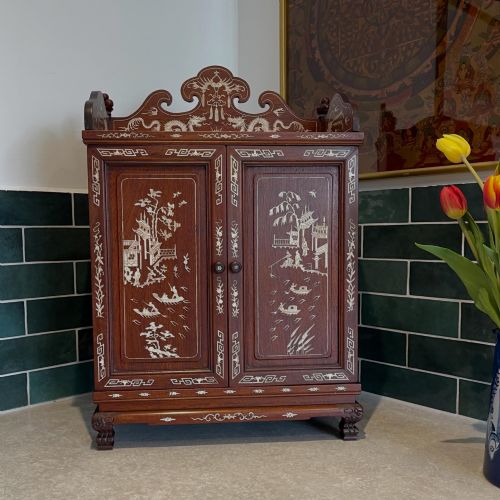


Rosewood Tabletop Cabinet
A rosewood tabletop cabinet is a miniature architectural showcase designed to organise personal treasures, bringing rich grain and refined craftsmanship straight to the surface.
Rosewood Tabletop Cabinet
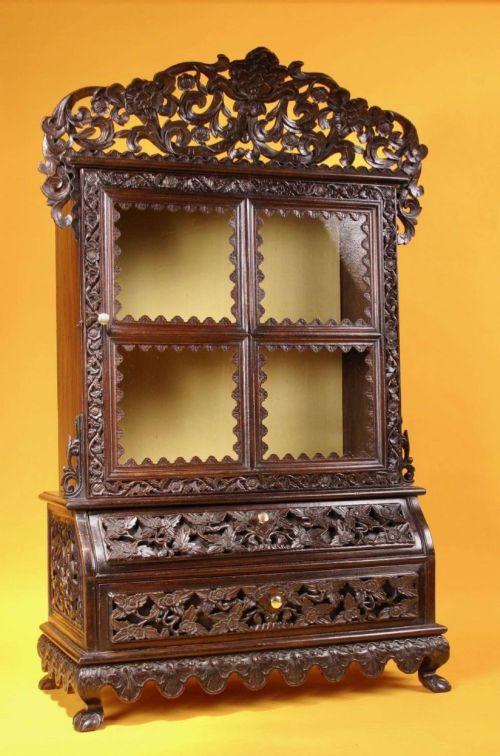
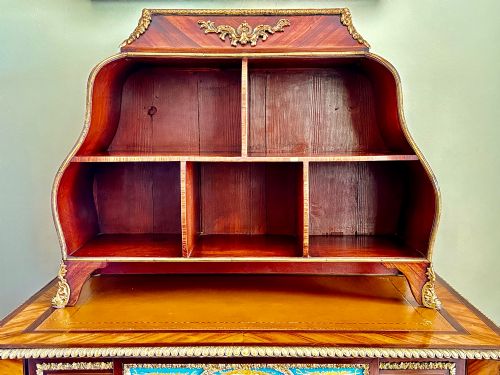
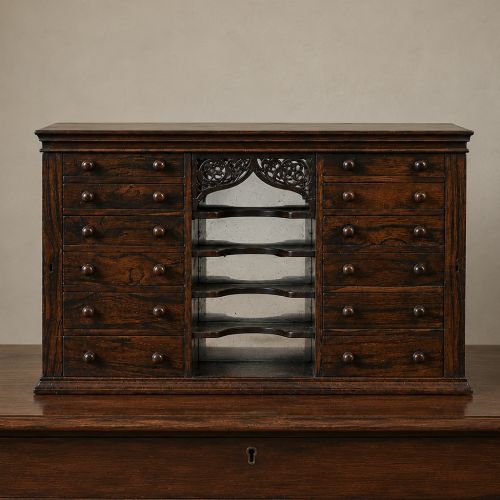
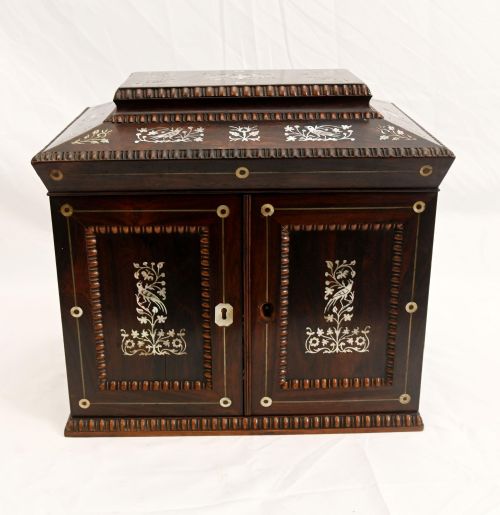
When you search for a rosewood tabletop cabinet, you encounter a diverse collection of small storage forms designed for desktop, table, or chest placement. These pieces range from compact collector's boxes and jewellery chests to miniature chests of drawers, display cabinets, and desktop cartonnieres.
The versions you are most likely to meet on this page span the nineteenth century, the Regency and Victorian eras, and the early twentieth century. They draw upon stylistic influences including French revival, Georgian proportions, Chinese republic production, and Anglo-Indian carving.
Originating as practical compartments for valuables or specimens, these cabinets combine utility with decorative presence. Their smaller scale allowed makers to employ fine timbers and elaborate embellishments without the mass of full-sized furniture.
Materials and construction
Makers constructed these cabinets using dense tropical timbers, primarily rosewood, alongside hardwood and boxwood. The exterior surfaces often highlight the deep, varied grain patterns characteristic of these woods.
Decoration relied on contrasting inlays and applied metals, incorporating mother-of-pearl, brass, and ormolu mounts. Some examples also utilise glass, mirror glass, and porcelain panels to enhance the visual depth of the miniature form.
Rosewood Tabletop Cabinet Retail Price Guide 2026
Typical asking prices for rosewood tabletop cabinet among the pieces listed under this phrase on Sellingantiques today, from the lower quarter to the upper quarter. They describe what is for sale here now, not the wider market.
Some miniature chests feature secret locking bars that require knowing the hidden sequence to release the tiny drawers.
Distinctions in quality
The distinction between standard examples and the finest pieces lies in the precision of the joinery and the execution of surface ornamentation. Superior cabinets display meticulous alignment in drawers and doors, alongside sharply detailed carving or flush, well-fitted inlay.
Material selection also dictates quality, where richer grain selection in the rosewood and finer grade brass, ormolu, or mother-of-pearl embellishments elevate the piece. The integration of complex internal fittings and specialised storage compartments marks the upper tier of these works.
The Rosewood Tabletop Cabinet Glossary
- Cartonnier
- A desktop cabinet specifically fitted with compartments or drawers for holding papers, documents, or letters. These vertical storage units often feature decorative mounts on the exterior.
- Ormolu
- Gilded bronze used for decorative mounts, feet, and key escutcheons on furniture. This technique adds metallic contrast to the dark timber surfaces.
- Wellington Chest
- A tall, narrow chest of drawers secured by a locking hinged stile on one side. This locking mechanism secures all drawers simultaneously with a single key.
- Hongmu
- A traditional Chinese term for dense, heavy hardwoods, often translated as red wood. Pieces utilising this material frequently feature carved decorative motifs.
- Specimen Case
- A specialised cabinet or box designed to house and display collections of small natural history or art objects. The interior typically contains multiple shallow drawers tailored for organisation.
Rosewood Tabletop Cabinet: Frequently Asked Questions
What were rosewood tabletop cabinets used for originally?
These cabinets served as secure, portable receptacles for valuable personal items such as jewellery, trinkets, letters, and small collections. Owners placed them on larger desks, tables, or chests within private rooms for daily access.
Their compact interiors often featured specialised compartments, velvet linings, and small drawers tailored to specific possessions. This allowed owners to keep delicate or precious objects organised and protected from dust.
How do you distinguish between Regency and Victorian pieces?
Regency pieces generally reflect classical restraint, featuring cleaner lines, restrained brass inlay, and proportions influenced by ancient architectural forms. They favor dark timbers with minimal carved fuss.
Victorian examples often embrace more exuberant ornamentation, incorporating heavier ormolu mounts, extensive mother-of-pearl inlay, and diverse revival styles. The carving tends to be deeper and the overall decorative program busier.
Where should I place a tabletop cabinet in a modern home?
These cabinets suit surfaces where they can be viewed closely, such as a sturdy sideboard, a library desk, or a dedicated console table. Their miniature scale allows them to sit comfortably without dominating a room.
Ensure the placement protects the rosewood and decorative inlays from direct, harsh sunlight, which can fade the timber over time. Placing them away from excessive heat sources also preserves the stability of the wood and glue joints.
How do Chinese export cabinets differ from European examples?
Chinese export pieces, particularly those from the early twentieth century or the republic period, frequently feature native hardwoods like hongmu and distinctive hand-carved motifs. Their construction methods and aesthetic vocabulary align with traditional eastern woodworking.
European cabinets typically follow Western stylistic revivals, utilising French or British proportions and standard European locking mechanisms. The decorative vocabulary relies on ormolu, brass stringing, and mother-of-pearl rather than deep relief carving in dense tropical timber.