



Brass Mounted Rosewood Box
A brass mounted rosewood box brings heavy tropical timber and polished metal corners together for desk, travel or display.
Brass Mounted Rosewood Box
A brass mounted rosewood box unites dark grain with metal reinforcement, taking forms such as writing slopes, jewellery boxes, and campaign chests across the nineteenth century. Buyers searching for a brass mounted rosewood box encounter Georgian and Victorian pieces designed for correspondence, travel, and domestic organisation.
The selection ranges from compact Regency document cases to large bijouterie tables and merchants trunks in Indian rosewood. Most examples stem from the nineteenth century, including campaign pieces built with inset brass handles and corner brackets.
Form follows function closely, dividing between portable writing slopes with fitted interiors and standing display or storage boxes. Pieces span English, French, and Chinese origins, reflecting global trade in exotic timbers during the Georgian and Victorian eras.
Materials and construction
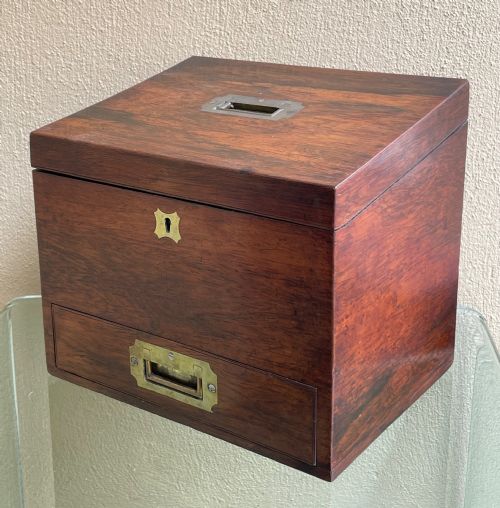
Cabinetmakers constructed these pieces using dense rosewood veneers or solid boards over secondary timbers, secured with brass corner mounts, escutcheons, and hinges. Ormolu, or gilded bronze, appears on French-influenced display tables and decorative cases.
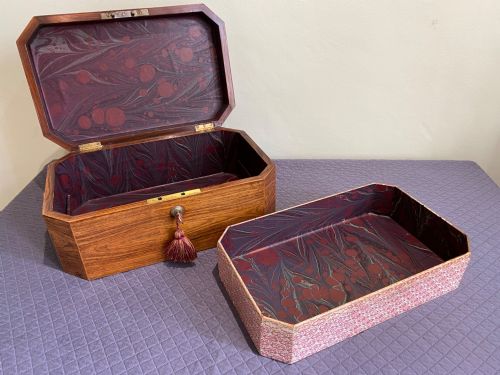
Internal fittings integrate glass, marbled paper, fabric linings, and secondary woods like mahogany to create compartments for writing implements, jewellery, or sewing tools. Metalwork is typically flush-fitted to withstand travel, particularly on campaign and military-style items.
Brass Mounted Rosewood Box Retail Price Guide 2026
Typical asking prices for brass mounted rosewood box among the pieces listed under this phrase on Sellingantiques today, from the lower quarter to the upper quarter. They describe what is for sale here now, not the wider market.
Secret drawers hidden behind false panel walls inside these writing slopes rewarded curious owners with secret spaces for confidential letters.
Assessing quality and execution
Quality rests in the precision of the brass work, the tightness of the mitred joints, and the preservation of the rosewood grain. Superior examples retain original fitted interiors, working locks with keys, and uncracked timber surfaces.
Thick brass mounts screwed flush into the timber distinguish higher grade campaign boxes from simpler domestic containers. The depth and figure of the rosewood veneer further separate standard production pieces from masterwork furniture.
Gillows of Lancaster
The Brass Mounted Rosewood Box Glossary
- Campaign slope
- A portable desk designed for military officers, featuring brass corners and flush handles to resist travel damage. These boxes fold open to reveal a baize-lined writing surface and inkwells.
- Bijouterie table
- A glass-topped display table mounted in ormolu or brass, designed for showing small collections. These pieces elevate the tabletop box onto sturdy legs for drawing room exhibition.
- Escutcheon
- A protective brass plate surrounding a keyhole. It prevents the timber from splitting around the lock during daily use.
- Ormolu
- Gilded bronze applied as decorative mounts to furniture and boxes. The technique creates a bright metallic contrast against dark rosewood surfaces.
- Secondary wood
- Timber used in hidden areas such as drawer linings and interior dividers, commonly including mahogany in better boxes.
Brass Mounted Rosewood Box: Frequently Asked Questions
What were brass mounted rosewood boxes used for?
These boxes served as portable writing desks, secure jewel cases, and storage for documents during travel or home use. Interiors were fitted with compartments for ink, pens, letters, and valuables.
Larger versions functioned as games compendiums, sewing boxes, or display cases for precious curiosities in the Victorian parlour.
How do I date a rosewood box?
Dating relies on construction methods, brass mount styles, and historical periods such as the Georgian, Regency, or Victorian eras. Campaign hardware often points to military use between eighteen hundred and eighteen sixty.
Later pieces from nineteen twenty show different joinery techniques and international trade origins, such as Chinese export workshops.
Are these boxes waterproof for travel?
While campaign boxes were built to withstand damp climates and rough transport, their historical linings and timber construction make modern travel risky. They are best kept in stable indoor environments.
Changes in humidity can cause rosewood to shrink or split, threatening old veneers and internal paper or fabric fittings.
How do I care for rosewood and brass?
Maintenance requires dry dusting and occasional treatment with suitable wax to nourish the rosewood grain without harming the finish. Brass mounts can be left with their natural patina or gently polished with non-abrasive cloths.
Direct sunlight and sudden temperature shifts should be avoided to prevent the timber from warping or fading over time.