





Gilt Bronze Display Shelf
These gilt bronze display shelf pieces bring French revival elegance and rich hardwoods into a room, offering refined surface space for treasured objects.
Gilt Bronze Display Shelf
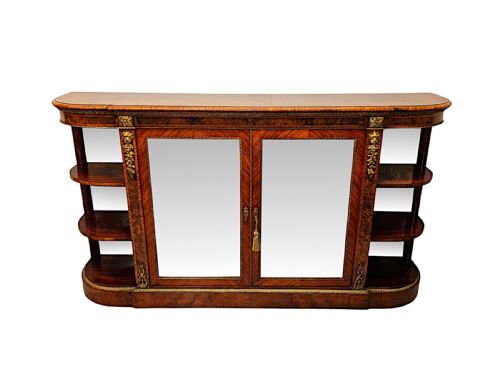
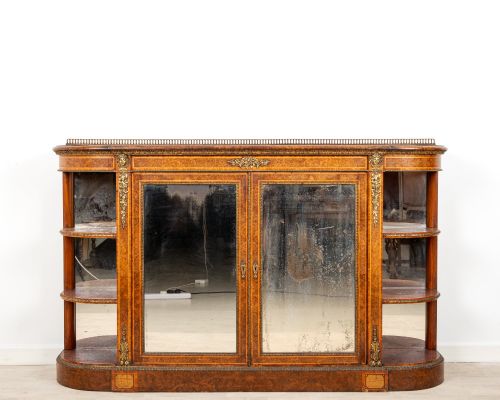
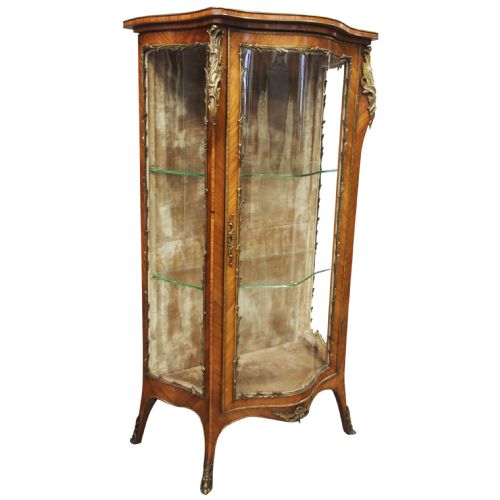
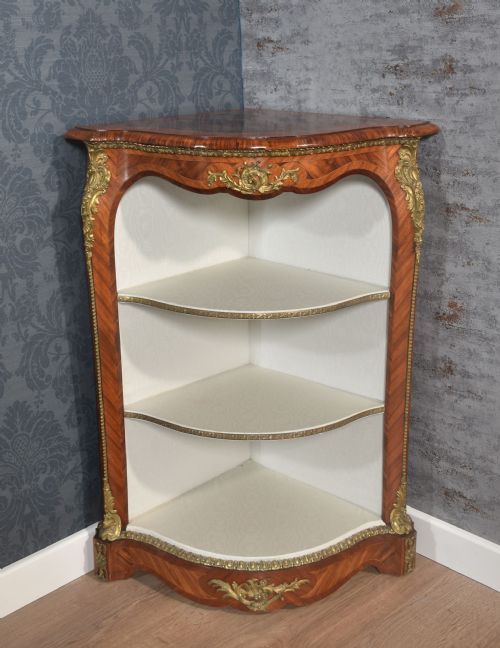
A gilt bronze display shelf encompasses ornate display cabinets, etageres, wall cabinets, and open bookcases that integrate metal mounts with decorative woods. These pieces bridge functional storage and decorative presentation, relying on glass panels and tiered surfaces to showcase small collections.
The versions most commonly met on this page date from the nineteenth century, including Victorian and Edwardian examples alongside French revival styles. They combine timber carcases in mahogany, kingwood, rosewood, and burr walnut with brass or ormolu mounts.
Makers such as Gillows, Thomas Justice and Sons, and Town and Emanuel appear among the nineteenth-century pieces. Buyers encounter various forms ranging from corner cupboards and credenzas to hanging wall cabinets and octagonal display tables.
Materials and construction
Cabinetmakers constructed the carcases using dense timbers like mahogany, rosewood, and kingwood, frequently applying burr walnut veneers and marquetry inlay for patterned surface detail. Ormolu and gilt metal mounts were cast and applied to corners, borders, and feet to accent the timber.
Glass panels are integrated into doors and sides on vitrines and display cabinets to enclose the interior shelves. Marble tops and mirrored glass backs also appear, reflecting light through the cabinet interior and beneath mantel clocks.
Gilt Bronze Display Shelf Retail Price Guide 2026
Typical asking prices for gilt bronze display shelf among the pieces listed under this phrase on Sellingantiques today, from the lower quarter to the upper quarter. They describe what is for sale here now, not the wider market.
Listings feature nineteenth-century and Edwardian periods, utilising materials such as ormolu, glass, kingwood, rosewood, and burr walnut.
Quality variations in gilt bronze display shelf pieces
The standard of execution in the ormolu mounts and bronze work distinguishes the level of craftsmanship, with crisper chasing and heavier casting marking superior examples. Cabinetry construction details, such as the precision of the marquetry inlay and the selection of figured burr walnut or kingwood veneer, separate standard production from finer workshop output.
Maker attribution through stamps or documented provenance elevates certain pieces, reflecting the standing of firms like Gillows or Thomas Justice and Sons. The integration of secondary materials like porcelain mounts, rouge marble, and bevelled glass indicates greater ambition in the original design.
Gillows·Thomas Justice and Sons·Town and Emanuel
The Gilt Bronze Display Shelf Glossary
- Ormolu
- Gilded bronze used for decorative mounts on furniture. It provides a bright metallic contrast against dark hardwoods like mahogany and rosewood.
- Vitrine
- A glass-fronted cabinet designed for displaying porcelain, silver, or curiosities. The term often describes the upper display section of a bookcase or cabinet.
- Etagere
- An open piece of furniture with multiple tiers for displaying small objects. These are typically freestanding and supported by slender uprights.
- Marquetry
- The art of applying pieces of veneer to a structure to form decorative patterns. Craftsmen use various tinted woods to create floral or geometric designs.
- Credenza
- A low cabinet, often fitted with doors and mounted with ormolu or porcelain panels. Nineteenth-century versions frequently incorporate mirrored doors.
- Kingwood
- A dense, heavy timber with rich dark violet and brown figuring used in fine cabinetmaking. It is frequently seen in French style and revival pieces.
Gilt Bronze Display Shelf: Frequently Asked Questions
How do I clean ormolu mounts safely?
Gilt bronze mounts require gentle dusting with a soft, dry brush to prevent the accumulation of dirt in the chased recesses. Avoid harsh chemical polishes that can strip the gilding from the bronze underneath.
For stubborn marks, a damp cloth with mild soap can be used sparingly, followed immediately by thorough drying with a clean cloth.
Where should I place a display cabinet?
Display cabinets and etageres benefit from placement away from direct sunlight, which can fade delicate rosewood and mahogany veneers over time. Stable room temperatures protect the timber joints and prevent warping in the glass doors.
Positioning them against interior walls ensures they remain secure and away from excessive moisture fluctuations.
How can I identify nineteenth-century French furniture styles?
Nineteenth-century pieces often draw on Louis XV and Louis Rococo revivals, characterised by curved serpentine lines, floral marquetry, and asymmetrical ormolu mounts. French Empire examples favor more formal symmetry and classical architectural bronze detailing.
Examining the internal construction woods and the quality of the gilt metal mounts helps confirm the period of manufacture.