

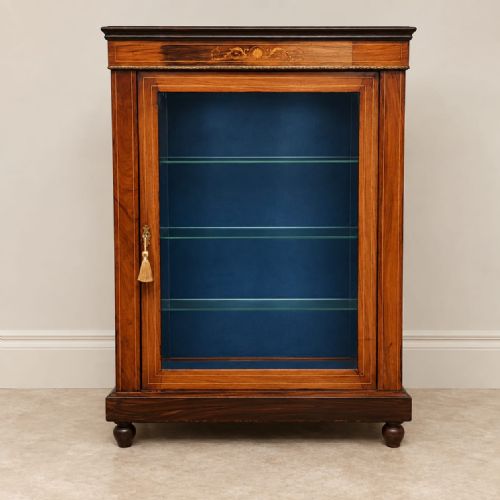
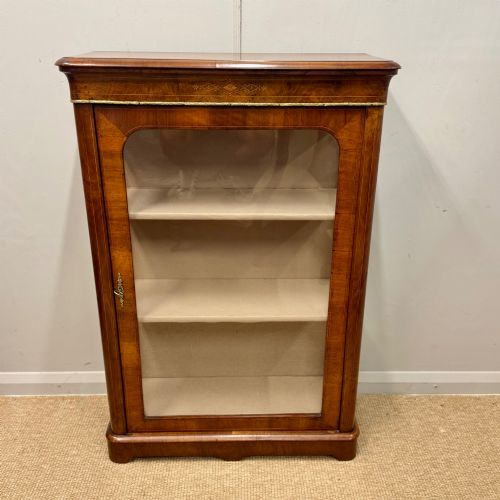
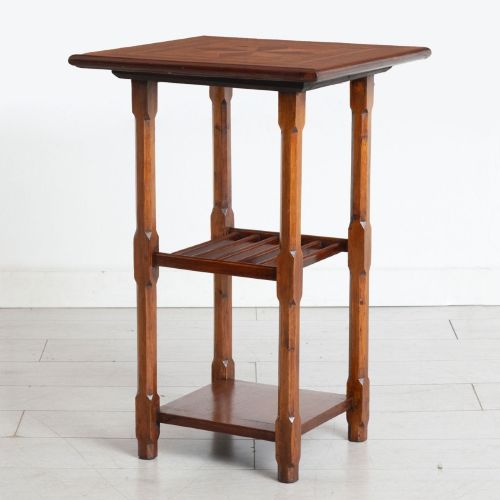
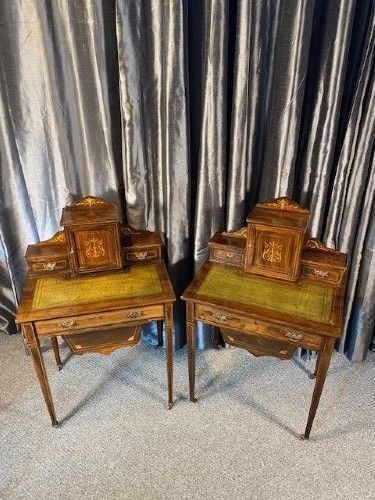
Small Marquetry Cabinet
A small marquetry cabinet brings patterned wood veneer and compact utility into a room, offering both display space and historical charm.
Small Marquetry Cabinet
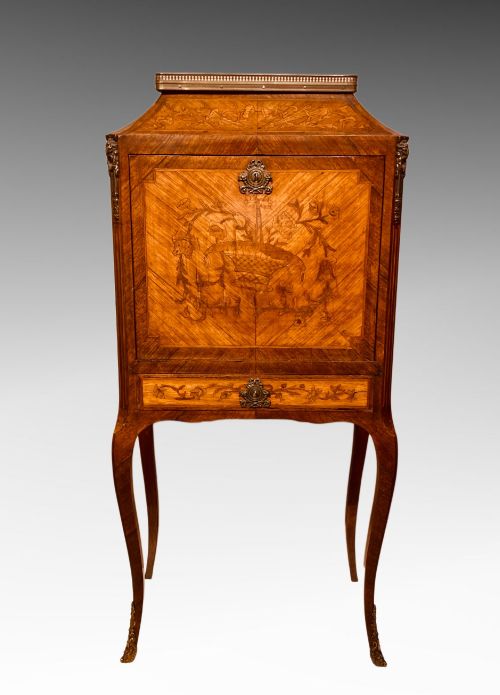
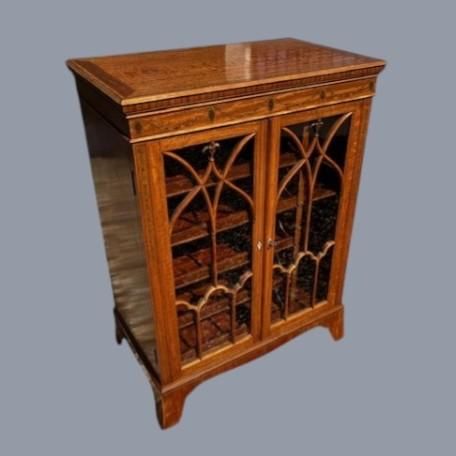
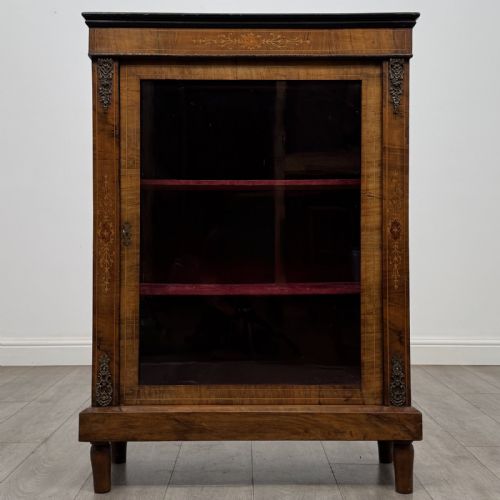
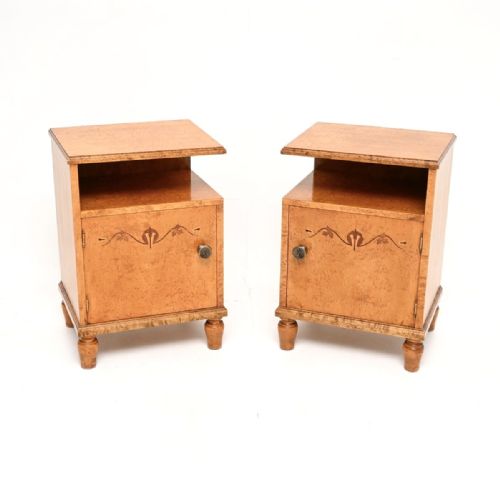
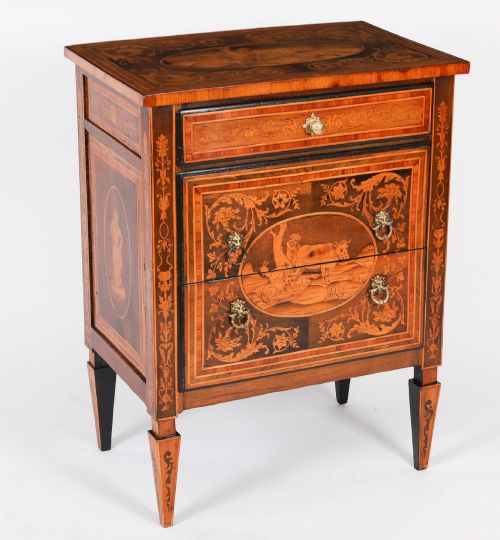
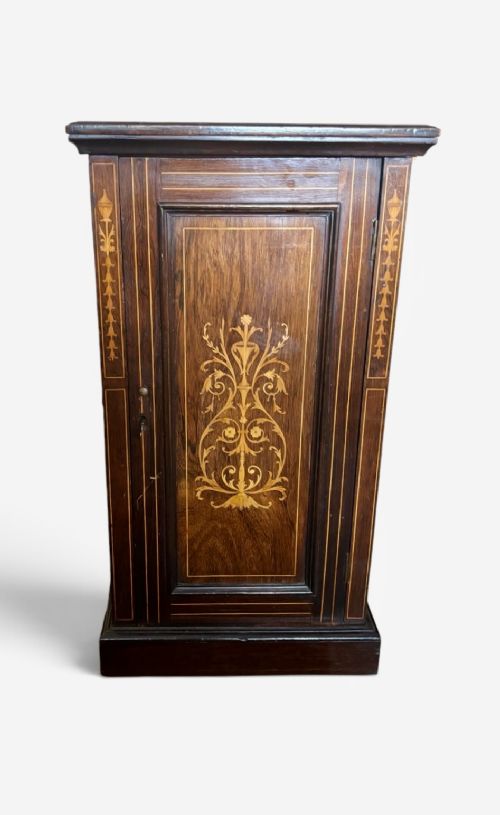
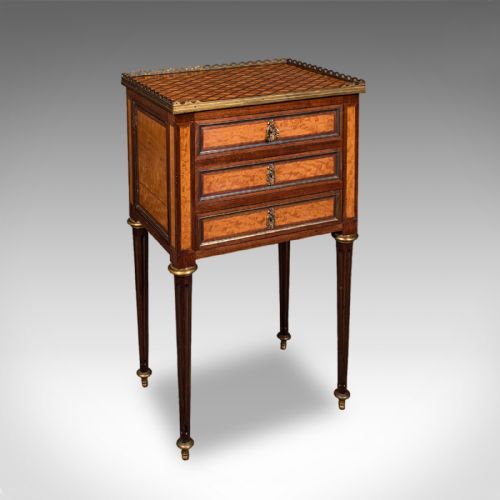
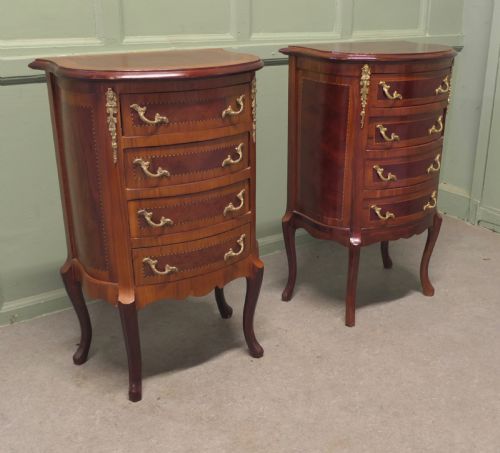
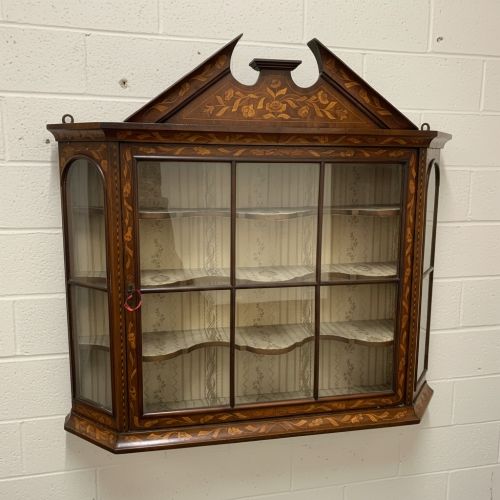
A small marquetry cabinet is a compact timber piece decorated with inlaid floral, geometric or figurative veneers. You encounter these most frequently in Victorian, Edwardian and eighteenth-century forms such as pier cabinets, bedside cupboards, wall cabinets and diminutive chests.
The phrase encompasses varied storage types from glazed display cases to small desks and nightstands. Walnut, mahogany, satinwood and rosewood form the foundational timbers of the pieces found here.
Originating across British, French, Dutch and Italian workshops, these items serve as both functional furniture and surface decoration. Their diminutive proportions suit modern interiors where floor space remains limited.
How they were made
Cabinetmakers constructed these pieces using solid carcases of mahogany, walnut or oak overlaid with fine wood veneers. Contrast was achieved by cutting thin sections of exotic timbers like satinwood, boxwood and rosewood.
Marquetry designs were hand-cut using a fret saw, assembling multiple contrasting wood veneers like jigsaw pieces before gluing them onto the ground timber. Engraved lines and scorching with hot sand provided shading and depth to floral and scroll motifs.
Small Marquetry Cabinet Retail Price Guide 2026
Typical asking prices for small marquetry cabinet among the pieces listed under this phrase on Sellingantiques today, from the lower quarter to the upper quarter. They describe what is for sale here now, not the wider market.
Listings feature walnut, mahogany, satinwood, and rosewood alongside brass and ormolu mounts.
What varies in quality
The distinction between ordinary and superior examples lies in the precision of the veneer cutting and the complexity of the botanical or pictorial design. Crisp botanical shading and tight joints separate master craftsmanship from mechanical production.
Secondary timbers and interior detailing also define the tier of a piece, with solid mahogany drawer linings and fire-gilt ormolu mounts indicating higher workshops. Patina accumulated over centuries alters the perceived depth of the inlaid woods.
Edwards and Roberts·Maple and Co
The Small Marquetry Cabinet Glossary
- Marquetry
- Decorative veneer work forming pictures or patterns by assembling small pieces of wood, shell or ivory onto a carcase. This technique differs from parquetry by utilising pictorial or curvilinear designs rather than geometric grids.
- Ormolu
- Gilded bronze mounts applied to furniture edges, feet and key escutcheons for decorative effect. It gained widespread use in French and Victorian luxury cabinet making.
- Pier cabinet
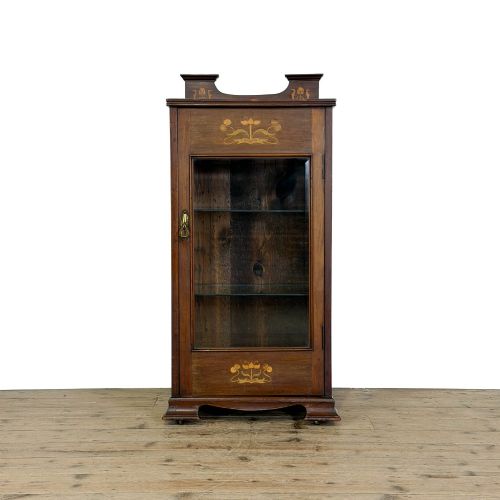
- A low shelving unit designed specifically to stand against the wall space between windows. These cabinets often featured glazed doors and intricate marquetry tops.
- Burr walnut
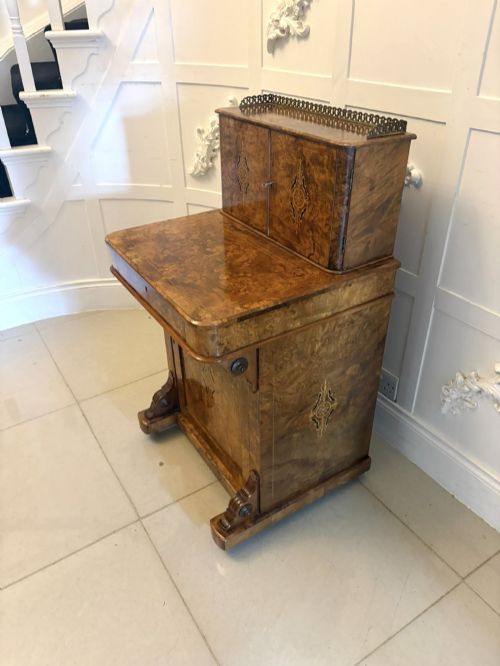
- Timber taken from walnut tree growths, producing highly figured, swirling grain patterns. Cabinetmakers prized this material for prominent door panels and drawer fronts.
- Bonheur du jour
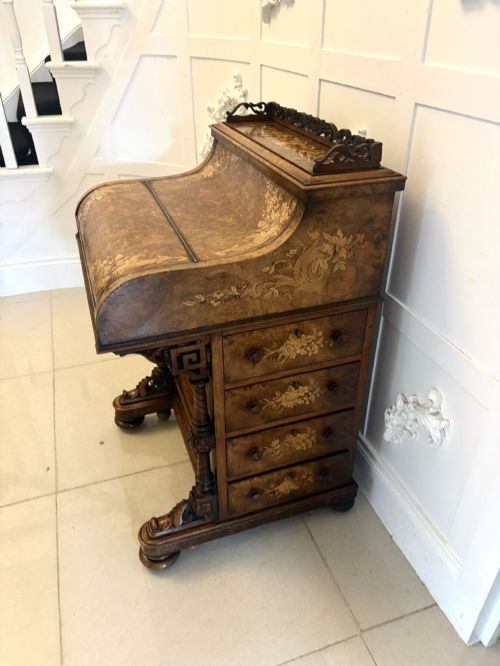
- A light lady's writing desk featuring a small cabinet or set of drawers superstructure on top. They emerged in France during the eighteenth century and remained popular through the Victorian era.
Small Marquetry Cabinet: Frequently Asked Questions
Where should I place a small marquetry cabinet?
These compact pieces fit well in hallways, living room corners or beside a bed where full-sized furniture overwhelms the floor plan.
Their decorative veneer panels look best away from direct sunlight, which can fade delicate satinwood and rosewood tones over time.
How do I clean inlaid veneer surfaces?
Dust the marquetry gently with a dry, soft cloth to prevent particulate buildup in the tiny joints between different wood species.
Avoid liquid polishes or water, as excess moisture can loosen the glue beneath the delicate veneer and cause lifting.
Can I store books inside these cabinets?
Many wall cabinets and glazed display pieces accommodate books, provided the weight does not strain antique shelves.
Enclosed cupboards protect fragile volumes from dust and light exposure while keeping reading materials close at hand.
How do I distinguish Victorian from 18th-century work?
Eighteenth-century pieces typically feature hand-cut marquetry with natural organic adhesives and distinct timber ageing beneath the surface.
Victorian revivals often show denser, darker secondary woods and machine-finished brass fittings alongside more uniform veneer thickness.